
IEA

Search documents
【原油点评】美国或打击伊朗,假期油价上行
Xin Lang Cai Jing· 2026-02-23 09:23
热点栏目 自选股 数据中心 行情中心 资金流向 模拟交易 客户端 来源:建信期货研究服务 美国或打击伊朗,假期油价上行 春节期间,油价延续节前的上涨态势并加速冲高。布伦特原油期货价格上涨4.1%,重新站上70美元关 口;WTI主力也涨超4%,站上65美元。油价上涨一方面原因在于EIA最新数据显示美国原油以及成品油 库存均大幅回落。原油库存周环比减901.4万桶,汽油库存减321.3万桶,馏分油库存减456.6万桶。此 外,油价上涨主要受到地缘局势的影响。 美国与伊朗在2月17日至18日的第二轮谈判陷入僵局,未能就核心议题达成共识。随后,美方在2月19日 下达"最后通牒",声称若限期内无法达成协议,可能采取"进一步军事行动"。23日,美媒援引美国中央 情报局前情报人员的话称,美国可能在2月23日或2月24日对伊朗发动军事打击。消息人士称特朗普"倾 向于在未来数日(对伊朗)进行初步打击",然后在未来数月发动一场更大规模的军事打击,迫使伊 朗"屈服"并按美方要求达成协议。地缘溢价进一步抬升。 伊核协议谈判已持续数年,始终没有达成实质性进展。 2018年5月,特朗普表示奥巴马政府达成的伊核协议是一个单方面受益的协议, ...


Crude Prices Weaken on Progress in US-Iran Nuclear Talks
Yahoo Finance· 2026-02-17 20:20
Escalation of geopolitical risk in the Middle East has added a risk premium to crude oil, supporting prices. The Wall Street Journal said last Wednesday that the US has discussed seizing tankers carrying Iranian oil. Also, the US is sending a second aircraft carrier strike group to the Middle East to prepare for military action should nuclear talks with Iran fail. The US Department of Transportation recently issued a maritime advisory stating that American-flagged ships should stay as far as possible from I ...
长安期货范磊:战争锚点不定,油价可关注中长期动向
Xin Lang Cai Jing· 2026-01-16 01:24
Financial Attributes - The US December CPI increased by 2.7% year-on-year, remaining unchanged from November, while the core CPI rose by 2.6%, also consistent with the previous month. Both figures fell below market expectations, leading to a resurgence in interest rate cut expectations for April, although January's expectations remain low [3][12] - The market consensus indicates that no rate cut is expected in January, with April's cut supported by the CPI data decline. There is a divergence in expectations for rate cuts in April and June, with a potential focus on June if April cuts occur [3][12] Political Attributes - Tensions between the US and Venezuela are easing, with the market absorbing the impact of the US capturing Maduro. Despite Maduro's resistance, the export of oil products to the US is likely to continue, and further US control over Venezuela's oil industry may occur [4][13] - The US-Iran relationship is under scrutiny due to internal political unrest in Iran, with potential military actions from the US causing oil prices to rise. However, recent statements from Trump and Israel suggest a pause in military actions, leading to a price correction. Iran's significance in the oil market is highlighted, with potential for greater price volatility depending on geopolitical developments [4][13] Fundamental Attributes - OPEC and EIA reports indicate that OPEC+ production in December was 78.3 thousand barrels per day below planned levels, with actual production at 37.44 million barrels per day against a target of 38.22 million barrels per day. OPEC member production was 23.17 million barrels per day, 6.1% below quota levels, indicating a preparation for the January production cuts [6][15] - Despite OPEC+ production cuts, non-OPEC countries like the US, Brazil, and Canada maintain high production levels, which may not fully offset the supply surplus in the market. OPEC maintains its consumption growth forecast for this year while raising expectations for next year, indicating optimism about long-term fuel consumption driven by global economic recovery [6][15] - EIA's report slightly raised oil price expectations due to technical adjustments rather than a shift in market outlook, suggesting that production surplus and inventory accumulation remain detrimental to price recovery. The IEA's upcoming report is expected to align with EIA's view on weak demand [6][15] Overall Market Outlook - Recent oil price volatility is attributed to geopolitical uncertainties, with supply-side looseness and weak demand recovery contributing to ongoing price pressure. The market anticipates rate cuts in April or June, with macroeconomic pressures likely to persist unless US tariff policies change [10][19] - The US-Iran relationship is a critical factor influencing oil prices, with potential military actions leading to rapid price increases, while negotiations could reduce geopolitical risk premiums. Overall, geopolitical factors will continue to play a significant role in oil price trends, with supply-side pressures likely to keep prices subdued unless unexpected developments occur [10][19]
Crude Prices Gain on Doubts About a Russian-Ukrainian Peace Deal
Yahoo Finance· 2025-11-26 16:47
Core Insights - Crude oil and gasoline prices are experiencing slight increases, driven by dollar weakness and geopolitical tensions related to the Russian-Ukrainian conflict [2][3] - OPEC has revised its Q3 global oil market estimates from a deficit to a surplus, indicating a shift in market dynamics [5][6] Price Movements - January WTI crude oil is up by +0.08 (+0.14%) and January RBOB gasoline is up by +0.0110 (+0.61%) [1] - Crude oil prices are supported by reduced exports from Russia, with shipments falling to 1.7 million bpd, the lowest in over three years [3] Geopolitical Factors - Ongoing geopolitical risks, including a potential US military buildup against Venezuela, are providing underlying support for oil prices [4] - Ukraine's targeting of Russian refineries has significantly impacted Russia's refining capacity, reducing it by 13% to 20% and curbing production by up to 1.1 million bpd [3] Supply and Production Dynamics - OPEC has announced a production increase of +137,000 bpd for December but plans to pause further hikes in Q1-2026 due to an emerging global oil surplus [6] - The EIA has raised its 2025 US crude production estimate to 13.59 million bpd, reflecting stronger-than-expected US production [5] Market Adjustments - The EIA reported larger-than-expected increases in crude oil and products, which has limited gains in crude prices [2] - OPEC's October crude production rose by +50,000 bpd to 29.07 million bpd, marking the highest level in 2.5 years [6]
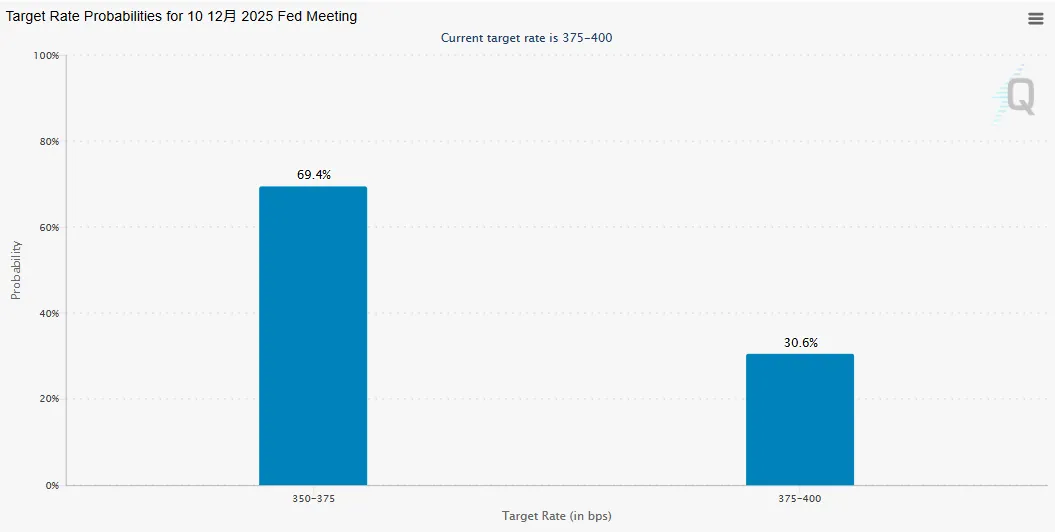
特朗普 关税突发!美联储官员最新表态 12月降息概率几乎翻倍
Qi Huo Ri Bao· 2025-11-22 23:56
Group 1: Tariff Policy Developments - The Trump administration is preparing a backup plan for tariffs amid potential Supreme Court challenges to a key tariff authorization [2] - The U.S. Department of Commerce and the U.S. Trade Representative's Office are exploring options under Trade Act Sections 301 and 122, which grant the president unilateral tariff authority [2] - If the court ruling is unfavorable, the U.S. government may be forced to refund over $88 billion in tariffs, but analysts expect immediate reimplementation of tariffs [2] Group 2: U.S.-Brazil Trade Relations - The U.S. has announced the cancellation of a 40% additional tariff on certain Brazilian goods, including coffee, meat, and fruits, while approximately 22% of exports to the U.S. remain affected [3][4] - This tariff adjustment is seen as a significant progress in bilateral negotiations, with Brazil expressing optimism about ongoing talks [4] - The White House's decision also includes the removal of a 40% tariff on Brazilian aircraft parts, aimed at balancing national security concerns with trade relations [5][6] Group 3: Oil Market Dynamics - International oil prices have been declining, with WTI crude futures down 1.59% to $58.06 per barrel, and Brent crude down 1.29% to $62.56 per barrel, amid geopolitical and macroeconomic pressures [13] - Analysts suggest that a potential resolution in the Russia-Ukraine conflict could significantly reduce geopolitical risks and lead to a drop in oil prices as Russian oil returns to the market [13][14] - Current oil supply is under pressure, with OPEC+ increasing production while demand is in a seasonal decline, leading to expectations of significant inventory build-up in 2025-2026 [14][15]
Crude Prices Tumble on Dollar Strength and Easing Geopolitical Risks
Yahoo Finance· 2025-11-19 20:18
Core Insights - Crude oil and gasoline prices have experienced a significant decline, with gasoline reaching a 1.5-week low, influenced by a stronger dollar and geopolitical developments [2][4] - A report indicated that the Trump administration has been collaborating with Russia to formulate a new strategy to resolve the Ukraine conflict, adding downward pressure on energy prices [2] - OPEC has revised its Q3 global oil market outlook from a deficit to a surplus, now estimating a surplus of 500,000 barrels per day (bpd) due to increased US production and OPEC's own output [5] Price Movements - December WTI crude oil closed down by $1.30 (-2.14%) and December RBOB gasoline fell by $0.0672 (-3.36%) [1] - The dollar index reached a 2-week high, contributing to the bearish sentiment in energy markets [2] Supply Dynamics - Russian crude oil exports have decreased significantly, with shipments dropping to 1.7 million bpd in the first half of November, the lowest in over three years [3] - Ukraine's military actions have targeted Russian refineries, reducing Russia's refining capacity by 13% to 20% and impacting crude production by up to 1.1 million bpd [3] Geopolitical Factors - Ongoing geopolitical tensions, including Iran's seizure of an oil tanker and US military preparations regarding Venezuela, are providing underlying support for oil prices [4] OPEC+ Production Strategy - OPEC+ announced a production increase of 137,000 bpd for December but plans to pause further increases in Q1 2026 due to an emerging global oil surplus [6] - The IEA has projected a record global oil surplus of 4.0 million bpd for 2026, indicating a shift in market dynamics [6] - OPEC's crude production rose to 29.07 million bpd in October, the highest level in 2.5 years, as the organization works to restore previous production cuts [6]
Crude Prices Retreat on Dollar Strength and Possible Ukraine Peace Deal
Yahoo Finance· 2025-11-19 16:41
Core Insights - Crude oil and gasoline prices are experiencing significant declines, with gasoline reaching a 1.5-week low, influenced by a stronger dollar and geopolitical developments [2][4] - A report indicates that the Trump administration is collaborating with Russia to formulate a new plan to resolve the Ukraine conflict, adding pressure to energy prices [2] - Russian crude exports have decreased significantly, with shipments falling to 1.7 million barrels per day (bpd) in early November, the lowest in over three years, due to ongoing geopolitical tensions and sanctions [3][4] Price Movements - December WTI crude oil is down by $1.47 (-2.42%) and December RBOB gasoline is down by $0.0612 (-3.06%) [1] - The dollar index has reached a 1.5-week high, contributing to bearish sentiment in energy markets [2] Supply Dynamics - The EIA reported a mixed inventory situation, with crude supplies declining more than expected while gasoline and distillate stockpiles increased [2] - OPEC revised its Q3 global oil market outlook from a deficit to a surplus, now estimating a surplus of 500,000 bpd, driven by higher US production and increased OPEC output [5] - OPEC+ plans to increase production by 137,000 bpd in December but will pause further increases in Q1-2026 due to the anticipated global oil surplus [6] Geopolitical Factors - Ongoing geopolitical risks, including the seizure of an oil tanker by Iran and US military actions regarding Venezuela, are providing underlying support for oil prices [4] - Ukraine's military actions have significantly impacted Russian refining capacity, reducing it by 13% to 20% and affecting crude export capabilities [3]
Crude Prices Pressured by Risk-Off Sentiment as Stocks Tumble
Yahoo Finance· 2025-11-18 16:35
Core Insights - Crude oil prices are experiencing downward pressure due to a selloff in the S&P 500 and signs of weakness in the US labor market, which negatively impacts economic growth and energy demand [1] - Reduced crude exports from Russia, geopolitical tensions, and a bullish crude crack spread provide underlying support for oil prices [2][3] Group 1: Market Dynamics - December WTI crude oil is down by 0.04 (-0.07%), while December RBOB gasoline closed down by 0.0246 (-1.24%) [1] - The S&P 500's decline to a one-month low has created a risk-off sentiment in asset markets [1] - The US labor market shows weakness, with an average loss of 2,500 jobs per week reported by ADP for the four weeks ending November 1 [1] Group 2: Supply Factors - Russia's crude exports have decreased to 3.36 million barrels per day (bpd) in the four weeks to November 16, down 90,000 bpd from the previous week, marking the lowest level in three months [2] - Ukraine's targeting of Russian refineries has reduced Russia's refining capacity by 13% to 20%, curbing production by as much as 1.1 million bpd [2] - New US and EU sanctions on Russian oil companies and infrastructure have further limited Russian oil exports [2] Group 3: OPEC and Production Outlook - OPEC revised its Q3 global oil market estimates from a deficit to a surplus, now projecting a surplus of 500,000 bpd, compared to a previous estimate of a -400,000 bpd deficit [4] - OPEC+ announced an increase in production by 137,000 bpd in December but plans to pause further hikes in Q1-2026 due to the emerging global oil surplus [5] - The IEA forecasts a record global oil surplus of 4.0 million bpd for 2026, with OPEC+ aiming to restore 2.2 million bpd of production cuts made in early 2024 [5]
Crude Prices See Continued Support from Geopolitical Risks
Yahoo Finance· 2025-11-17 17:12
Group 1: Crude Oil Market Dynamics - Crude oil prices are supported by geopolitical risks, including tensions with Russia, Iran's seizure of an oil tanker, and US military buildup regarding Venezuela [2] - Reduced crude exports from Russia due to Ukrainian attacks on refineries have limited Russia's export capabilities, with total seaborne fuel shipments dropping to 3.45 million bpd, the lowest in two months [3] - OPEC revised its Q3 global oil market estimates from a deficit to a surplus, now projecting a surplus of 500,000 bpd, influenced by increased US production and OPEC's own output [4] Group 2: OPEC+ Production Decisions - OPEC+ announced a production increase of 137,000 bpd for December but plans to pause further hikes in Q1-2026 due to an emerging global oil surplus [5] - OPEC's October crude production rose to 29.07 million bpd, the highest level in 2.5 years, as the group aims to restore a total of 2.2 million bpd cut earlier [5] - The IEA forecasts a record global oil surplus of 4.0 million bpd for 2026, indicating ongoing challenges in balancing supply and demand [5]
Crude Prices Climb on Dollar Weakness and Reopening of the US Government
Yahoo Finance· 2025-11-13 17:38
Core Insights - Crude oil and gasoline prices are experiencing a recovery after a significant sell-off, influenced by a decline in the dollar index and the reopening of the US government, which is expected to boost economic growth and energy demand [2][5] - However, the gains in crude prices are limited due to an unexpected rise in crude inventories and record-high US oil production [2][3] Group 1: Market Dynamics - On Wednesday, crude prices fell to a three-week low as OPEC revised its Q3 global oil market estimates from a deficit to a surplus, now projecting a surplus of 500,000 barrels per day (bpd) [3] - The EIA has increased its 2025 US crude production estimate to 13.59 million bpd, up from 13.53 million bpd [3] - Saudi Arabia has lowered the price of its main crude grade to Asia for the first time in 11 months, indicating bearish market sentiment [4] Group 2: Demand and Supply Factors - China's crude imports from January to October increased by 3.1% year-on-year to 471 million metric tons, providing some support for oil prices [4] - The US military's potential military actions against Venezuela, the 12th largest oil producer, have also contributed to price support [5] Group 3: OPEC+ and Production Adjustments - OPEC+ announced a production increase of 137,000 bpd for December but plans to pause further hikes in Q1 2026 due to an emerging global oil surplus [6] - OPEC's October crude production rose by 50,000 bpd to 29.07 million bpd, marking the highest level in 2.5 years [6] Group 4: Geopolitical Influences - Reduced crude exports from Russia, due to Ukrainian attacks on refineries and new sanctions from the US and EU, have limited Russia's export capabilities, supporting oil prices [7] - Ukrainian actions have led to a significant reduction in Russia's refining capacity, curbing production by as much as 1.1 million bpd [7]