Innoviz

Search documents
资讯日报:特朗普宣称将接管委内瑞拉直至完成权力过渡安排-20260105
Guoxin Securities Hongkong· 2026-01-05 05:11
Market Overview - On January 5, 2026, the Hang Seng Index closed at 26,338, up 2.76% for the day and 2.76% year-to-date[3] - The Hang Seng Technology Index surged 4.00% to close at 5,736, marking a strong start to the year[3] - The Nasdaq China Golden Dragon Index rose 4.38%, achieving its largest single-day gain since May 12, 2025[2] Sector Performance - Baidu Group's stock increased by over 9% following the announcement of its subsidiary Kunlun Chip's IPO application, with expected revenue of approximately 5 billion yuan for 2025[9] - Aerospace and defense stocks saw significant gains, with Asia Pacific Satellite rising 34.53% and Goldwind Technology up over 20%[9] - Semiconductor stocks performed strongly, with Hua Hong Semiconductor up over 9% and SMIC rising over 5%[9] Economic Indicators - The U.S. Federal Reserve President anticipates a moderation in inflation and stable employment, projecting economic growth around 2% for the year[13] - The Chinese government has adjusted the weight of the U.S. dollar, euro, and yen in the CFETS RMB exchange rate index effective January 1, 2026[13] Investment Trends - The tourism and leisure sector showed active performance, with Hong Kong Travel and Ctrip Group both rising over 5%[9] - Institutional forecasts suggest that the net profit growth rate for Hong Kong Stock Connect constituents is expected to reach high single digits in 2026, with technology and healthcare sectors leading the growth[9]
告别「够用」时代,L3 智驾呼唤高性能激光雷达上量
3 6 Ke· 2025-10-22 00:02
Core Viewpoint - The debate over the optimal approach for intelligent driving technology has concluded, with a consensus on the necessity of a multi-sensor fusion strategy that includes cameras, millimeter-wave radar, and LiDAR [1][3]. Group 1: Technical Insights - The integration of LiDAR is essential for L3 autonomous driving due to its ability to compensate for the limitations of visual perception in extreme lighting conditions [1]. - LiDAR serves as a critical safety component in intelligent driving systems, providing necessary redundancy in perception capabilities [1][4]. - The commercial rollout of L3 autonomous driving will initially focus on highways and urban expressways, where the complexity of scenarios is relatively lower [5][22]. Group 2: Market Dynamics - The transition from L2 to L3 driving systems necessitates a shift in responsibility from human drivers to the system, requiring enhanced reliability and redundancy in perception systems [4][8]. - The demand for high-performance LiDAR has transformed it from an optional component to a prerequisite for L3 autonomous driving [3][19]. - Companies like TuSimple are leading the market with their advanced LiDAR solutions, having achieved significant milestones in mass production and technology validation [18][28]. Group 3: Competitive Landscape - The L3 LiDAR market features three main player categories: leading manufacturers like Hesai and TuSimple, cross-industry players like Huawei, and international firms like Luminar and Innoviz [19][21]. - The competition is shifting from purely technical specifications to a comprehensive evaluation of performance, cost, and mass production capabilities [21][29]. - TuSimple has established a unique position by developing both 1550nm and 905nm LiDAR technologies, creating a complete product matrix for various driving scenarios [26][28].

禾赛科技登陆港股,全球最高市值激光雷达公司的王者归来
华尔街见闻· 2025-09-16 04:43
Core Viewpoint - The article highlights the emergence of Hesai Technology as a dominant player in the global LiDAR industry, marking a significant shift in the competitive landscape and showcasing its strong financial performance and market leadership [1][4][10]. Financial Performance - Hesai achieved a GAAP net profit of 44.1 million RMB in Q2 2025, a dramatic turnaround from a net loss of 72.1 million RMB in the same period last year, indicating a historic breakthrough in profitability [7]. - The company's quarterly net revenue surged by 53.9% year-on-year to 706.4 million RMB, while maintaining a gross margin of 42.5% despite intense price competition in the industry [7][8]. - By 2024, Hesai is projected to hold a 33% revenue market share globally, with a commanding 61% share in the L4 autonomous driving market [8]. Market Position and Strategy - Hesai's successful IPO on the Hong Kong Stock Exchange, raising over 4.16 billion HKD, reflects its strong market position and investor confidence [1][3]. - The company has established itself as a leader in both the automotive and robotics sectors, initiating a "dual-line battle" for future growth [5]. - Hesai's vertical integration and in-house manufacturing capabilities have allowed it to maintain high product quality and reduce costs, further solidifying its competitive edge [19][20]. Technological Innovation - The company has focused on chip innovation, transitioning from high-cost products to more affordable solutions, with its main product ATX priced at 200 USD by 2025, down from 200,000 RMB in 2017 [16][15]. - Hesai's commitment to R&D and manufacturing integration has resulted in a robust "moat" that enhances its market position [20]. Global Expansion and New Markets - Hesai has secured a long-term exclusive contract with a top European automaker for L3 autonomous driving, demonstrating its capability to meet stringent global automotive standards [22][25]. - The company is also expanding into the robotics sector, with a significant increase in sales of its laser radar for smart lawn mowers, achieving a 744% year-on-year growth in Q2 2025 [31]. Future Outlook - Hesai is poised to capitalize on the growing global demand for LiDAR technology, with projections indicating a substantial market opportunity in the smart lawn mower segment, expected to reach 2.21 billion USD by 2031 [32]. - The company's leadership believes that the rise of China's smart automotive industry presents a unique opportunity for growth and global influence [33][34].

2025边缘AI报告:实时自主智能,从范式创新到AI硬件的技术基础
3 6 Ke· 2025-03-28 11:29
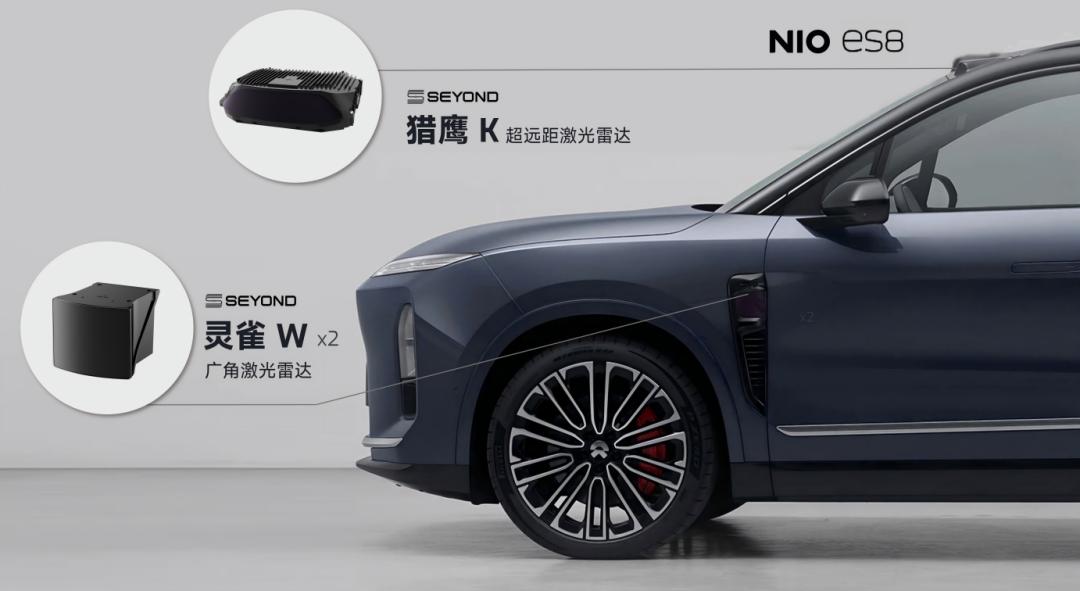
Core Insights - The Edge AI Foundation has rebranded from the TinyML Foundation and released the "2025 Edge AI Technology Report," highlighting the maturity and real-world applications of TinyML [1][3]. Group 1: Edge AI Technology Drivers - The report discusses advancements in hardware and software that support Edge AI deployment, focusing on innovations in dedicated processors and ultra-low power devices [3]. - Edge AI is transforming operational models across various industries by enabling real-time analysis and decision-making capabilities [3]. Group 2: Industry Applications of Edge AI - In the automotive sector, Edge AI enhances safety and response times, with examples like Waymo and NIO utilizing real-time data processing for improved performance [7][8]. - Manufacturing benefits from Edge AI through predictive maintenance, quality control, and process optimization, with reported reductions in maintenance costs by 30% and downtime by 45% [9][12]. - In healthcare, localized AI accelerates diagnostics and improves patient outcomes by analyzing medical data directly on devices [14]. - Retail operations are optimized through real-time behavior analysis and AI-driven systems, reducing checkout times by 30% [16]. - Logistics is enhanced by integrating Edge AI with IoT sensors, allowing for immediate analysis of data and optimization of supply chain operations [18]. - Smart agriculture utilizes Edge AI for precision farming, reducing water usage by 25% and pesticide use by 30% [21]. Group 3: Edge AI Ecosystem and Collaboration - The Edge AI ecosystem relies on collaboration among hardware vendors, software developers, cloud providers, and industry stakeholders to avoid fragmentation [24]. - A three-layer architecture is recognized for Edge AI, distributing workloads across edge devices, edge servers, and cloud platforms [24][25]. - Cross-industry partnerships are increasing, with companies like Intel and Qualcomm collaborating to enhance Edge AI deployment [26][27]. Group 4: Emerging Trends in Edge AI - Five emerging trends are reshaping Edge AI, including federated learning, quantum neural networks, and neuromorphic computing [30]. - Federated learning is expected to enhance model adaptability and collaboration across industries, with a projected market value of nearly $300 million by 2030 [31]. - Quantum computing is set to redefine Edge AI capabilities, enabling faster decision-making and real-time processing [34][36]. - AI-driven AR/VR applications are evolving with Edge AI, allowing for real-time responses and improved energy efficiency [39]. - Neuromorphic computing is gaining traction for its energy efficiency and ability to handle complex tasks without cloud connectivity [41].