
Kuehne + Nagel

Search documents
Mexico violence after cartel boss killing slows cross-border trade, hitting air freight, trucking, ports
CNBC· 2026-02-23 19:50
Group 1: Impact of Violence on Trade - The killing of cartel boss Nemesio "El Mencho" Oseguera has led to significant violence across Mexico, affecting trade routes and logistics operations [2][3] - Logistics companies are warning that ongoing violence could dramatically hurt trade between the U.S. and Mexico, particularly impacting freight operations [2][4] - The U.S. State Department has issued a shelter-in-place order for several states, including Jalisco and Tamaulipas, which has prompted logistics firms to have employees work from home [7] Group 2: Air Freight and Transportation Disruptions - Major U.S. airlines, including American Airlines and Delta, have canceled flights to and from affected regions, impacting air freight operations significantly [5][6] - Approximately 50% of air freight by weight is moved by passenger aircraft, making flight cancellations particularly detrimental to freight movement [4] - The Port of Manzanillo, Mexico's busiest container port, faced temporary closures and ongoing disruptions due to violence, affecting container traffic [9] Group 3: Trucking and Freight Corridors - The violence has led to reduced trucking volume between the U.S. and Mexico, with many carriers hesitant to send drivers into western Mexico, tightening trucking capacity [10] - Road blockades have disrupted key freight corridors, particularly those connecting the Port of Manzanillo to Guadalajara [8] - Logistics companies are preparing for delays in freight movement, especially through western Mexico, with expectations of continued disruptions [12]



道指重挫逾600点!AI抛售潮重燃 思科暴泻12% 商业地产遭遇“黑色星期四”
Di Yi Cai Jing· 2026-02-12 23:27
Market Overview - US stock market experienced a significant decline, driven by concerns over the accelerated penetration of artificial intelligence impacting the software industry and office space demand, leading to pressure on commercial real estate and tech sectors [2] - The Dow Jones Industrial Average fell by 669.42 points, a decrease of 1.34%, closing at 49,451.98 points; the S&P 500 dropped by 108.71 points, down 1.57%, closing at 6,832.76 points; the Nasdaq Composite decreased by 469.32 points, a decline of 2.03%, closing at 22,597.15 points [2] Popular Stocks Performance - Major tech companies faced significant losses, with Apple plunging 5%, marking its largest single-day drop since April 2025, following claims by the US Federal Trade Commission regarding Apple's suppression of conservative content [3] - Other notable declines included Meta Platforms down 2.82%, Amazon down 2.20%, Tesla down 2.62%, Nvidia down 1.64%, Microsoft down 0.63%, and Google C shares down 0.63% [3][4] Commercial Real Estate and Financial Services - The current sell-off in the US stock market is primarily focused on commercial real estate and related financial services, with fears that increased use of AI tools may structurally weaken demand for office space, impacting leasing and valuation [5] - Major commercial real estate service companies saw significant stock price drops, with CBRE Group down 8.8%, JLL down 7.6%, and Colliers International down 11.5% [5] - Analysts noted that the discussion around AI reducing office demand has been ongoing, but the recent sell-off in brokerage stocks has led investors to reassess commercial real estate risks more directly [5] Transportation and Logistics Sector - The trucking and logistics sector also faced notable pressure, with the Dow Jones Transportation Average dropping over 4%, marking its worst day since the US announced tariff increases in April of last year [6] - Among the 20 component stocks of the Dow Jones Transportation Average, 17 experienced declines, with Landstar System and C.H. Robinson seeing drops of 15.6% and 14.5%, respectively [6] - Concerns were heightened following Algorhythm Holdings' disclosure that its SemiCab division increased customer freight volumes by 300% to 400% without a corresponding increase in workforce, raising fears about AI's potential to reduce labor demand in logistics [6] Labor Market Data - Recent labor market data showed that initial jobless claims fell by 5,000 to 227,000, indicating overall stability in the job market [7] Bond Market Reaction - US Treasury yields fell, with the 10-year Treasury yield decreasing by 8.1 basis points to 4.102%, marking the largest single-day drop in October; the 2-year yield fell by 4.8 basis points to 3.464% [8] Commodity Market Performance - International oil prices saw a significant decline, with light crude oil futures for March delivery dropping by $1.79 to $62.84 per barrel, a decrease of 2.77%; Brent crude futures for April fell by $1.88 to $67.52 per barrel, down 2.71% [10] - Precious metals also faced pressure, with spot gold down 3.26% to $4,918.36 per ounce and silver down 10.89% to $75.0942 per ounce [10]


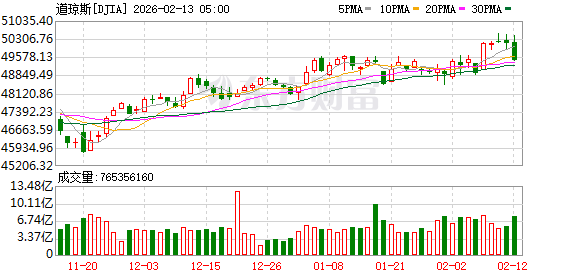
道指重挫逾600点!AI抛售潮重燃,商业地产遭遇“黑色星期四”
Di Yi Cai Jing· 2026-02-12 23:24
Market Overview - US stock market experienced a significant decline, driven by concerns over the accelerated penetration of artificial intelligence impacting the software industry and office space demand [1] - The Dow Jones Industrial Average fell by 669.42 points, a decrease of 1.34%, closing at 49,451.98 points; the S&P 500 dropped by 108.71 points, down 1.57%, closing at 6,832.76 points; the Nasdaq Composite decreased by 469.32 points, a decline of 2.03%, closing at 22,597.15 points [1] Technology Sector Performance - Major tech stocks faced pressure, with Apple experiencing a sharp decline of 5%, marking its largest single-day drop since April 2025, following claims by the US Federal Trade Commission regarding Apple's suppression of conservative content [3] - Other tech giants also saw declines: Meta Platforms down 2.82%, Amazon down 2.20%, Tesla down 2.62%, Nvidia down 1.64%, Microsoft down 0.63%, and Alphabet's Class C shares down 0.63% [3][4] Commercial Real Estate Impact - The sell-off in the US stock market focused on commercial real estate and related financial services, with fears that increased use of AI tools could structurally weaken demand for office space, impacting leasing and valuation systems [5] - Major commercial real estate service companies saw significant stock price drops, with CBRE Group down 8.8%, JLL down 7.6%, and Cushman & Wakefield down 11.5% [6] - Analysts noted that the discussion around AI reducing office demand has been ongoing, and the recent sell-off in brokerage stocks has led investors to reassess commercial real estate risks more directly [6] Transportation and Logistics Sector - The transportation and logistics sector also faced significant pressure, with the Dow Jones Transportation Average dropping over 4%, marking its worst day since the US announced tariff increases in April of last year [6] - Among the 20 components of the Dow Jones Transportation Average, 17 stocks declined, with Landstar System and C.H. Robinson experiencing the largest drops of 15.6% and 14.5%, respectively [7] - Concerns were heightened following Algorhythm Holdings' disclosure that its SemiCab division increased customer freight volumes by 300% to 400% without a corresponding increase in workforce, raising fears about AI's impact on labor demand in the logistics industry [7] Global Market Reactions - The impact of the US market decline extended to European markets, with Swiss logistics group Kuehne + Nagel's stock falling by 13% and Danish logistics firm DSV A/S dropping over 10% [8] Economic Data and Interest Rates - Recent labor market data showed a smaller-than-expected decline in initial jobless claims, leading to fluctuating market expectations regarding the Federal Reserve's interest rate path for the year [8] - The yield on 10-year US Treasury bonds fell by 8.1 basis points to 4.102%, marking the largest single-day drop since October, while the yield on 2-year bonds decreased by 4.8 basis points to 3.464% [8] Commodity Market Performance - International oil prices saw a notable decline, with light crude oil futures for March dropping by $1.79 to $62.84 per barrel, a decrease of 2.77%, and Brent crude oil futures for April falling by $1.88 to $67.52 per barrel, down 2.71% [9] - Precious metals also faced pressure, with spot gold down 3.26% to $4,918.36 per ounce and silver down 10.89% to $75.0942 per ounce [9]


道指重挫逾600点!AI抛售潮重燃,思科暴泻12%,商业地产遭遇“黑色星期四”
第一财经· 2026-02-12 23:22
Core Viewpoint - The article discusses the significant decline in the U.S. stock market, driven by concerns over the impact of artificial intelligence on the software industry and office space demand, leading to a reassessment of the Federal Reserve's interest rate path [3]. Market Performance - Major U.S. indices fell sharply, with the Dow Jones Industrial Average down 669.42 points (1.34%) to 49,451.98, the S&P 500 down 108.71 points (1.57%) to 6,832.76, and the Nasdaq Composite down 469.32 points (2.03%) to 22,597.15 [3]. - Tech giants faced significant pressure, with Apple dropping 5% (largest single-day decline since April 2025), Meta down 2.82%, Amazon down 2.20%, and Tesla down 2.62% [6][7]. Commercial Real Estate Concerns - The sell-off focused on commercial real estate and related financial services, with fears that increased AI usage could structurally weaken demand for office space, impacting leasing and valuation [10]. - Major commercial real estate service companies saw significant stock declines, with CBRE down 8.8%, JLL down 7.6%, and Colliers down 11.5% [10]. - Analysts noted that the discussion around AI reducing office demand has been ongoing, but recent sell-offs in brokerage sectors have intensified fears regarding commercial real estate risks [10]. Transportation and Logistics Sector - The transportation and logistics sector also faced declines, with the Dow Jones Transportation Average dropping over 4%, marking its worst day since April of the previous year [11]. - Key logistics companies like Landstar System and C.H. Robinson saw declines of 15.6% and 14.5%, respectively, due to concerns over AI potentially reducing labor demand in the logistics industry [12]. Economic Data and Federal Reserve Outlook - Recent labor market data showed a smaller-than-expected drop in initial jobless claims, leading to fluctuating market expectations regarding the Federal Reserve's interest rate decisions [12]. - The market is currently pricing in a cumulative rate cut of 59 basis points by the end of the year, up from 54 basis points earlier in the day [12]. Commodity Market Trends - International oil prices fell significantly, with WTI crude down $1.79 to $62.84 per barrel (2.77% decline) and Brent crude down $1.88 to $67.52 per barrel (2.71% decline) [15]. - Precious metals also faced pressure, with spot gold down 3.26% to $4,918.36 per ounce and silver down 10.89% to $75.0942 per ounce [15].



道指重挫逾600点!AI焦虑抛售潮重燃,思科暴泻12%,商业地产遭遇“黑色星期四”
Di Yi Cai Jing Zi Xun· 2026-02-12 23:03
Market Overview - The U.S. stock market experienced a significant decline, with concerns about the impact of artificial intelligence on the software industry and office space demand leading to a sell-off in commercial real estate and tech sectors [1] - The Dow Jones Industrial Average fell by 669.42 points, a decrease of 1.34%, closing at 49,451.98 points; the S&P 500 dropped by 108.71 points, down 1.57%, closing at 6,832.76 points; and the Nasdaq Composite decreased by 469.32 points, a drop of 2.03%, closing at 22,597.15 points [1] Technology Sector Performance - Major tech stocks faced pressure, with Apple experiencing a 5% drop, marking its largest single-day decline since April 2025, following claims by the U.S. Federal Trade Commission regarding content suppression [2][3] - Other tech giants also saw declines: Meta Platforms down 2.82%, Amazon down 2.20%, Tesla down 2.62%, Nvidia down 1.64%, Microsoft down 0.63%, and Alphabet (Google) down 0.63% [2][3] Commercial Real Estate Impact - The commercial real estate sector faced a sharp sell-off, with major service companies like CBRE Group down 8.8%, JLL down 7.6%, and Cushman & Wakefield down 11.5% [4] - Analysts noted that the discussion around AI reducing office demand has been ongoing, and the recent sell-off in brokerage stocks has led investors to reassess risks in commercial real estate [4] Transportation and Logistics Sector - The transportation and logistics sector also suffered, with the Dow Jones Transportation Average dropping over 4%, marking its worst day since the U.S. announced tariff increases in April of last year [5] - 17 out of 20 stocks in the Dow Jones Transportation Average declined, with Landstar System and C.H. Robinson falling by 15.6% and 14.5%, respectively, due to concerns over AI reducing labor demand in logistics [6] Economic Data and Interest Rates - Recent labor market data showed a smaller-than-expected decline in initial jobless claims, leading to fluctuating expectations regarding the Federal Reserve's interest rate cuts for the year [6] - The yield on 10-year U.S. Treasury bonds fell by 8.1 basis points to 4.102%, marking the largest single-day drop since October [7] Commodity Market Performance - International oil prices saw a notable decline, with light crude oil futures dropping by $1.79 to $62.84 per barrel, a decrease of 2.77% [8] - Precious metals also faced pressure, with spot gold down 3.26% to $4,918.36 per ounce and silver down 10.89% to $75.0942 per ounce [8]

Borderlands Mexico: DSV plans $14.5M Arizona regional HQ amid cross-border boom
Yahoo Finance· 2026-01-25 12:00
Group 1: DSV's Investment and Expansion - DSV is constructing a new regional headquarters in Mesa, Arizona, with a total investment of $14.5 million, covering nearly 950,000 square feet [2] - The facility will consolidate various local service offerings, including air, ocean, and road transport, as well as contract logistics and inventory management, and is expected to employ up to 160 people at full capacity [3] - The completion of DSV's new headquarters and logistics hub is scheduled for 2027, aimed at supporting Arizona's growth in manufacturing and distribution [4] Group 2: Industry Trends and Developments - The investment by DSV is part of a broader trend of logistics and transportation companies expanding their cross-border facilities and services between the U.S. and Mexico, driven by nearshoring, manufacturing realignment, and e-commerce demand [6] - Kuehne + Nagel has expanded its bonded warehouse capacity in El Paso, Texas, to accommodate increasing freight volumes related to nearshoring and maquiladora production [6] - C.H. Robinson has also announced a significant expansion of cross-dock and warehousing space along the U.S.–Mexico border in El Paso to support rising cross-border volumes [7]
US Air Freight Transport Market to Reach USD 61.63 Billion by 2030, Fueled by Fast U.S.-Asia E-Commerce Deliveries and U.S.-Mexico Electronics Reshoring
Medium· 2025-11-11 11:58
Core Insights - The US Air Freight Transport Market is projected to grow from USD 49.85 billion in 2025 to USD 61.63 billion by 2030, reflecting a CAGR of 4.33% driven by demand in e-commerce, healthcare, and high-value manufacturing sectors [1][11] Market Drivers - Rapid growth in e-commerce is leading to increased demand for faster delivery, with consumers expecting two-day or same-day shipping, prompting carriers to optimize routes and expand capacity [3][12] - Nearshoring of semiconductor, electronics, and automotive manufacturing to Mexico is increasing air cargo volumes along the US-Mexico corridor, emphasizing the need for just-in-time delivery [4][12] - The healthcare sector is increasingly relying on air freight for temperature-sensitive shipments, necessitating compliance with cold-chain standards and expanding logistics capabilities [5][6] Infrastructure and Operational Enhancements - Major US airports are investing in cargo facilities and infrastructure upgrades to handle rising freight volumes, improving operational efficiency and reducing turnaround times [7][12] - Airlines are increasing their fleet of dedicated freighters and adopting sustainable aviation fuels to enhance service reliability and reduce environmental impact [7][12] Competitive Landscape - Key players in the market include UPS, FedEx, DHL, Atlas Air Worldwide Holdings, and Kuehne + Nagel, each offering specialized services tailored to various industries [10][12]



Trade Management Market to Reach USD 3.21 Billion by 2030 Driven by Growing Cross-Border Trade
Medium· 2025-10-24 10:18
Trade Management Market to Reach USD 3.21 Billion by 2030 Driven by Growing Cross-Border TradeRakeshnaidu4 min read·Just nowJust now--Outlook of the Trade Management MarketThe trade management market size is estimated at USD 2.70 billion in 2025, and is expected to reach USD 3.21 billion by 2030, at a CAGR of 3.21%. This growth is driven by the increasing adoption of automated trade compliance solutions, digital customs workflows, and enhanced logistics management. As international trade becomes more comple ...
特朗普政府大幅扩大钢铝关税范围 标普预计其政策将带来“可观”财政收入
智通财经网· 2025-08-19 22:33
Group 1 - The Trump administration has significantly expanded the scope of tariffs on steel and aluminum products, imposing a 50% tariff on over 400 product categories, including firefighting equipment, machinery, construction materials, and specialty chemicals made from steel and aluminum [1] - The U.S. Department of Commerce stated that the new measures cover 407 new product categories, aiming to close loopholes and support the revival of the U.S. steel and aluminum industries [1] - Experts predict that the impact of these tariffs will be extensive, with the current steel and aluminum tariffs covering at least $320 billion in imported goods, which is expected to further increase inflationary pressures in the Producer Price Index (PPI) [1] Group 2 - S&P Global indicated that the substantial revenue generated from the broad tariff policy will largely offset the recent significant tax cuts and spending reductions, maintaining the U.S. long-term sovereign credit rating at AA+ [2] - The report warns that if the U.S. deficit continues to expand over the next two to three years without effective spending control or addressing the fiscal gap caused by tax cuts, there may be a downgrade in the rating [2] - Despite the increase in customs tariff revenue, the federal budget deficit still widened by approximately 20% during the same period [2]
