Mistral

Search documents
ICLR 2026 | 北航开源Code2Bench:双扩展动态评测,代码大模型告别躺平刷分
机器之心· 2026-02-21 04:06
在衡量大语言模型(LLM)代码生成能力的竞赛中,一个日益严峻的问题正浮出水面:当模型在 HumanEval、MBPP 等经典基准上纷纷取得近乎饱和的成绩时,我 们究竟是在评估其真实的泛化推理能力,还是在检验其对训练语料库的「 记忆力」? 现有的代码基准正面临两大核心挑战: 数据污染 的风险,以及 测试严谨性不足 。前者使评测可能退化为「 开卷考试」,后者则常常导致一种「 正确的幻觉 」 (Illusion of Correctness)—— 模型生成的代码或许能通过少数示例,却在复杂的真实世界边缘场景中不堪一击。 为了打破这种「 高分幻觉」,来自北京航空航天大学的研究团队提出了一种全新的基准构建哲学 —— 双重扩展(Dual Scaling) ,并基于此构建了端到端的自动化 框架 Code2Bench 。该研究旨在为代码大模型的评估,建立一个更动态、更严苛、也更具诊断性的新范式。 目前,该论文已被 ICLR 2026 接收。 论文标题:Code2Bench: Scaling Source and Rigor for Dynamic Benchmark Construction 我们需要什么样的 Benchma ...


Capgemini CEO dismisses calls for full European tech autonomy
Reuters· 2026-02-13 09:09
Core Viewpoint - Capgemini CEO Aiman Ezzat rejects the notion of complete technological sovereignty in Europe, emphasizing the need for a balanced approach to digital autonomy that accommodates both sovereignty and global competitiveness [1] Group 1: Technological Sovereignty - Ezzat states that "there is no such thing as absolute sovereignty," highlighting that no entity possesses complete control over the entire value chain necessary for service delivery [1] - The current European tech policy reflects a tension between the desire for autonomy and the reality of reliance on U.S. tech giants like Amazon, Google, and Microsoft [1] - Ezzat outlines a four-layer framework for digital autonomy: data, operations, regulation, and technology, indicating that Europe has independence at the first three levels but lacks complete technological independence due to U.S. dominance [1] Group 2: Strategic Partnerships - Instead of pursuing full autonomy, Ezzat advocates for finding "the right sovereignty solution based on the use case, the client environment, the government" [1] - Capgemini has formed partnerships with U.S. hyperscalers such as AWS, Google Cloud, and Microsoft to provide "sovereign" AI solutions, which are cloud services offered by a European company but utilize American infrastructure [1] - The company is also engaging with European AI firms like France-based Mistral as part of its strategy to navigate the complexities of technological sovereignty [1] Group 3: Reputational Challenges - Capgemini is facing reputational issues related to government contracts, exemplified by its decision to sell its U.S. subsidiary, Capgemini Government Solutions, following backlash over a $4.8 million contract with U.S. Immigration and Customs Enforcement [1]

ARR收入突破4亿美元,“欧洲OpenAI”一年收入暴增20倍
Hua Er Jie Jian Wen· 2026-02-12 00:34
Core Insights - Mistral, a French AI startup, has achieved remarkable growth with an annual recurring revenue (ARR) exceeding $400 million, a 20-fold increase from $20 million a year ago, positioning itself as "Europe's OpenAI" [1][2] - The company plans to surpass $1 billion in ARR by the end of this year, driven by aggressive expansion among large enterprise clients, now exceeding 100 [1][2] - Mistral is investing €1.2 billion to build a new AI data center in Sweden, marking its first facility outside France, aimed at reducing reliance on external infrastructure [1][3] Vertical Integration and Infrastructure Expansion - Mistral is pursuing a vertical integration strategy by constructing and operating its own AI data centers instead of relying solely on major U.S. cloud providers [3] - The new Swedish facility will provide 23MW of computing power and is expected to be operational next year, leveraging low-carbon and relatively inexpensive local energy [4] - This infrastructure investment is projected to generate over €2 billion in revenue over the next five years, providing a predictable business model [4] Geopolitical Drivers of "Sovereign AI" Demand - There is growing concern in Europe regarding over-reliance on U.S. digital services, with over 80% of digital services and infrastructure depending on foreign providers, primarily American companies [5] - Mistral's position as the only homegrown developer of cutting-edge language models in Europe places it in a favorable position to meet the demand for data sovereignty among clients [5] - Current clients include major corporations and various European governments, with approximately 60% of revenue generated from Europe [5] Financial Position and Future Plans - Mistral's CEO indicated that the company does not require an IPO this year due to sufficient debt financing, although it may consider going public in the future to ensure independence [6] - The company is not currently pursuing an IPO, unlike competitors such as OpenAI and Anthropic, which are preparing for public offerings [5][6] Practical Applications and Market Realities - Despite the rapid growth of products like ChatGPT and Claude, Mistral's CEO expressed a pragmatic view of the market, noting that many enterprise clients are disappointed with off-the-shelf chatbot solutions [7] - There is skepticism regarding the notion that a single system can manage all business processes, emphasizing the continued relevance of traditional software companies that hold critical business data [7] - Mistral warns that startups focused solely on creating user interfaces for specific industries may find their strategies less valuable as AI technology evolves [7]
“欧洲版OpenAI”进军北欧:Mistral拟斥资12亿欧元,在瑞典建设AI基础设施
Hua Er Jie Jian Wen· 2026-02-11 13:20
被视为"欧洲版OpenAI"的法国人工智能初创公司Mistral正通过一项重大的跨境投资,加速构建欧洲本土 的AI计算能力,此举不仅标志着这家独角兽企业战略重心的扩展,也凸显了欧洲在地缘政治紧张局势 下寻求科技主权的迫切需求。 据CNBC报道,Mistral周三宣布将投入12亿欧元(约合14.3亿美元)在瑞典建设数字基础设施,重点包 括人工智能数据中心、先进计算能力以及本地化的AI功能开发。这是Mistral在其本土市场法国以外进行 的首个AI基础设施投资,预计新设施将于2027年投入运营,届时将支持该公司下一代AI模型的开发与 运行。 作为投资计划的一部分,Mistral将与瑞典公司EcoDataCenter合作部署"大规模"AI计算能力。北欧地区凭 借较低的能源成本和利于散热的寒冷气候,正成为欧洲计算设施的首选地。此前,OpenAI也于去年7月 宣布作为其"Stargate"计划的一部分,将在挪威启动AI数据中心项目。 Mistral首席执行官Arthur Mensch表示,此项投资是建立欧洲独立AI能力的具体步骤,旨在通过提供数 据本地处理和存储的全垂直服务,加强欧洲的战略自主权和竞争力。这也为服务于工 ...
马克龙同美国宣示“数字主权”,公务员禁用Zoom,能摆脱对美依赖吗?
第一财经· 2026-02-03 00:37
Core Viewpoint - France is pushing for the use of domestically developed software to replace Zoom and Microsoft Teams among public servants, marking a significant step in Europe's efforts to reduce dependence on major US tech companies [3][4]. Group 1: Government Initiatives - French Prime Minister Leclerc has instructed ministries to transition to Visio, a French-developed video conferencing solution, by the end of 2026 to ensure secure and stable public electronic communications [3]. - The French government blocked the sale of Eutelsat's ground antenna business to private equity firm EQT, citing its strategic importance and competition with SpaceX's Starlink [3]. Group 2: European Digital Sovereignty - The European Parliament recently passed a resolution urging member states to enhance technological sovereignty by promoting the procurement of European digital products and services [5]. - Researcher Zhao Yongsheng noted that the decision to ban Zoom primarily targets the French public sector, reflecting Europe's response to US geopolitical pressures and the call for "digital sovereignty" [4][5]. Group 3: Challenges and Historical Context - Despite efforts, Europe still relies on non-EU countries, mainly the US, for over 80% of digital services and infrastructure, with past initiatives often failing due to inferior performance or user experience of local alternatives [6][8]. - France has historically announced various state-supported tech projects with limited success, such as the Quaero search engine, which was shut down after five years [8]. Group 4: Future Prospects - The French government aims to develop more tools for the public sector to replace Microsoft Office and Google software, with the Visio project being a key initiative [9]. - The French Secretary of State for Public Service, David Amiel, emphasized the need for high-quality domestic tools to achieve President Macron's goal of "strategic autonomy" [9].




马克龙同美国宣示“数字主权”,公务员禁用Zoom,能摆脱对美依赖吗?
Di Yi Cai Jing· 2026-02-02 12:20
Core Viewpoint - The European Union (EU) is striving for digital sovereignty by reducing reliance on non-EU countries for digital services and infrastructure, with France leading initiatives to promote domestic software solutions [1][5]. Group 1: Digital Sovereignty Initiatives - The EU relies on non-EU countries, primarily the US, for over 80% of its digital services and infrastructure [1][5]. - France is pushing for millions of civil servants to use domestically developed software, such as Visio, to replace Zoom and Microsoft Teams by the end of 2026 [1][5]. - The French government has blocked the sale of Eutelsat's ground antenna business to a private equity firm, citing strategic importance and competition with SpaceX's Starlink [1][5]. Group 2: Legislative and Policy Actions - The European Parliament passed a resolution supporting the development of a European cloud platform and AI models, prioritizing European suppliers in public procurement [5]. - France has been a leader in advocating for digital taxes on large US tech companies within the EU [4]. - The EU is drafting new legislation to promote "digital sovereignty" and reduce dependence on US technology [5]. Group 3: Challenges and Limitations - Despite efforts, Europe has struggled to create competitive alternatives to US technology, with many initiatives failing due to poor performance and user experience [5][6]. - Historical attempts, such as the Quaero search engine, have not succeeded, and Google still holds about 90% of the European search market [6]. - Current cloud infrastructure investments in Europe are still heavily directed towards US providers, with Amazon, Microsoft, and Google controlling over two-thirds of the market [7]. Group 4: Future Outlook - France's Minister of Public Service emphasized the need for high-quality domestic tools to achieve strategic autonomy and reduce reliance on non-European solutions [7]. - The Visio project aims to develop more tools for the public sector, ultimately replacing Microsoft Office and Google software [7]. - The French government plans to collaborate with European tech companies to enhance the development of these tools [7].


Here's Why Feb. 5 Could Be a Big Day for Amazon Investors
Yahoo Finance· 2026-01-27 15:05
Core Insights - Amazon's stock has only gained 2% over the past year despite significant advancements in artificial intelligence (AI) that are driving growth across the organization [1] - The upcoming Q4 2025 operating results on February 5 are anticipated to provide insights into how AI is influencing Amazon's cloud computing and e-commerce sectors [2] Group 1: Cloud Computing - Amazon Web Services (AWS) is the largest cloud computing platform globally, attracting AI developers due to its advanced data centers and services [4] - AWS utilizes AI chips from suppliers like Nvidia and has developed its own chips, Trainium and Inferentia, with the latest Trainium2 chips offering up to 40% better price performance for AI model training [5] - AWS generated $93.1 billion in revenue during the first three quarters of 2025, an 18% increase from the previous year, with a $200 billion order backlog from developers awaiting new data center infrastructure [7] Group 2: Overall Company Performance - Amazon operates as a tech conglomerate with a strong presence in e-commerce, cloud computing, and streaming, with AI significantly enhancing profitability in these sectors [8]
These are the European startups Nvidia backed in 2025, as it ramped up investing in the continent's AI companies
CNBC· 2026-01-26 14:31
Core Insights - Nvidia has established itself as a significant player in the AI sector, actively investing in European startups to enhance its AI capabilities and maintain its leadership position in the industry [1][3]. Investment Trends - In 2025, Nvidia participated in 14 funding rounds for European tech companies, a significant increase from previous years, indicating a strategic focus on expanding its investment footprint in Europe [2]. - The total number of global startup rounds Nvidia invested in during the same year was 86, showcasing its aggressive investment strategy [2]. Notable Investments - Nvidia's investment in the French AI lab Mistral amounted to €1.7 billion in September, valuing the company at €11.7 billion ($13.6 billion) [5]. - The company invested $1.1 billion in Nscale in September and $433 million in October, highlighting its commitment to AI cloud computing services [6]. - Nvidia backed Quantinuum with $600 million in September, valuing the quantum computing company at $10 billion [7]. - In December, Nvidia participated in Lovable's Series B funding round, which raised $330 million and valued the startup at $6.6 billion [9]. - Nvidia also invested in Black Forest Labs, contributing to a $300 million funding round in December, valuing the company at $3.25 billion [10]. Additional Investments - Other notable investments include $180 million in N8n, $100 million in CuspAI, and $80 million in Charm Therapeutics, all occurring in September [12][13][15]. - Nvidia's participation in PolyAI's $86 million Series D in December further emphasizes its strategy to support AI-driven companies [14]. - The company made undisclosed equity investments in Cassava Technologies and Revolut, the latter being valued at $75 billion, marking it as Europe's highest valued startup [18][19].

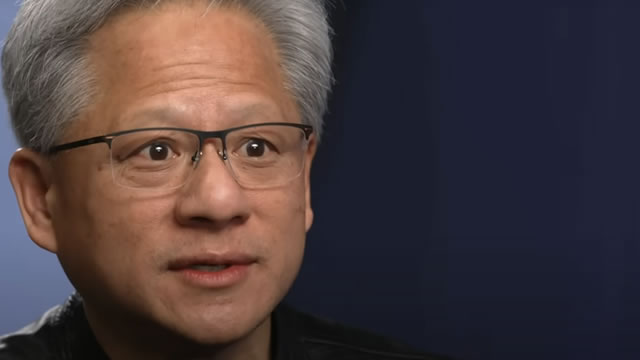
“DeepSeek-V3基于我们的架构打造”,欧版OpenAI CEO逆天发言被喷了
3 6 Ke· 2026-01-26 07:44
Core Viewpoint - The discussion centers around the competitive landscape in the AI field, particularly focusing on the contrasting approaches of Mistral and DeepSeek in developing sparse mixture of experts (MoE) models, with Mistral's CEO acknowledging China's strong position in AI and the significance of open-source models [1][4]. Group 1: Company Perspectives - Mistral's CEO, Arthur Mensch, claims that open-source models are a strategy for progress rather than competition, highlighting their early release of open-source models [1]. - The recent release of DeepSeek-V3 is built on Mistral's proposed architecture, indicating a collaborative yet competitive environment in AI development [1][4]. - There is skepticism among the audience regarding Mistral's claims, with some suggesting that Mistral's recent models may have borrowed heavily from DeepSeek's architecture [4][13]. Group 2: Technical Comparisons - Both DeepSeek and Mistral's Mixtral focus on sparse MoE systems, aiming to reduce computational costs while enhancing model capabilities, but they differ fundamentally in their approaches [9]. - Mixtral emphasizes engineering principles, showcasing the effectiveness of a robust base model combined with mature MoE technology, while DeepSeek focuses on algorithmic innovation to address issues in traditional MoE systems [9][12]. - DeepSeek introduces a fine-grained expert segmentation approach, allowing for more flexible combinations of experts, which contrasts with Mixtral's flat knowledge distribution among experts [11][12]. Group 3: Community Reactions - The community has reacted critically to Mistral's statements, with some users expressing disbelief and pointing out the similarities between Mistral's and DeepSeek's architectures [2][17]. - There is a sentiment that Mistral, once a pioneer in the open-source AI space, is now perceived as having lost its innovative edge, with DeepSeek gaining more influence in the sparse MoE and MLA technologies [14][17]. - The competitive race for foundational models is expected to continue, with DeepSeek reportedly targeting significant releases in the near future [19].


“DeepSeek-V3基于我们的架构打造”,欧版OpenAI CEO逆天发言被喷了
量子位· 2026-01-26 04:45
Core Viewpoint - The article discusses the competitive landscape between Mistral and DeepSeek in the AI field, particularly focusing on the architecture of their models and the implications of their recent statements and research papers [1][2][3]. Group 1: Mistral's Position and Statements - Mistral's CEO, Arthur Mensch, acknowledges China's strong development in AI and claims that open-source models are a successful strategy [2]. - Mensch expresses confidence in Mistral's contributions to the field, stating that their models are built on a foundation of open architecture [3][5]. - The recent statements from Mistral have sparked skepticism among the online community, with some questioning the validity of their claims [5][26]. Group 2: Comparison of DeepSeek and Mistral Models - Both DeepSeek and Mistral's models are based on sparse mixture of experts (SMoE) systems, aiming to reduce computational costs while enhancing model capabilities [13]. - The Mixtral model focuses on engineering aspects, emphasizing the combination of a strong base model with mature MoE technology, while DeepSeek prioritizes algorithmic innovation to address issues in traditional MoE architectures [14][15]. - DeepSeek introduces a fine-grained expert segmentation approach, allowing for more flexible combinations of smaller experts, which contrasts with Mixtral's standard MoE design [20]. Group 3: Technical Differences - The routing mechanisms differ significantly: Mixtral employs a flat knowledge distribution among experts, while DeepSeek utilizes shared experts for general knowledge and routing experts for specific knowledge [22]. - DeepSeek's architecture modifies the gating mechanism and expert structure compared to traditional MoE, leading to a more decoupled knowledge distribution [19][22]. - The mathematical formulations of both models highlight their differences, with DeepSeek's approach allowing for more precise knowledge acquisition [18][19]. Group 4: Community Reactions and Future Outlook - The online community has reacted critically to Mistral's claims, suggesting that they have borrowed heavily from DeepSeek's architecture [24][26]. - There is a sentiment that Mistral, once a pioneer in the open-source model space, is now facing challenges in maintaining its innovative edge [28]. - The competition between foundational models is expected to intensify, with DeepSeek already targeting upcoming releases [30][31].