Ouster, Inc.

Search documents
速腾聚创:Breakeven milestone & path to profitability-20260210
西牛证券· 2026-02-10 10:24
Investment Rating - The report assigns a "BUY" rating to RoboSense (02498.HK) with a target price of HK$ 48.50 per share [2][7]. Core Insights - RoboSense reported strong Q4 2025 operating metrics, achieving breakeven in the quarter due to significant increases in LiDAR shipments for both ADAS and robotics [3][7]. - The robotics segment, particularly lawn mower robots, was a key driver of growth, supported by product upgrades and new customer additions [4]. - Demand for new digital LiDAR products, EMX and EM4, is expected to exceed expectations, contributing significantly to revenue in 2026 [5]. - Technological advancements showcased at CES, including a Delivery Assistant robot, highlight RoboSense's innovation capabilities [6]. - The upward revision of sales volume forecasts and revenue assumptions reflects stronger-than-expected demand, leading to improved gross margin forecasts [7]. Financial Overview - For 2025, RoboSense is projected to generate revenue of RMB 2,019.6 million, with a gross profit of RMB 557.9 million and a gross margin of 27.6% [8]. - The company anticipates a significant increase in revenue to RMB 4,002.8 million by 2026, with a gross profit of RMB 1,142.1 million [8]. - The financial metrics indicate a path to profitability, with net profit expected to turn positive by 2026, reaching RMB 221.6 million [8].
TipRanks’ Perfect 10s: Unveiling 3 High-Scoring Stocks for 2026
Yahoo Finance· 2025-12-30 08:00
Financial Performance - D-Wave reported a significant revenue increase in 3Q25, rising from $1.9 million to $3.7 million, nearly a 100% gain year-over-year [1] - The adjusted net loss improved to $18.1 million, or 5 cents per share, compared to a loss of $23.2 million, or 12 cents per share in 3Q24, exceeding expectations by 2 cents per share [1] - D-Wave's stock has surged by 201% in 2025 [1] Intellectual Property and Technology - D-Wave has over 260 U.S. granted patents protecting its technology and innovations [2] - The company operates at all levels of the quantum computing segment, producing both hardware (quantum computers) and software, positioning itself as a full-stack quantum company [3] Market Position and Services - D-Wave is a leader in the quantum computing industry, having launched its real-time quantum cloud service, Leap, in 2018, which offers 99.9% uptime and advanced quantum processing units [4] - The company is recognized for its potential to revolutionize various sectors, including AI applications, cloud computing, and encryption [5] Analyst Insights and Ratings - Wedbush analyst Antoine Legault highlights D-Wave's broad commercial adoption potential and significant addressable market, giving it a Buy rating with a $35 price target, indicating a 38% upside [8] - The consensus rating for D-Wave is Strong Buy, with 13 recent positive analyst reviews and an average price target of $40, suggesting a 58% one-year upside [8]



2026年市场展望:人工智能稍作喘息,而消费强势回归
美股研究社· 2025-12-24 07:13
Core Viewpoint - The article highlights a dichotomy in the current economic landscape, where the AI sector thrives while the broader economy struggles, leading to a "two worlds" scenario where wealth is concentrated among high-income groups and capital-rich companies, leaving ordinary citizens facing stagnation or decline in wealth [1][5]. Market Status - The AI sector has attracted unprecedented investment due to optimistic expectations of future demand, particularly following the launch of ChatGPT, which has initiated a prolonged upward trend for tech companies [4]. - Despite strong GDP growth figures, the underlying economic performance is uneven, heavily reliant on AI investments and infrastructure spending, with many indicators showing stagnation when these factors are excluded [5]. - The K-shaped economic structure indicates that while AI is booming, many individuals are experiencing job insecurity and financial distress, as evidenced by rising unemployment rates and low consumer confidence [5]. 2026 Outlook - Analysts predict a cooling of the AI investment frenzy by 2026, with a potential recovery in consumer spending as employment conditions improve [6][8]. - The implementation of tax reduction policies under the "Good Bill" is expected to provide short-term relief to consumers, potentially boosting disposable income and consumption in 2026 [8]. - Overall, analysts foresee a mixed impact on the S&P 500 index, with consumer spending recovery benefiting certain sectors while tech sector weakness may offset these gains [9]. Earnings and Valuation - Analysts project a 14% growth in S&P 500 earnings per share from December 2025 to December 2026, but this estimate has been revised down to about 10% due to pessimistic views on the AI sector [9]. - The current price-to-earnings ratio of the S&P 500 is around 25, which may decline to 22 or lower if large tech companies experience slower profit growth and valuation contraction [9][10]. - The combination of earnings growth and valuation contraction is expected to significantly offset any positive impacts from earnings increases, leading to a "hold" rating for major indices like the S&P 500 [10]. Strategic Recommendations - Given the anticipated market shifts, analysts recommend reallocating investments from high-priced tech stocks to undervalued sectors such as retail and dining, which are expected to outperform in 2026 [14].






最后的希望破产 打压中国产品难掩美国激光雷达产业窘境
Ke Ji Ri Bao· 2025-12-18 01:49
Group 1 - The U.S. House of Representatives introduced the "Security Lidar Act," aiming to phase out Chinese-made lidar systems and ban new imports after three years, except for research and cybersecurity testing [1] - The act is seen as part of a broader strategy to undermine Chinese technology products and protect U.S. market space, similar to previous actions against Huawei [1] - Chinese companies currently dominate the lidar market, with estimates indicating that four firms—Hesai Technology, RoboSense, Huawei, and TuSimple—will hold 88% of the global automotive lidar market share by 2024 [1] Group 2 - Chinese lidar companies have achieved significant technological advancements and manufacturing capabilities, with Hesai and RoboSense holding over three times the number of relevant patents compared to U.S. leaders Ouster and Luminar [2] - The production efficiency of Chinese firms is highlighted, with Hesai's automated production line capable of producing a lidar unit every 20 seconds, making their products not only technologically advanced but also competitively priced [2] - In contrast, U.S. lidar companies face challenges in scaling production and maintaining competitive pricing, with Luminar's products priced around $1,000 and plans to reduce prices not expected until 2026 [3] Group 3 - The struggles of U.S. lidar companies reflect broader issues within the U.S. manufacturing sector, indicating that reliance on market restrictions against Chinese products may not resolve underlying challenges [4] - Even if the U.S. manages to restrict Chinese products, it may not be able to capitalize on the resulting market space due to its own industry weaknesses [4]

科技日报:打压中国产品难掩美国激光雷达产业窘境
Ke Ji Ri Bao· 2025-12-18 01:02
Group 1 - The U.S. House of Representatives' "China Task Force" has proposed the "Laser Radar Security Act," aiming to phase out Chinese-made laser radars in the U.S. and ban imports after three years, except for research and cybersecurity testing [1] - The act's proponent, Congressman Raja Krishnamoorthi, claims that Chinese laser radars pose a national security threat and emphasizes the need for the U.S. and its allies to lead in laser radar innovation [1] - Chinese companies currently dominate the laser radar market, with estimates indicating that four firms—Hesai Technology, RoboSense, Huawei, and TuSimple—will hold 88% of the global market share by 2024 [1] Group 2 - Chinese laser radar companies are excelling in both technology and manufacturing, with Hesai Technology and RoboSense holding over three times the number of relevant patents compared to U.S. leaders Ouster and Luminar [2] - The mass production capabilities of Chinese firms are highlighted, with Hesai's automated production line producing a laser radar every 20 seconds and achieving competitive pricing, with some products priced as low as $200 [2] Group 3 - U.S. companies once held a leading position in the laser radar market, with Velodyne dominating with over 80% market share in the 2010s, but have struggled with low-cost mass production [3] - Recent challenges include the bankruptcy of Luminar, which was once highly valued, and difficulties faced by other U.S. laser radar companies, with Ouster's actual shipments being only 7,200 units in Q3 2025 [3] Group 4 - The struggles of the U.S. laser radar industry reflect broader issues within its manufacturing sector, suggesting that relying on market restrictions against Chinese products may not resolve underlying challenges [4]
美议员加戏:别用中国的了,万一打起来…
Guan Cha Zhe Wang· 2025-12-12 01:47
Group 1 - The U.S. House of Representatives is targeting Chinese lidar sensors used in autonomous vehicles and critical infrastructure, proposing a bill to phase them out due to security concerns [1][3] - The bill mandates a ban on new procurement of Chinese lidar sensors after three years, with exemptions for research and cybersecurity, and a five-year transition period for existing equipment [1][3] - Chinese companies dominate the lidar market, holding 93% of the global passenger vehicle lidar market and 89% of the overall lidar market, according to Yole Group [1] Group 2 - The proposal is driven by fears that Chinese lidar technology could be exploited in conflicts, potentially leading to widespread system failures in the U.S. [3][4] - The U.S. Department of Defense has listed Hesai Technology, a major lidar manufacturer, on its military-related entity list, although the company denies any military sales [4] - The narrative of a "Chinese threat" has become a reflexive discourse in the West, reflecting an imbalance in the technological competition mindset [4][5]

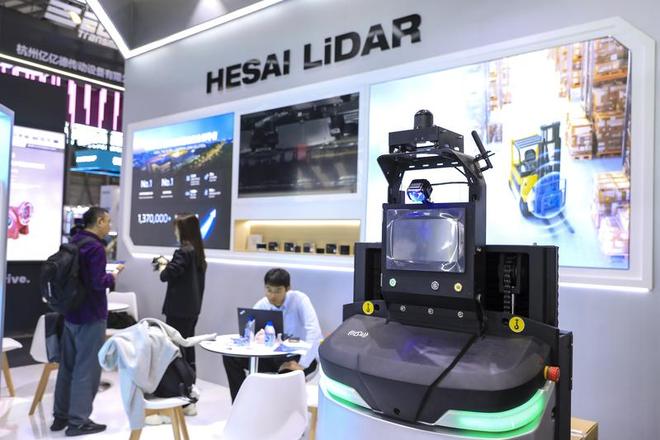
美国计划淘汰中国传感器
半导体行业观察· 2025-12-12 01:12
Core Viewpoint - A U.S. lawmaker has proposed phasing out Chinese-made sensors used in autonomous vehicles and critical infrastructure due to concerns over potential hacking risks during conflicts, which could disable systems rapidly [2][3]. Group 1: Legislative Proposal - The proposed legislation aims to gradually eliminate Chinese-made lidar sensors, which are essential for autonomous vehicles to perceive their environment in 3D [2]. - The bill will prohibit the purchase of new Chinese lidar sensors three years after its enactment, with exemptions for scientific and cybersecurity research [2]. - Existing equipment in critical infrastructure will have a five-year transition period before being phased out [2]. Group 2: Market Dynamics - Despite efforts from U.S. companies like Ouster and Aeva Technologies to capture market share, Chinese companies currently dominate the lidar market, holding 93% of the passenger vehicle market and 89% of the overall lidar market as of June [2]. - The U.S. Department of Defense has listed Hesai Group, the largest global lidar sensor manufacturer, as an entity of concern, indicating heightened scrutiny on Chinese technology in critical sectors [3]. Group 3: National Security Concerns - National security organizations have warned that Chinese lidar devices could pose hacking risks to the U.S. during conflicts, with the capability to disable large areas of sensors via satellites in seconds [3]. - Experts emphasize the need for the U.S. and its allies to lead in lidar innovation to prevent foreign adversaries from gaining control over critical technologies [3].

What AEVA's New Auto Contract Means for Its Growth Outlook
ZACKS· 2025-12-10 15:26
Core Insights - Aeva Technologies has secured a significant Tier-1 contract with a major European passenger car manufacturer, establishing its Atlas Ultra sensor as the standard LiDAR for multiple vehicle models globally, excluding China, and ensuring production through the mid-2030s [1][9] - The successful completion of the joint development phase with the automaker has reduced technical risks and increased the likelihood of securing additional contracts [2] - Aeva is preparing for increased production capacity at its Fabrinet facility to meet anticipated demand by 2026, indicating readiness for mass production [3][4] Company Performance - Aeva reported third-quarter 2025 revenues of $3.6 million, an operating loss of $27.2 million, and cash use of $33.6 million, with total available cash around $270 million, supported by a recent $100 million investment from Apollo [3] - The company is still in an early stage, facing challenges in scaling manufacturing and proving its technology's performance and reliability [5] Market Context - The LiDAR market features competitors like Ouster and Luminar Technologies, which offer advanced sensor technologies aimed at enhancing safety and efficiency across various industries [6][7] - Aeva's stock has seen significant appreciation, more than tripling in 2025, although it trades at a forward price-to-sales ratio of nearly 35, which is considerably higher than the industry average [8][10]


Is Ouster, Inc. (OUST) The Best Hardware Stock To Buy?
Yahoo Finance· 2025-12-10 11:47
Core Viewpoint - Ouster, Inc. (NASDAQ:OUST) is identified as a promising investment opportunity in the hardware sector, particularly benefiting from the growth of autonomous delivery robots and humanoids, supported by favorable government policies [1][2]. Group 1: Analyst Ratings and Price Targets - Cantor Fitzgerald analyst Andres Sheppard has a Buy rating on Ouster, with a price target raised to $33 from $30, reflecting optimism about the company's growth prospects [2]. - Oppenheimer has reaffirmed an 'Outperform' rating for Ouster, maintaining a price target of $39, indicating over 50% upside potential [3]. Group 2: Company Growth and Technology - Ouster is expected to achieve 30-50% revenue growth by 2026 as it rolls out its L4 technology, leveraging its sensor fusion capabilities which are considered underappreciated for customer retention [4]. - The company is recognized as a critical technology partner in the Physical AI solutions space, positioning itself as a leader in perception technology [4]. Group 3: Market Context and Government Support - The U.S. administration's approval of low-cost "tiny cars" manufacturing, including ICE and EV models priced between $8,000 and $13,000, is anticipated to boost the local robotics sector [2]. - An executive order is expected to accelerate the development of the robotics industry, further benefiting companies like Ouster [2].
7 Hidden Multibagger Stocks to Invest In
Yahoo Finance· 2025-12-07 15:56
Core Insights - The article identifies 7 hidden multibagger stocks that have shown significant returns and potential upside, emphasizing the importance of selecting stocks with strong fundamentals and growth prospects [1][5]. Group 1: Stock Selection Criteria - Stocks were selected based on a minimum return of 75% over the past year and a market capitalization of at least $1 billion [1]. - The shortlisted stocks were required to have at least 30% potential upside, leading to a ranking of the top 7 stocks [1]. Group 2: Market Outlook - The S&P 500 index is expected to show positive performance for the third consecutive year, with AI adoption potentially driving a productivity boom similar to the late 90s [3]. - Goldman Sachs anticipates that reducing tariff uncertainties could enhance economic security, leading to increased capital deployment in defense, energy, and infrastructure sectors [4]. Group 3: Individual Stock Highlights - **Praxis Precision Medicines, Inc. (NASDAQ:PRAX)**: Achieved a 264% price return over the past year with a potential upside of 33%. The company reported positive results from a key study on a treatment for severe epilepsy [6][8]. - **Solaris Resources Inc. (NYSEAMERICAN:SLSR)**: Recorded a 139% price return with a potential upside of 43.36%. The company is focused on copper and other minerals, with a significant project expected to produce 4.5 million tonnes of Copper Equivalent [10][11]. - **Ouster Inc. (NASDAQ:OUST)**: Experienced a 138.5% price return and has a potential upside of 55.37%. The company is noted for its strong client base and growth prospects in lidar sensor technology [14][15]. - **Xeris Biopharma Holdings, Inc. (NASDAQ:XERS)**: Achieved a 75% price return with a potential upside of 61.3%. The company is advancing a new formulation for hypothyroidism treatment [18][19]. - **Applied Digital Corporation (NASDAQ:APLD)**: Saw a 192.6% price return and has a potential upside of 62.36%. The company is investing in advanced cooling systems for data centers, positioning itself for growth in the AI sector [21][22]. - **IREN Limited (NASDAQ:IREN)**: Recorded a 190.5% price return with a potential upside of 91.23%. Despite recent funding challenges, the company has strong fundamentals supported by a significant AI contract with Microsoft [24][26]. - **UniQURE (NASDAQ:QURE)**: Achieved a 186% price return with a potential upside of 117.16%. The company is developing a gene therapy for Huntington's disease, although it faces regulatory challenges [28][29].