Red Hat

Search documents
Mavenir 与 Red Hat 合作,为电信运营商提供运营商级本地部署对话式 AI 及智能体 AI 服务保障
Globenewswire· 2026-02-18 20:06
Core Insights - Mavenir has announced a partnership with Red Hat to leverage AI technologies for providing conversational AI and intelligent agent services in the telecommunications sector [1][2] - The collaboration aims to transform the telecom industry by offering scalable, secure, resilient, and cost-optimized network operations through locally deployed generative AI products [1][2] Group 1: Partnership and Solutions - The partnership focuses on delivering AI solutions that enhance existing platform investments while providing additional security, resilience, and low-latency features critical for real-time network operations [1][2] - Mavenir's AI solutions are designed for higher cost efficiency and stronger security compared to hosted service-based AI solutions [1][2] Group 2: Technological Advancements - Mavenir and Red Hat are collaborating with Dell Technologies' Open Telecom Ecosystem Lab (OTEL) to utilize advanced AI infrastructure for fine-tuning large language models [3] - The use of Red Hat OpenShift AI allows service providers to optimize GPU resource efficiency, maintain control over security and governance requirements, and manage complex AI lifecycles more easily [3] Group 3: Industry Impact - The industry is evolving from merely providing connectivity to utilizing AI agents that take control based on communication content and intent [2] - Intelligent agent service assurance represents a significant evolution from traditional machine learning-based service assurance solutions, enabling adaptive and self-learning systems that can detect and correct issues before they impact customers [2] Group 4: Company Background - Mavenir is dedicated to developing telecom-first, cloud-native, AI-native software solutions for mobile operators, supporting over 300 operators in more than 120 countries [4] - The company combines deep telecom expertise with necessary cloud computing, IT knowledge, and data science skills to drive operators towards a tech company transformation and an AI-driven future [4]


上一次“软件要亡”论发生在10年前,后续如何了?
Hua Er Jie Jian Wen· 2026-02-15 07:39
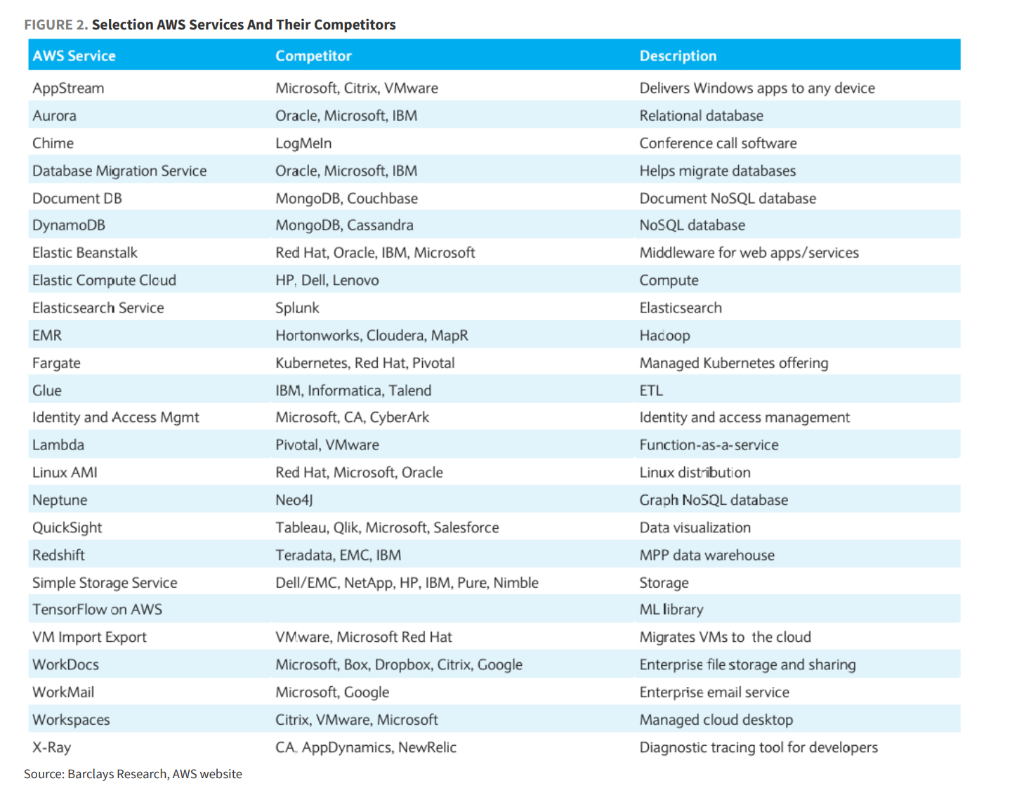
Core Viewpoint - Barclays believes that the current market panic regarding generative AI (GenAI) is based on a "worst-case scenario" assumption, predicting the extinction of traditional software companies, which mirrors the panic seen a decade ago with the rise of Amazon AWS [1][2] Historical Context - The current investor sentiment in the software sector is extremely negative, with a simplistic investment logic of buying AI newcomers and shorting traditional software [2] - This situation is reminiscent of the panic surrounding AWS's growth, where established software companies faced similar doomsday predictions, yet none went bankrupt due to AWS competition [4][5] Market Dynamics - Historical data shows that while AWS gained significant market share, it did not lead to the extinction of mature software companies; instead, these companies evolved and thrived [4][5] - The market's current indiscriminate sell-off of software stocks, with the IGV (software ETF) down approximately 24% year-to-date, is viewed as irrational [6] Mispricing Opportunities - Barclays identifies significant mispricing opportunities in the current market, particularly for companies with strong core record systems and specific domain moats that are being undervalued [1][6] - The panic selling creates an opportunity for investors to identify industry leaders that have been unfairly punished [7] Defensive Sectors - Two defensive sectors highlighted are: 1. Owners of record systems, such as Salesforce and SAP, which hold core enterprise data and are difficult to replace [9] 2. Vertical SaaS companies, like Veeva Systems and Tyler Technologies, which possess deep domain-specific data moats [9] Company Performance - Notable company performances include: - CyberArk's market cap surged from $885 million to $22.516 billion, a 2443% increase [8] - Microsoft and Google also saw significant market cap growth, with increases of 1048% and 871%, respectively [8] - Traditional companies like Teradata experienced a 73% decline, while others like Tableau and Splunk were acquired at high premiums [8]




算力为王:AI数据中心万亿赛道的产业链争霸与投资风暴
QYResearch· 2026-02-13 09:30
Core Insights - The article emphasizes the accelerated global construction of AI-driven data centers, highlighting significant investments from major tech companies like Meta and Mistral AI, which reflect the strategic importance of AI computing power deployment [2][3] - Data centers are not only foundational for AI applications but also serve as critical support for profit growth and technological competition across the industry [4] Market Size and Policy Environment by Region - North America: Projected market size of approximately $95-100 billion by 2026 and $300-350 billion by 2030, with a CAGR of ~28%. The region benefits from supportive AI innovation policies and strict data privacy regulations [6] - Europe: Expected market size of around $40-45 billion by 2026 and $120-150 billion by 2030, with a CAGR of ~25%. The region faces strict GDPR compliance and has a strong demand for localized data centers [6] - China: Anticipated market size of about $50-55 billion by 2026 and $160-200 billion by 2030, with a CAGR of ~27%. The government encourages AI and computing infrastructure development [6] - South Korea: Estimated market size of $5-6 billion by 2026 and $20-25 billion by 2030, with a CAGR of ~30%. The government promotes AI strategies and local semiconductor advantages [6] - Japan: Projected market size of $6-7 billion by 2026 and $18-22 billion by 2030, with a CAGR of ~23%. The region's stable demand comes from high-end manufacturing and finance sectors [6] - India: Expected market size of $3-4 billion by 2026 and $12-15 billion by 2030, with a CAGR of ~28-30%. The region shows rapid growth in cloud computing and AI applications [6] Key Industry Chain and Leading Companies - AI Chips/Accelerators: Key players include NVIDIA, AMD, Intel, and Google, focusing on high-performance AI training and inference [8] - Data Center Infrastructure: Major operators like Equinix and Digital Realty, along with self-built centers from Meta, AWS, and Microsoft, dominate the market [8] - Cloud Services/AI Platforms: AWS, Microsoft Azure, and Google Cloud are leading providers of AI services and solutions [8] - Storage/Memory: Companies like Samsung and SK Hynix are crucial for high-speed storage demands [9] - Network Equipment: Cisco and Arista Networks are essential for data center connectivity [9] - Energy and Cooling: Schneider Electric and Vertiv lead in providing reliable power and cooling solutions [9] - Data Center Software: VMware and HashiCorp/Red Hat offer critical management tools for data centers [9] Investment Opportunities - Upstream Chips: Investment in GPU/TPU/accelerators offers high margins and long-term contracts [10] - Data Center Operations: Focus on self-built or managed centers in high-demand regions like North America, China, and South Korea for stable rental income [10] - Cloud Service Platforms: High-growth subscription revenue opportunities in AI SaaS/IaaS [10] - Storage/Memory: Long-term supply agreements with major operators for HBM/SSD [10] - Network Equipment: Targeting AI-optimized and low-latency products for mid to long-term replacement [10] - Energy/Cooling: Building green data centers to leverage policy benefits [10] - Software/Operations: Providing intelligent operation and monitoring services for high profit margins [10] Conclusion and Strategic Recommendations - AI data centers are positioned as the core hub of the global tech industry over the next decade, with understanding technology trends and market opportunities being crucial for competitive advantage and long-term returns [12][14] - Regional market differences indicate that North America and China have large, stable markets, while South Korea and Southeast Asia show rapid growth [14] - Investment strategies should focus on leveraging these regional insights for optimal positioning in the evolving landscape [14]





Pure Storage Partner Program Evolution Reinforces Commitment to 100% Partner Go-To-Market Strategy
Prnewswire· 2026-02-04 12:00
Core Insights - Pure Storage has announced updates to its partner programs, focusing on creating a differentiated, solutions-led partner experience with deeper enablement and new program tiers [1][2] Partner Program Evolution - The updated partner program builds on previous foundational updates, emphasizing Pure's commitment to partner success and introducing the Ambassador tier to help partners integrate Pure into their solutions [2][3] - The program prioritizes verified technical expertise and solution specialization over volume-based participation, recognizing partners with deep knowledge of the Pure Storage platform [3][7] Focus Areas - The updates emphasize data-centric services, particularly in the Managed Services Provider (MSP) Partner program, and aim to enhance distributor roles to accelerate partner readiness [4][7] - The MSP Partner program will focus on services where data and storage are foundational, including private and sovereign cloud, Storage-as-a-Service, and backup and disaster recovery [7] New Recognition and Incentives - The introduction of the Ambassador tier rewards skilled partners who understand the Pure Storage platform and showcases expertise in key areas such as AI, cyber resilience, cloud, and application modernization [7] - The program now includes Solution Practice Designations to recognize partners with the skills to drive innovation in these areas [7] Industry Collaboration - Partners play a critical role in helping customers modernize their infrastructure and manage rising cyber risks, with Pure Storage's solutions-focused program creating opportunities for collaboration and integrated solutions [6][8] - The program aligns with industry trends, as customers increasingly seek complete, trusted solutions in AI, cloud, and cyber resilience [8]


IBM (NYSE:IBM) Maintains Outperform Rating by Wedbush Amidst Modest Growth Projections
Financial Modeling Prep· 2026-01-29 18:03
Core Viewpoint - IBM is positioned as a significant player in the technology and consulting sector, with a focus on cloud computing and artificial intelligence, despite facing challenges in its growth outlook [1][3][6] Group 1: Stock Performance and Analyst Ratings - Wedbush has maintained an "Outperform" rating for IBM and raised its price target from $325 to $340, indicating confidence in the company's potential for stock growth [2][6] - On the day of the announcement, IBM's stock price increased by 0.10%, or $0.30, with fluctuations between $291.26 and $295.90 [5] Group 2: Financial Performance and Growth Projections - IBM reported solid fourth-quarter results but projected only a 5% sales growth for 2026, raising concerns among investors [3][6] - The company recently completed an $11 billion acquisition of Confluent, which adds to the uncertainty regarding its growth trajectory, especially as growth from the previous acquisition, Red Hat, is slowing [3][6] Group 3: AI and Consulting Services - IBM has a strong GenAI order book valued at $12.5 billion, although most of this revenue is derived from consulting services, which only grew by 1% [4][6] - The demand for AI cloud services remains high, which could positively impact IBM's future performance [4]

IBM unveils Sovereign Core for digital sovereignty in AI environments
Yahoo Finance· 2026-01-16 09:52
Core Insights - IBM has launched IBM Sovereign Core, a software solution aimed at enterprises, government bodies, and service providers to manage AI workloads in secure environments, addressing the need for operational authority as regulatory requirements evolve [1][2] - The solution allows customers to build and oversee AI-ready environments under their jurisdiction, focusing on data control and system governance [2][5] Product Features - IBM Sovereign Core is based on Red Hat's open-source software, providing a customer-controlled operational model where authentication, encryption keys, and access management are maintained within jurisdictional boundaries [3] - The product generates operational data, system telemetry, and audit trails to support compliance requirements [3] - It enables local AI model deployment and operations, ensuring data does not need to be exported externally [4] Market Strategy - IBM is collaborating with IT service providers for the initial rollout in Europe, starting with Cegeka in Belgium and the Netherlands, and Computacenter in Germany, to provide local operational control for large-scale AI workloads [5][6] - A tech preview of IBM Sovereign Core is expected to be available from February, with full general availability anticipated by mid-2026 [6]
计算机行业深度报告:太空算力:苍穹之上的下一代计算范式
Soochow Securities· 2025-12-30 06:33
证券研究报告·行业深度报告·计算机 计算机行业深度报告 太空算力:苍穹之上的下一代计算范式 2025 年 12 月 30 日 增持(维持) [Table_Tag] [Table_Summary] 投资要点 执业证书:S0600521080005 021-60199781 wangzj@dwzq.com.cn 证券分析师 王世杰 执业证书:S0600523080004 wangshijie@dwzq.com.cn 行业走势 -14% -10% -6% -2% 2% 6% 10% 14% 18% 22% 26% 2024/12/30 2025/4/30 2025/8/29 2025/12/28 计算机 沪深300 相关研究 《梳理 SpaceX 的 A 股供应商》 2025-12-29 《商业航天 还有哪 些事件 值得期 待?》 2025-12-21 东吴证券研究所 1 / 15 请务必阅读正文之后的免责声明部分 证券分析师 王紫敬 ◼ 太空算力是构建于地球轨道上的下一代分布式计算范式。将数据中心的 核心硬件部署于太空,形成轨道级 AI 基础设施,实现数据在采集源头 完成处理与分析,从而将卫星从传统的"数据下行中 ...
Further and Behr Paint Company Win New Product of the Year Award for Collaboration on ChatHUE™
Globenewswire· 2025-12-16 14:00
Core Insights - Further has been awarded the New Product of the Year at the 2025 BIG Awards for Business for its generative AI tool ChatHUE™, developed in collaboration with Behr Paint Company [1][5][10] - ChatHUE™ is designed to assist consumers in selecting paint colors by utilizing Behr's proprietary color data and Google Cloud technology, providing data-driven recommendations [2][3][4] Company Overview - Further is a data, cloud, and AI company that focuses on transforming raw data into actionable business decisions, boasting a client retention rate of over 90% [7] - Behr Paint Company, established in 1947, is a major manufacturer of paints and related products in North America, known for its commitment to quality and innovation [8] Product Details - ChatHUE™ simplifies the color selection process by offering a digital conversational experience, helping consumers navigate choices based on personal preferences and market trends [3][4] - The tool integrates color science and expert style guides, making the selection process easier and more inspiring for consumers [3][4] Awards and Recognition - The BIG Awards for Business, founded in 2012, recognize companies and products that deliver transformative results across various industries, with winners selected through rigorous peer evaluation [5][10][11]


“最悲伤的结局”?IBM豪掷110亿收购Confluent:Kafka开源焦虑升级,Flink流计算成最大赢家
Xin Lang Cai Jing· 2025-12-10 00:27
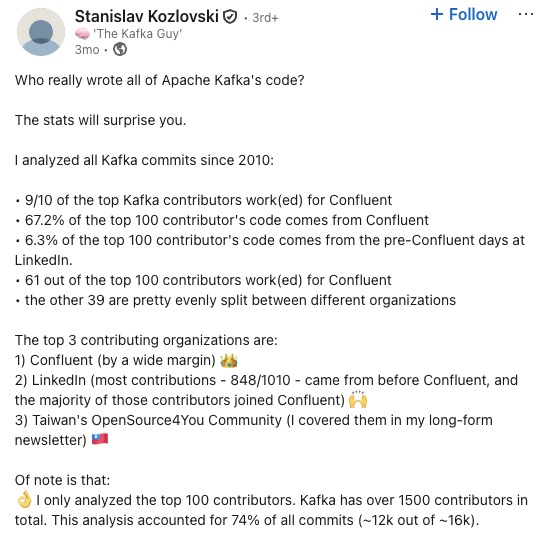
Core Insights - IBM has acquired Confluent for $11 billion in cash, marking a strategic shift away from the industry's focus on GPUs and large model training [1][2] - This acquisition is seen as a natural progression given the five-year strategic partnership between IBM and Confluent, with IBM promoting Confluent as part of its IBM Cloud Pak [1][2] - The acquisition price represents a 30% premium over Confluent's previous stock price, with funding sourced from IBM's cash reserves [1] Financial Overview - IBM's total expenditure on open-source software companies has now exceeded $50 billion, including previous acquisitions of Red Hat for $34 billion and HashiCorp for $6.4 billion [2] - Confluent has over 6,000 customers, providing IBM an opportunity to increase its product penetration among existing clients [2] Market Position and Risks - Confluent is a key player in the Kafka ecosystem, contributing significantly to its development, which raises concerns about the future of Kafka under IBM's ownership [3][5] - The acquisition may lead to cultural clashes between Confluent's fast-paced engineering culture and IBM's traditional corporate structure, potentially impacting innovation and talent retention [5][6] - There are fears that IBM may prioritize proprietary technology over open-source development, which could stifle the growth of the open-source Kafka version [5][6] Strategic Implications - The acquisition is viewed as a move to enhance IBM's capabilities in real-time data processing, with Confluent's technologies being integral to this strategy [8][11] - IBM aims to build a comprehensive data flow capability chain, integrating data ingestion (Kafka), data stream computation (Flink), and enterprise applications [11][12] - The acquisition aligns with IBM's broader strategy to address the challenges of enterprise AI by ensuring efficient internal data flow, moving beyond mere computational power [11][12]
速递|IBM拟110亿美元收购Confluent,继345亿美元拿下Red Hat后又一开源豪赌
Z Potentials· 2025-12-09 01:04
Core Viewpoint - IBM is in advanced negotiations to acquire data analytics company Confluent for approximately $11 billion, marking a significant move in its strategy to enhance its software, cloud, and AI capabilities [2][6]. Group 1: Company Overview - Confluent went public in 2021 and currently has a market capitalization of around $8 billion. The company's software is designed for real-time data analysis, making it valuable in applications such as ride-hailing and fraud detection [3]. - Confluent has been promoting its software's ability to provide real-time data for AI models, with OpenAI utilizing its software to analyze customer interactions with ChatGPT and other products [4]. Group 2: Market Dynamics - Confluent's sales growth has been slowing due to increased competition and customers becoming more adept at managing their cloud expenditures. The company has been exploring sale options since receiving acquisition interest two months ago [5]. - Managing the open-source Apache Kafka software, Confluent represents a strategic fit for IBM, which previously acquired Red Hat for $34.5 billion in 2019, the largest software deal in history, and last year acquired cloud management tool provider HashiCorp [5]. Group 3: Strategic Implications - If the acquisition of Confluent is finalized, it will be one of IBM's largest acquisitions in recent years, further solidifying its focus on software, cloud, and AI under CEO Arvind Krishna's leadership [6].