中国模式

Search documents
王文:“极致中国化”正在塑造中国的全球领导力
Xin Lang Cai Jing· 2026-02-21 05:57
海外的年轻人并非只是在模仿生活方式的怪癖。他们以微妙却可衡量的方式,表达了对当代中国社会逻 辑的好奇。这些仪式——健康生活方式、极简消费习惯、数字平台和创业雄心——如同一扇大门,引领 人们更广泛地迷恋上一些人眼中的另类发展模式。 在国际拥趸眼中,中国代表着包容性、基础设施建设能力以及以物质提升为目标的治国之道。因 此,"极致中国化"现象与其说是一种角色扮演,不如说是一种态度。它反映了西方青年群体情绪的转 变:他们对西方各国国内的政治极化感到失望,并渴望在海外寻求认同感。 数据也印证了这种文化趋势。调查显示,美国Z世代如今花费在网络上搜索中国相关内容的时间是老一 代人的两倍多,其中18至24岁年龄段的年轻人表现出最高的文化好奇心和认同感。 英国"2025年全球软实力指数"报告,将中国列为全球第二,并指出中国在国际年轻受访者中尤其具有强 大的影响力。2025年,中国短剧在海外累计下载量达12.1亿次,创造了23.8亿美元的收入。电子游戏 《黑神话:悟空》全球销售额突破10亿美元。源自中国的在线文学平台拥有3.5亿海外用户。 这些数字不仅仅标志着出口的成功,更表明全球文化格局正趋于多元化。中国本土内容——以数字技术 ...


埃及学者:研究“中国模式”正在全球南方高校蔚然成风
Xin Lang Cai Jing· 2026-01-26 12:48
Core Viewpoint - The article discusses the increasing trend among universities in the Global South to study the "Chinese model" as an alternative development model in political and social sciences [1][4]. Group 1: Educational Trends - Developing countries in the Global South are placing greater emphasis on political and social science courses to reflect new global realities [4]. - Countries are integrating concepts such as "global comprehensive cooperation," "common development," and the "Chinese model" into their educational curricula, particularly in Egypt, Arab nations, and various African countries [4]. - New courses such as "Chinese Foreign Policy," "Belt and Road Economics," and "World New Order" are being introduced, focusing on case studies from China and Belt and Road Initiative partner countries [4]. Group 2: Motivations for Curriculum Changes - The fundamental reason for these curriculum adjustments is the urgent desire of developing countries to reshape the global power structure [4]. - The rise of China as a major global economic power necessitates research into its development model, especially as countries reflect on the limitations of Western models, particularly in achieving sustainable and comprehensive development in the Global South [4]. - Developing countries aim to establish an independent development identity and formulate policies that align with their own developmental realities and visions [4]. Group 3: Ideological Perspectives - The adjustments in curricula are not intended to ideologically replicate the "Chinese model," but rather to propose an alternative vision for national economic and political development, moving away from traditional Western and American development paths [4]. - The new courses are designed to cultivate researchers, students, and scholars who can analyze issues from a non-Western perspective, breaking free from the narrow confines of American hegemonic ideas [4].
国际残奥委会主席:中国残疾人体育发展为世界提供“中国模式”范例
Xin Hua She· 2026-01-14 00:56
新华社布达佩斯1月13日电(记者周欣)国际残奥委会主席安德鲁·帕森斯13日表示,中国已成为全球残 奥运动和残疾人体育事业发展的重要引领者,其通过体育促进残疾人康复与社会融合的实践,为世界提 供了可借鉴的"中国模式"范例。 ...
中国市场中的二元经济结构
Sou Hu Cai Jing· 2025-12-26 06:18
Group 1 - The concept of a dual economic structure in China refers to a multi-faceted economic model that differs significantly from Western models, where state-owned enterprises (SOEs) and private enterprises operate under different rules within the same competitive field [2][4] - Scholars like Zhang Weiwei argue that the success of the Chinese economy is attributed to this unique model, although its long-term viability remains uncertain and will require practical testing [4] - The existence of unequal rules in a competitive environment undermines the fundamental principles of fairness and efficiency, leading to decreased productivity and making it difficult for weaker entities to thrive [5] Group 2 - Liu Shijun emphasizes that both state-owned and private enterprises should be treated equally in the same competitive field, as reflected in policies like the "Private Economy Promotion Law," although the reality of the system often contradicts this ideal [6] - The question of whether policies can eliminate the dual economic structure remains open, indicating ongoing debates about the effectiveness of reforms in achieving true equality between different types of enterprises [8]
过剩也可以被“计划”吗?
Sou Hu Cai Jing· 2025-12-19 16:53
从经济增长上说,效率是关键。 主流媒体说是需求不足;专家说是缺少内生动力。这些都是看得到的问题,我们完全可以列出一个长长的问题清单,但是,更值得思考的还是两位张教授争 论的 "中国模式":如果中国模式算得上是一个特立独行的模式,它是否具有可持续性? 中国经济的问题是什么? 什么是中国模式? 可以归结为行政权主导的市场经济,有人说是现代版的盐铁论,也有人说是国家资本主义,中国自己有一种不成文的表达叫 "举国经济"。其实,这都不足 以表达中国经济到底是个什么模式,这些并不太重要;重要的是生产过剩是资本主义的专利,为什么会在中国发生。 这是因为我们的经济存在两个方面的平衡:一是投资规模与效率的平衡,二是分配的平衡。 中国主要是通过投资拉动经济,但拉动了规模,并不等于提高了收益;也就是说,办公室精英可以计划供应端,通过投资与扩大财政赤字,稳住 GDP 增 长,但决定不了效益。如果是低效投资,无法带动起收入,生产与消费就会失去平衡。 当然,市场经济本身也存在社会大分配的平衡。 如果财政支出中,行政管理性开支过高,超过国际平均水平,那么用于民生的二次分配就会显得力不从心,特别是社会保障支出在GDP中的占比过低,会降 低有 ...

世界卫生组织报告赞誉中国结核病预防性治疗实践
Ren Min Wang· 2025-12-17 03:09
在遵循世卫组织标准的基础上,我国开展本土化创新:采用结核菌素皮肤试验、结核抗原皮肤试验 和γ干扰素释放试验进行感染检测;优化治疗方案,将异烟肼+利福喷丁方案调整为每周两次;研发国 产免疫制剂;探索更短疗程方案,推动治疗技术持续进步。 构建了"疾控机构-定点医疗机构-基层医疗卫生机构"三级协同网络,实现筛查、诊断、治疗、随访 全流程服务。同时建立标准化监测体系,跟踪关键指标,为防治工作提供科学依据。 我国通过系统推进结核病预防性治疗,为全球终结结核病目标提供了行之有效的"中国模式",未来 将继续为终结结核流行贡献中国力量。 人民网北京12月17日电 (记者乔业琼)据中疾控微信公众号消息,我国结核病预防性治疗工作成 效显著,获得世界卫生组织的赞誉,为全球提供了可借鉴的"中国模式"。 2021年以来,我国构建起完善的预防性治疗网络。预防性治疗人数从2021年22778人增至2024年 87034人,覆盖家庭密切接触者、学生、HIV感染者等重点人群。 我国先后发布多项技术指南,并在《全国结核病防治规划(2024—2030年)》中设定明确目标: 2025年密切接触者预防性治疗覆盖率达60%,2030年提升至80%。 ...
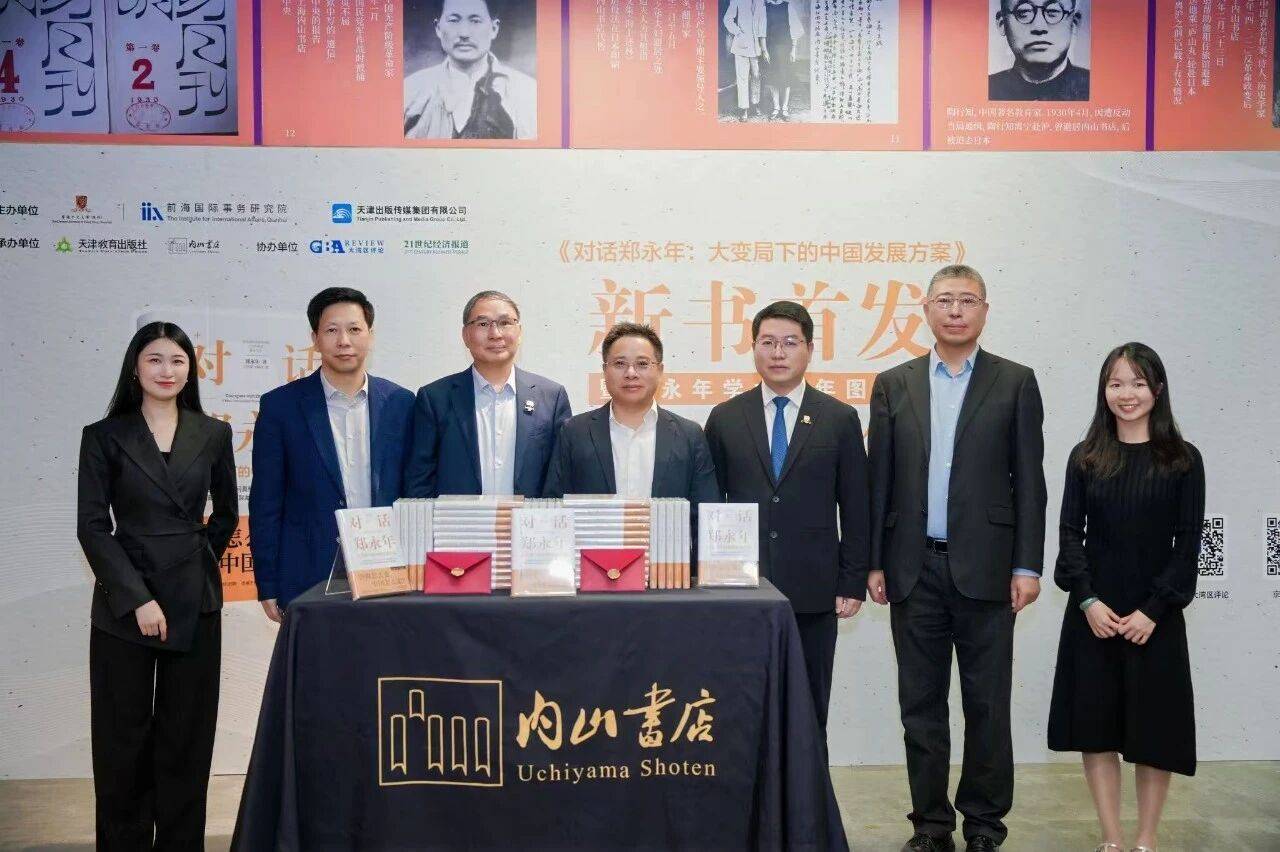
郑永年新书《对话郑永年:大变局下的中国发展方案》在深首发
Sou Hu Cai Jing· 2025-12-05 11:56
Core Insights - The book "Dialogue with Zheng Yongnian: China's Development Plan under Great Changes" offers deep insights into the complexities of international affairs and China's development strategy [3][5] - Zheng Yongnian, a prominent political economist, emphasizes the importance of understanding global dynamics and China's position within it, providing a methodological approach to gaining knowledge in uncertain times [3][5] Group 1 - The book is not merely a collection of current affairs commentary but a profound dialogue addressing global hotspots for 2024-2025 [3] - Zheng Yongnian's academic career aligns with China's rise and the restructuring of global order, showcasing his contributions to political, economic, and social discourse [3][5] - The launch event featured a dialogue between Zheng Yongnian and media representatives, highlighting the practical application of knowledge and its role in interpreting and leading through contemporary challenges [5] Group 2 - The event was attended by notable figures, including the president of Hong Kong University (Shenzhen), who underscored the importance of judgment in leadership and academia during turbulent times [7] - An accompanying exhibition showcased Zheng Yongnian's academic evolution over three decades, illustrating his insights on national institutional transformation and the "China model" [7]
打造观察大变局中国叙事样本 《这就是中国》300期研讨会在上海举行
Jie Fang Ri Bao· 2025-11-30 02:25
Core Viewpoint - The seminar on "The Power of Chinese Discourse" marks the 300th episode of the program "This is China," which has been exploring China's model, path, and system for nearly seven years, aiming to construct a Chinese narrative and promote the "Four Confidences" to a global audience [1][2]. Group 1 - The program has focused on the "unprecedented changes in a century," successfully predicting shifts in international dynamics and geopolitical developments [2]. - It employs a historical perspective to analyze current global events, revealing Western cognitive warfare tactics and deconstructing Western narratives [2]. - The program addresses the process of Chinese-style modernization and global governance issues, providing Chinese answers to contemporary global questions [2]. Group 2 - The program plans to innovate its discourse by inviting more participants into dialogues and showcasing China's modernization efforts in various locations [3]. - A special episode was recorded on the Guizhou Huajiang Grand Canyon Bridge, highlighting major national projects and the grandeur of Chinese-style modernization [3]. - Future plans include expanding the program's international reach and enhancing its presence in the global discourse arena, allowing more audiences to understand both China and the world [3].
两年内将推14款新车 奥迪CEO高德诺:中国市场仍是集团未来投资重点
Mei Ri Jing Ji Xin Wen· 2025-11-07 07:53
Core Insights - Audi plans to launch 14 new models in the Chinese market by 2027, responding to consumer demand with an unprecedented speed in product updates [1] - The company is undergoing a strategic transformation, as indicated by its Q3 financial results, which show total revenue of approximately €48.4 billion, a 4.6% year-on-year increase, and a cumulative sales volume of about 1.176 million units, down 4.8% year-on-year [3] - Audi's dual-brand strategy is being implemented exclusively in China, with plans for further product expansion under both the Audi and AUDI brands [5] Financial Performance - For the first three quarters of the year, Audi reported total revenue of approximately €48.4 billion, with an operating profit of around €1.6 billion and net cash flow reaching €2.1 billion [3] - The decline in cumulative sales volume by 4.8% is attributed to the transition period as new models are introduced and the existing product cycle phases out [3] Product Strategy - Audi showcased its dual-brand lineup at the China International Import Expo, including the Audi 100 Coupé S, Audi A6L e-tron, and the AUDI E5 Sportback, which is based on a smart digital platform developed in collaboration with SAIC Motor [4] - The AUDI E5 Sportback is expected to attract a new customer base without replacing existing classic models, thereby expanding Audi's product matrix [4] Market Positioning - Audi's dual-brand strategy, initiated two and a half years ago, aims to enhance its product offerings specifically in the Chinese market, with more models to be announced in the coming weeks [5] - The company emphasizes the importance of local partnerships in China, which include collaborations with Huawei, Momenta, and CATL, to enhance product development and market responsiveness [7] Competitive Landscape - The luxury car market in China is experiencing significant changes, with a 10.9% year-on-year decline in sales in the luxury segment, totaling approximately 1.783 million units in the first three quarters [9] - Despite the competitive environment, Audi remains committed to increasing its investment in China, viewing it as a core market that drives product transformation and innovation [9]

那个被外资血洗的中国娃娃,藏着一场不容忽视的惊天内幕
Sou Hu Cai Jing· 2025-11-06 16:27
Core Viewpoint - The article discusses the significant decline in the stock price of Pop Mart, highlighting a clash between Eastern and Western perceptions of consumer culture and investment strategies, suggesting that foreign investors fail to understand the unique emotional connections that Chinese consumers have with products like Labubu [1][3][4]. Group 1: Market Dynamics - Pop Mart's stock price drop is perceived as a typical market fluctuation, but it represents a deeper cultural conflict and a challenge to traditional investment narratives [1]. - The article draws parallels between Pop Mart's situation and the historical example of Beanie Babies, indicating that Western investors view Pop Mart as another fleeting trend rather than a sustainable business model [1][3]. - The emotional economy surrounding products like Labubu is rooted in cultural nuances that Western investors struggle to grasp, leading to a misinterpretation of the brand's value [4][6]. Group 2: Cultural Perspectives - The entrenched biases of Western capital markets stem from a "narrative hegemony" that dictates what constitutes a successful intellectual property (IP), often overlooking the unique emotional connections in Eastern cultures [3][4]. - Pop Mart's business model, which integrates IP incubation, design, supply chain management, and direct retail, contrasts sharply with the licensing-dependent models of Western IP giants, showcasing a new commercial paradigm [4][6]. - The willingness of domestic investors to buy into Pop Mart despite market pressures reflects a deeper understanding of local consumer behavior and the emotional value of products in modern society [6][7]. Group 3: Future Implications - The ongoing short-selling battle transcends mere stock price fluctuations, evolving into a struggle for defining consumer narratives and market authority [6]. - The challenges faced by Pop Mart are indicative of the broader journey of Chinese innovative companies as they seek to ascend the value chain and redefine market standards [6][7]. - The article posits that the rise of new business models in China, such as those exemplified by Pop Mart, poses a threat to established Western paradigms, leading to defensive reactions from traditional investors [7][9].