
极致中国化

Search documents
印媒:美国年轻人“极致中国化”的背后
Xin Lang Cai Jing· 2026-02-28 03:44
Core Insights - The phenomenon of "extreme Sinicization" among young Americans reflects a growing interest in Chinese aesthetics, lifestyles, and daily habits, contrasting with their views on American society [1][2] - This cultural shift is not driven by official propaganda but rather by organic trends on social media platforms, showcasing China as a futuristic and efficient country [1] - The increasing visibility of China globally, through technology, fashion, and entertainment, has altered American perceptions, moving beyond stereotypes of cheap products and geopolitical narratives [2] Group 1 - The "extreme Sinicization" trend indicates a shift in American youth's admiration for China, influenced by their dissatisfaction with domestic issues such as political polarization and economic anxiety [1] - Young Americans are increasingly exposed to Chinese culture through social media, which presents a stark contrast to the challenges faced in the U.S., such as infrastructure decay and high living costs [1] - The trend is characterized by a cultural openness driven by generational shifts, algorithm-driven media, and a sense of self-doubt within American society [2] Group 2 - The rise of Chinese platforms, games, and consumer products has made it difficult for people worldwide to ignore China's influence, leading to a more nuanced understanding of Chinese products among Americans [2] - Online interactions between American and Chinese users are bypassing traditional media filters, fostering a more direct cultural exchange [2] - The "extreme Sinicization" trend is not a result of deliberate Chinese diplomatic efforts but rather a spontaneous cultural phenomenon shaped by various social factors [2]
“极致中国化”就是叛国?英媒都看不下去了
Xin Lang Cai Jing· 2026-02-26 14:30
Core Viewpoint - The article discusses the phenomenon of "Chinamaxxing," where young people in the West express admiration for Chinese culture, which is being mischaracterized by some Western entities as a form of betrayal or disloyalty to their own countries [1][5]. Group 1: Cultural Exchange - "Chinamaxxing" is derived from the popular internet suffix "maxxing," indicating an extreme pursuit of something, and involves TikTok users adopting various Chinese customs and lifestyles [2]. - Participants in this trend view it as a light-hearted cultural exchange, with many feeling a sense of pride as their heritage is embraced by a broader audience [2]. Group 2: Western Reactions - Some Western media outlets, such as the New York Post and Fox News, have framed "Chinamaxxing" as a negative trend, suggesting that it undermines American values and promotes a pro-China sentiment among youth [5]. - The New York Times has expressed skepticism about China's cultural influence, focusing on the lack of globally successful Chinese films, indicating a reluctance to acknowledge China's rising soft power [5]. Group 3: Youth Discontent - The article highlights that both American and British youth are experiencing significant socio-economic challenges, such as housing crises and rising education debt, which contribute to their disillusionment with their own cultures [6][8]. - The author argues that rather than labeling young people as unpatriotic, there should be a focus on addressing their real concerns and providing them with opportunities for a better future [8]. Group 4: Broader Implications - The trend of "Chinamaxxing" may fade over time, but the underlying factors driving it, such as China's manufacturing dominance and cultural appeal, are likely to persist [9]. - The article suggests that this cultural trend could serve as an unexpected "digital bridge" between the U.S. and China amid ongoing geopolitical tensions [9].


美媒:普通美国人拥抱“像中国人一样生活”
Xin Lang Cai Jing· 2026-02-25 23:03
Group 1 - The article discusses the growing trend of non-Chinese individuals in the West adopting Chinese lifestyle habits, referred to as "extreme Sinicization" [1][2] - Many individuals are influenced by social media, leading them to incorporate traditional Chinese practices such as drinking warm water, consuming herbal teas, and practicing traditional Chinese medicine [1][2] - The phenomenon is not politically motivated; rather, it stems from a genuine interest in health and wellness associated with Chinese traditions [3] Group 2 - The rise of Chinese cultural influence is highlighted, particularly through platforms like TikTok and Xiaohongshu, where users exchange recipes and daily life experiences [2] - Influencers and ordinary people in the West are increasingly adopting Chinese wellness practices, with some reporting health benefits from these changes [2][3] - The trend reflects a broader cultural shift, as individuals express their experiences of "being very Chinese" during certain periods of their lives [2]
王文:“极致中国化”正在塑造中国的全球领导力
Xin Lang Cai Jing· 2026-02-21 05:57
Core Insights - The rise of "Chinamaxxing" reflects a significant cultural shift among Western Gen Z users who are increasingly curious about and adopting aspects of Chinese culture, indicating a reevaluation of power and prosperity [1][2][11] Group 1: Cultural Trends - The hashtags becomingchinese, iwannabechinese, and veryChinese have garnered over 4 billion views since 2025, showcasing a growing interest in Chinese lifestyle and values among young people [1] - American Gen Z spends more than twice the time online searching for Chinese-related content compared to older generations, with the 18-24 age group showing the highest cultural curiosity [4] Group 2: Global Influence - The 2025 Global Soft Power Index ranks China as the second globally, highlighting its strong influence among international youth [5] - Chinese short dramas achieved 1.21 billion downloads overseas, generating $2.38 billion in revenue, while the video game "Black Myth: Wukong" surpassed $1 billion in global sales [5] - China's online literature platforms have 350 million overseas users, indicating a shift towards a more diverse global cultural landscape [5] Group 3: Tourism and Experience - In 2025, China welcomed 82.035 million foreign tourists, a 26.4% increase year-on-year, with a fourfold increase in flight bookings during the 2026 Spring Festival [6] - The expansion of visa-free policies to 48 countries has transformed online curiosity into real-life experiences, influencing perceptions of China [6] Group 4: Development Model - China's Belt and Road Initiative has created a vast network of infrastructure and trade agreements, accounting for approximately 45% of China's total foreign trade [7] - Over 1 trillion USD has been invested, creating over 1 million local jobs, and China's poverty alleviation efforts have lifted 770 million people out of poverty, representing over 70% of global poverty reduction in recent decades [7][10] Group 5: Perception and Soft Power - Over 80% of the global public recognizes China's increasing comprehensive national power, contrasting with Western narratives that often depict China negatively [8] - China's global appeal is attributed to its unique vision of globalization based on mutual benefit rather than dominance, as reflected in its diplomatic efforts and development strategies [7][10] Group 6: Future Implications - The "Chinamaxxing" phenomenon signifies a generational identity shift and a questioning of existing prestige hierarchies, suggesting a potential reconfiguration of global leadership dynamics [11][12] - The competition for global leadership in the 21st century may be defined by the ability to deliver dignity and prosperity, rather than military might or ideological dominance [12]
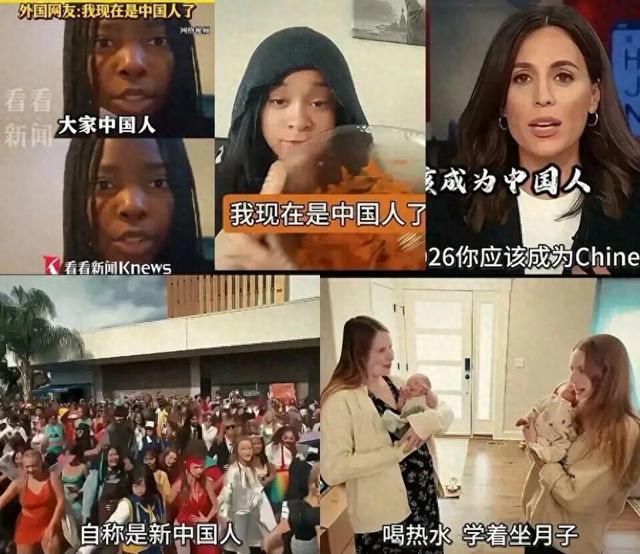
“酷中国”现象走红,美媒破大防:中国竟在西方赢得人心
Xin Lang Cai Jing· 2026-02-18 12:08
Core Viewpoint - The article discusses a surprising shift in perception towards China among Western youth, highlighting a trend of "Chinamaxxing" where young people are increasingly embracing Chinese culture and lifestyle [1][3]. Group 1: Cultural Influence - The phenomenon of "Chinamaxxing" is gaining popularity, particularly among American youth, who are adopting Chinese practices such as drinking hot water and eating congee [1][3]. - Influential figures, including American social media personalities and NBA stars, have praised Chinese culture and infrastructure, contributing to a more favorable image of China [3][4]. - The trend indicates a potential shift in cultural dynamics, as young people seek alternatives to traditional Western influences [7][8]. Group 2: Perception of China - The New York Times notes that while China has made significant advancements in various sectors, its ability to win hearts in the West has been limited until recently [3][4]. - Despite ongoing geopolitical tensions, there is a growing trend among young people to appreciate Chinese culture, suggesting a detachment from political narratives [7][8]. - A Carnegie Endowment survey reveals that most young Americans are not overly concerned about China's rising global influence, indicating a possible shift in public sentiment [5][8]. Group 3: Economic and Infrastructure Factors - China's modern infrastructure, such as its high-speed rail system, is seen as more appealing compared to the U.S., enhancing its attractiveness to foreign visitors [3][4]. - The simplification of travel procedures for foreign tourists has led to positive experiences, further improving China's image [3][4]. - The article emphasizes that China's manufacturing and digital infrastructure advancements are influencing global standards and perceptions, regardless of individual awareness [8].
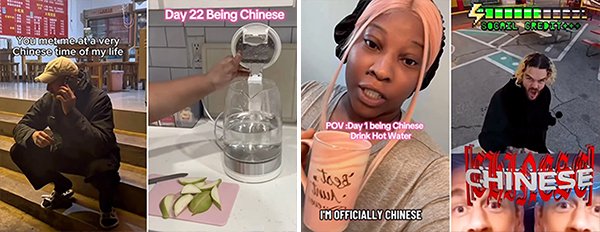
“中国竟在西方赢得人心”,美媒破大防
Guan Cha Zhe Wang· 2026-02-18 12:07
Group 1 - The article discusses a shift in perception towards China, particularly among Western youth, highlighting a trend called "Chinamaxxing" where young people adopt Chinese cultural practices [1][3][4] - The New York Times notes that American influencers and celebrities are increasingly praising Chinese infrastructure and culture, indicating a growing interest in China [3][4] - The article mentions that recent simplifications in travel procedures for foreign visitors to China have led to positive experiences, further enhancing China's image [4][5] Group 2 - The article points out that despite ongoing geopolitical tensions, there is a trend among young people to romanticize Chinese culture, suggesting a detachment from political conflicts [7][8] - A Carnegie Endowment survey indicates that most Americans, especially younger demographics, are not overly concerned about China's rising global influence, questioning the willingness to maintain U.S. dominance [5][8] - The article emphasizes that the rise of China's soft power is not solely dependent on Hollywood-level productions, as China's advancements in manufacturing, supply chains, and digital infrastructure contribute to its cultural influence [7][8][9]
海外社交媒体出现“极致中国化”热潮,网民纷纷争当“新晋中国人”
Xin Lang Cai Jing· 2026-02-15 05:20
Core Viewpoint - The rise of "Chinamaxxing" reflects a growing trend among Western youth to embrace Chinese culture and lifestyle, driven by disillusionment with their own societal conditions and a fascination with China's rapid development [1][2][10]. Group 1: Cultural Trends - "Chinamaxxing" has gained popularity on platforms like TikTok, where users share experiences and practices associated with Chinese culture, such as traditional health methods and lifestyle choices [1][5]. - The trend signifies a shift in perception, where previously dismissed Chinese cultural elements are now celebrated and adopted by Western audiences [5][12]. - Young people are increasingly purchasing Chinese-inspired products and engaging with Chinese media, indicating a broader cultural exchange [2][8]. Group 2: Societal Context - The emergence of "Chinamaxxing" coincides with a perceived decline in the American Dream, as many young Americans face stagnant economic prospects and societal challenges [10][11]. - Observers note that this trend may represent a search for new cultural identities and alternatives to Western norms, as young people look to China as a model of progress [12][14]. - The trend is seen as a response to geopolitical tensions, with some young people seeking to distance themselves from the negative narratives surrounding China [14][15]. Group 3: Media Response - Western media, including the BBC, have acknowledged the trend while expressing skepticism about its implications, often framing it within a narrative of cultural appropriation or misunderstanding [2][6][14]. - Despite the media's critical stance, the popularity of "Chinamaxxing" suggests a significant shift in cultural dynamics, with young people increasingly drawn to Chinese culture [5][12]. - The trend has sparked discussions about the evolving global landscape, where cultural influence is no longer solely dominated by Western ideals [14][15].

“Ni hao,我们现在都是中国人了”
Guan Cha Zhe Wang· 2026-02-15 04:39
Core Viewpoint - The rise of "Chinamaxxing" reflects a growing trend among Western youth to embrace Chinese culture and practices, driven by disillusionment with their own societal conditions and a fascination with China's rapid development [1][2][3]. Group 1: Cultural Trends - "Chinamaxxing" has gained popularity on platforms like TikTok, where users share videos about adopting Chinese lifestyle habits, indicating a shift in cultural perception [1][10]. - The trend is characterized by a blend of traditional Chinese practices, such as health remedies and cultural attire, which were previously viewed as outdated but are now celebrated [2][3][6]. - Influencers like Sherry Zhu are pivotal in promoting this trend, encouraging followers to embrace Chinese culture and practices [3][6]. Group 2: Global Perception of China - The increasing interest in Chinese culture coincides with a decline in the perception of the "American Dream," as many young Americans feel stagnant while observing China's rapid urban and technological advancements [8][9]. - The trend signifies a potential shift in global cultural dynamics, where younger generations are looking beyond traditional Western influences for inspiration [12][13]. - Despite ongoing geopolitical tensions, the trend suggests a growing appreciation for Chinese culture among Western youth, indicating a possible cultural rapprochement [12][13]. Group 3: Economic and Social Implications - The popularity of Chinese brands and cultural products, such as Laobubu dolls and Chinese tea drinks, highlights the expanding influence of Chinese soft power globally [2][4]. - The trend may also reflect a broader acceptance of Chinese standards and infrastructure, as Western societies increasingly interact with Chinese innovations [2][4]. - The phenomenon of "Chinamaxxing" could lead to a re-evaluation of cultural and economic relationships between China and the West, as younger generations seek new cultural narratives [12][13].

爆梗升级!西方Z世代不满足于“成为中国人”,开始卷“极致中国化”
Xin Lang Cai Jing· 2026-02-10 13:51
Core Viewpoint - The emergence of the term "Chinamaxxing" reflects a growing trend among foreigners, particularly younger generations, to embrace and imitate Chinese cultural practices, as seen through social media platforms like TikTok and Xiaohongshu [1][3]. Group 1: Cultural Trends - The term "Chinamaxxing" combines "China" and "maxxing," representing the extreme adoption of Chinese lifestyle by foreigners [1]. - A viral TikTok video by American-Chinese comedian Ouyang Wancheng showcases traditional Chinese attire and music, garnering over 849,000 views, indicating a significant interest in Chinese culture [1]. - Non-Asian creators are increasingly producing content that explores Chinese dietary habits and traditional medicine, highlighting a broader cultural engagement [3]. Group 2: Cross-Cultural Interaction - The rise of cross-cultural interactions on platforms like Xiaohongshu has facilitated a bilingual space for cultural dialogue between Western and Chinese youth, enhancing mutual understanding [3]. - A Pew Research Center study indicates that individuals under 34 in 16 out of 17 surveyed countries have a more favorable view of China compared to those over 50, suggesting a generational shift in perceptions [3]. - Many young Americans are developing a fondness for Chinese technology, brands, and cities, leading to increased consumption of Chinese-made products [3]. Group 3: Positive Cultural Exchange - The popularity of videos showcasing Chinese lifestyles on social media platforms in the U.S. reflects a pride in adopting Chinese daily practices, with users competing to showcase their "Chinese" lives [3]. - The Chinese ambassador to the U.S. emphasizes that cultural exchange should be viewed as a collaborative opportunity rather than a competitive one, promoting mutual growth [3]. - Understanding and accepting Chinese culture, rather than fearing it, represents a positive development in cross-cultural relations [4].

“极致中国化”爆火,西方Z世代在追求什么?
Huan Qiu Shi Bao· 2026-02-10 07:30
Core Viewpoint - The term "Chinamaxxing" has gained popularity on overseas social media, particularly among Western Gen Z, reflecting a growing interest in Chinese culture and lifestyle, which contrasts with a perceived decline in American identity [1][2] Group 1: Cultural Trends - The emergence of "Chinamaxxing" follows previous trends like "very Chinese" and "Becoming Chinese," indicating a shift in cultural fascination towards China among young people in the West [1] - Western media, including conservative outlets, express confusion and concern over this trend, attributing it to a desire among Gen Z to distance themselves from American identity [1][2] Group 2: Underlying Factors - The popularity of Chinese cultural elements is supported by four key factors: high safety perception among Chinese residents, impressive infrastructure like high-speed rail, convenience in daily life due to technological innovations, and effective governance [2] - The understanding of China is evolving as younger generations in the West engage with Chinese culture in a more authentic and relatable manner, breaking down previous ideological barriers [3] Group 3: Cultural Exchange - The blending of Chinese and Western cultural elements is evident, with many overseas influencers incorporating their own cultural aspects into Chinese lifestyles, creating a humorous and experimental cross-cultural dialogue [4] - The increasing interest in Chinese culture among Gen Z signifies a broader acceptance and appreciation of diverse cultural expressions, highlighting the vitality of Chinese culture in the global landscape [4]