中美贸易关税调整

Search documents
中方将保留采取一切必要措施的权利
Xin Lang Cai Jing· 2026-02-24 22:22
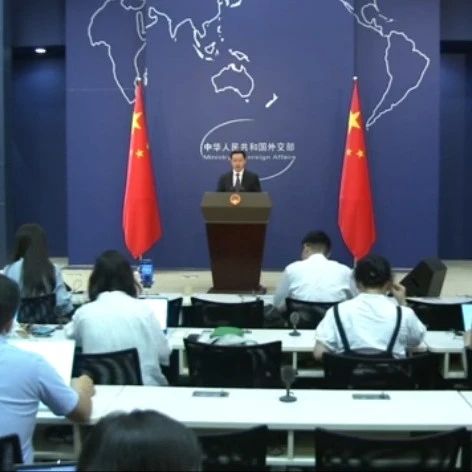
发言人说,我们注意到有关情况。2025年2月初和4月初,美方依据《国际紧急经济权力法》,先 后对中国商品加征了10%所谓芬太尼关税和34%对等关税,其中24%对等关税已暂停实施,对华实 际加征关税水平为20%。根据美最高法院关税诉讼案裁决和美国政府相关行政令、公告等,美方 已停止征收上述关税,但同时又依据122条款加征了10%的进口附加费。中方也注意到,美方在多 个场合表示,将利用301、232等调查征收关税。中方正密切关注并将全面评估美方相关举措,后 续将视情适时决定调整针对美方原芬太尼关税和对等关税的反制措施。中方将保留采取一切必要 措施的权利,坚决捍卫自身合法权益。 据新华社北京2月24日电(记者谢希瑶 黄韬铭)商务部新闻发言人24日就美近期关税调整举措答 记者问时表示,中方正密切关注并将全面评估美方相关举措,后续将视情适时决定调整针对美方 原芬太尼关税和对等关税的反制措施。中方将保留采取一切必要措施的权利,坚决捍卫自身合法 权益。中方愿与美方在将于近期举行的第6轮中美经贸磋商中开展坦诚磋商。 有记者问:美东时间2026年2月24日凌晨,美国海关已根据美方相关公告,停止征收《国际紧急经 济权力法》项下所 ...
前5个月进出口延续增长!5月出口增6.3%
券商中国· 2025-06-09 08:41
Core Viewpoint - China's goods trade maintained resilience amid external pressures, with a total import and export value of 17.94 trillion yuan in the first five months of the year, reflecting a year-on-year growth of 2.5% [1][2]. Trade Performance - Exports reached 10.67 trillion yuan, growing by 7.2%, while imports totaled 7.27 trillion yuan, declining by 3.8% [1]. - In May, despite having two fewer working days compared to the previous year, imports and exports grew by 2.7% and 6.3% year-on-year, respectively [2]. Trade Partners - ASEAN remained China's largest trading partner, with a trade value of 3.02 trillion yuan, up 9.1%, accounting for 16.8% of total foreign trade [4]. - Trade with the EU also increased, with a total of 2.3 trillion yuan, a growth of 2.9% in the first five months, and a notable 9.39% increase in May [4]. US-China Trade Relations - The recent US-China trade talks led to a commitment from the US to cancel 91% of tariffs on Chinese goods, while China will suspend or cancel corresponding counter-tariffs [4]. - In May, trade with the US totaled $285.51 billion, with a month-on-month decline of 12.67%, but the decline was less severe than in April [5]. Trade with Other Regions - Trade with Africa showed significant growth, reaching 963.21 billion yuan, a year-on-year increase of 12.4%, with exports growing by 20.2% [6]. - Trade with countries involved in the Belt and Road Initiative totaled 9.24 trillion yuan, growing by 4.2% [7]. Future Outlook - Exports of mechanical and electrical products reached 6.4 trillion yuan, growing by 9.3%, while automotive exports increased by 16.8% [10]. - June is expected to see continued growth in exports, driven by a "rush to export" to the US and efforts to explore other overseas markets [10]. - The macroeconomic policy is anticipated to strengthen, with potential financial support for struggling foreign trade enterprises [11].


集装箱运输预订量飙升277%,一箱难求再现,对美出口预计六七月迎来高峰
Hua Xia Shi Bao· 2025-05-16 12:34
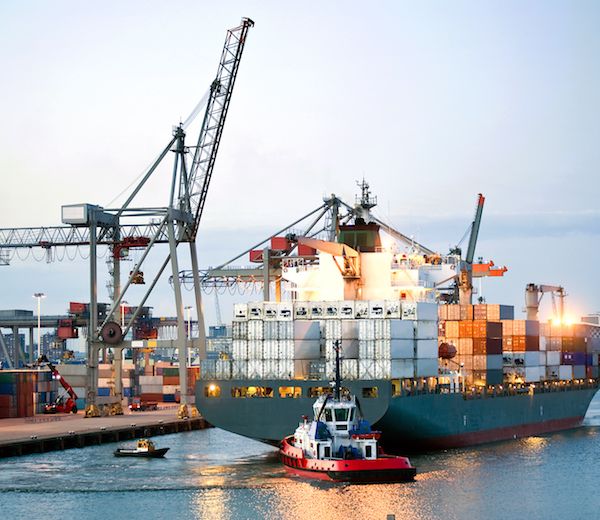
Core Viewpoint - The recent tariff changes have led to a surge in shipping demand from China to the U.S., with container bookings increasing by 277% following the tariff reductions, indicating a significant uptick in trade activity between the two countries [2][3]. Shipping Demand and Pricing - The average booking volume for standard containers rose from 5,709 to 21,530 within a week, reflecting heightened shipping activity [2]. - Despite the increase in bookings, the actual shipping volume in May has remained stable, with only slight variations in the number of container ships departing for the U.S. [2]. - Shipping prices have surged, with major shipping companies raising rates for 40-foot containers to between $3,500 and $6,100 for routes to the U.S. West Coast [5][6]. Impact on Exporters - Many exporters are experiencing a backlog of orders due to previous tariff uncertainties, leading to a concentrated effort to ship goods to U.S. clients [4][5]. - The production cycle for goods typically takes about a month, suggesting that shipping volumes will continue to rise in the coming weeks as orders are fulfilled [3]. Market Dynamics - The Baltic Dry Index has seen a notable increase, indicating a broader trend of rising shipping costs across various routes [6]. - The current shipping price increases are seen as just the beginning, with further hikes expected in June due to seasonal demand [6]. - The shipping industry is facing a potential capacity crunch, as many shipping companies have reduced their fleet sizes despite an increase in demand [8]. Trade Relations - The U.S. remains China's largest export destination, and despite ongoing trade tensions, the bilateral trade volume is projected to reach $688.28 billion in 2024 [9][10]. - The dynamics of U.S.-China trade have shifted since 2018, with a reduced dependency on the U.S. market for Chinese exports, although recent trends indicate a resurgence in export activity [10].
航运衍生品数据日报-20250515
Guo Mao Qi Huo· 2025-05-15 13:58
Group 1: Report Industry Investment Rating - There is no information about the report industry investment rating in the provided content. Group 2: Core Viewpoints of the Report - This week, the China-US tariff negotiation results were announced. Both sides will retain the right to impose an additional 10% tariff while canceling or suspending other additional tariffs. The US will actually retain a 30% tariff on Chinese goods. This outcome greatly exceeded market expectations, leading to a recovery in market demand expectations for the next three months. On the same day, there were reports of full bookings on US routes, with a 35% increase in bookings and quotes ranging from $1000/FEU to $3000/FEU. The positive demand on US routes mainly affects the supply side of European routes rather than the demand side. Some ships had been scheduled to be transferred from US routes to European routes this month, but it seems there will be no more such transfers. Market expectations suggest that the concentrated bookings on US routes will absorb European route capacity, resulting in stronger performance in the near term. Currently, no ships have been transferred from European to US routes. If US route demand surges and causes port congestion, shipping companies may transfer European route ships to US routes, driving up European route freight rates. [8] - In the short term, it is driven by sentiment. The fundamentals of European routes have not improved significantly. When the market rises rapidly, the positions of long orders and arbitrage strategies (long in peak season contracts and short in relatively off - season contracts) can be reduced. [8] Group 3: Summary by Relevant Catalogs 1. Shipping Freight Index - **Shanghai Export Container Freight Composite Index (SCFI)**: The current value is 1345, the previous value was 1341, with a increase of 0.32% [5]. - **China Export Container Freight Index (CCFI)**: The current value is 1106, the previous value was 1121, with a decrease of 1.31% [5]. - **SCFI - US West**: The current value is 2347, the previous value was 2272, with an increase of 3.30% [5]. - **SCFIS - US West**: The current value is 1455, the previous value was 1321, with an increase of 10.19% [5]. - **SCFI - US East**: The current value is 3335, the previous value was 3283, with an increase of 1.58% [5]. - **SCFI - Northwest Europe**: The current value is 1161, the previous value was 1200, with a decrease of 3.25% [5]. - **SCFIS - Northwest Europe**: The current value is 1303, the previous value was 1379, with a decrease of 5.54% [5]. - **SCFI - Mediterranean**: The current value is 2089, the previous value was 2089, with a change of 0.00% [5]. 2. EC Contracts - **Current Values and Changes**: For contracts EC2506, EC2508, EC2510, EC2512, EC2602, and EC2604, the current values are 1726.0, 2186.1, 1542.0, 1710.0, 1518.3, and 1314.1 respectively, with increases of 17.80%, 15.30%, 9.34%, 6.67%, 7.34%, and 3.54% compared to the previous values [5]. - **Position Changes**: The current positions of EC2506, EC2508, EC2410, EC2412, EC2602, and EC2604 are 38501, 45783, 23878, 4994, 3323, and 3102 respectively, with increases of 1663, 4882, 4183, 556, 370, and 1006 compared to the previous positions [5]. - **Monthly Spread Changes**: The current monthly spreads for 10 - 12, 12 - 2, and 12 - 4 are 644.1, - 168.0, and 395.9 respectively, with increases of 158.4, 24.7, and 62.1 compared to the previous spreads [5]. 3. Tariff - related Information - China will reduce tariffs on US goods from 125% to 10% for 90 days, and the US will reduce tariffs on Chinese goods from 145% to 30% for 90 days [5]. - The US - China trade agreement does not include a "minimum" exemption for e - commerce companies [6]. - The US will modify the ad - valorem tariffs on Chinese goods (including those from Hong Kong and Macau) stipulated in Executive Order No. 14257 on April 2. The 24W tariff will be suspended for the initial 90 days, while retaining the right to impose the remaining 10% tariff. The additional tariffs imposed on these goods according to Executive Orders No. 14259 on April 8 and No. 14266 on April 9 will be cancelled [6]. - The US will reduce the tariff on small parcels from 120% to 54%. The ad - valorem tariff rate for small parcels worth less than $800 will be reduced from 120% to 54%, while maintaining a specific tariff of $100 per small postal item and revoking the original plan to increase the specific tariff from $100 to $200 on June 1 [6].
美国航运界人士:中国至美国海运货运订单激增
Xin Hua She· 2025-05-15 12:25
Group 1 - The average daily container bookings from China to the U.S. surged nearly threefold, increasing from 5,709 TEUs to 21,530 TEUs, a rise of over 277% [1] - The increase in bookings follows the U.S. government's adjustment of tariffs on Chinese goods, which has led to a recovery in shipping volumes [2] - Some logistics companies reported a 35% increase in business inquiries within two days, indicating a potential rebound in logistics activities [3] Group 2 - Major shipping companies, such as Maersk, have introduced significant discounts for door-to-door shipping services to fill empty containers [3] - The overall recovery speed of the logistics business remains uncertain, despite the increase in bookings and inquiries [3]
履约,刚刚美国下调对华加征关税
仪器信息网· 2025-05-14 13:30
Core Viewpoint - The article discusses the recent adjustments made by the U.S. regarding tariffs on Chinese goods, reflecting the outcomes of high-level economic talks between the U.S. and China [1]. Group 1: Tariff Adjustments - The U.S. has rescinded a total of 91% of tariffs imposed on Chinese goods as per the executive orders from April 2025, effective from May 14, 2023 [1]. - A 34% reciprocal tariff on Chinese goods has been modified, with 24% of the tariff suspended for 90 days while retaining 10% [1]. - The U.S. has also reduced tariffs on small packages from China, lowering the international mail tax rate from 120% to 54% and canceling a planned increase in the per-item tax from $100 to $200 [1]. Group 2: China's Response - In response to the U.S. adjustments, China is expected to modify its own tariff and non-tariff measures against the U.S. [1].

外交部:中方对美“芬太尼关税”反制措施仍然有效
证券时报· 2025-05-14 11:34
Group 1 - The core viewpoint of the article highlights the recent adjustments in tariffs between China and the United States, emphasizing the mutual agreement to significantly reduce tariffs on each other's goods [1][2] - China will lower tariffs on U.S. goods from 125% to 10% within 90 days, while the U.S. will reduce tariffs on Chinese goods to 30%, including a 20% tariff increase justified by fentanyl concerns [1] - Both countries have agreed to cancel 91% of their respective tariffs and suspend the implementation of 24% of additional tariffs, retaining only 10% of tariffs on both sides [1][2] Group 2 - The Chinese Ministry of Foreign Affairs stated that the countermeasures taken in response to U.S. tariffs remain effective, asserting China's commitment to protect its legitimate rights and interests [1] - The adjustments to the tariff rates are formalized in the announcements from the State Council Tariff Commission, which include the suspension of certain previously announced tariff measures [2]
《中美联合声明》落地48小时:“抢运潮”会出现吗?
经济观察报· 2025-05-14 10:45
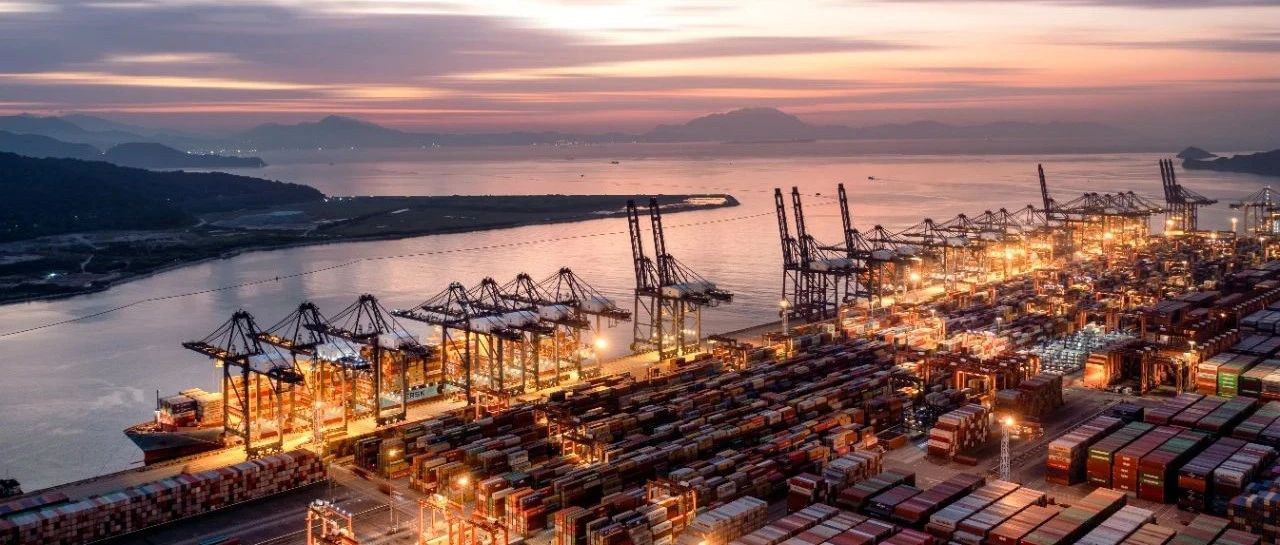
Core Viewpoint - The recent U.S.-China trade agreement has significantly reduced tariffs, leading to a rapid recovery in the foreign trade sector, particularly in electronics and logistics, creating a 90-day "window period" for businesses to capitalize on the improved trade environment [2][4][5]. Group 1: Market Response - Following the announcement of the trade agreement, many companies, especially in the electronics sector, have seen a surge in inquiries and orders from U.S. clients who previously delayed shipments due to tariffs [2][5]. - The Shenzhen Huaqiangbei electronics market has experienced a revival, with prices for certain electronic components dropping significantly, indicating a return to normalcy in trading activities [4]. - The logistics sector anticipates a "rush" in shipping as businesses aim to maximize the 90-day window, although some companies are still assessing the situation before making large-scale shipping decisions [6][9]. Group 2: Industry Variations - Different industries are responding variably to the trade agreement; for instance, companies in the consumer electronics sector are cautious due to longer production and inventory cycles, while others with existing overseas stock are better positioned to respond quickly [9][10]. - Some sectors, like the optical module industry, report minimal impact from the tariff changes, as they were already exempt from previous tariffs, indicating that the effects of the trade agreement are not uniform across all industries [11]. - U.S. industry associations have welcomed the trade agreement but emphasize the need for long-term stability in trade policies, highlighting ongoing concerns about remaining tariffs and their impact on consumer prices [12].
浙江鼎力(603338):中美贸易获90天窗口期 业绩兑现确定性增强
Xin Lang Cai Jing· 2025-05-13 10:36
Group 1 - The US-China trade negotiations have resulted in a 90-day window where tariffs on Chinese exports to the US will be 30%, with a potential increase to 54% after this period, enhancing the certainty of performance for companies involved [1] - The adjustment in tariffs is expected to provide a short-term shipping and stocking window, while in the long term, domestic production capacity for exports to the US is likely to maintain good profitability [1] Group 2 - The European Union has imposed anti-dumping duties on Chinese mobile elevating work platforms, with the lowest duty at 20.6% for Dingli, which is lower than foreign brands, indicating recognition of compliance and market operations [2] - The impact of these duties on the company's export orders and profitability is considered limited, as price increases are expected to be a trend, allowing for cost transfer to end customers [2] - The company is expected to enhance its market share in Europe as new production capacity is released in 2025, despite high tariffs acting as a barrier [2] Group 3 - The company is anticipated to see sustained performance growth due to successful trials with overseas clients, extended stocking windows, and the introduction of high-value products in Europe [3] - The company is also expanding into emerging markets and new business segments, which will contribute to steady growth [3] - Profit forecasts for the company indicate a net profit of 21 billion (31% YoY growth), 24 billion (14% YoY growth), and 28 billion (14% YoY growth) from 2025 to 2027, with corresponding PE ratios of 12, 10, and 9 [3]

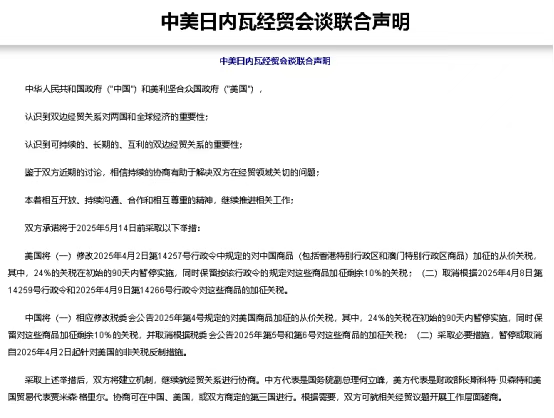
中美谈判结果出炉,美国对中国商品的关税调整至30%!
Sou Hu Cai Jing· 2025-05-13 06:21
Core Points - The recent US-China Geneva trade talks have led to significant changes in tariffs, with China reducing its export tax rate to the US to 30% from a previous higher rate [1][6] - Both countries have agreed to modify their respective tariffs by May 14, 2025, with the US suspending 24% of tariffs on Chinese goods for the first 90 days [2][3] Group 1: US Actions - The US will amend the tariffs imposed on Chinese goods, suspending 24% of the tariffs for the initial 90 days while retaining a 10% tariff [2] - The US will cancel additional tariffs imposed under specific executive orders, reducing the overall tariff burden on Chinese imports [2][4] Group 2: China Actions - China will similarly suspend 24% of tariffs on US goods for the first 90 days and maintain a 10% tariff [3] - China will take necessary measures to suspend or cancel non-tariff retaliatory measures against the US starting April 2, 2025 [3][6]