
伊朗核协议

Search documents
Jump in oil prices may reflect worry about Iran delays on nuclear deal, analyst says
MarketWatch· 2026-02-27 15:07
Core Viewpoint - Oil prices are increasing, recovering from previous losses, as market concerns grow over delays in reaching a deal regarding Tehran's nuclear ambitions [1] Group 1 - Oil prices were climbing on Friday, indicating a rebound from earlier losses [1] - Market sentiment is becoming increasingly nervous due to uncertainties surrounding negotiations related to Iran's nuclear program [1]

上海发布“沪七条”房地产优化政策
Dong Zheng Qi Huo· 2026-02-26 00:48
1. Report Industry Investment Ratings No relevant content provided. 2. Core Views of the Report - The global market risk appetite continues to rise due to the increased difficulty of the US - Iran nuclear agreement negotiations. The real - effect of Shanghai's real - estate policy on the market should be rationally viewed. The short - term bond market is volatile, and there is a long - term adjustment risk. The prices of various commodities have different trends and influencing factors, and corresponding investment suggestions are put forward for each commodity [17][20][24] 3. Summary by Directory 3.1 Financial News and Comments 3.1.1 Macro Strategy (Gold) - The US may raise the "global import tariff" on some countries to 15%. Gold prices are supported by the weakening of the US dollar index, US tariff policies, and the uncertainty of US - Iran negotiations. However, the short - term interest rate cut willingness of the Fed is low, and gold prices continue to fluctuate. Silver is supported by low inventory, but its upward trend may not last [12] - Investment advice: Precious metals will continue to fluctuate in the short term, and the upward trend of silver may be difficult to sustain [13] 3.1.2 Macro Strategy (Foreign Exchange Futures - US Dollar Index) - Cuba fired at a US speedboat, and the US envoy requires the Iran nuclear agreement to be permanent, increasing the negotiation difficulty. The EU is evaluating that the new US tariffs may be higher than the 15% upper limit of the agreement. The global market risk preference continues to rise [14][15][17] - Investment advice: The US dollar will continue to fluctuate [18] 3.1.3 Macro Strategy (Stock Index Futures) - Shanghai issued the "Seven - Point Plan for Shanghai" to optimize real - estate policies, reducing the home - purchase threshold and releasing a positive policy signal. The real - estate sector rose, but the increase was limited. In the context of an aging population and income pressure, residents' ability to increase leverage is limited [19][20] - Investment advice: Hold stock index long positions in a balanced manner [21] 3.1.4 Macro Strategy (Treasury Bond Futures) - Shanghai optimized real - estate policies, and the central bank conducted 4095 billion yuan of 7 - day reverse repurchase operations, with a net investment of 95 billion yuan on that day. The real - estate policy has limited negative impact on the bond market. In the short term, the bond market sentiment is not likely to turn weak, and there is still rebound momentum in some periods. In the long term, the bond market is not optimistic [23][24] - Investment advice: The bond market will fluctuate in the short term, and there is still an adjustment risk in the long term [25] 3.2 Commodity News and Comments 3.2.1 Black Metals (Coking Coal/Coke) - The coking coal market in Lvliang is oscillating. After the Spring Festival, the supply of coking coal has increased, but the demand is weak. The coke market also has problems such as inventory accumulation and weak demand. The market will maintain an oscillating pattern in the short term [26][27] - Investment advice: The market will maintain an oscillating pattern in the short term [28] 3.2.2 Black Metals (Rebar/Hot - Rolled Coil) - Australia made an anti - dumping final review ruling on Chinese rebar, and Mexico launched an anti - dumping investigation on Chinese cold - rolled coils. After Shanghai relaxed real - estate purchase restrictions, steel prices rose, but the fundamental pressure is still obvious. The steel price is in the stage of oscillating and bottom - grinding in the short term [30][32] - Investment advice: The steel price will oscillate in the short term. Pay attention to the opportunity of undervalued prices [33] 3.2.3 Agricultural Products (Cotton) - As of February 21, 2026, Brazil's cotton planting was 99.9% complete. After the festival, textile enterprises are resuming work. Some spinning enterprises have raised yarn prices, but the increase is less than that of cotton. The downstream market's acceptance of raw material price increases needs to be observed. The commercial cotton inventory is lower than last year, and the market is worried about the tight supply in the later period [34][36][37] - Investment advice: Zheng cotton is expected to be difficult to fall in the short term, and the market will be mainly oscillating strongly. Pay close attention to the macro - situation and downstream enterprise conditions [37] 3.2.4 Agricultural Products (Soybean Meal) - Argentina's weather will be drier this week, and the condition of soybean crops is declining. Brazil's soybean harvest is behind schedule, but exports are stable. In China, factors such as new purchases of US soybeans, reserve sales, and customs policies need to be focused on [38] - Investment advice: Temporarily view soybean meal with an oscillating mindset [40] 3.2.5 Agricultural Products (Soybean Oil/Rapeseed Oil/Palm Oil) - Indonesia urges the EU to restore market access for Indonesian palm oil products. From February 1 - 20, Malaysia's palm oil production and exports decreased. The palm oil market may decline in production and exports in February, and the inventory is expected to fall to 250 - 260 million tons. In March, production is expected to remain low, and attention should be paid to the replenishment demand in the sales area [41][42][43] - Investment advice: The palm oil inventory in Malaysia is expected to decline in February, and attention should be paid to the replenishment demand in the sales area in March [43] 3.2.6 Agricultural Products (Corn) - From February 12 - 18, 2026, the consumption of corn by deep - processing enterprises decreased. The progress of farmers selling corn is faster than in previous years. The downstream inventory is at a relatively high level, and the demand support may weaken. The corn futures price is expected to oscillate strongly [44][45] - Investment advice: Be vigilant against the technical correction risk after the optimistic sentiment fades. The corn futures price is expected to oscillate strongly [45] 3.2.7 Non - ferrous Metals (Lithium Carbonate) - Zimbabwe suspended the export of all raw ores and lithium concentrates. It is estimated that the monthly supply will be affected by 12,000 tons of LCE. In the short term, the impact on domestic smelters is controllable, but it will intensify the de - stocking. In the long term, it will affect the annual stocking trend. Be vigilant against the negative feedback from the demand side [46][47] - Investment advice: Adopt a bullish mindset in the short term, and pay attention to the price correction after the supply increases in the medium term [48] 3.2.8 Non - ferrous Metals (Lead) - On February 24, the LME 0 - 3 lead was at a discount of $49.85 per ton. The Shanghai lead price oscillated at a low level. The downstream consumption is lacking, and the inventory is high. The lead price will oscillate weakly, but the decline space is limited due to the cost support [49][50] - Investment advice: Observe in the short term and consider long positions in the medium term [50] 3.2.9 Non - ferrous Metals (Zinc) - On February 24, the LME 0 - 3 zinc was at a discount of $31.93 per ton. The zinc price oscillated. The LME inventory decreased, and the domestic inventory increased. The downstream start - up speed is slow. The zinc price is recommended to be treated with a bullish mindset, and continue to hold the Call [51] - Investment advice: Adopt a bullish mindset for the single - side trading, and continue to hold the previous Call. Observe for arbitrage [51] 3.2.10 Non - ferrous Metals (Copper) - In 2025, the global refined copper market had a surplus of 380,000 tons. European copper processing enterprises warned about the shortage of raw material supply. Chile's new government may adjust mining policies. The macro - sentiment is warming up, which will support the non - ferrous metal prices. The short - term copper price is likely to oscillate strongly [52][53][56] - Investment advice: Adopt a bullish mindset for the single - side trading and continue to buy on dips. Observe for arbitrage [56] 3.2.11 Non - ferrous Metals (Tin) - On February 24, the LME 0 - 3 tin was at a discount of $10 per ton. The supply of tin ore is expected to be tight in the long term. The downstream enterprises have not fully resumed work, and the spot market is cold. The tin price is expected to oscillate strongly and widely [57][58] - Investment advice: The tin price is expected to oscillate strongly and widely. Pay attention to the macro - situation, supply recovery, and post - festival consumption [58] 3.2.12 Energy and Chemicals (Crude Oil) - OPEC+ is considering a small increase in production. The EIA commercial crude oil inventory increased significantly. The oil price oscillated weakly, and the market is concerned about the progress of the US - Iran negotiations [59][60][61] - Investment advice: Pay close attention to the changes in the US - Iran situation in the short term [62] 3.2.13 Energy and Chemicals (Liquefied Petroleum Gas) - Saudi Aramco cancelled the March loading plan due to force majeure, which stimulated the international market price to rise. The international market is expected to be strong in the short term [63] - Investment advice: The price is expected to be strong in the short term [65] 3.2.14 Energy and Chemicals (Asphalt) - The capacity utilization rate of domestic heavy - traffic asphalt increased. The downstream demand has not fully recovered, and the market is in a weak state. The short - term asphalt price still has support [65][66] - Investment advice: The asphalt price will oscillate in the short term [67] 3.2.15 Energy and Chemicals (LLDPE) - The inventory of polyethylene social sample warehouses and production enterprises increased. The inventory accumulation speed is normal during the holiday, and the subsequent de - stocking speed needs to be observed [68][69][70] - Investment advice: Observe the de - stocking speed and geopolitical issues [71] 3.2.16 Energy and Chemicals (Methanol) - The methanol port inventory increased slightly. The unloading and提货 speed are slow. Iranian devices are restarting. Before the geopolitical issues are resolved, continue to observe methanol. After the issues are resolved, consider short - selling or 5 - 9 reverse arbitrage [72][74] - Investment advice: Observe methanol before the geopolitical issues are resolved, and consider short - selling or 5 - 9 reverse arbitrage after the issues are resolved [75] 3.2.17 Energy and Chemicals (Styrene) - The inventory of styrene in East China ports increased significantly. The pure benzene port inventory is high, and the de - stocking is difficult before mid - March. The styrene is suppressed by potential supply increases. Pay attention to the actual inventory accumulation in February and the change of trading logic [76][77] - Investment advice: The pure benzene price may rise after short - term oscillation. The styrene is suppressed by supply increases. Pay attention to inventory accumulation and trading logic changes [78] 3.2.18 Energy and Chemicals (Urea) - The urea enterprise inventory increased significantly during the Spring Festival. The international urea price is easy to rise. The domestic supply is abundant, and the demand for spring plowing is approaching. The urea price is expected to be strong, but policy intervention should be noted [79][81] - Investment advice: Market participants should replenish inventory based on rigid demand and reduce speculative operations. The urea futures market should be treated with an oscillating mindset [82] 3.2.19 Shipping Index (Container Freight Rate) - The opening price of MSK from Shanghai to Rotterdam in the 11th week decreased, and the shipping capacity pressure still exists. The spot freight rate in March is expected to decline. The market sentiment has shifted from expectation - driven to reality - driven [83] - Investment advice: Pay attention to the opportunity of short - selling the 04 contract at high prices in the short term [83]
美特使:“特朗普不明白,伊朗为何还不屈服”
Xin Lang Cai Jing· 2026-02-23 06:20
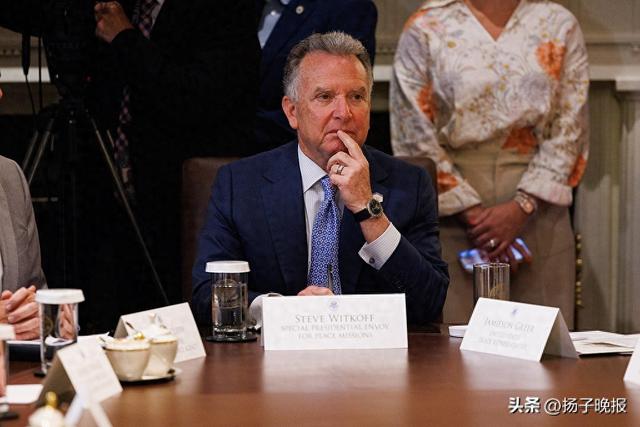
Group 1 - The core viewpoint of the article highlights the surprise of U.S. President Trump regarding Iran's lack of compliance with the nuclear agreement despite military pressure from Washington [1][3] - The U.S. has deployed two aircraft carriers to the Middle East as part of its strategy to compel Iran to accept the nuclear deal [3] - U.S. Special Envoy Steven Witkoff expressed confusion over why Iran has not approached the U.S. to declare its intention to abandon nuclear weapons under the current pressure [5] Group 2 - Witkoff acknowledged that despite the military pressure, it remains challenging to persuade Iran to take the desired steps [7] - He confirmed a meeting with Reza Pahlavi, the son of the deposed Iranian king, stating it was at the direction of the President [7]
伊朗外长说将在2至3天内完成核协议草案的起草工作
Xin Lang Cai Jing· 2026-02-20 16:32
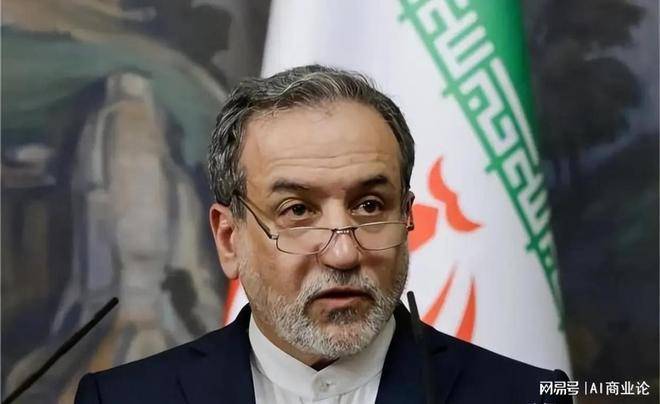
Core Viewpoint - Iran's Foreign Minister, Zarif, stated that the draft of the nuclear agreement will be completed within 2 to 3 days and submitted to the U.S. after final approval from Iranian leadership [1] Group 1: Agreement Drafting Process - The draft agreement will be submitted to U.S. Special Envoy, Wittekoff, after high-level confirmation [1] - Further meetings may be required to discuss and refine the draft, which could take about a week [1] - Both parties aim to reach a "fair, win-win, and just" agreement [1] Group 2: Diplomatic Negotiations - Zarif emphasized that diplomatic negotiations are the only solution to the Iranian nuclear issue, and military action would complicate matters [1] - The second round of indirect negotiations between the U.S. and Iran took place on February 17 in Geneva, with both sides acknowledging progress despite existing differences [1] - Zarif communicated with the Director-General of the International Atomic Energy Agency, Grossi, indicating that Iran is developing a negotiation framework to advance dialogue with the U.S. [1]
美伊新一轮谈判在即 以总理强调伊朗必须拆除核设施
Zhong Guo Xin Wen Wang· 2026-02-16 03:16
Core Viewpoint - Israeli Prime Minister Netanyahu stated that any agreement between the U.S. and Iran must include the dismantling of Iran's nuclear infrastructure, not just a halt to uranium enrichment [1] Group 1: U.S.-Iran Negotiations - The second round of negotiations between the U.S. and Iran is set to take place, with Iran seeking a nuclear agreement that provides economic benefits for both parties [1] - Netanyahu expressed skepticism regarding the potential agreement but emphasized the necessity for Iran to dismantle all equipment and infrastructure related to uranium enrichment [1]
美总统特使据称周五与伊外长会面,伊朗强调美伊核谈核心诉求:解除制裁
Hua Er Jie Jian Wen· 2026-02-02 20:31
Core Viewpoint - The United States and Iran are attempting to resolve tensions through diplomatic negotiations, but significant differences remain in their positions regarding the scope of discussions, particularly on nuclear issues and sanctions [1][4]. Group 1: Diplomatic Efforts - Iranian President Pezeshkian has ordered the initiation of nuclear talks, with high-level negotiations expected to occur soon between U.S. Special Envoy Wittekopf and Iranian Foreign Minister Zarif in Istanbul [1][3]. - The upcoming meeting in Istanbul will include foreign ministers from Turkey, Qatar, Egypt, Oman, UAE, Saudi Arabia, and Pakistan, indicating a broad international interest in the negotiations [1][3]. - U.S. Defense Secretary Esper has warned that if Iran refuses to negotiate on its nuclear program, the U.S. is prepared to take action [2][4]. Group 2: Divergent Positions - The core disagreement lies in the negotiation agenda, with the U.S. insisting on a comprehensive agreement that includes Iran's nuclear, missile, and regional proxy issues, while Iran is focused solely on nuclear discussions [4][5]. - Iranian officials emphasize that the lifting of sanctions is a critical demand for their participation in negotiations, asserting that any agreement must be mutually beneficial [2][4]. Group 3: Regional Dynamics - Regional countries, including Jordan and Saudi Arabia, have expressed neutrality and will not support any military actions against Iran, indicating a cautious approach to the escalating tensions [7]. - The U.S. has significantly increased its military presence in the Gulf region, with the Abraham Lincoln aircraft carrier strike group positioned to respond quickly if necessary [2][6].
伊朗强调:若安理会不解除制裁,将停止与国际原子能机构的合作!
Sou Hu Cai Jing· 2025-09-22 08:22
Core Points - The recent UN Security Council vote has led to a deadlock between Iran and the International Atomic Energy Agency (IAEA) regarding nuclear cooperation [1] - Iran's Supreme National Security Council (SNSC) announced on October 20 that cooperation with the IAEA has effectively ceased due to the reinstatement of sanctions [1] - The crisis was triggered by the actions of the UK, France, and Germany, which initiated the process to restore sanctions based on Iran's non-compliance with the 2015 nuclear deal [1][2] Summary by Sections Iran's Response - Iran's SNSC emphasized that despite the Foreign Ministry's efforts to cooperate and propose solutions, European nations insisted on advancing sanctions, undermining months of cooperation with the IAEA [1] - The Iranian Foreign Minister met with the IAEA Director General on October 9, reaching a substantive agreement to resume inspections, which was later approved with a condition regarding hostile actions against Iran [1] Key Dates and Developments - A critical date is set for October 27, when if the Security Council does not reach a consensus to terminate sanctions, they will automatically be reinstated [2] - The security status of Iran's nuclear facilities remains a focal point for the international community, especially after attacks in June by Israel and the U.S. [2] International Concerns - Western nations are increasingly worried about Iran potentially developing nuclear weapons, a claim that Tehran has consistently denied [2] - The situation is evolving into a new phase of tension as the countdown to the reinstatement of sanctions progresses, drawing close attention from the international community [2]
英法德对伊朗发出最后通牒:月底前还不谈判,就恢复制裁!
Jin Shi Shu Ju· 2025-08-13 04:17
Group 1 - The E3 countries (France, Germany, and the UK) have informed the UN that they are prepared to trigger the restoration of sanctions against Iran unless negotiations regarding its nuclear program are resumed with the US and the international community [2][3] - The E3 has proposed an extension of the deadline to avoid the automatic restoration of sanctions, stating that if Iran does not reach a diplomatic solution by August 2025, they are ready to initiate the "snapback" mechanism [2][3] - The E3 foreign ministers emphasized that the legal basis for re-imposing sanctions is clear, as Iran has deliberately deviated from its commitments under the nuclear agreement since 2019 [3] Group 2 - Iran has not responded to the E3's proposal for an extension, and the E3 believes that a limited extension would provide more time for negotiations aimed at reaching a new nuclear agreement while retaining the ability to re-impose sanctions to prevent nuclear proliferation [3] - Iranian Foreign Minister Amir-Abdollahian has stated that there is no reason to negotiate with the European countries if they cannot lift sanctions, indicating a hardened stance following recent conflicts with Israel [4] - Iran announced a suspension of cooperation with the International Atomic Energy Agency (IAEA) after a conflict with Israel, which raises concerns about the future of nuclear oversight and negotiations [4]
法国外交消息人士:法国、英国、德国(E3)外长及欧盟高级代表与伊朗外交部长进行了通话。欧洲三国部长告诉伊朗外长,必须立即回归外交途径,以达成可验证且持久有效的核协议;再次强调如果到夏末未取得实质性进展,将重新对伊朗实施联合国制裁。
news flash· 2025-07-17 21:28
Group 1 - The core message indicates that the foreign ministers of France, the UK, Germany (E3), and the EU's senior representative have communicated with the Iranian foreign minister, emphasizing the need to return to diplomatic negotiations for a verifiable and lasting nuclear agreement [1] - The E3 ministers reiterated that if substantial progress is not achieved by the end of summer, the re-imposition of UN sanctions on Iran will be considered [1]
法国外交消息人士:必须达成一项坚实的伊朗核协议,以保障欧洲的安全利益。
news flash· 2025-07-08 15:07
Core Viewpoint - A solid nuclear agreement with Iran is essential to safeguard Europe's security interests [1] Group 1 - The necessity of a robust nuclear deal is emphasized to ensure the stability and safety of European nations [1]