
公共财政

Search documents
数读中国 2025
Xin Lang Cai Jing· 2026-01-30 23:52
Group 1: National Budget and Healthcare - National general public budget revenue reached 216,045 billion yuan, a decrease of 1.7% compared to 2024 [1] - National general public budget expenditure was 287,395 billion yuan, an increase of 1% compared to 2024 [1] - Basic medical insurance (including maternity insurance) total revenue was 29,544.06 billion yuan, while total expenditure was 24,231.24 billion yuan, indicating stable overall operation of the medical insurance fund [1] - 4.63 billion people utilized personal accounts for provincial mutual aid in employee medical insurance, with a mutual aid amount of 68.02 billion yuan [1] Group 2: Software and Information Technology - The software and information technology service industry showed a good operational trend, with software business revenue reaching 154,831 billion yuan, a year-on-year increase of 13.2% [2] Group 3: Electronic Information Manufacturing - The electronic information manufacturing industry experienced rapid production growth, with the added value of large-scale electronic information manufacturing increasing by 10.6% year-on-year, outpacing the growth rates of the overall industry and high-tech manufacturing by 4.7 and 1.2 percentage points respectively [2] Group 4: Cultural and Related Industries - Enterprises in the cultural and related industries achieved operating revenue of 152,135 billion yuan, an increase of 10,451 billion yuan, representing a growth of 7.4% compared to the previous year [3] Group 5: Foreign Investment and Energy - Non-financial direct investment by China abroad reached 145.66 billion USD, an increase of 1.3% compared to the previous year [4] - National energy investment maintained rapid growth, with annual key project investment exceeding 3.5 trillion yuan for the first time, a year-on-year increase of nearly 11% [4]
英国政府12月借款降至2003年以来最低,赤字明显改善,支撑里夫斯控财政
Zhi Tong Cai Jing· 2026-01-22 09:08
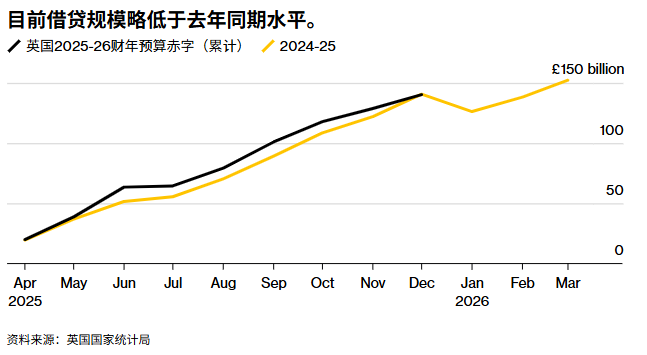
英国政府12月的借款降幅超出市场预期,强劲的税收表现为财政大臣瑞秋.里夫斯控制公共财政的努力 提供了有力支撑。英国国家统计局周四公布的数据显示,当月政府支出超出税收收入116亿英镑(约合 156亿美元)。与上年同期相比,赤字减少了71亿英镑,这一降幅低于一项对经济学家调查得出的中位数 预期值130亿英镑。值得一提的是,这是自2003年以来,英国政府12月的借款水平首次降至如此低位。 英国国家统计局高级统计师汤姆.戴维斯表示:"2025年12月的借款额相较于2024年同期显著降低,这主 要是因为今年的收入较去年大幅上扬,而支出仅出现了小幅增长。" 前几个月的税收收入表现优于此前预期,这一积极态势主要得益于公司税实现了19亿英镑的增长。 在去年12月,税收收入相较于上年同期增长了77亿英镑。这一显著增长主要得益于国民保险缴款额额外 增加了30亿英镑,同时所得税收入也增加了25亿英镑。此外,在2025-2026年度的前九个月里,国民保 险缴款收入也同比增长了近19%。 上个月,中央政府的日常开支相较于上年同期增长了32亿英镑,与此同时,资本项目的净投资规模却呈 现出下降态势。 里夫斯所领导的财政监督机构——预算责任 ...

法国国民议会表决通过2026年社会保障预算草案
Zhong Guo Xin Wen Wang· 2025-12-10 01:00
Group 1 - The French National Assembly approved the 2026 social security budget draft with a narrow margin of 247 votes in favor and 234 against, reflecting a significant political maneuvering among various parties [1] - The budget draft includes a suspension of the retirement system reform, seen as a key step by the government to fulfill commitments to left-wing parties [1] - Prime Minister Leclerc expressed gratitude to the supporting parties and emphasized that the approval of the budget draft marks an end to the deterioration of France's public finances [1] Group 2 - Social security expenditures account for over 40% of France's overall public sector spending, covering welfare, healthcare, and pensions [2] - The government aims to keep the social security deficit within €20 billion, while previously warning that failure to pass the budget could lead to a deficit of €30 billion [2] - In December 2024, former Prime Minister Barnier bypassed the National Assembly using constitutional Article 49.3 to forcefully pass the 2025 social security budget, leading to a vote of no confidence against the government [2]
因国防支出增加 德国等欧盟成员赤字超标
Yang Shi Xin Wen· 2025-11-26 06:04
Core Points - The European Commission announced that Germany's defense spending increase has led to an excessive deficit, but no procedures have been initiated against Germany for this issue [1] - The Commission highlighted several strategic vulnerabilities and structural challenges facing the EU, including low productivity, demographic pressures, and rising public spending demands related to defense, decarbonization, and digital economy transformation [1] - The Commission called for EU member states to maintain sound public finances and enhance competitiveness [1] Summary by Category Fiscal Outlook - The European Commission projected that the budget deficit in the Eurozone will slightly increase from 3.1% of GDP in 2024 to 3.2% in 2025, further rising to 3.3% in 2026 and 3.4% in 2027 [2] - Finland's budget deficit is expected to be 4.4% of GDP in 2024, rising to 4.5% in 2025 and decreasing to 4.0% in 2026, prompting the need for excessive deficit procedures against Finland [1] Member States' Performance - Germany's projected budget deficit is expected to reach 3.1% of GDP in 2025, 4.0% in 2026, and 3.8% in 2027 [1] - The European Commission emphasized that under the Stability and Growth Pact, member states' annual budget deficits should not exceed 3% of GDP, and public debt should not exceed 60% of GDP [1]

IMF:美国债务将创历史新高,到2030年将超过意大利和希腊!凸显美国公共财政的脆弱状态
Sou Hu Cai Jing· 2025-10-27 05:55
Core Insights - The U.S. government debt is projected to exceed that of Italy and Greece for the first time this century, highlighting the fragility of U.S. public finances [1][3] - By 2030, U.S. government debt is expected to rise over 20 percentage points, reaching 143.4% of GDP, surpassing the record set during the pandemic [1] - The annual budget deficit in the U.S. is anticipated to remain above 7% of GDP, higher than any other developed economy tracked by the International Monetary Fund [1] Comparison with Italy and Greece - Italy and Greece, historically known for their weak fiscal positions and central to the 2010-2012 Eurozone debt crisis, are expected to reduce their debt burdens by the end of the decade through strict deficit control [3] - In contrast, U.S. debt is projected to continue rising, with the Congressional Budget Office forecasting ongoing growth in U.S. debt over the coming decades [3]

美国,突传利空!
Zhong Guo Ji Jin Bao· 2025-10-25 16:13
Core Viewpoint - Scope Ratings has downgraded the United States' credit rating by one level to AA- due to ongoing deterioration in public finances and weakened governance standards, which have increased the risk of policy missteps and reduced the ability of Congress to address structural fiscal challenges [1][2]. Group 1: Credit Rating Downgrade - The downgrade reflects a three-level drop from the highest rating, indicating significant concerns about the U.S. fiscal outlook [1][3]. - Scope Ratings' assessment is two levels lower than its larger competitors, Fitch, Moody's, and S&P Global Ratings, highlighting a divergence in credit evaluations among rating agencies [3]. Group 2: Fiscal Challenges - As of October 21, the total U.S. federal government debt has surpassed $38 trillion, marking a significant increase from $37 trillion just two months prior [2][3]. - The International Monetary Fund (IMF) predicts that the U.S. general government debt will reach 140% of GDP over the next four years, an increase of 15 percentage points compared to 2025, surpassing the debt levels of any European country [3]. Group 3: Future Outlook - Scope Ratings has maintained a "stable" outlook for the U.S. rating, indicating a balanced risk of upgrades and downgrades over the next 12 to 18 months [2]. - The agency has expressed concerns about the potential decline in the dollar's status as the global reserve currency, which could reduce global demand for U.S. Treasury securities [2].
英国7月零售销售超预期仍难掩疲态 经济前景蒙上阴影
智通财经网· 2025-09-05 07:35
Core Viewpoint - The UK retail sales in July showed a month-on-month increase of 0.6%, surpassing market expectations of 0.2%, although the three-month trend indicates a decline, reflecting consumer caution that hampers economic growth plans of the Labour government [1] Group 1: Retail Sales Data - The July retail sales data was delayed by two weeks due to the need for "further quality assurance" by the Office for National Statistics [1] - The June retail sales growth was revised down from 0.9% to 0.3% [1] - Despite the positive July figure, retail sales have declined over the past three months, indicating ongoing consumer caution [1] Group 2: Economic Implications - Consumer spending accounts for about two-thirds of the economy, and the Labour government cannot afford the consequences of continued consumer caution [1] - The UK government is striving to revive economic growth amidst rising borrowing costs and potential downward revisions of productivity forecasts by the Office for Budget Responsibility [1] - Chancellor Rachel Reeves announced that the annual budget will be revealed on November 26, with economists estimating a need for tax increases or spending cuts of up to £51 billion (approximately $68 billion) to address the public finance shortfall [1] Group 3: Data Accuracy Concerns - Retail analysts and economists have raised concerns about the accuracy of official spending data, noting that it fails to account for seasonal variations and does not keep pace with shopping trends on social media platforms like TikTok [1]
英国公债:7月借款优预期,10年期收益率升至4.7%
Sou Hu Cai Jing· 2025-08-21 10:20
Group 1 - The core viewpoint of the article highlights the rising UK government bond yields due to increasing government borrowing, raising concerns about the overall fiscal health [1] - As of July, the net borrowing of the public sector was £1 billion, which was better than the consensus expectation of £3.2 billion, but the borrowing figure for June was revised up from an initial £20.7 billion to £22.6 billion, indicating a trend of increasing government debt [1] - Analysts suggest that the overall public finances in the UK remain in a state of long-term weakness, reflecting ongoing fiscal challenges [1] Group 2 - The 10-year gilt yield has increased by 2.6 basis points to 4.700%, indicating a rise in borrowing costs for the government [1]
债务成本飙升 英国政府借款额超预期数十亿英镑
news flash· 2025-07-22 09:43
Group 1 - The UK's budget deficit has risen to £20.7 billion ($27.9 billion), an increase of £6.6 billion compared to the same period last year, significantly exceeding market expectations of £17.5 billion [1] - The surge in debt interest payments is a primary factor contributing to the increased budget deficit, raising concerns about potential tax hikes to stabilize public finances [1] - Following the report, UK government bonds experienced a decline, with the yield on 10-year government bonds rising by 3 basis points to 4.63%, outpacing declines in German and US bonds [1]
道明证券:英国仍可能会通过提高税率来填补其财政缺口
news flash· 2025-07-14 12:03
Core Viewpoint - The UK may address its fiscal deficit by increasing tax rates and cutting government spending, as indicated by analysts from TD Securities [1] Group 1: Fiscal Situation - The UK's public finances remain fragile due to the impact of global tariffs [1] - The Labour Party's decision to cancel spending cuts on welfare legislation adds pressure to the already strained fiscal situation [1] Group 2: Budget Considerations - An additional fiscal space of £10 billion to £20 billion may be required for the upcoming autumn budget [1] - The exact figures for the fiscal space will depend on monthly tax revenues and expenditures leading up to the autumn budget [1]