关税分红

Search documents
美国两党都支持!“关税退税”变“全民发钱”?
Hua Er Jie Jian Wen· 2026-02-24 01:05
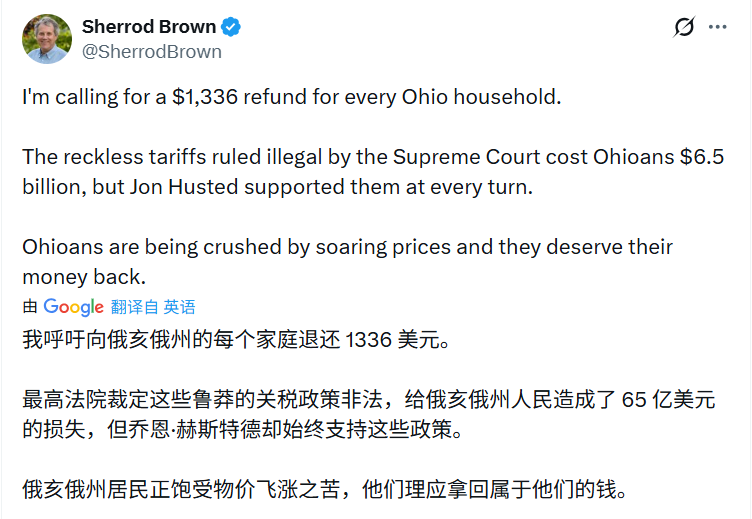
Core Viewpoint - The Democratic Party is advocating for the full refund of tariffs collected after a Supreme Court ruling, aligning with former President Trump's earlier proposal for tariff "dividend" checks to American families [1][5]. Group 1: Political Responses - Prominent Democrats, including Senators Elizabeth Warren and Sherrod Brown, are calling for the refund of approximately $175 billion in tariffs, citing inflation as a key issue and blaming Republicans for the situation [1][2]. - Brown specifically mentioned a proposed refund of $1,336 per household in Ohio, while California and Illinois governors suggested refunds of $1,700 or more [1][4]. - The Senate Democratic leadership has introduced legislation to mandate the refund, although it lacks enforcement mechanisms for businesses to pass the refunds to consumers [1][2]. Group 2: Trump's Position - Trump has initiated a new 15% global tariff to replace the overturned tariffs and indicated that refunds could be delayed for years due to legal processes [1][6]. - Despite his complex stance, Trump previously promoted the idea of distributing $2,000 "dividend" checks to low- and middle-income families, although this proposal received a lukewarm response from Republican leaders [5][6]. Group 3: Legislative Challenges - The tariff issue is expected to play a significant role in key Senate races in battleground states like Ohio, Maine, Alaska, and Iowa, with substantial campaign spending anticipated [2]. - Republican Senator Jon Husted has faced criticism for supporting tariffs, while his opponent, Bernie Moreno, argues that Democrats historically supported tariffs as a working-class party [3]. - The likelihood of Congress taking action on refunds appears low, as indicated by House Ways and Means Committee Chairman Jason Smith, amidst concerns over the federal budget deficit nearing $20 trillion [7].

特朗普经济顾问:不太可能退回关税 明年有望兑现“关税分红”承诺
Zhong Jin Zai Xian· 2025-12-22 01:32
Group 1 - The core viewpoint is that the Trump administration is unlikely to refund tariffs even if the Supreme Court rules against them, due to the administrative challenges involved [1][2] - Hassett believes that the Supreme Court will align with the Trump administration's stance, and the complexity of refunding tariffs will deter the court from issuing such a directive [2] - The Trump administration is preparing plans to impose new tariffs on imports if the court rules unfavorably [1] Group 2 - Hassett indicates that the improving U.S. economy increases the likelihood of issuing one-time $2,000 checks to Americans, a plan previously suggested by Trump [3][4] - The administration is expected to propose this plan to Congress in the new year, leveraging tariff revenues to alleviate cost-of-living concerns for Americans [5] - Hassett mentions that there is a list of housing proposals being prepared for the President, aimed at making home buying more affordable, with an announcement expected early next year [5]
FICC日报:市场避险情绪升温,关注美国10月CPI数据-20251113
Hua Tai Qi Huo· 2025-11-13 02:13
Report Summary 1. Report Industry Investment Rating No industry investment rating information is provided in the report. 2. Core View of the Report - Amid rising market risk - aversion, focus on the US October CPI data. In the commodity market, during the current inflation - expectation game phase, pay attention to non - ferrous metals and precious metals with high certainty. Consider buying precious metals and non - ferrous metals on dips [2][4][5]. 3. Summary by Related Catalogs Market Analysis - In the domestic market, positive news has emerged, but the economic foundation needs further consolidation. The "15th Five - Year Plan" proposal was released on October 28, and the average GDP growth rate during the 15th Five - Year Plan period is expected to be around 5%. On October 30, the China - US economic and trade teams reached a three - aspect consensus, and China officially postponed tariffs on November 5. In October, the national manufacturing PMI was 49, a 0.8 decline from the previous month. China's October exports (in US dollars) decreased by 1.1% year - on - year, compared with an 8.3% increase in the previous value. China's October CPI increased by 0.2% year - on - year, and the core CPI reached the highest level since March 2024. The PPI increased month - on - month for the first time this year. On November 12, the A - share market adjusted with a slight decline in the three major indices, the bond market rose across the board, most commodities fell, and precious metals rose [2]. - In the US, the liquidity risk has temporarily eased. The Fed cut interest rates by 25BP as expected and announced the end of balance - sheet reduction on December 1. On November 10, the US Senate voted to pass the "Continuing Appropriations and Extensions Act". The US October ISM manufacturing index dropped to 48.7%, shrinking for eight consecutive months. The ADP private - sector employment in October decreased by 45,000, the largest decline in two and a half years. There are uncertainties regarding the Fed chair candidate and future tariff policies [3]. Commodity Analysis - In the black sector, it is still dragged down by downstream demand expectations, and focus on the "anti - involution" situation. The long - term supply limitation in the non - ferrous sector has not been alleviated, and it has been boosted by the global easing expectation recently. The medium - term supply of the energy sector is considered to be relatively loose as OPEC + announced an additional production increase of 137,000 barrels per day in November. In the chemical sector, the "anti - involution" space of methanol, caustic soda, urea and other varieties is worth attention. In the agricultural products sector, with the China - US peace talks, pay attention to China's procurement plan for US goods and next year's weather forecast. For precious metals, after the short - term sharp adjustment risk is cleared, consider buying on dips [4]. Strategy - For commodities and stock index futures, consider buying precious metals and non - ferrous metals on dips [5]. A - Share Market - The A - share market recovered after hitting the bottom, with the three major indices slightly declining. More stocks fell than rose, and over 3500 stocks in the Shanghai, Shenzhen and Beijing stock markets closed down. The trading volume was 1.96 trillion yuan. At the close, the Shanghai Composite Index fell 0.07%, the Shenzhen Component Index fell 0.36%, and the ChiNext Index fell 0.39% [6]. US Tariff and Economic News - US Treasury Secretary Bessent said that there will be major tariff news in the next few days, and tariff dividends are under discussion. Trump mentioned a $2000 tax refund for families with an annual income of less than $100,000. Bessent also said that the economic situation was good before the government shutdown, and he expects real income to rebound in the first and second quarters of next year [3][6].
2000美元能“买来”民众支持加征关税吗
Sou Hu Cai Jing· 2025-11-11 20:26
Core Viewpoint - The U.S. government is proposing a one-time "tariff dividend" of $2,000 per person for the American public, excluding high-income individuals, funded by revenue from tariffs, which Trump claims generates trillions for the federal government [2][3] Group 1: Financial Implications - The U.S. Census Bureau indicates a population of 340 million, meaning a total payout of $680 billion if every individual receives $2,000 [2] - Approximately 18% of American adults earn over $100,000 annually, suggesting that even after excluding high-income earners, the total cost of the "tariff dividend" would exceed $500 billion [2] - Tariff revenue for the fiscal year 2025 is projected to reach $195 billion, a significant increase of $118 billion from the previous fiscal year, but still far from the required funds for the proposed dividend [3] Group 2: Legal and Political Context - The legality of the proposed "tariff dividend" is under scrutiny, as the U.S. Constitution grants Congress the power to levy taxes, while the President's role is limited to execution and management of tax policies [4] - The Supreme Court is questioning whether the President has the authority to impose large-scale tariffs, emphasizing that taxation is a core power of Congress [5] - Officials are attempting to frame tariffs as diplomatic tools rather than revenue-generating measures, complicating the narrative surrounding the proposed dividend [6] Group 3: Economic Impact and Public Perception - Economic experts argue that the burden of tariffs will ultimately fall on American consumers and importers, potentially leading to price increases that outweigh the benefits of the proposed $2,000 payment [8] - Research indicates that during Trump's first term, tariffs led to price hikes on consumer goods, with American consumers bearing over 90% of the tariff costs [8] - The proposal for a "tariff dividend" may serve as a political strategy to counteract criticism of inflation caused by tariffs, creating a perception that protectionism equates to welfare [8][9]
把3亿美国人当猴耍?关税给每人分2000?特朗普刚吹完牛就撤回
Sou Hu Cai Jing· 2025-11-11 18:07
Core Viewpoint - The promise of $2000 dividends from tariff revenues made by President Trump is viewed as an unrealistic and unfulfilled political tool rather than a serious policy initiative [3][15]. Group 1: Tariff Revenue and Dividend Promise - Trump claims that tariff revenues will provide enough funds for each American to receive at least $2000, which he suggests will help pay off the national debt of $37 trillion [3][5]. - The actual tariff revenue data shows that for the first three quarters of 2025, the U.S. collected $195 billion, meaning that if all of it were distributed, each person would only receive about $590, significantly less than the promised amount [7]. - Tax policy expert Erica York estimates that if the income threshold for high earners is set at $100,000, approximately 150 million adults would qualify for the dividend, leading to a total expenditure of around $300 billion [5]. Group 2: Legal and Political Context - The timing of Trump's announcement coincides with a Supreme Court hearing regarding the legality of his administration's tariff policies, which could have significant implications for his trade policies [9][11]. - The Supreme Court justices expressed skepticism about the government's authority to impose broad tariffs, indicating potential legal challenges to Trump's claims [9]. - Trump's acknowledgment of the potential "disastrous" consequences if the government loses the case highlights the precarious nature of his tariff strategy [11]. Group 3: Economic Implications and Public Perception - The assertion that tariffs are paid by foreign entities is contradicted by research indicating that the costs are primarily borne by American consumers and businesses [15]. - The promise of dividends appears to be a strategy to garner public support amid legal challenges, with past instances of similar promises made by Trump that were never realized [15][19]. - The ongoing federal government shutdown, affecting over 500,000 federal employees, further undermines the credibility of Trump's dividend promise, making it seem hollow in the current economic climate [17].
特朗普大方画饼:全民发2000美元“关税红包”
第一财经· 2025-11-11 13:47
Core Viewpoint - The article discusses former President Trump's proposal to distribute $2,000 "dividends" to Americans funded by tariff revenues, amidst declining support and recent electoral losses for the Republican Party [3][5]. Group 1: Proposal Details - Trump's plan aims to provide $2,000 to Americans, excluding high-income individuals, funded by tariff revenues [4]. - The Congressional Budget Office (CBO) estimates that implementing this plan could lead to a fiscal loss exceeding twice the tariff revenue, which is insufficient to support such large-scale payouts [4][8]. - The proposal has been made twice in 2023, indicating Trump's focus on improving his public image [4]. Group 2: Financial Implications - The CRFB estimates that distributing $2,000 to all Americans would result in an annual expenditure of approximately $600 billion, while the federal tariff revenue for the fiscal year was only $195 billion [8]. - If limited to 150 million adults earning less than $100,000 annually, the total payout would still reach around $300 billion, far exceeding the tariff income [8]. - Historical data suggests that large cash distributions could trigger inflation, as seen during the pandemic when stimulus checks contributed to a 40-year high inflation rate [8]. Group 3: Broader Economic Context - The U.S. is currently facing significant fiscal challenges, with a projected federal budget deficit of $1.8 trillion for the 2025 fiscal year [11]. - The CRFB warns that annual implementation of the dividend could increase the deficit by $6 trillion over ten years, which is double the expected revenue from Trump's tariffs [11]. - If the Supreme Court rules against the legality of the tariffs, the remaining revenue may only support dividends every seven years [11]. Group 4: Public Sentiment and Economic Indicators - Recent polls indicate a decline in Trump's support, with a net approval rating of -18%, and significant dissatisfaction regarding his handling of inflation and economic issues [14]. - Consumer confidence has dropped, with the Michigan Consumer Sentiment Index falling to a three-year low, reflecting concerns about the economic impact of the government shutdown [14]. - Economic analysts suggest that the current market conditions are precarious, with potential risks of recession or renewed inflation [15].
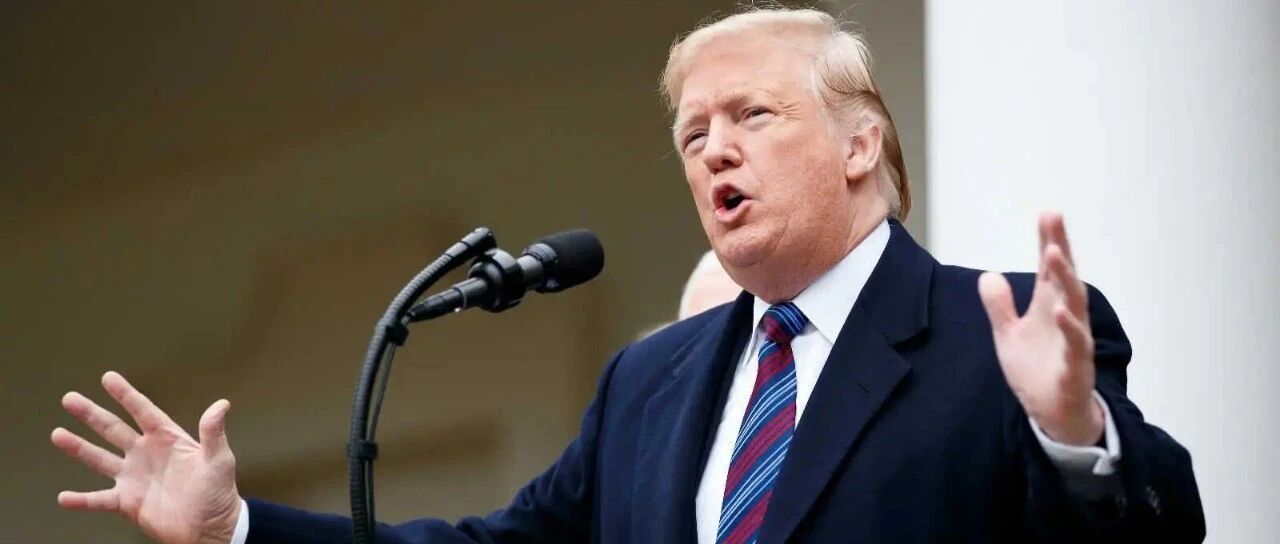
全民发2000美元“关税红包”,特朗普大方画饼但预算说不
Di Yi Cai Jing· 2025-11-11 12:52
Core Viewpoint - President Trump has proposed a plan to distribute $2,000 "dividends" to Americans funded by tariff revenues, which has raised concerns about potential fiscal losses exceeding twice the tariff income [1][2]. Group 1: Financial Implications - The Congressional Budget Responsibility Committee (CRFB) estimates that implementing this plan could lead to fiscal losses that are more than double the tariff revenues, exacerbating the already severe fiscal pressures in the U.S. [2] - The CRFB also projects that if the dividend is distributed annually, the deficit could increase by $6 trillion over ten years, which is about twice the expected revenue from Trump's tariffs during the same period [9]. - If the government were to distribute $2,000 to all Americans, it would face an annual expenditure pressure of approximately $600 billion, while the tariff revenue for the fiscal year ending September 30 was only $195 billion [6][9]. Group 2: Political Context - Trump's approval ratings have declined significantly, with a net support rate dropping to -18%, which is three percentage points lower than the lowest point during his first term [4][11]. - The Democratic Party has gained victories in local elections across several states, adding pressure to Trump's administration [4]. Group 3: Economic Concerns - Historical data suggests that large-scale cash distributions could lead to inflation risks, as seen during the pandemic when stimulus checks contributed to a peak inflation rate not seen in 40 years [7]. - The CRFB warns that if tariffs are solely used for dividend payments, it would limit the government's ability to reduce deficits or pay down debt, potentially increasing federal debt to 134% of GDP by 2035 [10]. - Erica York from the Tax Foundation indicates that the revenue from new tariffs would be insufficient to support the proposed dividend plan, estimating that the net revenue from tariffs would be around $90 billion, far less than the $300 billion needed for the dividends [10].
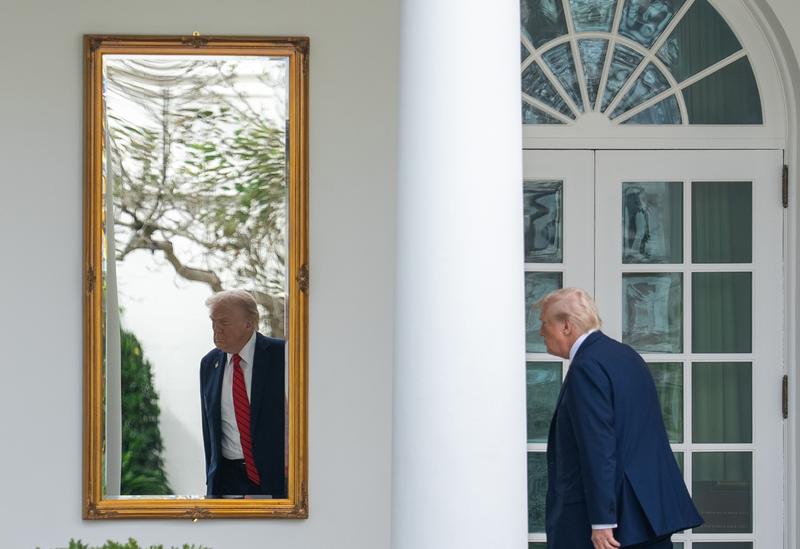
经济热点问答|2000美元能“买来”民众支持加征关税吗
Xin Hua Wang· 2025-11-11 08:26
Core Viewpoint - The U.S. government's proposal to distribute a one-time $2,000 "tariff dividend" to citizens raises questions about its feasibility and legality, especially in light of the significant costs involved and the ongoing Supreme Court review of tariff policies [1][3][5]. Financial Implications - The total cost of distributing $2,000 to the entire U.S. population of approximately 340 million would amount to $680 billion, and even after excluding high-income earners, the cost would still exceed $500 billion [1]. - The projected tariff revenue for the fiscal year 2025 is $195 billion, which is a significant increase of $118 billion from the previous fiscal year, but still insufficient to cover the proposed dividend [1][2]. Legal Considerations - The legality of the proposed "tariff dividend" is under scrutiny, as the U.S. Constitution grants Congress the power to levy taxes, while the President's authority to impose tariffs is being challenged in the Supreme Court [3]. - Officials are attempting to frame tariffs as diplomatic tools rather than revenue-generating measures, complicating the legal landscape surrounding the proposed dividend [3]. Public Sentiment and Economic Impact - Surveys indicate that the American public does not support the current economic and trade policies, suggesting that the proposed dividend may not garner the intended support for the government's tariff strategy [4]. - The burden of tariffs is likely to be passed on to American consumers through increased prices, potentially negating the benefits of the proposed $2,000 payment [5]. Political Strategy - The proposal for a "tariff dividend" may be a strategic move to counteract criticism of the negative economic impacts of tariffs, creating a perception that protectionist policies can provide benefits to the public [5][6]. - The approach of taxing citizens and then offering rebates or cash payments is described as a common political tactic in the U.S. [6].
【环球财经】2000美元能“买来”民众支持加征关税吗
Xin Hua She· 2025-11-11 07:19
Core Viewpoint - The U.S. government is proposing a one-time "tariff dividend" of $2,000 per person for citizens outside the high-income group, funded by tariffs collected from trade, raising questions about the legality and feasibility of such a policy [1][3]. Financial Implications - The total cost of distributing $2,000 to the entire U.S. population of approximately 340 million would amount to $680 billion, and even after excluding high-income earners, the cost would still exceed $500 billion [1]. - The projected tariff revenue for the fiscal year 2025 is $195 billion, which is a significant increase of $118 billion from the previous fiscal year, but still insufficient to cover the proposed dividend [1]. Legal Considerations - The legality of the proposed "tariff dividend" is under scrutiny, as the U.S. Constitution grants Congress the power to levy taxes, while the President's authority to impose tariffs is being challenged in the Supreme Court [3]. - Officials are attempting to frame tariffs as diplomatic tools rather than revenue-generating measures, complicating the legal landscape surrounding the proposed dividend [3]. Economic Impact - Scholars argue that the burden of tariffs will not disappear but will instead be passed on to consumers through higher prices, potentially negating the benefits of the proposed cash payments [5]. - Research indicates that during Trump's first term, tariffs led to increased prices for consumer goods, with U.S. importers and consumers bearing over 90% of the tariff costs [5]. Political Strategy - The proposal for a "tariff dividend" may be a strategic move to regain public support for the administration's trade policies, especially among lower-income groups, by creating the illusion that protectionism equates to welfare [5][6]. - The Wall Street Journal critiques the approach of using cash payments to placate public discontent over high taxes, labeling it a common political tactic [6].
特朗普宣布将向美国人发放至少2000美元关税“分红”,加密普涨
Sou Hu Cai Jing· 2025-11-10 05:04
Core Viewpoint - The announcement by President Trump regarding a plan to distribute "at least" $2000 in tariff "dividends" to most Americans has led to a moderate increase in cryptocurrency prices, particularly Bitcoin and Ethereum [1] Cryptocurrency Market Reaction - Bitcoin (BTC) experienced a rise of approximately 1.75%, surpassing $103,000 [1] - Ethereum (ETH) saw an increase of about 3.32%, exceeding $3,487 [1] - This price increase occurred after a generally weak weekly market performance, with the CoinDesk 20 index recovering from a nearly 15% weekly decline [1] Legislative Considerations - Experts indicate that the proposed payment plan requires Congressional approval to be implemented [1] - Current tariff revenues are significantly lower than the funds needed for the proposed payments [1]