
分布式账本技术

Search documents
Paul Atkins:将弥补加密监管“错失机会”,推进 Project Crypto 更新框架
Xin Lang Cai Jing· 2026-02-28 00:25
Core Viewpoint - The SEC is addressing previous regulatory shortcomings in the cryptocurrency sector under the leadership of Chairman Paul Atkins, who criticizes the prior administration for not adapting to industry innovations [1] Group 1: Regulatory Changes - The SEC has shifted to a more favorable regulatory stance since the Trump administration, which includes the establishment of a dedicated cryptocurrency task force [1] - Multiple enforcement actions have been withdrawn as part of this new approach [1] - The SEC is advancing "Project Crypto" to update the regulatory framework for cryptocurrencies [1] Group 2: Industry Outlook - Despite fluctuations in the prices of individual cryptocurrencies, there is optimism regarding the potential of distributed ledger technology in payment clearing and settlement systems [1]
维塔金 (Vitaking) 的“火眼金睛”:如何用科技手段确保黄金的“血统纯正”?
Sou Hu Cai Jing· 2026-02-24 06:35
Core Insights - The article highlights Vitaking's innovative approach to enhancing transparency and trust in the gold industry by assigning a unique digital identity to every gram of gold [1][3]. Group 1: Industry Challenges - Consumers face difficulties in tracing the complete journey of gold from mines to their hands, including information about origin, purity, and intermediaries [3]. - Ensuring the "pure bloodline" of each gram of gold is a common challenge faced by the industry [3]. Group 2: Vitaking's Solution - Vitaking utilizes advanced digital technology to create a detailed "digital identity" for each gram of gold, fundamentally reshaping the traceability and authentication system [3][4]. - The core of this "digital identity" is a traceability system based on distributed ledger technology, which records key information such as origin, weight, purity, production date, and a unique serial number in a public, transparent, and tamper-proof digital ledger [3][4]. Group 3: Traceability and Transparency - Each transaction involving the gold bar is meticulously recorded, including details of armed transport by international security companies and independent audits by reputable organizations [4]. - Users can access detailed traceability information through a public browser, allowing them to verify the serial number of their gold and its entire journey from production to storage [4]. Group 4: Impact on the Industry - Vitaking's digital traceability system represents a serious commitment to consumer rights and industry responsibility, presenting the complex gold supply chain in a clear, intuitive, and trustworthy manner [4][5]. - This initiative not only enhances Vitaking's brand reputation but also provides a valuable digital solution for the transparent and standardized development of the entire gold industry [5]. Group 5: Company Overview - Vitaking is a leading digital ecosystem for real assets, focused on converting physical gold into verifiable and transferable digital assets [6]. - The company has successfully accumulated 57.6 tons of physical gold, covering over 200 gold mines globally, with total asset value exceeding $20 billion [6]. - Vitaking aims to break the liquidity constraints of traditional gold investment, offering a safe, efficient, and transparent new way for global investors to invest in gold [6].


英国选定汇丰银行作为数字债券试点发行平台
Xin Lang Cai Jing· 2026-02-12 08:59
Core Insights - HSBC has been selected by the UK government to use its blockchain platform for the pilot issuance of tokenized digital government bonds, positioning the UK as a leader in exploring blockchain-based sovereign debt among G7 nations [1][2] - The pilot project, named "Digital Gold-Backed Bond Tool," aims to test how distributed ledger technology can enhance capital market efficiency and reduce operational costs for financial institutions, although the timeline for the official issuance of gold-backed bonds remains unclear [2] - HSBC's Orion platform has a proven track record, having facilitated over $3.5 billion in digital bond issuances globally for sovereign nations, central banks, financial institutions, and corporate sectors [2] - The UK government has appointed Ashurst LLP to provide legal services for the digital bond pilot project [2] - Despite growing global interest in issuing traditional assets on blockchain, tokenized debt currently represents a very small share of the overall market [2]

香港首批稳定币牌照或在3月面世,谁将脱颖而出?
Guo Ji Jin Rong Bao· 2026-02-06 03:32
Core Viewpoint - The Hong Kong Monetary Authority (HKMA) is evaluating 36 applications for stablecoin issuer licenses, aiming to issue licenses by March 2024, but the number of licenses granted will be limited to ensure a cautious approach [1][2]. Group 1: Licensing Process - The stablecoin licensing mechanism in Hong Kong has undergone four stages: policy exploration, sandbox testing, legislative implementation, and license approval, starting from early 2022 and culminating in the official enactment of the Stablecoin Ordinance on August 1, 2025 [1][3]. - The HKMA's evaluation criteria for stablecoin license applicants focus on three main aspects: 100% high liquidity reserve assets, an independent third-party custody mechanism, and clear, actionable payment scenarios [1][2]. Group 2: Potential Licensees - Local banks in Hong Kong are likely to be among the first to receive stablecoin licenses due to their established reserve systems and anti-money laundering capabilities [3][4]. - The first batch of licensed institutions is expected to be limited to around 3 to 5 entities, with a strong emphasis on compliance and risk management [4]. Group 3: Regulatory Environment - The regulatory framework in Hong Kong is designed to ensure that any cross-border activities by stablecoin operators comply with local regulations, particularly for those engaging in retail activities [2][6]. - The strict regulatory environment in mainland China regarding virtual currencies creates a unique complementary relationship with Hong Kong's proactive approach to stablecoin innovation, providing a buffer against cross-border risks [7][8]. Group 4: Market Implications - The issuance of stablecoin licenses is anticipated to create a clear compliance hierarchy in the market, differentiating between licensed and unlicensed entities, which will affect transaction costs and operational capabilities [8][9]. - The introduction of a compliant Hong Kong dollar stablecoin represents a significant upgrade to the financial infrastructure, establishing a direct value bridge between the local financial system and the Web3 ecosystem, enhancing payment efficiency and cross-border trade [9].
香港金管局推动金融科技革新 助力内地企业“走出去”战略升级
Zheng Quan Shi Bao Wang· 2026-01-26 07:36
Core Insights - Hong Kong aims to strengthen its role as a key platform for mainland enterprises to expand globally, focusing on an international, reliable, and innovative banking system [1][4] - The application of new technologies in finance is intended to enhance the effectiveness, efficiency, and credibility of financial intermediation, ultimately empowering business activities and overall economic development [1] Group 1: Financial Technology Strategy - Hong Kong's financial technology development will focus on optimizing service frameworks to support mainland enterprises' overseas expansion strategies [1] - The Hong Kong Monetary Authority (HKMA) has launched the "Fintech 2030 Strategy," which includes 40 initiatives across four key areas: data and payment infrastructure, artificial intelligence, risk management capabilities, and more [3] - The HKMA is particularly advancing innovations in trade finance and supply chain management, with 20 initiatives aimed at automating trade financing processes and enhancing credit assessment efficiency for businesses [3] Group 2: Banking System Advantages - Hong Kong possesses a truly international multi-currency banking system, with 70 of the world's top 100 banks operating in the region, providing comprehensive financial services for global multi-currency transactions [2] - The average capital adequacy ratio of Hong Kong banks exceeds 24%, and the liquidity coverage ratio is over 170%, significantly above international minimum requirements, ensuring secure cross-border financial transactions [2] - Hong Kong is a leading offshore RMB business hub, with daily trading volume in the CNH market reaching $315 billion, offering deep currency exchange and risk management support for mainland enterprises [2] Group 3: Invitation for Collaboration - The HKMA encourages mainland enterprises to explore Hong Kong's platform and engage with local banks to leverage financial resources and technological advantages for long-term business development goals [4]
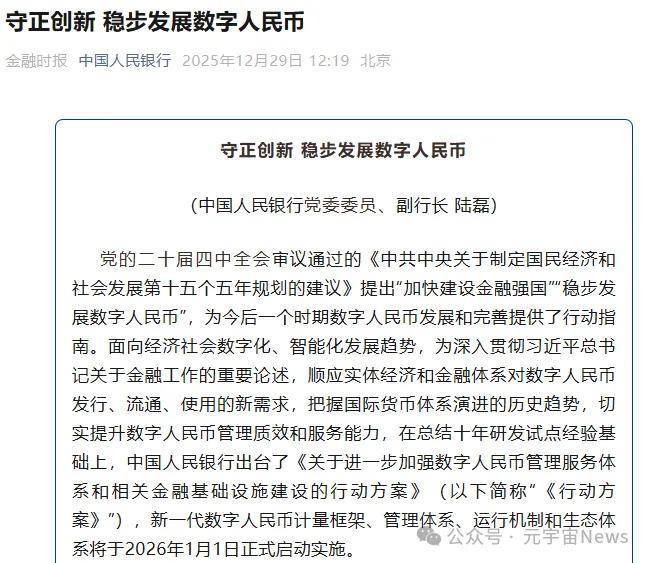
央行:数字人民币升级2.0版,2026年起钱包余额可计付利息
Sou Hu Cai Jing· 2025-12-29 09:03
Core Viewpoint - The digital renminbi is transitioning from "digital cash" to "digital deposit currency," allowing it to generate interest and participate in credit cycles, thus evolving into a complete financial infrastructure [1][3]. Group 1: Transition to Digital Deposit Currency - The digital renminbi will now be classified as a liability of commercial banks, allowing users to enjoy deposit insurance and earn interest, marking a shift from a mere payment tool to a value storage function [3]. - This change respects financial principles, as cash cannot earn interest due to its anonymity, while deposits can participate in economic cycles through bank credit [3]. Group 2: Hybrid Architecture - The digital renminbi features a "mixed architecture" that combines the advantages of an account system with the transparency and programmability of blockchain technology [4]. - This dual approach allows for practical solutions without blindly pursuing decentralization, focusing on real-world issues such as cross-border payments [5]. Group 3: Internationalization Efforts - As of November 2025, the digital renminbi has processed cross-border payments totaling 387.2 billion yuan, with a 95.3% share in the mBridge multilateral central bank digital currency platform [6]. - The Shanghai International Digital Renminbi Operations Center, launched in September 2025, aims to address the inefficiencies of traditional SWIFT systems through its "digital currency bridge" platform [6]. Group 4: Balancing Efficiency and Security - The upgrade of the digital renminbi faces challenges in balancing anonymous payments with anti-money laundering measures, offline transactions with system security, and technological advancements with risk prevention [7]. - The exploration of the digital renminbi transcends technical aspects, aiming to demonstrate that digital currencies can enhance traditional finance without necessarily disrupting it, potentially influencing the future of the global financial order [7].

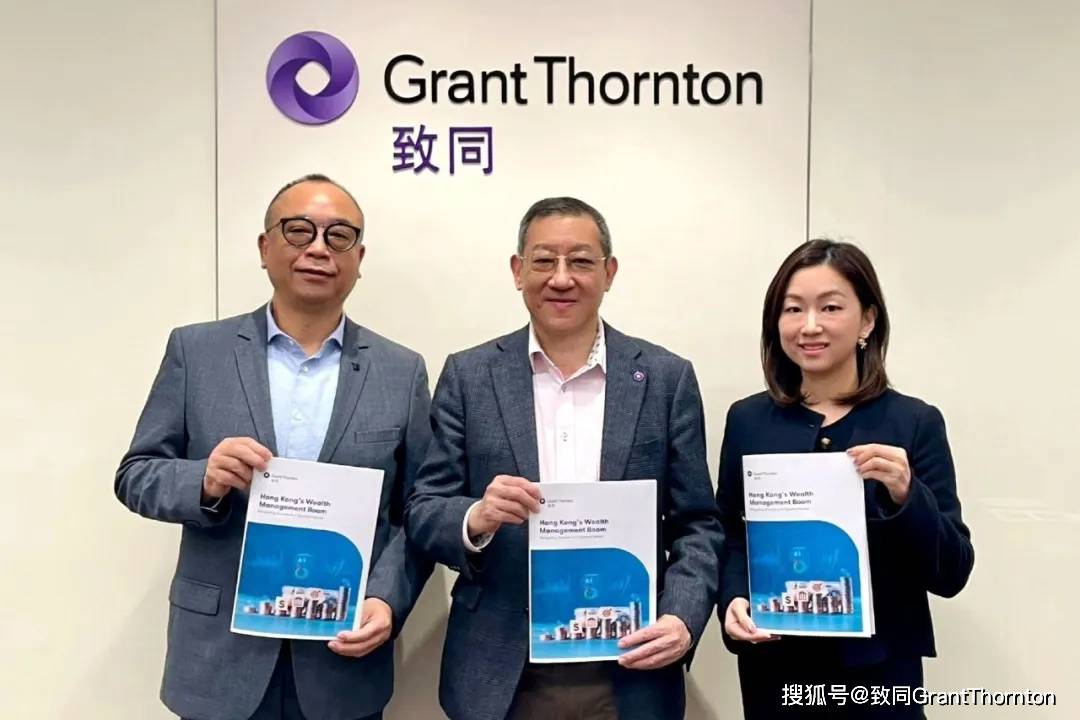
【致同报告】香港财富管理增速领跑全球 剑指全球财富中心之首
Sou Hu Cai Jing· 2025-12-14 13:46
Core Insights - Hong Kong is rapidly becoming the world's largest cross-border wealth management center, surpassing Switzerland, driven by strong capital inflows, growth of family offices, fintech innovation, and deep integration with the Greater Bay Area (GBA) [1][3] Group 1: Wealth Management Growth - The number of ultra-high-net-worth individuals in Hong Kong is projected to increase by 22.9% to 17,215 by mid-2025, making it the fastest-growing region in the global wealth market [1] - Total assets under management in Hong Kong are expected to reach 35.142 trillion HKD by the end of 2024, reflecting a 13% year-on-year growth [3] - Net capital inflow is anticipated to soar to 321 billion HKD in 2024, more than six times the previous year, indicating increasing global investor confidence [3] Group 2: Family Office Ecosystem - Hong Kong's family office ecosystem has become a crucial pillar of its wealth strategy, with over 2,700 family offices established by the end of 2023, 885 of which manage assets exceeding 100 million USD [4] - The growth of family offices has led to a 15% annual increase in private banking and wealth management assets, reaching 10.404 trillion HKD in 2024 [4] - The government’s tax incentives and facilitation policies have accelerated the growth of family offices, surpassing the original target of attracting 200 new family offices between 2023 and 2025 [4] Group 3: Fintech and Regulatory Framework - Hong Kong is enhancing its position as a global asset allocation hub through innovative fintech and forward-looking policies, including the "Fintech 2030" strategy focusing on data, AI, resilience, and tokenization [4][5] - The introduction of the "Stablecoin Ordinance" in August 2025 provides legal clarity for digital assets, attracting investors seeking diversified opportunities [5] - The adoption of distributed ledger technology (DLT) is rapidly increasing, with tokenized products and services reflecting a mature digital infrastructure [5] Group 4: Integration with Greater Bay Area - The integration with the Greater Bay Area is providing new growth momentum for Hong Kong's wealth management industry, with over 510,000 high-net-worth families in the region [6] - The "Cross-Border Wealth Management Connect" program aims to facilitate cross-border investment flows, enhancing Hong Kong's role as a bridge for wealth from mainland China to global markets [6][7] - Upcoming enhancements to the "Cross-Border Wealth Management Connect" will simplify processes and increase individual investment quotas, further solidifying Hong Kong's strategic position [6][7]
瞄准33万亿欧元居民储蓄!欧盟拟打破金融服务国家壁垒,推动打造真正的统一资本市场
Hua Er Jie Jian Wen· 2025-12-04 13:22
Core Viewpoint - The European Commission is advancing a comprehensive plan to break down national barriers in the financial services sector, aiming to create a unified capital market that can compete with the United States, thereby revitalizing the struggling EU economy [1] Group 1: Regulatory Integration - The plan proposes a series of technical measures focused on regulatory integration, granting greater powers to the European Securities and Markets Authority (ESMA) [2] - It suggests simplifying cross-border operations through enhanced "passport" systems for regulated markets and central securities depositories, and allowing pan-European trading venues to consolidate their structures and licenses into a single entity [2] - The proposal aims to transfer regulatory authority over key market infrastructures, such as trading venues and central counterparties, to ESMA, highlighting the disparity in the number of central counterparties and securities depositories between the EU and the US [2] Group 2: Mobilizing Private Savings - A core objective of the plan is to unlock and reallocate the substantial private savings within the EU, as European households hold a significant portion of their assets in cash and deposits compared to their US counterparts [3] - It is reported that EU households possess up to €33 trillion in private savings, with approximately €300 billion flowing overseas annually, primarily to the US [3] - Policymakers believe that the fragmentation of the European financial market contributes to a cautious investment attitude among investors, leading innovative companies to seek funding and expansion opportunities in the US [3] Group 3: Economic Fragmentation - The fragmentation of the financial services market has been identified as a key factor undermining the EU's economic competitiveness, with the market capitalization of EU stock exchanges projected to be only 73% of its annual economic output in 2024, compared to 270% in the US [5] - Former ECB President Mario Draghi emphasized the need for a larger common savings pool and optimized investments to enhance productivity and growth in his report on improving European competitiveness [5] - ECB President Christine Lagarde has also stated that Europe must break internal barriers to move away from an outdated export-driven growth model [5]
多边数字货币桥的新征途
Jing Ji Guan Cha Wang· 2025-11-27 13:55
Core Insights - The multilateral digital currency bridge (JISR) project has officially launched, aiming to create an efficient, low-cost, and scalable cross-border payment solution centered around central bank digital currencies (CBDCs) [1][2] - The project is expected to significantly enhance the efficiency of fund transfers and reduce transaction fees by at least 50% compared to traditional cross-border payment methods [2][4] - The implementation of the JISR project is seen as a step towards promoting the international use of the digital renminbi and reducing reliance on the US dollar for cross-border transactions [4][5] Project Overview - The JISR project was initiated in February 2021 by the People's Bank of China, Hong Kong Monetary Authority, Bank of Thailand, and Central Bank of the UAE, with the Saudi Central Bank joining in June 2024 [1] - The platform is built on distributed ledger technology (DLT), allowing multiple central banks to issue their own CBDCs and facilitate their exchange [1][2] Operational Principles - The project adheres to three main principles: non-destructive, compliant, and interoperable, ensuring that CBDCs promote healthy international monetary systems and comply with local regulations [2][3] - The operational process involves four steps: transferring digital dirhams to the JISR platform, initiating cross-border payments, synchronizing foreign exchange settlements, and transferring digital renminbi to the Chinese enterprise [3][4] Future Implications - The JISR project is expected to accelerate the process of cross-border trade and investment currency settlement between China and the UAE, thereby mitigating exchange rate risks for trade enterprises [4][5] - The establishment of the digital renminbi international operation center in Shanghai aims to provide standardized services for cross-border payments and blockchain applications [5][6] Market Reception - The JISR project is gaining traction among enterprises in regions with stringent cross-border fund flow regulations, as it facilitates compliance and operational efficiency [6][7] - There is a growing interest in tokenized cross-border transfer services among Western companies, while Asian enterprises prioritize compliance and regulatory requirements in cross-border trade payments [6][7]
全球首个文物艺术品溯源元数据国际标准发布
Ren Min Ri Bao· 2025-11-21 19:32
Core Points - The "Metadata Standard for Tracking Cultural Relics and Artworks Based on Distributed Ledger Technology" was officially released at the 2025 Beijing International Cultural Relics Expo [1] - This standard is the world's first international standard for the traceability of cultural relics and artworks, led by China [1] - The establishment of this standard provides a unified common language for digital cultural exchanges among countries, promoting the digital transformation of the global cultural heritage industry [1] - It will also serve as a dialogue bridge for various applications of cultural relics and artworks in digital scenarios, including the internet and virtual reality [1]