国际紧急经济权力法

Search documents
美贸易代表:美对部分国家加征的“全球进口关税”税率或达15%
Sou Hu Cai Jing· 2026-02-26 11:10
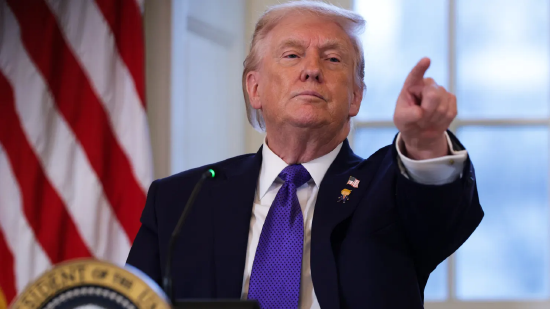
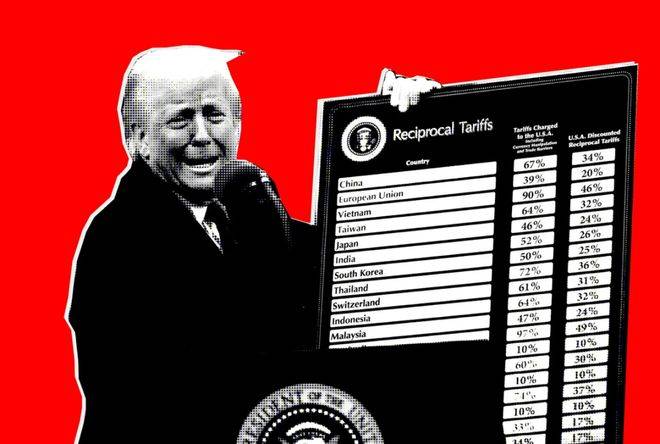
Core Viewpoint - The U.S. is increasing the global import tariff rate from 10% to 15% or higher, following a Supreme Court ruling that deemed previous tariff measures under the International Emergency Economic Powers Act as lacking legal authority [3]. Group 1: Tariff Changes - The U.S. Trade Representative, Jamison Greer, announced the increase in global import tariffs, although specific trade partners were not disclosed [3]. - Following the Supreme Court's ruling, President Trump announced a new global import tariff of 10% for 150 days, which is intended to replace the previously invalidated tariffs [3]. - On February 21, Trump stated via social media that the import tariff rate would be raised to 15% [3]. Group 2: Legal Context - The Supreme Court ruled 6-3 that the Trump administration's use of the International Emergency Economic Powers Act to impose tariffs exceeded its legal authority [3]. - The ruling was based on lawsuits filed by businesses and 12 states, which argued that the unilateral imposition of import taxes was unprecedented [3].

特朗普战胜美国!最高法院被骑脸输出,国会沦为摆设
Sou Hu Cai Jing· 2026-02-25 05:42
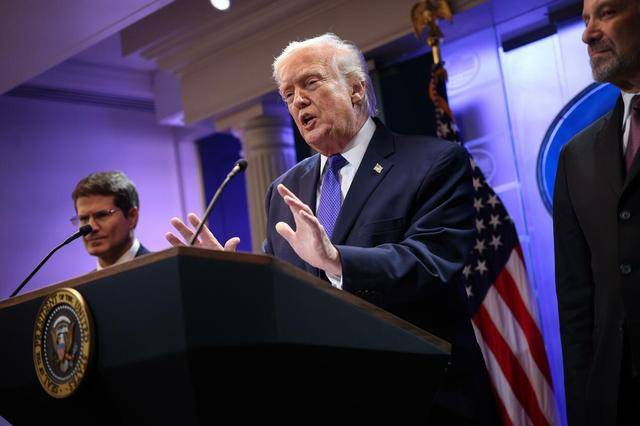
Core Viewpoint - The article discusses how former President Trump has effectively circumvented traditional checks and balances in the U.S. government, particularly through the use of legal loopholes, leading to significant implications for American governance and law [1][3][7]. Group 1: Legal Maneuvering - Trump has exploited two legal loopholes: the National Emergencies Act and the International Emergency Economic Powers Act, allowing him to impose tariffs without congressional approval [3][5]. - By declaring a national emergency, Trump has claimed broad powers to act unilaterally, interpreting various domestic issues as justifications for such emergencies [3][5]. - The Supreme Court ruled that Trump's imposition of additional tariffs was illegal, requiring the return of over $170 billion, but the practical implications of this ruling remain unclear [1][5]. Group 2: Judicial and Legislative Response - Trump's strategy includes a delay tactic in response to the Supreme Court's ruling, leveraging the complexity of the refund process to prolong legal battles [5][8]. - Despite the Supreme Court's authority, Trump has continued to impose tariffs, using different legal provisions to justify his actions, demonstrating a disregard for judicial oversight [5][8]. - The article highlights that Trump's interactions with the judicial system have made him more adept at navigating legal challenges, effectively turning him into a legal expert within the political landscape [3][5]. Group 3: Impact on Governance - The article suggests that Trump's actions have rendered the bureaucratic system in the U.S. ineffective, with the judiciary and legislative branches struggling to respond to his maneuvers [7][8]. - Trump's second term is characterized by a shift from being constrained by legal and institutional frameworks to exploiting them for personal and political gain [8][10]. - The erosion of traditional governance structures under Trump's leadership raises concerns about the future integrity of American democracy and its global standing [8][10].
关税被裁定非法后续:美国最高法院未追究退税,特朗普暗示不退
Sou Hu Cai Jing· 2026-02-23 07:25
Core Viewpoint - The U.S. Supreme Court's decision to reject President Trump's tariffs on trade partners significantly impacts his economic policies and complicates U.S. relations with other countries [2][3] Group 1: Supreme Court Ruling - The Supreme Court upheld a lower court's ruling that Trump exceeded his presidential authority by imposing tariffs without congressional approval, citing the 1977 International Emergency Economic Powers Act [2][3] - Chief Justice John Roberts stated that Trump could not provide legal justification for his unilateral tariff actions, emphasizing the need for explicit congressional authorization [3] Group 2: Tariff Policy and Economic Agenda - Tariffs were central to Trump's "America First" agenda, aimed at revitalizing U.S. manufacturing, creating jobs, reducing national debt, and enhancing negotiation leverage with other countries [3] - Trump announced a new 10% "global tariff" on imports, claiming it is supported by the Trade Act of 1974, which allows such tariffs to address significant trade deficits for up to 150 days [5] Group 3: Legal and Economic Implications - The legal battle surrounding the global tariffs involves small businesses and several U.S. states, separate from the sector-specific tariffs imposed by Trump's administration [6] - The Supreme Court did not clarify whether the U.S. government must refund the tariff revenues collected under the now-invalidated measures [4]
玉渊谭天:美国最高法裁决后,对华IEEPA关税应自动取消
Xin Lang Cai Jing· 2026-02-22 08:41
Core Viewpoint - The article discusses the new tariffs imposed by the U.S. on China under the International Emergency Economic Powers Act (IEEPA), highlighting two main components: the "fentanyl tariff" and the "reciprocal tariff" [1] Summary by Relevant Categories Tariff Details - The current tariff rate on China for the "fentanyl tariff" is 10% [1] - The "reciprocal tariff" also has a 10% rate currently enforced, while an additional 24% rate is on hold [1] Legal Context - According to U.S. executive orders, these tariffs are stated to be "terminated as soon as possible" [1] - A ruling from the U.S. Supreme Court implies that any administrative orders to cancel IEEPA tariffs will also apply to the relevant parts of the U.S.-China tariff arrangements, leading to an automatic cancellation of the IEEPA tariffs on China [1]
关税违法,市场大涨
Zhong Guo Ji Jin Bao· 2026-02-20 23:46
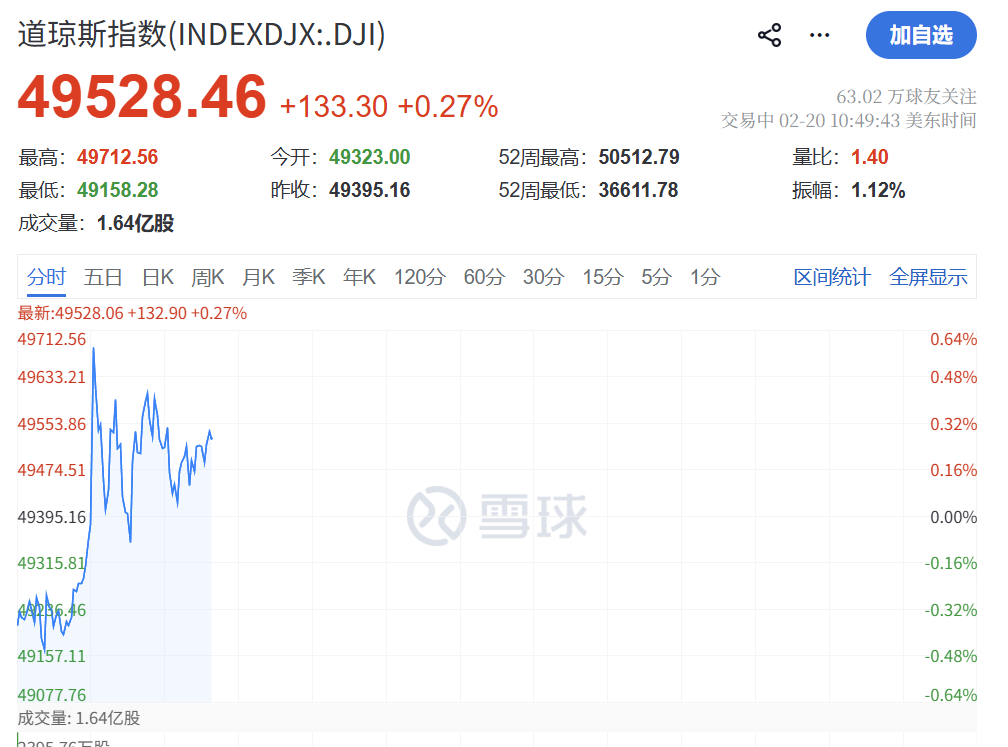
Core Viewpoint - The U.S. Supreme Court ruled against former President Trump's imposition of tariffs, stating that the International Emergency Economic Powers Act (IEEPA) does not authorize such actions, marking a significant legal setback for the Trump administration [10][12]. Group 1: Market Reactions - Gold and silver experienced significant volatility, with silver rising nearly 5% and gold increasing over 1% as the market reacted to the Supreme Court's decision [6]. - Chinese assets showed positive movement, with the Chinese concept stock index opening lower but then rising, and the FTSE China A50 index increasing by nearly 1% [7]. Group 2: Legal and Political Implications - The Supreme Court's decision was a rare defeat for Trump, who had a conservative majority in the court, with the ruling emphasizing that the president does not have inherent power to impose tariffs during peacetime [11][12]. - The ruling was welcomed by a coalition of over 800 small businesses, which viewed it as a significant victory, urging the government to establish an efficient refund process for the tariffs paid [12]. Group 3: Future Actions and Economic Impact - Trump indicated he is considering alternative plans to maintain tariffs, potentially invoking national security clauses or unfair trade retaliation measures [13]. - The estimated total of tariffs imposed under the IEEPA exceeds $175 billion, which may need to be refunded following the Supreme Court's ruling [13].
特朗普已22次宣布国家紧急状态
Xin Lang Cai Jing· 2026-01-31 14:21
Core Viewpoint - The article discusses the frequent declarations of national emergency by President Trump, highlighting the implications and legal framework surrounding such actions, as well as the criticisms they have garnered [1]. Summary by Relevant Sections National Emergency Definition - A national emergency in the U.S. is a specific legal status that allows the President to mobilize resources and take actions typically prohibited by law to address sudden threats, based on the National Emergencies Act of 1976 [1]. - The declaration activates over 100 powers written into law by Congress, covering various crises from economic threats to military needs [1]. Frequency of Declarations - Since returning to office on January 20, 2017, Trump has declared a national emergency 11 times, making him the president with the most declarations since the law's enactment, surpassing former President Clinton's 17 declarations over eight years [1]. Use of Emergency Powers - National emergencies allow the President to bypass Congress and implement policies through executive orders, such as economic sanctions against countries like Cuba, Iran, and Venezuela [1]. - The declaration elevates diplomatic issues to "national security threats," providing legal justification for sanctions and tariffs, which can be adjusted or extended at the President's discretion [1]. Impact of Declarations - The U.S. has used national emergency powers to address issues like weapons proliferation, terrorism, and human rights violations, leading to sanctions against multiple countries, including Canada and Mexico [1]. - Concerns have been raised about the potential abuse of power, as the ease of declaring emergencies may lead to actions that do not constitute genuine emergencies [1]. - Legal challenges have emerged against Trump's use of emergency powers, particularly regarding tariffs, with courts ruling against the legality of his actions, and the Supreme Court is currently reviewing these cases [1].
美国最高法院仍未对特朗普关税案作出裁决,即将休庭四周
Xin Lang Cai Jing· 2026-01-21 12:21
Core Viewpoint - The U.S. Supreme Court has delayed a decision on the legality of tariffs imposed by President Trump, maintaining the status quo and causing significant financial losses for U.S. importers, estimated at over $16 billion per month [1][6]. Group 1: Tariff Impact - Trump's tariffs have resulted in over $16 billion in monthly losses for U.S. importers since their implementation [1][6]. - By February 20, the total tariffs collected under the International Emergency Economic Powers Act could exceed $170 billion, according to Bloomberg's economic analyst Chris Kennedy [5]. Group 2: Legal Proceedings - The Supreme Court has not yet announced a ruling on the legality of Trump's tariffs, with the next possible decision date set for February 20, following a four-week recess [2][5]. - There have been over 1,500 preemptive claims submitted to the U.S. International Trade Court by companies affected by the tariffs, indicating a significant legal response from the business community [5]. Group 3: Political Context - Trump's tariffs are also being used as leverage in geopolitical strategies, such as pressuring European nations regarding Greenland, with proposed increases in tariffs from 10% to 25% on certain countries [6]. - Despite potential unfavorable rulings from the Supreme Court, experts suggest that Trump may continue to use tariffs as a tool for geopolitical ambitions, indicating a persistent strategy regardless of legal outcomes [6].
关税突发!美国刚刚宣布
中国基金报· 2026-01-15 00:07
Group 1 - The U.S. White House announced a 25% import tariff on certain semiconductors, semiconductor manufacturing equipment, and derivatives starting from January 15 [1] - The U.S. Supreme Court did not make a ruling on the legality of the tariffs imposed by the Trump administration, leaving the case unresolved [2] - The Trump administration's tariffs were implemented under the International Emergency Economic Powers Act without Congressional approval, leading to legal challenges [2]

特朗普宣布对伊朗贸易伙伴征收25%关税:“立即生效”
Sou Hu Cai Jing· 2026-01-13 01:51
Group 1 - The core point of the news is that President Trump announced a 25% tariff on countries that engage in trade with Iran, effective immediately, although the specifics of the policy remain unclear [1][3] - The new tariff policy could significantly increase the import costs for Iran's major trading partners, including Iraq, India, the UAE, and Turkey [3] - The announcement coincides with ongoing anti-government protests in Iran, which have been met with internet blackouts and government crackdowns [3] Group 2 - Trump's administration has previously increased tariffs on Indian goods to 50% in an effort to penalize India for purchasing Russian oil, indicating a broader strategy of using tariffs as a tool for foreign policy [5] - The legal basis for Trump's tariff actions is under scrutiny, with potential challenges in the Supreme Court that could limit his ability to impose such tariffs and may require the return of approximately $130 billion in tariff revenue [5] - The economic situation in Iran is dire, with the currency plummeting, inflation exceeding 40%, and rising prices for essential goods, exacerbated by international sanctions and domestic mismanagement [5]
特朗普试图阻止法院及债权人扣押委内瑞拉在美国的石油收入
Xin Lang Cai Jing· 2026-01-11 08:43
Group 1 - The core point of the news is that President Trump signed an executive order to prevent the seizure of Venezuelan oil revenues held in U.S. Treasury accounts, emphasizing that these funds are sovereign assets for government and diplomatic purposes [2][8] - The executive order declares a national emergency, stating that any court attempts to seize these funds would significantly harm U.S. national security and foreign policy [2][8] - The order also highlights that any judicial actions regarding these funds would interfere with efforts to maintain Venezuela's economic and political stability [2][8] Group 2 - The context includes the recent capture of Venezuelan leader Nicolás Maduro and his wife, who face drug trafficking charges, with Trump indicating cooperation between the U.S. and Venezuela to rebuild the oil and gas infrastructure [2][8] - Trump met with executives from major oil companies to encourage investment in Venezuela, although ExxonMobil's CEO stated that the country currently lacks investment conditions [2][8] - Chevron is noted as the only major U.S. oil company still operating in Venezuela under a special license granted by the Trump administration [4][9]