太空制造

Search documents
钧达股份20260308
2026-03-10 10:17
Summary of the Conference Call for JunDa Co., Ltd. Company Overview - **Company Name**: JunDa Co., Ltd. - **Core Business**: Primarily focused on photovoltaic (PV) cells, recognized as a leading player in the global market in terms of technology and operational scale [2][3]. Industry Insights - **Photovoltaic Market**: The company notes a return to a new supply-demand balance in the PV market after intense competition, with a significant reduction in market participants leading to improved profitability [2][3]. - **Price Trends**: The price of ground PV cells has increased from below 0.3 yuan per watt in 2022 to a range of 0.4 to 0.5 yuan per watt in 2026, creating conditions for profitability [3]. Strategic Developments - **Transition to Space Photovoltaics**: JunDa has begun investing in space photovoltaic technology, collaborating with the Chinese Academy of Sciences to develop new technologies, including the Space-grade CPI membrane and advanced solar cells [3][4]. - **Market Potential**: The company anticipates a significant increase in satellite launches in China, projecting a rise from a few hundred to thousands of launches annually, representing a substantial market opportunity [5][6]. Technological Advancements - **CPI Membrane Technology**: The company is developing a new type of CPI membrane designed for space applications, which is lightweight, flexible, and cost-effective compared to traditional materials [9][10]. - **Performance Metrics**: The CPI membrane aims for over 90% light transmittance and enhanced durability against space conditions, including atomic oxygen and UV radiation [11][12]. Competitive Positioning - **Acquisition of Satellite Company**: JunDa acquired Shanghai Xuntian Qianhe Satellite Company to enhance its capabilities in satellite manufacturing, leveraging the expertise of a team from a top aerospace institution [5][6]. - **Dual Focus**: The company is strategically positioned at two critical junctures: space photovoltaics and satellite manufacturing, which are expected to provide a competitive edge in the commercial aerospace sector [6][7]. Regulatory and Market Environment - **Government Support**: The recent national plan has identified aerospace as a pillar industry, with specific tasks and targets for satellite internet and computing satellites, indicating strong governmental backing for the sector [7][8]. - **Challenges in Material Supply**: The production of CPI membranes faces challenges due to strict regulations on fluorinated chemicals, which are essential for the manufacturing process [26][27]. Future Outlook - **Production Capacity**: JunDa plans to establish a standardized production line for CPI membranes by mid-2024, with initial capacity starting at several hundred megawatts [37][38]. - **Market Strategy**: The company aims to introduce a low-cost P-type heterojunction solar cell combined with the CPI membrane, targeting a conversion efficiency exceeding 30% in the near future [31][34]. Analyst Questions and Responses - **Production Process**: The production of CPI membranes involves complex material sourcing and proprietary formulations, which are critical to maintaining competitive advantages [26][27]. - **Client Engagement**: JunDa is actively engaging with clients for the deployment of its space photovoltaic solutions, with ongoing trials and experiments planned for the near future [42][43]. This summary encapsulates the key points discussed during the conference call, highlighting JunDa's strategic direction, technological advancements, and market positioning within the rapidly evolving aerospace and photovoltaic industries.
重新认识一下:聚双环戊二烯(PDCPD)材料
DT新材料· 2026-03-08 16:05
Market Overview - The global PDCPD market is projected to grow from approximately $15.2 million in 2025 to $16.3 million in 2026, reaching $31.7 million by 2035, with a compound annual growth rate (CAGR) of about 7.6% [2] - Key application areas include engineering and agricultural machinery (34%) and transportation (31%), accounting for over 60% of the market [2] - Geographically, North America holds 33%, Asia-Pacific 31%, and Europe 28%, with China being a significant market in the Asia-Pacific region [2] Traditional Positioning Issues - PDCPD has been marketed as a "super material" capable of replacing steel, emphasizing its impact resistance, lightweight nature, and ability to form large, complex parts [3][4] - However, it is often viewed as a non-essential material, akin to a "cold dish" at a banquet, where its absence does not significantly impact the overall offering [5] - The chosen market segment for PDCPD, focusing on automotive exterior components and engineering machinery casings, is highly competitive and cost-sensitive, leading to challenges in securing profitable orders [6] Reevaluating PDCPD - PDCPD is a thermosetting engineering plastic with performance metrics that indicate it is not a "super material" but rather a moderately performing engineering plastic [10][11] - To achieve equivalent strength to a 1mm steel plate, a thickness of 4.7mm of PDCPD is required, highlighting its limitations in structural applications [12] - The material's production process limits its application to thin shell components due to heat retention issues during thick part formation [14][15] Potential Applications - PDCPD can be utilized in various applications beyond automotive parts, including: - **Pipelines**: PDCPD can replace stainless steel and rubber-lined pipes in chemical industries due to its corrosion resistance [27] - **Protective Coatings**: It can be developed into a sprayable protective layer for chemical storage tanks and pipelines [28] - **High-Performance Composites**: PDCPD can be used as a resin in fiber-reinforced composites, enhancing mechanical properties [29] - **Foam Materials**: PDCPD can be produced as both closed-cell and open-cell foams for insulation and filtration applications [31] - **Military and Emergency Scenarios**: Its properties make it suitable for rapid on-site manufacturing of large components in military operations [34][36] Space Manufacturing Potential - PDCPD's characteristics make it ideal for low-energy manufacturing in space, where traditional heating methods are impractical [41] - The material has been tested in space environments, demonstrating its potential for rapid fabrication and repair of components [46][48] - Innovative manufacturing techniques, such as "growth printing," could revolutionize the speed and efficiency of producing parts in space [55] Conclusion - PDCPD is not a super material but has distinct advantages in specific applications, including pipelines, coatings, composites, and military uses [68] - The focus should shift to leveraging its unique properties in suitable markets rather than attempting to position it as a direct competitor to steel or advanced composites [68]


航天军工:太空制造或成为商业航天重要增长点
HTSC· 2026-03-02 02:55
Investment Rating - The report maintains an "Overweight" rating for the aerospace and military industry, indicating an expectation that the industry stock index will outperform the benchmark [2]. Core Insights - The first Space Manufacturing and Space Economy Innovation Development Conference was held in Beijing, announcing the establishment of the Space Manufacturing Innovation Development Alliance, aimed at promoting the industrialization of space manufacturing and the development of new business models in the space economy [4]. - Unique environments in space, such as microgravity and vacuum, provide significant advantages for industries like space material processing and space pharmaceuticals. China has conducted over 3,000 space breeding experiments, resulting in more than 260 approved varieties of staple grains and hundreds of new varieties of vegetables, fruits, and flowers, leading to an annual increase of over 2 billion kilograms of grain and direct economic benefits exceeding 100 billion yuan [4][5]. - The report emphasizes that the core support for the industrialization of space manufacturing includes three aspects: the significant reduction in costs for entering space through reusable heavy-lift rockets, the transition from returnable satellites to commercial space stations for large-scale manufacturing environments, and the low-cost downlink capabilities provided by reusable cargo spacecraft like the "Haolong" [6]. Summary by Sections Space Manufacturing Industry - The report highlights that space manufacturing is a new growth point for commercial aerospace, enhancing demand for launch vehicles and creating new needs for commercial space stations and cargo spacecraft [6]. - The integration of advanced manufacturing technology with space application technology is expected to foster new business models in areas such as in-orbit services, space pharmaceuticals, and space material processing [5]. Key Players and Applications - The report lists key players and applications in the space manufacturing sector, including: - Space stations and returnable spacecraft: Tianhe core module, Wen Tian experimental module, Dream Tian experimental module, and commercial space stations [8]. - Space pharmaceuticals: Aerospace Shenzhou Biotechnology Group, China Resources Sanjiu Medical & Pharmaceutical Co., Ltd., and Hubei Chang'e Biotechnology Co., Ltd. [8]. - Space material processing: Teams from Northwestern Polytechnical University and various institutes under the Chinese Academy of Sciences [8].
太空制造创新发展联盟成立,桂海潮发布联盟倡议
Xin Jing Bao· 2026-02-27 12:29
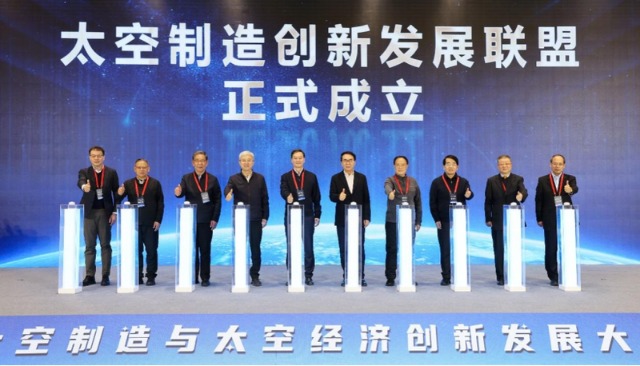
Core Viewpoint - The first Space Manufacturing and Space Economy Innovation Development Conference was held in Beijing, marking the establishment of the Space Manufacturing Innovation Development Alliance aimed at promoting the industrialization of space manufacturing and the development of new business models in the space economy [1] Group 1: Conference Overview - The conference was themed "Building the Star Path, Business Initiates the Sky" and was co-hosted by Beihang University and the Chinese Academy of Sciences Space Application Engineering and Technology Center [1] - The event aimed to create a high-level platform for academic exchange, technical collaboration, and industry connection across various fields [1] Group 2: Alliance Formation - The Space Manufacturing Innovation Development Alliance was officially announced, with ten academicians participating in the unveiling ceremony [1] - The alliance consists of nearly a hundred universities, research institutions, enterprises, and investment organizations, focusing on collaborative innovation in production, education, research, and application [1] Group 3: Key Initiatives - The alliance's initiatives include driving innovation, breaking through key core technologies, establishing a standard system, promoting the application of research results, optimizing resource allocation, and fostering innovative talent [1] - The emphasis is on open sharing and building a collaborative development ecosystem to support the high-quality development of commercial aerospace and cultivate new business models in the space economy [1]
太空制造创新发展联盟成立 桂海潮发布联盟倡议
Xin Jing Bao· 2026-02-27 12:17
Group 1 - The first Space Manufacturing and Space Economy Innovation Development Conference was held in Beijing, leading to the establishment of the Space Manufacturing Innovation Development Alliance, which aims to promote the industrialization of space manufacturing and the development of new business models in the space economy [1][2] - The alliance was initiated by nearly a hundred universities, research institutions, enterprises, and investment organizations, focusing on building a collaborative innovation system that integrates production, education, research, application, and finance [1] - The conference was themed "Star Path Builders, Opening the Sky" and aimed to create a high-level platform for academic exchange, technical collaboration, and industry connection across various fields [1] Group 2 - Professor Gui Haichao from Beihang University, who is also the first payload expert of the Chinese space station, proposed six initiatives for the alliance, including driving innovation, breaking through key core technologies, establishing a standard system, and optimizing resource allocation [2] - The initiatives also emphasize the importance of enhancing communication and cooperation, cultivating innovative talent, and maintaining an open and shared ecosystem for collaborative development in the commercial aerospace sector [2] - The unveiling of the alliance was attended by ten academicians, highlighting the significance of academic support in advancing the goals of the alliance [1][2]
一座芯片工厂,被发向太空
半导体芯闻· 2026-02-14 08:56
Core Viewpoint - A UK company, Space Forge, is developing a space "factory" to produce materials needed for quantum computers, AI data centers, and defense infrastructure, achieving key milestones in manufacturing high-quality semiconductor crystals in microgravity conditions [1][2]. Group 1: Space Manufacturing Technology - Space Forge's factory, located in Cardiff, Wales, aims to produce "seed" crystals for semiconductors that can be used in communication infrastructure, computing, and transportation [1]. - The company plans to launch a satellite named ForgeStar-1 using a SpaceX rocket by June 2025, which will generate plasma at temperatures of 1000 degrees Celsius (1832 degrees Fahrenheit) to facilitate advanced crystal production [1]. - The CEO, Joshua Western, emphasizes that manufacturing semiconductors in microgravity leads to a more orderly atomic arrangement, resulting in semiconductor crystals with purity hundreds to thousands of times higher than those produced on Earth [1]. Group 2: Market and Commercialization - The primary market for Space Forge's materials includes aerospace and defense, telecommunications, and data sectors, with plans to establish a commercial production system in orbit within two years [2]. - The company faces significant regulatory challenges, as obtaining launch permits took two and a half years despite the satellite's construction taking only seven weeks [2]. - The value of the high-quality compounds produced in space could reach tens of millions of dollars per kilogram, with potential for hundreds of new material combinations previously only theoretical [2].
在太空造芯片,图啥?
半导体行业观察· 2026-02-12 00:56
Core Viewpoint - Space Forge has achieved a significant milestone in space manufacturing by successfully operating an orbital furnace on its ForgeStar-1 satellite, which is expected to enable near-ideal semiconductor crystal manufacturing in space [2] Group 1: Space Manufacturing Achievements - Space Forge's orbital furnace produced a high-temperature plasma flow, marking a breakthrough in the field of orbital manufacturing [2] - The company aims to create crystal seeds in space that will be used on Earth to produce high-performance power devices [2] - Historical experiments have shown that semiconductor crystals grown in microgravity environments tend to be larger, more uniform, and perform better than those grown on Earth [2] Group 2: Advantages of Space-Grown Crystals - The ultra-high vacuum in space can eliminate impurities that typically affect crystal quality, leading to improved semiconductor performance [4][5] - Microgravity conditions allow for more uniform crystal growth, reducing defects and enhancing the overall quality of the semiconductor [5] - Enhanced crystal quality can lead to lower operating temperatures and reduced energy consumption for semiconductor devices [5] Group 3: Economic Considerations and Challenges - The cost of launching materials into space remains high, with SpaceX's Falcon 9 rocket charging approximately $1,500 per kilogram [6] - Space Forge plans to cultivate space-grown crystal seeds further on Earth, potentially yielding significant amounts of high-performance materials [6] - Some industry experts express skepticism about the economic viability of space-grown crystals, citing declining costs of terrestrial semiconductor materials [7] Group 4: Industry Outlook and Competitors - Other companies, such as Voyager Technologies and ACME Space, are also exploring the potential of space-grown materials for various applications [8] - Analysts predict that the in-space manufacturing market could reach $28.19 billion by 2034, indicating growing interest and investment in this sector [9] - Caution is advised regarding the scalability of space manufacturing for bulk materials, though niche applications may justify the investment [9]

马斯克突然喊话“重返月球”!SpaceX要搞什么大事?
Xin Lang Cai Jing· 2026-02-09 11:06
Core Viewpoint - Elon Musk has shifted focus from Mars colonization to lunar exploration, stating that the Moon is the first step for humanity towards the stars, driven by time efficiency, policy pressures, and commercial viability [2][11]. Group 1: Reasons for the Shift - Time efficiency favors lunar missions, with a launch window every 10 days and a travel time of 3 days, compared to Mars which has a 26-month wait and a 6-month journey [2][11]. - Policy pressures from the U.S. government mandate a return of astronauts to the Moon by 2028, with SpaceX as a key contractor for NASA on a multi-billion dollar contract [2][11]. - The Moon presents quicker financial returns through NASA contracts and potential resource extraction, such as helium-3 for fusion energy, and opportunities for commercial ventures like hotels [2][11]. Group 2: SpaceX's Ambitious Plans - SpaceX plans to establish a "construction frenzy" on the Moon, utilizing AI satellites for environmental monitoring and building factories to 3D print materials from lunar regolith [3][12]. - The company aims to deploy 1 million satellites to create the first orbital data center, addressing AI computational needs on Earth, with a projected cost reduction for space computing to one-tenth of current Earth costs within four years [3][12]. - SpaceX's valuation has surged to $1.25 trillion, with an IPO planned for summer 2026, potentially raising over $30 billion, reflecting strong market interest in lunar initiatives [3][12]. Group 3: Challenges and Future Plans - Technical challenges include lunar dust damaging equipment, extreme temperatures during lunar nights, and high costs for transporting water from Earth [6][14]. - Ethical concerns arise regarding lunar resource extraction rights and the potential for conflict over these resources, alongside public skepticism about prioritizing commercial interests over scientific research [6][14]. - SpaceX plans to launch an unmanned lunar mission in March 2027 and establish the first lunar base by 2030, which could serve as a testing ground for technologies needed for future Mars colonization [6][14].

我国实现太空金属3D打印,开启“天造天用”新篇章
Xin Lang Cai Jing· 2026-02-03 12:52
Core Insights - China's first successful space metal additive manufacturing experiment marks a significant advancement in space manufacturing technology, transitioning from "ground verification" to "space engineering verification" [1][5] - This breakthrough is expected to enhance the development of space manufacturing technology, laying a crucial technical foundation for rapid in-orbit manufacturing, autonomous repairs, deep space exploration, and extraterrestrial base construction [1][5] Policy Support - The Chinese government has identified space metal 3D printing as a key development area, providing robust policy and project support [2][7] - In November 2025, the China National Space Administration established a dedicated regulatory body for commercial space, indicating a structured approach to the sector's growth [2][7] Market Activity - Companies are actively entering the space metal 3D printing market, with Hangzhou E-Jia 3D Printing Technology Co., Ltd. planning to raise 1.205 billion yuan for expansion and R&D in metal 3D printing [3][8] - E-Jia's technology can reduce engine weight by over 50% and double strength, while significantly shortening delivery times from six months to weeks, aligning with the commercial space sector's demands for lightweight, low-cost, and efficient manufacturing [3][8] Future Applications - Space metal 3D printing technology is expected to be applied in various aerospace scenarios, including on-orbit maintenance of spacecraft and satellites, reducing reliance on ground supplies [4][9] - In deep space exploration, this technology can utilize extraterrestrial resources to print necessary tools and components, supporting future space infrastructure and habitation efforts [4][9]
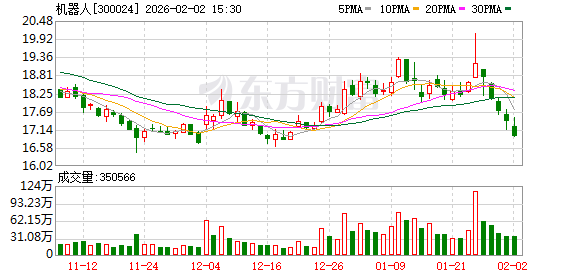
机器人:公司暂未涉及太空制造领域
Zheng Quan Ri Bao· 2026-02-02 08:40
Core Viewpoint - The company primarily provides comprehensive solutions for industries such as new energy vehicles, semiconductors, lithium batteries, electronics, photovoltaics, aerospace, and medical sectors, and has not yet ventured into space manufacturing [2] Group 1 - The company is focused on sectors including new energy vehicles, semiconductors, lithium batteries, electronics, photovoltaics, aerospace, and medical [2] - The company is actively monitoring cutting-edge technology applications and will explore opportunities based on future market demand [2]