
收入分配制度改革

Search documents
多地上调最低工资标准
第一财经· 2026-01-08 11:06
Core Viewpoint - The article discusses the recent adjustments to minimum wage standards in various provinces in China, highlighting the impact on laborers' income and social security benefits, as well as the broader implications for income distribution and economic growth [3][4][6]. Summary by Sections Minimum Wage Adjustments - Shaanxi Province has announced new minimum wage standards effective from January 1, 2026, with monthly minimum wages set at 2376 yuan for Class 1, 2250 yuan for Class 2, and 2140 yuan for Class 3 regions. The hourly minimum wage for part-time workers is 23 yuan, 21.7 yuan, and 20.7 yuan respectively [3]. - Jiangsu Province will also implement new minimum wage standards starting January 1, 2026, increasing the monthly minimum wages from 2490 yuan, 2260 yuan, and 2010 yuan to 2660 yuan, 2430 yuan, and 2180 yuan. The hourly minimum wage for part-time workers will rise from 24 yuan, 22 yuan, and 20 yuan to 25 yuan, 23 yuan, and 21 yuan [3]. - Zhejiang Province's new minimum wage standards will also take effect on January 1, 2026, with monthly minimum wages set at 2660 yuan, 2430 yuan, and 2180 yuan, and hourly minimum wages for part-time work adjusted to 25 yuan, 23 yuan, and 21 yuan [3]. Impact on Laborers and Social Security - The adjustment of minimum wage standards is expected to positively influence the distribution structure and significantly affect laborers' interests. Other benefits linked to minimum wage, such as overtime pay and social security contributions, will also see corresponding increases, leading to an overall enhancement in social security levels [4][5]. Broader Economic Implications - The Central Economic Work Conference held in December 2025 emphasized the need for a plan to increase urban and rural residents' income. The National Development and Reform Commission highlighted the importance of raising residents' income share in national income distribution and improving labor remuneration in the initial distribution [6]. - Experts suggest that promoting income growth for residents requires both short-term measures to boost employment and long-term reforms in income distribution and social security systems. The capital market is also seen as playing a crucial role in enhancing residents' income and expanding domestic demand [6].


金融大家评 | 收入分配制度或迎重大改革!
清华金融评论· 2026-01-01 10:18
Core Viewpoint - The article emphasizes the importance of income distribution reform in enhancing residents' income and consumption, which is crucial for economic growth and achieving common prosperity in China [2][3]. Group 1: Policy Evolution - The shift from a focus on low- and middle-income groups to a comprehensive urban and rural resident income increase plan indicates a significant upgrade in policy approach, moving from principles to actionable plans [3]. - The new policy aims to cover all urban and rural residents, reflecting a broader scope compared to previous measures that primarily targeted low- and middle-income groups [3]. Group 2: Structural Issues in Income Distribution - The current income distribution structure is a significant constraint on consumption growth, with labor compensation and residents' income as a percentage of GDP being lower than in most developed economies [4]. - The urban-rural income disparity remains substantial, with a ratio of 2.34:1, indicating persistent inequality that affects overall consumption patterns [4]. Group 3: Economic Development and Consumption - A well-structured income distribution system is essential for forming a consumption-driven development model, which is critical for China's modernization efforts [5]. - The low proportion of residents' income in national income and the large income gap among different groups hinder the expansion of consumer spending [5]. Group 4: Recommendations for Income Improvement - Increasing labor income through better wage growth mechanisms and enhancing market vitality are essential for improving income levels [7]. - The government should also focus on stabilizing asset prices and improving social security measures to support low-income groups [7]. Group 5: Redistribution Mechanisms - Strengthening redistribution efforts is crucial, as current measures are less effective compared to major economies, impacting the government's ability to adjust income disparities [8]. - Optimizing tax structures and enhancing social security contributions are recommended to improve the effectiveness of income redistribution [8]. Group 6: Comprehensive Policy Framework - A multi-faceted approach involving initial distribution, redistribution, and third distribution (charitable contributions) is necessary to effectively address income inequality [9][12]. - Policies should focus on improving employment, tax systems, and social welfare to create a more equitable income distribution landscape [9][12].

财经战略年会暨第二届财经智库论坛在京举办
Zhong Guo Jing Ji Wang· 2025-12-28 06:19
Core Viewpoint - The "15th Five-Year Plan" period is identified as a critical phase for China's economic development, emphasizing the need for comprehensive strategies to achieve modernization by 2035, with a focus on expectation management, income distribution reform, and the integration of investment in goods and people [3][4]. Group 1: Economic Development Strategies - The "15th Five-Year Plan" should reflect the transitional characteristics of the economy, aiming for a solid foundation and comprehensive efforts to meet the 2035 modernization goal [3]. - Emphasis on expectation management mechanisms, integrating them into macroeconomic analysis and policy frameworks [3]. - The need for reform in income distribution systems to establish a fair and just social security and transfer payment system [3]. Group 2: Macroeconomic Policies - The period will see peak levels in population, real estate demand, heavy industry scale, export volume, and carbon emissions, necessitating a combination of counter-cyclical and cross-cyclical macroeconomic policies for smooth transitions [4]. - High-quality development requires both qualitative improvements and reasonable quantitative growth, with a focus on maintaining economic growth while adjusting structures [4]. Group 3: Financial and Resource Management - The "debt-asset-resource" framework is proposed to revitalize existing economic structures, emphasizing the importance of resource liquidity and value creation [4]. - The need for financial theory innovation to support the development of a strong financial nation, addressing practical issues and enhancing core competitiveness [5]. Group 4: Fiscal Policy and Governance - Fiscal reforms are essential for national governance, requiring coordination between fiscal policies and other policy areas, while addressing structural issues in the medium to long term [5]. - The establishment of a budget system and tax system that aligns with responsibilities and powers is crucial for effective governance [5]. Group 5: Consumer-Focused Financial Systems - A consumer-friendly financial system is necessary to address the challenges in financial services and consumer behavior, promoting supply-side financial reforms and enhancing financial inclusivity [6]. - The significance of building a consumer-friendly financial system lies in guiding financial reforms and advancing inclusive finance [6]. Group 6: Forum Discussions - The conference featured six sub-forums discussing topics such as AI empowerment in think tank construction, economic growth and macroeconomic policies, fiscal policies and tax reforms, and the dual circulation development pattern [6].
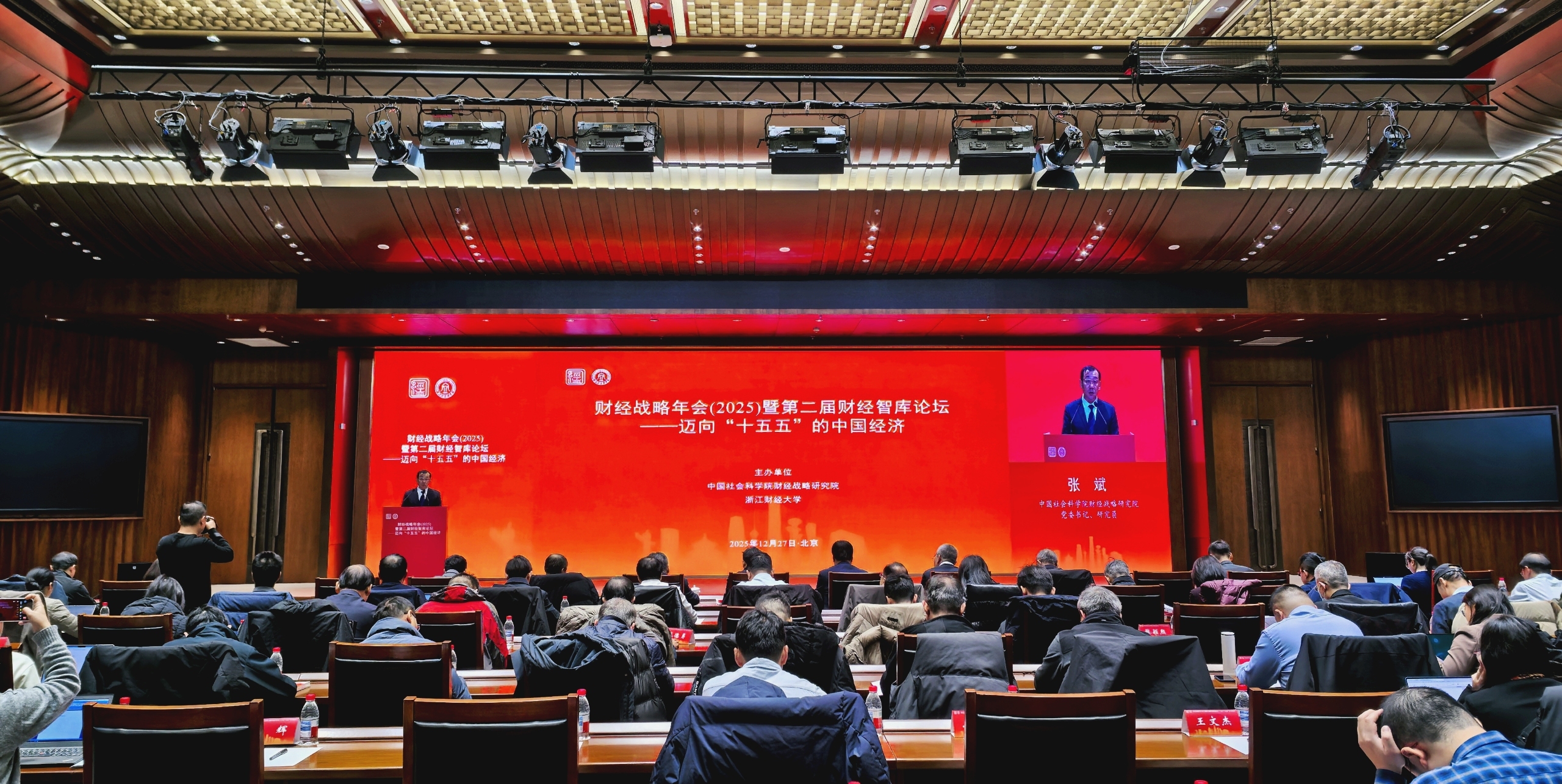
中国社会科学院学部委员、国家一级教授高培勇:政策支持与改革创新并举筑牢经济发展根基
Zheng Quan Ri Bao· 2025-12-26 16:44
Group 1 - The core argument presented by Gao Peiyong emphasizes the dual approach of policy support and reform innovation as essential for driving economic development in 2026 [1] - Current weak market expectations are identified as a significant factor hindering economic recovery, necessitating the establishment of a robust expectation management mechanism [1] - Gao proposes three key measures for improving expectation management: integrating expectation factors into macroeconomic analysis, explicitly including stable expectations in macroeconomic policy goals, and incorporating reform measures into macroeconomic regulation practices [1] Group 2 - Consumption is highlighted as a lasting driver of economic growth, with its effectiveness depending on both the release of current consumption potential and the cultivation of long-term consumption capacity [2] - The deep-rooted issue of insufficient consumer demand is attributed to changes in income and wealth accumulation patterns, leading to uncertainty in future expectations [2] - The Central Economic Work Conference's focus on implementing a plan for increasing urban and rural residents' income is seen as a crucial step in reforming the income distribution system [2] Group 3 - The fiscal and tax system is called to transition towards a public finance model, focusing on optimizing the government revenue and expenditure structure [3] - Adjustments in government spending are recommended, shifting funds from "investment in material" to "investment in people," particularly in social welfare and livelihood security [3] - This transformation is described as a profound change in the fiscal system's function, aimed at enhancing public service spending and increasing investments in livelihood, ultimately fostering a virtuous cycle of income growth and consumption increase [3]
收入分配制度或迎重大改革
凤凰网财经· 2025-12-18 14:38
Group 1 - The core viewpoint of the article emphasizes the upgrade of income increase policies from focusing on low- and middle-income groups to a comprehensive plan covering all urban and rural residents, aiming to enhance overall income levels and promote economic growth [2][4] - The National Development and Reform Commission highlights the importance of increasing residents' income share in national income distribution and labor remuneration in the initial distribution, aiming for synchronization between income growth and economic growth [2][3] - The article discusses the need for both short-term measures to boost employment and long-term reforms in income distribution and social security systems to ensure sustainable income growth for residents [2][5] Group 2 - Data from the National Bureau of Statistics indicates that the growth rate of per capita disposable income from 2020 to 2024 shows a general trend of synchronization with economic growth, with rates of 2.1%, 8.1%, 2.9%, 6.1%, and 5.1% respectively [3] - The article outlines the four sources of residents' income: labor remuneration, property income, operating income, and transfer income, with labor income accounting for 56.5% of disposable income in 2024 [6][7] - The importance of stabilizing employment is emphasized as a key factor influencing residents' income, with policies aimed at supporting various employment groups and enhancing social security for flexible employment workers [6][7] Group 3 - The article discusses the necessity of deepening income distribution reform as a long-term strategy to promote residents' income growth, focusing on a fair distribution system that rewards contributions [9][10] - It highlights the need for a balanced income distribution to address existing disparities, with a focus on increasing the share of residents' income in national income and improving the income of low-income groups [10][11] - The article suggests that enhancing the redistributive role of taxation and social security is crucial for addressing income inequality and supporting economic stability [10][11]

收入分配大变革!首提城乡居民增收计划
Sou Hu Cai Jing· 2025-12-17 17:00
Group 1 - The core viewpoint of the article emphasizes the implementation of a rural-urban resident income increase plan, aiming to enhance the proportion of resident income in national income distribution [3][5][11] - The policy signal has evolved from "promoting" to "formulating and implementing," indicating a shift from focusing on low-income groups to encompassing all urban and rural residents [3][5] - The article highlights the necessity for reform due to deep-rooted contradictions in China's income distribution, including low resident income share and significant income disparity [5][8] Group 2 - The "14th Five-Year Plan" provides clear guidance on income distribution reform, advocating for a primary distribution mechanism based on market evaluation of contributions [9][11] - The article discusses the synchronization of three distribution methods: primary distribution, redistribution, and third distribution, emphasizing their coordinated development [11][13] - For ordinary workers, the article indicates that a more reasonable wage growth mechanism will be established, including collective wage negotiations and minimum wage adjustments [13][15] Group 3 - The article mentions that the capital market will play a crucial role in increasing residents' income and expanding domestic demand, with projected cash dividends for investors reaching 2.4 trillion yuan in 2024 [15] - It notes that the actual growth rate of per capita disposable income for rural residents is expected to exceed that of urban residents by 2.4 percentage points in 2024, indicating a gradual narrowing of the income gap [15] - The implementation of the rural-urban resident income increase plan is expected to lead to more successful agricultural products, similar to the "golden fruit" of Sichuan's citrus industry, benefiting the income of 1.4 billion Chinese people [15]

收入分配制度或迎重大改革
Di Yi Cai Jing Zi Xun· 2025-12-16 15:57
Core Insights - The central economic work conference has upgraded the policy from focusing on low-income groups to a comprehensive "income increase plan" for all urban and rural residents, aiming to enhance overall income levels [2][3] - The National Development and Reform Commission emphasizes the importance of increasing residents' income to stimulate consumption and expand domestic demand, highlighting the need for both short-term and long-term measures [2][3] Policy Evolution - The shift from "promoting" income growth for low-income groups to "formulating and implementing" a plan for all residents indicates a significant change in policy approach, moving from principles to actionable strategies [3] - The new plan aims to effectively increase the income of low-income groups, expand the middle-income population, and regulate excessive incomes, promoting a more equitable income distribution [3][4] Employment and Income Sources - Employment is identified as a key factor influencing residents' income, with wage income accounting for 56.5% of disposable income in 2024, while other income sources include operating income, property income, and transfer income [5] - The government is focusing on stabilizing employment through various measures, including supporting flexible employment and ensuring job security for key groups [5][6] Capital Market Role - The capital market is seen as a crucial player in increasing residents' income and expanding domestic demand, with expectations that a bull market could amplify consumer spending [7] - The capital market's stability and growth are essential for enhancing residents' property income and overall wealth [7][6] Income Distribution Reform - Long-term reforms in the income distribution system are deemed essential for promoting residents' income growth, with a focus on fair compensation based on contribution [8][9] - The need for a balanced income distribution is highlighted, addressing issues of insufficient and unbalanced income across different demographics and regions [9][10] Government Initiatives - The government aims to enhance the effectiveness of income redistribution through improved tax systems and social security measures, which are crucial for addressing income disparities [10] - The emphasis is placed on increasing social security spending and ensuring that low-income groups receive adequate support [10]

收入分配制度或迎重大改革
第一财经· 2025-12-16 15:11
Core Viewpoint - The article emphasizes the implementation of a comprehensive urban and rural resident income increase plan, transitioning from a focus on low- and middle-income groups to a broader strategy aimed at all residents, which is expected to stimulate consumption and expand domestic demand [3][4]. Group 1: Policy Changes - The central economic work conference has shifted from "promoting income increase and reducing burdens" for low- and middle-income groups to "formulating and implementing a resident income increase plan" that covers all urban and rural residents, indicating a significant policy upgrade [4]. - The "14th Five-Year Plan" suggests a coordinated approach to promote employment, increase income, and stabilize expectations, with a focus on enhancing public service spending to boost consumer capacity [4][5]. Group 2: Income Sources and Employment - Resident income comprises four parts: labor remuneration, property income, operating income, and transfer income, with labor income accounting for 56.5% of disposable income in 2024 [7]. - Employment stability is prioritized, with measures to support key groups such as college graduates and migrant workers, and to encourage flexible employment participation in social insurance [8]. Group 3: Capital Market's Role - The capital market is seen as a crucial player in increasing resident income and expanding domestic demand, with expectations for a bull market to enhance consumer spending [9]. - The China Securities Regulatory Commission highlights the need for a diverse range of high-quality financial products to broaden channels for increasing residents' property income [9]. Group 4: Income Distribution Reform - Long-term reform of the income distribution system is essential for promoting resident income growth, with a focus on fair compensation based on contribution [11][12]. - The need for a balanced income distribution is emphasized, addressing issues of insufficient and unbalanced income distribution, particularly between urban and rural areas [12][13].
收入分配制度或迎重大改革,城乡居民增收计划将有明确目标
Di Yi Cai Jing Zi Xun· 2025-12-16 13:44
Core Insights - The central economic work conference this year emphasizes the implementation of an income increase plan for urban and rural residents, transitioning from last year's focus on middle and low-income groups to a comprehensive plan covering all residents [1][2] - The National Development and Reform Commission highlights the importance of increasing residents' income and improving the share of labor remuneration in national income distribution, aiming for synchronized growth in income and economic development [1][2] Policy Evolution - The shift from "promoting" income growth for middle and low-income groups to "formulating and implementing" a comprehensive income increase plan indicates a significant policy upgrade [2] - The new plan aims to effectively increase the income of low-income groups and steadily expand the middle-income group while regulating excessively high incomes [2][3] Employment Stability - Employment is identified as a key factor influencing residents' income, with the central economic work conference prioritizing employment stability as part of broader economic stability measures [4][5] - The government aims to support flexible employment and ensure that new employment forms are integrated into a robust social security system [5] Capital Market Role - The capital market is seen as a crucial player in increasing residents' income and expanding domestic demand, with expectations for a bull market to enhance consumer spending [6] - The implementation of the new "National Nine Articles" has led to a positive trend in the capital market, with significant cash dividends expected for investors [6] Income Distribution Reform - Long-term reform of the income distribution system is essential for promoting residents' income growth, with a focus on fair and reasonable distribution mechanisms [7][8] - The need for a balanced income distribution system is emphasized, addressing disparities between urban and rural areas, regions, and income groups [8][9]
锚定战略基点全方位扩大内需
Jing Ji Ri Bao· 2025-11-26 00:31
Core Insights - The article emphasizes the strategic importance of expanding domestic demand as a key driver for economic growth and stability, highlighting the need for a comprehensive approach to enhance consumption and investment [1][3][12] Group 1: Economic Growth Drivers - Domestic demand, particularly consumption and investment, is identified as the primary engine for economic growth, with a projected retail sales total of 48.3 trillion yuan in 2024, reflecting a 3.5% year-on-year increase [2] - Fixed asset investment is expected to reach 52.1 trillion yuan in 2024, marking a 3.1% increase from the previous year, although investment growth remains sluggish due to long return cycles [2][9] Group 2: Consumption Enhancement - To address insufficient consumption, the focus should be on boosting consumer confidence and willingness, with strategies aimed at increasing income and employment opportunities [4][6] - A stable social security system is crucial for enhancing consumer confidence, which in turn supports consumption growth [6][7] Group 3: Investment Optimization - The article advocates for reforms in market access and investment management to stimulate effective investment, aiming to improve the quality of the supply system and align it with demand structures [9][10] - Emphasis is placed on creating a favorable investment environment to attract private capital into key projects and sectors [10][11] Group 4: Interconnection of Consumption and Investment - The relationship between consumption and investment is highlighted as mutually reinforcing, with strategies to enhance consumer demand leading to increased investment opportunities [12][13] - The article suggests that effective investment can create new demand, thereby driving consumption, particularly in emerging sectors such as digital and green industries [13]