
教育强国建设

Search documents
风口再起!教育行业尾盘大幅上行,中公教育领衔,政策 + 需求双轮驱动行情
Jin Rong Jie· 2026-02-27 07:20
教育(核心股)强国建设持续推进:据中国政府网 2026 年 1 月发布《教育强国建设规划纲要(2024— 2035 年)》,坚持教育优先发展,完善投入与保障机制,行业长期发展框架清晰。 教育(核心股)数字化加速落地:据教育部等九部门联合印发《关于加快推进教育数字化的意见》,推 动 AI 与教学全场景融合,扩大优质资源覆盖。 今日 A 股教育(核心股)板块尾盘显著走高,市场情绪与资金关注度同步提升。个股呈现集体上行态 势,中公教育直线涨停,科德教育、昂立教育、豆神教育、华图山鼎、全通教育等核心标的纷纷跟涨, 板块交易活跃度明显提升,资金对教育服务赛道的配置意愿增强。 教育(核心股)行业最新利好消息 职业教育(核心股)教学改革深化:据教育部 2026 年 2 月 12 日发布《关于深化职业教育教学关键要素 改革的意见》,面向低空经济(核心股)、人工智能等新兴产业增设新专业,推动产教融合与人才培养 升级。 教育(核心股)数字化行业:据国信证券行业研究,AI、虚拟仿真技术赋能教学场景,智慧教育硬件 与平台服务商迎来增量空间。 学历与升学服务行业:据申万宏源 2026 年教育(核心股)投资策略,高校与民办高教需求具备韧 ...



挑战、机遇并存:AI与高等教育“接轨” 路还有多远
Zhong Guo Qing Nian Bao· 2026-02-27 01:28
高等教育既把握着"入口关",也与就业"出口关"密不可分。中国高等教育学会副会长、秘书长李楠认 为,当下教育既有供给侧的劳动力生产,又有需求侧的消费者服务;需要应对时代迅猛发展的大潮,但 教育自身演进规律相对缓慢;"面对社会广谱化的、连续的人才需求,教育目前只能提供目录化的、离 散的专业人才供给。"这便是"症结"所在。 在前不久举办的首届高校教师教学创新学术研讨会上,与会的高校教师、教育管理部门人士聚焦于一个 话题:AI与高等教育"接轨",路还有多远? AI赋能高等教育,挑战、机遇并存 AI与高等教育"接轨",路还有多远 2025年,AI赋能千行百业,同时,AI对各行各业影响的探讨不绝于耳。其中教育领域的讨论尤其热 烈:AI是赋能抑或"夺权"? 多位高教领域的与会专家表示,我国的高等教育面临着诸多困难、问题。比如,教育科技人才一体化发 展机制尚不完善,人才培养体系与创新链、产业链存在断点、堵点;中国自主知识体系建设对中国式现 代化重大问题的支撑力度不足;高校办学同质化、"千校一面"等现象仍存在…… 政策导向已然明了。2024年9月,习近平总书记在全国教育大会上发出"加快建设教育强国"的总动员。 随后,《教育强国 ...
他们,将影响你的生意和生活|教育部部长怀进鹏
Jing Ji Guan Cha Bao· 2026-02-25 05:06
(原标题:他们,将影响你的生意和生活|教育部部长怀进鹏) 关键词:基教为先、县域普通高中振兴 "十五五"时期是基本实现社会主义现代化夯实基础、全面发力的关键时期,要深刻把握当前和未来五年 教育面临的新使命新挑战,准确识变、科学应变、主动求变,把教育强国建设放在国家战略利益和目标 的发展全局中来把握、放在我国经济和社会结构变化的新趋势中来谋划、放在世界百年变局的深刻演进 中来推进、放在破旧立新和蓄势突破的关键节点中来提升。 ——1月8日,教育部部长怀进鹏在2026年全国教育工作会议上表示 核心关注: 2026年是"十五五"开局之年,也是教育强国建设三年行动计划承上启下的关键一年,作为基本实现社会 主义现代化夯实基础、全面发力的关键阶段,教育是其中的重要支撑,需要为这一战略目标提供先导 性、基础性、战略性保障,这是"夯实教育基础"的核心政策逻辑。 7.适应国家和区域重大战略需求,持续优化高等教育结构布局,分类推进高校改革,启动新一轮"双一 流"建设。 8.全面推进地方普通高校高质量发展,统筹高技能人才集群培养计划与"双高建设计划",引导不同类型 高校科学定位、特色发展。 政策扫描: 1.坚持为党育人、为国育才,深 ...
贯彻教育“三大属性”助推教育强国建设
Xin Lang Cai Jing· 2026-02-09 23:29
教育的人民属性是教育强国的价值取向 教育的人民属性,是中国特色社会主义教育事业的根本价值取向和发展目标。教育作为满足人民需要、 促进社会发展的重要手段,其根本属性必然要求以人民为中心,以满足人民对美好生活的向往为根本目 标。教育的人民属性要求教育必须从人民的实际利益和根本需求出发,以人民满意作为检验教育成效的 最高标准。 践行教育的人民属性,关键在于以人民为中心,破解教育发展不平衡不充分问题,让优质教育惠及全体 人民。首先,满足人民对优质教育资源的需求,需要通过深化教育教学改革、完善教师队伍建设、优化 课程体系的普惠适配性等多方面举措,全面提升教育教学质量。其中,课程体系的优化重点聚焦"因材 施教、供需匹配",结合不同区域、不同群体学生的成长需求,丰富课程内容、拓宽课程选择,兼顾基 础素养与个性化发展,既夯实全体学生的共同基础,又满足社会多样化、个性化的人才培养需求,进而 推动人民整体素质的提升。其次,需要始终坚持以人民为中心的发展理念,通过财政投入倾斜、政策精 准帮扶等方式,强化对薄弱地区、薄弱学校和弱势群体的支持,缩小城乡、区域、学校之间的教育发展 差距,确保教育资源分配更加均衡。最后,坚持把人民对高质量 ...
多维发力绘就教育强国新图景
Xin Hua Ri Bao· 2026-02-09 23:26
Core Viewpoint - The article emphasizes the ambitious goal of building a strong education nation by 2035, as outlined in the "Education Strong Nation Construction Plan Outline (2024-2035)", marking a fundamental shift in the development stage of China's education sector [1] Group 1: Resource Allocation - The changing scale and structure of school-age population is a fundamental variable affecting education development, with Jiangsu province utilizing census data and predictive models to assess trends in school-age population changes [2] - Education resource allocation is transitioning from "experience-driven" to "data-driven", establishing a dynamic allocation mechanism that adapts to population changes [2] Group 2: Small Class Teaching - The implementation of small class teaching is a key requirement of the "Education Strong Nation Construction Plan" and is seen as essential for enhancing educational quality [3] - Jiangsu has made significant progress in small class teaching, addressing challenges such as uneven implementation pace and insufficient teacher allocation through various measures [3] Group 3: Elite Talent Cultivation - The cultivation of elite innovative talents is crucial for achieving technological self-reliance and enhancing national competitiveness, as highlighted by national policies [4] - Jiangsu is actively working on early-stage cultivation of elite talents but faces challenges such as an incomplete competition management system and a weak professional coaching team [4] Group 4: Digital Transformation - Education digitalization is viewed as a critical breakthrough for shaping new competitive advantages, with a focus on transforming educational concepts, teaching models, and governance systems [5] - Jiangsu's progress in building smart campuses is uneven between urban and rural areas, prompting initiatives to strengthen strategic leadership and enhance digital resource availability [6] Group 5: Teacher Education - Teacher education reform is essential for building a strong education system, with various explorations underway to enhance teacher training and development [7] - Jiangsu has implemented innovative teacher education models and is focusing on creating a collaborative mechanism among universities, government, schools, and communities to support teacher development [7] Group 6: Future Outlook - To achieve the goal of becoming a strong education nation by 2035, continuous theoretical research and practical exploration are necessary, addressing resource imbalances, enhancing quality through small class teaching, and leveraging digital technology [8]
2025拿下多个全国第一!省两会,江苏教育又“上新”
Xin Lang Cai Jing· 2026-02-05 14:08
这些都是江苏全力以赴抓落实取得的成果,也正是因为在"服务大局"上敢为人先、在"改革开放"上阔步 前行,江苏教育事业高质量发展实现整体跃升、全面突破,记者从省教育厅了解到,去年以来,江苏教 育取得多个"全国第一"。 记者梳理发现,在总结成绩时,政府工作报告提到不少江苏教育在过去五年和2025年取得的"全国前 列"成就。 比如,报告提到,"十四五"时期,江苏学前教育普及普惠、义务教育优质均衡发展县数量均居全国前 列。16所高校、48个学科入选"双一流"建设名单。 (来源:荔枝新闻) 再比如,报告提到,去年,江苏开展高新区和高等院校"双高协同",首批63个省重点实验室重组完成, 入选国家重大人才工程人数位居全国前列。还有,普通高中、本科和高水平大学录取人数再创历史新 高。 转自:荔枝新闻 作为底蕴深厚的教育大省,江苏如何继续办好人民满意的教育?今年政府工作报告中有哪些教育工作重 点?一起来看。 承担教育强国建设综合改革试点项目 31项,数量居全国第 入选高校思想政治工作质量提升综合 改革与精品建设项目63项,数量居全 EE - 获批教育部人文社会科学研究生度项 目360项,数量居全国第一 获批国家社科基金后期资助项 ...


江苏教育“十四五”实现整体跃升
Xin Hua Ri Bao· 2026-02-03 00:16
"十四五"时期是江苏教育发展历程中极不寻常、极不平凡的五年,习近平总书记多次给江苏教育系 统师生回信或勉励,为全省教育事业发展注入强大精神动力。在省委、省政府的坚强领导下,在社会各 界的有力支持下,江苏教育系统认真贯彻全国教育大会精神、教育强国建设规划纲要和全省教育大会要 求,全力以赴抓落实,加压奋进强攻坚,教育事业高质量发展实现整体跃升、全面突破。 过去这五年,江苏教育在"服务大局"上敢为人先。全国首个高校区域技术转移转化中心高质量推 进,对接入库全国高校成果5501项,270项科技成果落地转化。高新区与高校"有组织科研+有组织转 化"新模式创新融合,合作开展研发项目342个,落地共建产业创新平台58个。高校有组织科研彰显强大 创新策源能力,"十四五"期间荣获国家科学技术奖43项。 过去这五年,江苏教育在"改革开放"上阔步前行。江苏承担31项教育强国建设综合改革试点,数量 居全国第一;结合全省教育发展实际,又自主推进8项试点任务。在全国率先实施人工智能赋能教育高 质量发展行动,智慧教育平台覆盖全省8100余所中小学,优质教育资源跨越地域限制覆盖城乡。"留学 江苏"品牌与30所"郑和学院"的布局,持续扩大着江 ...
【云新发布】@云南人 这场发布会与你息息相关
Xin Lang Cai Jing· 2026-01-31 16:26
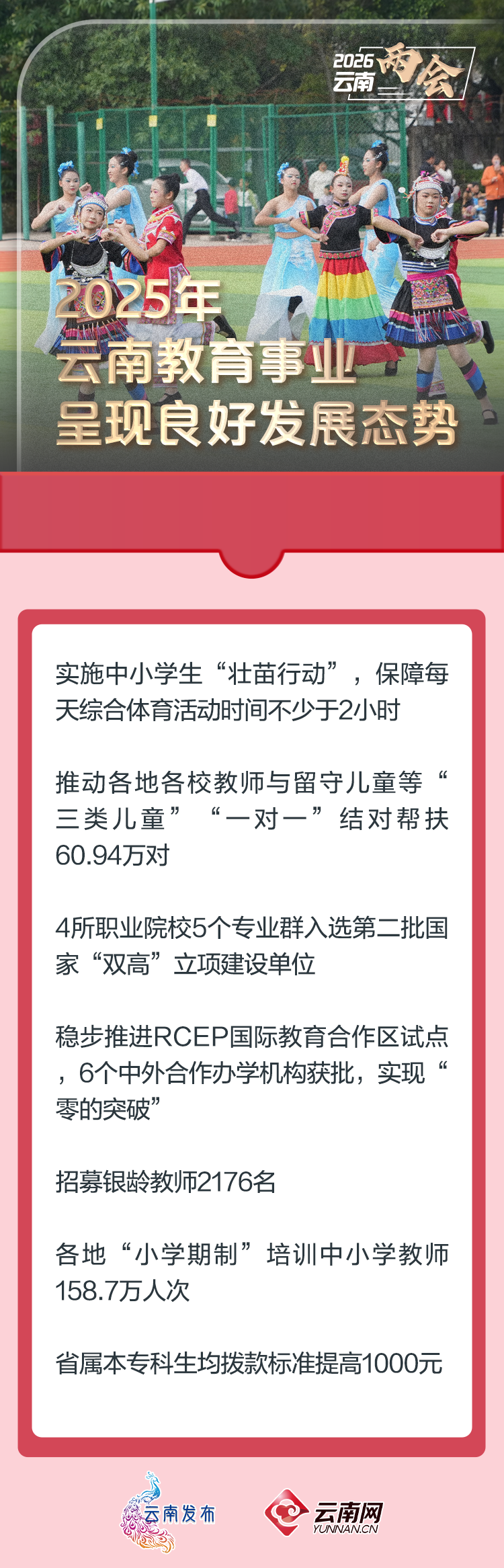
可扫描上方海报二维码查看 接下来 发布会完整实录 跟小编一起看发布会上的 主要内容 ↓↓ 过去一年 省委、省政府始终把 为民造福作为工作的出发点和落脚点 持续加大教育、民政 人社、卫生健康等领域的投入 用心用情办好群众身边的实事 全省各族人民的 获得感、幸福感、安全感显著增强 2025年云南民生保障 工作情况如何? 一起来看 2025年 t 開教育事 e现良好发展态势 实施中小学生"壮苗行动",保障每 天综合体育活动时间不少于2小时 推动各地各校教师与留守儿童等" 三类儿童""一对一"结对帮扶 60.94万对 全省教育系统深化落实 习近平总书记关于教育的重要论述 全面贯彻全国全省教育大会精神 加快推进教育强国建设的云南实践 教育事业呈现良好发展态势 党建思政工作得到新加强 省委、省政府推动"五级书记抓教育,党政同责办教育",5000多名各级党政领导当好"编外校长"。全省符 合条件的中小学校全面完成党组织领导的校长负责制改革。首次对省属高校4000余名中层干部全覆盖开展 政治培训。21所民办高校完成"党建入章""双向进入、交叉任职"。实施大中小学思政课一体化建设"四通行 动",改版升级张桂梅思政大讲堂并成功入选 ...
怎样理解健全与人口变化相适应的教育资源配置机制
Xin Hua She· 2026-01-25 05:09
第四,优化教师管理和资源配置。教师是最重要的教育资源,也是教育资源统筹调配的重点和难点。要 优化各级各类学校师生配比,统筹做好寄宿制学校、公办幼儿园教职工编制配备。优化中小学教师"县 管校聘"管理机制,加大中小学教职工编制统筹配置和调整力度,引导一批符合条件的教师跨学科跨学 段任教。强化教师工资待遇保障,优化教师工资结构,落实完善乡村教师生活补助政策,加大关心关爱 教师力度。 第五,优化高等教育资源供给。未来几年,高等教育学龄人口仍处于上升期,要努力满足国家战略、人 民群众对于高等教育特别是优质高等教育的需求。要扩大资源总量,通过现有高校改扩建挖潜扩容、新 设置高校等多种方式加大学位供给力度,支持高校改善学生宿舍等办学条件。加大优质资源供给,通过 统筹适度扩大"双一流"建设范围,支持布局新型研究型大学和高水平中外合作办学等多种方式,有序增 加优质本科教育招生规模。优化人才培养结构,逐步提高理工农医类人才比例,扩大研究生培养规模, 稳步提高博士研究生占比,大力发展专业学位研究生教育,着力培养拔尖创新人才。 (文章来源:新华社) 新华财经北京1月25日电《中共中央关于制定国民经济和社会发展第十五个五年规划的建议》 ...
祝贺!北京市中小学卓越校长培养项目14名校长结业
Xin Lang Cai Jing· 2026-01-21 01:01
据悉,北京市中小学卓越校长培养项目于2022年12月启动,根据北京市委教育工委、市教委部署,按标 准遴选小学、中学、一贯制学校、幼儿园的高级以上校长和园长作为培养对象。北京教育学院副院长肖 汶介绍,该项目助力学员强化理论修养、凝练办学思想、提升实践创新能力,在课程改革、学校治理、 教师发展等方面形成了一批有价值和推广意义的成果,有助于营造头雁引领、群雁齐飞的良好生态。 "在教学方式上,我们不单纯追求多样,而是追求适切。"该项目负责人、北京教育学院教授胡淑云介 绍,该项目采取"双导师+"培训方式,为每位学员配备理论导师和实践导师,进行深度学习、办学思想 凝练、课题研究等方面的全过程跟进式指导。项目强调"按需施训",建立培训需求"立体诊断"机制,帮 助学员聚焦关键需求、解决发展瓶颈问题。本着"理实相生"的原则,项目设计了基础课程、专业课程、 拓展课程等三大类10个系列课程模块,促进学员学以致用、以习促学。 作为一名来自首都生态涵养区的教育工作者,"如何缩小城乡教育差距"是北京第二实验小学平谷分校党 委书记梅红兵始终心系的课题。他说,三年的学习使他深刻认识到,真正的超越始于思维的变革。在项 目导师的指引下,学校一方 ...