民用核能

Search documents
美媒披露:美国谈判代表向英国施压,要求其采纳美国标准
Guan Cha Zhe Wang· 2026-01-19 14:25
Group 1 - The core issue in the US-UK trade negotiations is the disagreement over "non-tariff barriers," particularly regarding the adoption of US standards and recognition of US certification bodies by the UK [1][4] - The US has intensified pressure on the UK to align with its standards, which could jeopardize the UK's food industry and its cooperation with the EU [1][4] - The UK government has classified food standards as a "red line" in negotiations, but there are concerns that the UK may concede on other US demands [1][4] Group 2 - The US and UK signed the "Technology Prosperity Agreement" in September, aimed at enhancing cooperation in AI, quantum computing, and civil nuclear energy, but the agreement has been paused due to ongoing trade barrier disputes [1][4] - The UK's current certification model, managed by a single non-profit body (UKAS), differs significantly from the decentralized US system, which could lead to competitive pressures and potential compromises on public service obligations [4][5] - The UK is seeking to strengthen trade relations with the EU, which may reduce the likelihood of accepting US conditions in the ongoing trade negotiations [5]

中加联合声明:对双边民用核能进行负责任管理,加强天然铀贸易合作
Xin Lang Cai Jing· 2026-01-16 08:48
Core Viewpoint - The joint statement from the meeting between Chinese and Canadian leaders emphasizes cooperation in clean energy and traditional energy sectors, highlighting a commitment to mutual investment and trade in these areas [1] Group 1: Clean Energy Cooperation - Both countries agree to support exchanges and cooperation in the clean energy sector [1] - A ministerial energy dialogue will be initiated to identify key areas for collaboration [1] Group 2: Traditional Energy Collaboration - There will be an enhancement of cooperation in the development of traditional energy resources such as oil and natural gas [1] - The dialogue aims to facilitate bilateral investment and trade in both clean and traditional energy [1] Group 3: Nuclear Energy Management - Both parties commit to responsible management of bilateral civil nuclear energy based on the highest international standards [1] - There will be an emphasis on strengthening cooperation in natural uranium trade [1]
美国,突发威胁!白银暴涨,黄金直拉!
Sou Hu Cai Jing· 2025-12-17 04:51
Group 1: Silver and Gold Market Reaction - On December 17, silver prices surged over 3%, reaching a peak of over $66, while gold prices also increased by more than 0.5% [1] - The London silver market reported a closing price of $65.729, with an opening increase of $2.010, representing a 3.16% rise [2] Group 2: U.S. Trade Relations and Technology Cooperation - The U.S. has threatened to retaliate against the EU if it continues to undermine American service providers, indicating a potential escalation in trade tensions [3] - The U.S. has suspended the implementation of a technology cooperation agreement with the UK due to dissatisfaction with British policies on food, industrial standards, and digital regulation [3] - The U.S. hopes to resume cooperation with the UK on key technologies such as artificial intelligence and quantum computing once substantial progress is made in bilateral trade negotiations [4]

对英国施压 美国暂停执行两国《科技繁荣协议》
Xin Hua She· 2025-12-17 00:11
Core Viewpoint - The U.S. government has suspended the implementation of the "Tech Prosperity Agreement" signed with the UK in September due to dissatisfaction with the UK's policies on food, industrial standards, and digital regulation [1] Group 1: Agreement Details - The "Tech Prosperity Agreement" focuses on cooperation in cutting-edge technology fields such as artificial intelligence, quantum computing, and civil nuclear energy between the U.S. and the UK [1]
彭波:美英科技协议价值几何
Jing Ji Ri Bao· 2025-09-29 00:21
Core Points - The signing of the "Technology Prosperity Agreement" between the US and UK aims to deepen strategic cooperation in cutting-edge technology fields, including AI, quantum computing, and civil nuclear energy [1][2] - The agreement is expected to help both countries dominate the global AI landscape, with US tech companies committing £31 billion (approximately $42 billion) to enhance the UK's AI infrastructure [1][2] Group 1: Economic and Political Implications - The agreement is seen as a potential economic boost for the UK government, which is facing declining public support, by showcasing its ability to attract foreign investment and develop high-tech industries [2][3] - The Northeast region of England is projected to become a new AI growth area, potentially creating over 5,000 jobs and attracting billions in private investment [2] Group 2: Challenges and Concerns - There are significant disparities in the technological capabilities of the US and UK, with the US holding a dominant position in funding, corporate strength, and market size, which may lead to the UK facing risks of technological dependency [3] - The differing regulatory and ethical standards between the two countries could pose challenges for the implementation of the agreement, particularly in areas like data flow and AI ethics [3][4] Group 3: Strategic Direction and Criticism - The agreement has been criticized for overemphasizing military and national security applications, potentially distorting the priorities of scientific research [4] - The absence of blockchain technology from the agreement raises concerns about the UK's long-term strategic development in the fintech sector, as it risks falling behind in digital asset innovation [4] - The agreement reflects strong political motives, aiming to solidify the US-UK special relationship while promoting a "US first" technology strategy [4][5] Group 4: Institutional Framework - The agreement seeks to establish a formal US-UK technology cooperation alliance, emphasizing collaboration in international standard organizations and the development of technology rules [5] - It aims to create AI systems that align with democratic values, thereby fostering a technology cooperation network based on shared values and countering the technological advancements of non-Western countries [5]
美英科技协议价值几何
Jing Ji Ri Bao· 2025-09-28 21:49
Core Viewpoint - The signing of the "Technology Prosperity Agreement" between the US and UK aims to deepen strategic cooperation in cutting-edge technology fields, particularly in AI, quantum computing, and civil nuclear energy, although the actual impact on the tech industries of both countries remains to be seen [1][2]. Group 1: Agreement Details - The agreement focuses on collaboration in rapidly developing technologies such as AI, quantum computing, and civil nuclear energy [1]. - Major US tech companies, including Microsoft, Google, NVIDIA, and OpenAI, have committed to invest £31 billion (approximately $42 billion) to enhance the UK's AI infrastructure and advanced technologies [1]. Group 2: Market Reactions - Some analysts believe the agreement will create an alternative supply chain from design to manufacturing, reducing reliance on foreign technology and enhancing the technological strength of both nations [2]. - The agreement could provide much-needed economic support and political capital for the UK government, potentially creating over 5,000 jobs and attracting billions in private investment in the Northeast of England [2]. Group 3: Challenges and Concerns - There is a significant power imbalance, with the US holding advantages in funding, corporate strength, and market size, which may lead to the US dominating the collaboration [3]. - The UK faces risks of technological dependency and potential loss of sovereignty, as UK startups are often acquired by US tech companies [3]. - Discrepancies in regulatory and ethical standards between the US and UK could pose obstacles to the implementation of the agreement [3]. Group 4: Controversies - The agreement has been criticized for overemphasizing military and national security applications, potentially distorting research priorities [4]. - The absence of blockchain technology from the agreement raises concerns about the UK's long-term strategic development in the fintech sector [4]. - The agreement reflects strong political motives, aiming to solidify the US-UK special relationship and support the "America First" technology strategy [4]. Group 5: Institutional Framework - The agreement aims to establish a formal US-UK technology cooperation alliance to strengthen their leading position in global tech competition [5]. - It emphasizes collaboration in international standard organizations and the development of AI systems that align with democratic values, potentially creating a technology network based on shared values [5].
“二刷”英国
Qi Lu Wan Bao· 2025-09-22 11:54
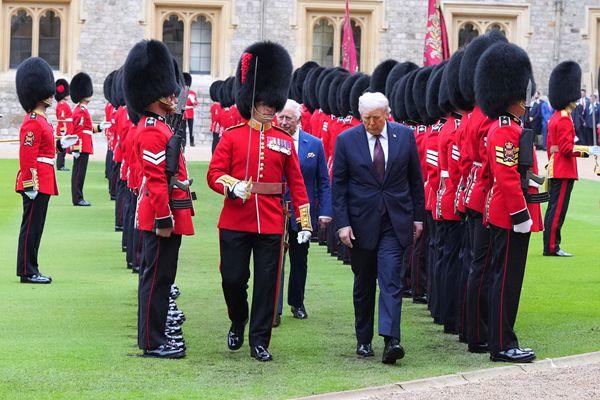
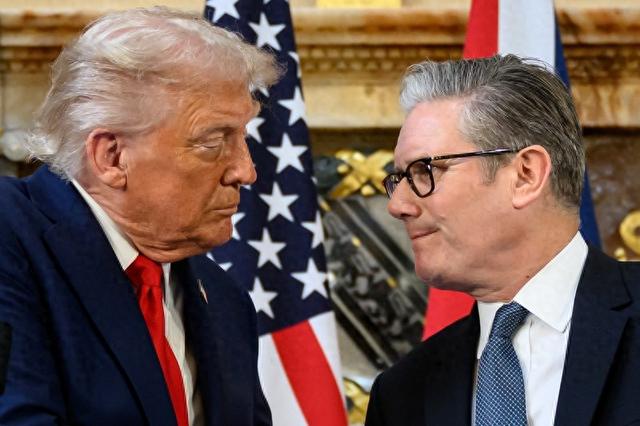
Group 1: Core Points of the Visit - Trump's visit to the UK from September 16 to 18 marked him as the first U.S. president to make two state visits to the UK, meeting with King Charles III and Prime Minister Starmer [2][3] - The visit included a grand welcome ceremony at Windsor Castle, featuring military displays and a state banquet, attended by 1,300 military personnel, the largest for a state visit in UK history [2][4] Group 2: Economic and Trade Relations - During the visit, the UK and the U.S. signed the "Technology Prosperity Agreement," focusing on collaboration in artificial intelligence, quantum computing, and civil nuclear energy [6][7] - Major U.S. tech companies, including Microsoft, Google, and Nvidia, committed to investing £31 billion in the UK's AI infrastructure, with Microsoft pledging £22 billion, marking its largest investment in the UK to date [6][7] Group 3: Public Sentiment and Protests - Despite the high-profile reception, Trump's visit faced significant public opposition, with approximately 5,000 protesters participating in demonstrations against his policies on immigration, Gaza, and climate change [4][5] - The protests included large gatherings in central London and near Windsor Castle, highlighting a stark divide between the official welcome and public sentiment [4][5] Group 4: Political Discrepancies - Polls indicate that only 36% of the British public believe in the existence of a "special relationship" between the UK and the U.S., reflecting underlying tensions in trade and foreign policy [7][8] - Disagreements were evident in discussions about support for Ukraine, with the UK government emphasizing its commitment to aid, contrasting with Trump's ambiguous stance on U.S. support for European allies [8][9]
摩尔线程IPO本周上会 ;传三星跟进涨价;SSD价格开始反弹…一周芯闻汇总(9.15-9.21)
芯世相· 2025-09-22 04:27
Key Points - The article discusses significant developments in the semiconductor industry, including IPOs, partnerships, and market trends [6][7][8][9][10][11][12][14][15][18][19][21]. Group 1: Major Events - Moer Thread's IPO on the Sci-Tech Innovation Board is scheduled for September 26, 2025 [14]. - Nvidia's CEO Jensen Huang announced a partnership with Intel to integrate Nvidia's AI with Intel's CPUs, involving a $5 billion investment from Nvidia [14]. - STMicroelectronics has abandoned its layoff plans at the Agrate factory in Italy, focusing on a €5 billion investment strategy [15]. - Samsung is expected to raise prices for DRAM and NAND Flash products by 15% to 30% and 5% to 10%, respectively, indicating a bullish market cycle [18]. Group 2: Market Trends - The global wafer fab equipment market is projected to reach $184 billion by 2030, with a CAGR of approximately 4.6% from 2024 to 2030 [12]. - The top 10 semiconductor equipment manufacturers are expected to generate over $64 billion in revenue in the first half of 2025, reflecting a year-on-year growth of about 24% [12]. - The SSD market is experiencing a rebound in prices due to rising demand and upcoming shopping events like Double 11 [19]. Group 3: Company Developments - MediaTek has completed the design tape-out of its first flagship SoC chip using TSMC's 2nm process, expected to enter mass production by the end of next year [16]. - AI chip startup Groq has raised $750 million in a new funding round, achieving a post-money valuation of $6.9 billion [16]. - OmniVision has confirmed its entry into Nvidia's supply chain, supporting the NVIDIA DRIVE AGX Thor ecosystem [16]. Group 4: Industry Insights - Foreign investment in Chinese semiconductor companies is increasing, with many foreign institutions conducting research on leading firms like SMIC [11]. - The semiconductor industry is entering a golden development period, particularly in the fields of "hard technology" and AI [11].



美国零售仍有韧性——全球经济观察第13期【陈兴团队•财通宏观】
陈兴宏观研究· 2025-09-20 12:33
Global Asset Price Performance - Government bond yields have generally risen, with the 10-year U.S. Treasury yield increasing by 8 basis points [2] - Global stock markets saw more gains than losses, with the S&P 500 and Dow Jones indices both rising by 0.7%, and the Nasdaq index increasing by 2.2% [2] - Oil prices have increased, with WTI crude oil and Brent crude oil rising by 1.4% and 0.8%, respectively, while London gold prices rose by 1.2% [2] - The U.S. dollar index remained nearly unchanged compared to the previous week [2] Major Central Bank Monetary Policies - The Federal Reserve lowered the benchmark interest rate by 25 basis points as expected, with a slight majority of officials indicating at least two more rate cuts by the end of the year [4] - The Bank of England decided to keep interest rates unchanged and slowed the pace of balance sheet reduction to £70 billion [4] - The Bank of Japan maintained its benchmark interest rate at 0.5%, marking the fifth consecutive time it has remained unchanged [4] U.S. Economic Dynamics - U.S. retail sales showed resilience, with a month-on-month increase of 0.6% in August and a year-on-year growth rate of 5% [8] - New housing starts in the U.S. fell by 8.5% month-on-month in August, marking the lowest level since May, indicating continued suppression in the real estate market due to high interest rates [8] - Industrial production showed marginal improvement, with a month-on-month increase of 0.1% in August, driven by a 2.6% increase in automotive and parts production [8] Other Regional Economic Dynamics - The UK signed a technology cooperation agreement with the U.S., focusing on rapidly developing fields such as artificial intelligence and quantum computing [20] - Japan's CPI fell to 2.7% in August, with core CPI also dropping to 2.7%, the first time below 3% since last November, primarily due to subsidies on electricity and gas [20]

地球局|特朗普“二刷”英国,“特殊关系”已不复从前
Qi Lu Wan Bao· 2025-09-19 09:37
Group 1 - The visit of President Trump to the UK from September 16 to 18 marks him as the first U.S. president to make two state visits to the UK, highlighting the significance of U.S.-UK relations despite existing trade and diplomatic differences [1][6][10] - During the visit, a significant investment agreement was signed, known as the "Tech Prosperity Agreement," focusing on collaboration in artificial intelligence, quantum computing, and civil nuclear energy, with U.S. tech companies committing £31 billion to enhance the UK's AI infrastructure [11][14] - The visit was met with large-scale protests in the UK, indicating public dissent against Trump's policies, particularly regarding immigration and climate change, with approximately 5,000 participants in the protests [6][7][14] Group 2 - The UK government expressed that the investments from U.S. companies would lead to a "transformational change" in transatlantic relations, although public sentiment shows only 36% of British people believe in a "special relationship" with the U.S. [14][15] - Trade tensions remain, as the U.S. imposes high tariffs on UK steel and aluminum products, while the UK seeks more favorable terms in trade agreements, reflecting ongoing economic friction [14][15] - The differing stances on international issues, such as the Ukraine conflict and the recognition of Palestine, reveal fundamental policy divergences between the U.S. and the UK, with the UK government advocating for increased military support for Ukraine and considering recognizing Palestine, contrary to U.S. support for Israel [15][17]