
法治思维

Search documents
苏南瑞丽航空保卫部党支部开展法律专题学习暨消防安全排查行动
Zhong Guo Min Hang Wang· 2026-01-29 08:21
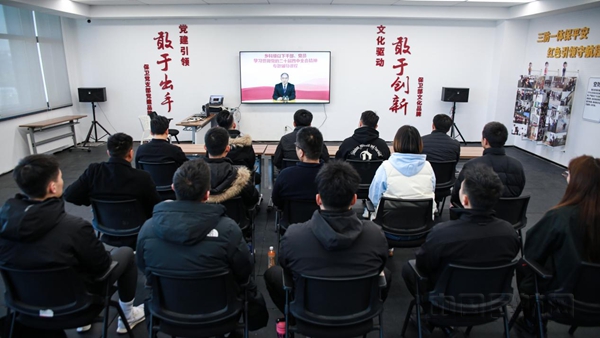
中国民航网 通讯员张恒钊 报道:近日,苏南瑞丽航空保卫部党支部开展法律专题学习暨消防安全隐患 排查行动,深入学习贯彻习近平总书记关于规划工作重要论述和"十五五"规划专题解读、新修订的《民 航法》《治安管理处罚法》及《民航从业人员安全工作作风建设管理办法》,并对运行楼消防栓隐患进 行排除,进一步强化党建引领安全实效,以学促行、以行践责,推动将学习成果转化为安全保障能力。 深学国家规划,锚定发展方向 在法律专题学习环节,参会党员重点学习新修订《民航法》《治安管理处罚法》及《民航从业人员安全 工作作风建设管理办法》。聚焦学习《民航法》新增"航空安全保卫"专章、航空安全员纳入航空人员管 理等条款;解读《治安管理处罚法》中扰乱航空器秩序、散布虚假信息、危害公共安全等条款,明确违 法认定标准与处罚幅度。通过案事例剖析、新旧条款比对、互动答疑等形式,深入学习与空防业务密切 相关条款,明确岗位职责边界、法条适用场景,强化依法履职,同步掌握作风建设要求。以此学习推动 法治思维贯穿航班安保执勤全流程,以法治保障与作风建设双轮驱动,筑牢空防安全防线。 ( 苏南瑞丽航空保卫部供图) 党建引领实干,排查加固平安 为落实党建引领安全要求 ...

运用法治思维破解行政争议化解难题
Xin Lang Cai Jing· 2026-01-19 19:14
(来源:法治日报) 转自:法治日报 □ 本报记者 常煜 □ 本报通讯员 董薇 近年来,云南省楚雄彝族自治州元谋县人民法院创新构建"一个平 台、两个机关、三个环节、四项举措"的"1234"工作法,将新时代"枫桥经验"融入行政争议化解全过 程,从"被动应诉"到"主动预防"转变,助力行政争议实质化解。 一个平台 元谋县法院依托县、乡、村三级综治中心,创新设立"元谋县府院联动办公室暨行政争议预防与实质化 解中心"。这一实体化、机制化的平台,成为"1234"工作法高效运转的核心"枢纽"和"总开关"。在县级 综治中心综合性服务大厅内,诉讼服务、调解对接等专业窗口与其他服务窗口协同布局,法院派驻法官 与常驻及轮驻检察官、警官、律师及专职调解员共同构成"三官一律+"复合型服务团队。依托"中心吹 哨、部门报到"的联动机制,除常驻力量外,综治中心还能根据争议类型,快速联动自然资源、人社、 住建等21个轮驻部门协同处置,真正实现行政争议化解"只进一扇门、最多跑一地"的"一站式"服务。 截至2025年底,该平台累计分流并处置行政争议线索316条,成功化解179起,其中包括10年以上积案17 起,真正实现了"矛盾纠纷联调、服务管理联抓 ...
以法治推动“事前预防型”公共安全建设
Xin Lang Cai Jing· 2026-01-02 18:29
Core Viewpoint - The article emphasizes the importance of transitioning public safety governance from "post-event response" to "pre-event prevention" as a key strategy for building a "Safe China" [1][2]. Group 1: Legislative Developments - Recent legislative efforts have reinforced the "pre-event prevention" concept, integrating it into various laws such as the Production Safety Law, Food Safety Law, and Environmental Protection Law [2]. - The newly revised Emergency Response Law exemplifies this shift, introducing new provisions that prioritize enhancing the capacity for prevention and response to emergencies [2][3]. - The law establishes a dedicated chapter on "Prevention and Emergency Preparedness," emphasizing the need for proactive measures to manage risks and prevent emergencies [2]. Group 2: Risk Management Strategies - Effective public safety governance requires a dual approach of "blocking" and "unblocking" risks, which includes both direct interventions and the development of safety infrastructure [3]. - The article advocates for the legal framework to adapt to modern technologies such as IoT, big data, and AI to enhance risk monitoring and assessment [4]. - It highlights the necessity of establishing clear legal responsibilities for various stakeholders, including enterprises and civil organizations, to ensure a collaborative approach to public safety [7]. Group 3: Legal Adaptability and Responsiveness - The adaptability of laws is crucial for effective risk warning and pre-event prevention, necessitating differentiated legal designs based on risk levels and regional characteristics [6]. - The article stresses the need for laws to evolve dynamically in response to changing risk landscapes, moving from static rules to dynamic responses [6]. - It calls for a comprehensive responsibility system that clearly defines the roles of multiple stakeholders in public safety governance, ensuring accountability even in the absence of incidents [7].
11月份,法律行业沉寂了!市场瞬间哑火。
Sou Hu Cai Jing· 2025-12-27 09:43
Group 1 - The legal consulting industry is facing significant challenges, with many firms shutting down and lawyers canceling their licenses due to regulatory crackdowns and market pressures [4][25][27] - Recent regulations from the Guangdong Bar Association have led to a sudden halt in market activities, prompting law firms to sever ties with legal consulting companies [3][4] - The crackdown includes the revocation of licenses for some law firms in major cities like Beijing, Shanghai, and Foshan, as authorities encourage reporting of illegal activities [4][5] Group 2 - The cost of acquiring legal clients is rising, with some firms reporting costs exceeding 800 yuan per lead, indicating a competitive and challenging environment [10][19][43] - Many law firms are adapting by focusing on maintaining relationships with existing clients through innovative methods, such as providing gifts to encourage referrals [31][33] - The legal industry is experiencing a shift towards localized services, with various platforms like Douyin and Xiaohongshu enforcing stricter regulations on legal content, impacting unqualified individuals [36][38][22] Group 3 - The overall number of lawyers in major cities has decreased significantly, with over 6,000 lawyers in cities like Beijing and Shanghai canceling their licenses, reflecting a broader industry contraction [25][27] - The legal market is expected to continue its contraction into lower-tier cities, prompting firms to seek transformation and adaptability to survive [29] - The integration of AI in the judicial process is anticipated to improve efficiency, potentially alleviating some pressures faced by lawyers and courts [45]

【人民日报】查处“蝇贪蚁腐”不能止于个案
Xin Lang Cai Jing· 2025-12-25 05:02
Group 1 - The article discusses the collaborative efforts of judicial and educational institutions to enhance the safety and legal awareness of minors in schools, emphasizing the importance of family education and community involvement [2][3][4] - It highlights specific cases where judicial recommendations have led to improved safety measures in schools, such as the prohibition of dangerous stationery items and the establishment of a management mechanism for hazardous materials [2][4] - The article also mentions the increase in cases where minors are involved in legal issues, and the proactive measures taken by the judicial system to prevent juvenile delinquency through education and community support [3][4] Group 2 - The article outlines the rise in juvenile crime and the corresponding response from the judicial system, which includes the establishment of social rehabilitation programs and partnerships with educational institutions to guide minors back to lawful behavior [3][4][5] - It emphasizes the need for a comprehensive approach to prevent juvenile crime, combining legal action with educational initiatives to foster a better understanding of laws among young people [4][5] - The article also notes the importance of addressing online safety for minors, as they are increasingly exposed to risks such as online scams and harassment [5][9] Group 3 - The article discusses the ongoing efforts to combat corruption at the grassroots level, particularly focusing on "micro-corruption" that affects public resources and services [15][16] - It highlights the judicial system's commitment to not only prosecute individual cases of corruption but also to implement systemic reforms to prevent such issues from arising in the future [15][16] - The article stresses the importance of transparency and accountability in public service, advocating for the use of technology to enhance oversight and reduce opportunities for corruption [16][17]
本领论丨尊法 学法 守法 用法
Zhong Yang Ji Wei Guo Jia Jian Wei Wang Zhan· 2025-12-16 00:49
Core Viewpoint - The importance of strengthening the rule of law in governance and enhancing the ability to use legal thinking and methods to deepen reforms, promote development, resolve conflicts, maintain stability, and respond to risks is emphasized by Xi Jinping's recent directives on comprehensive rule of law [1][2]. Group 1: Legal Thinking and Methods - Legal thinking is defined as a decision-making and problem-solving approach based on legal awareness and principles, while legal methods are the actions guided by legal thinking [2][3]. - The emphasis on legal thinking and methods is crucial for leaders to effectively address issues, coordinate relationships, and resolve conflicts [2][3]. Group 2: Role of Leadership - Leaders are identified as the "key minority" in the comprehensive rule of law initiative, and they are expected to model respect for, understanding of, and adherence to the law [3][4]. - Xi Jinping calls for leaders to embody four models: respecting the law, learning the law, abiding by the law, and applying the law [3][4]. Group 3: Learning and Application - A deep understanding of Xi Jinping's legal thought is essential for enhancing the ability to apply legal thinking and methods, addressing significant questions about the implementation of comprehensive rule of law [4][5]. - Learning constitutional and legal knowledge is the first step in cultivating legal thinking, which is necessary for effective law application [5][6]. Group 4: Practical Implementation - Continuous improvement in the application of legal thinking and methods should occur through practical engagement in the comprehensive rule of law initiative [6]. - The goal is to ensure that every legal system, enforcement decision, and judicial case reflects fairness and justice, thereby meeting the growing needs of the people [6].
网言网语 | 善于用法治思维和法治方式正风肃纪反腐
Zhong Yang Ji Wei Guo Jia Jian Wei Wang Zhan· 2025-12-15 09:30
Core Viewpoint - The article emphasizes the importance of utilizing legal thinking and methods in the work of discipline inspection and supervision to enhance the quality and effectiveness of anti-corruption efforts in China [2][3]. Group 1: Legal Framework and Development - Since the new era, the central leadership has positioned the rule of law as a strategic priority, leading to significant historical changes and achievements in the construction of socialist rule of law in China [2]. - The article highlights the necessity of integrating legal thinking into the discipline inspection and supervision work to ensure high-quality development [3][6]. Group 2: Training and Capacity Building - Continuous training and education for discipline inspection and supervision personnel are essential to strengthen their legal awareness and professional skills [5][6]. - The use of expert-led training sessions and workshops is recommended to enhance the understanding of legal principles among staff [5]. Group 3: Implementation of Legal Thinking - Discipline inspection agencies must adhere to legal principles in their operations, ensuring that every step from case handling to investigation is legally sound and procedurally compliant [7][8]. - The article stresses the importance of establishing internal control mechanisms to oversee the entire process of supervision and investigation, thereby ensuring accountability and transparency [7][8]. Group 4: Practical Application and Case Studies - The article discusses the practical application of legal thinking in grassroots discipline inspection work, emphasizing the need for clear procedures and documentation in handling cases [9][11]. - It highlights the effectiveness of using real cases as educational tools to instill legal awareness among new and young officials [11].

厚植为民情怀解决急难愁盼 切实维护社会大局和谐稳定
Zheng Zhou Ri Bao· 2025-12-05 00:41
Group 1 - The core viewpoint emphasizes the importance of addressing public grievances and enhancing the effectiveness of the petition system to ensure social stability and high-quality development [1][2] - The mayor highlighted the need to integrate petition work with urban renewal, improving people's livelihoods, and grassroots governance to align with public sentiment and promote development [2] - There is a focus on developing a legal framework for petition work, ensuring that it operates within the rule of law and adheres to the "Petition Work Regulations" [2] Group 2 - The mayor stressed the significance of understanding and addressing the root causes of public issues, moving from solving individual cases to addressing systemic problems [2] - The approach includes fostering a mindset that seeks solutions and enhancing social governance effectiveness by incorporating public feedback into long-term development strategies [2]
扬州市人大常委会部署“十五五”规划纲要编制专题调研工作
Yang Zi Wan Bao Wang· 2025-11-10 06:32
Core Points - The meeting focused on the preparation of the "15th Five-Year Plan" for Yangzhou, emphasizing the importance of high-quality development and the implementation of the spirit of the 20th Central Committee of the Communist Party of China [1][3] Group 1 - The Yangzhou Development and Reform Commission reported on the progress of the "15th Five-Year Plan" preparation, covering planning ideas, basic guidelines, overall framework, and key tasks [3] - The meeting highlighted the necessity of conducting specialized research to align with the city's development goals, particularly the "trillion-yuan city" initiative [3] - Emphasis was placed on ensuring the research is people-centered, adheres to new development concepts, and follows a systematic approach [3] Group 2 - Responsibilities for the research were clearly defined, with a focus on selecting appropriate research methods and scheduling [3] - The goal is to produce high-quality research outcomes that will inform the Yangzhou Municipal Committee's recommendations and assist in the preparation of the "15th Five-Year Plan" [3] - The meeting was attended by key officials from the Yangzhou People's Congress and the Development and Reform Commission, indicating a collaborative approach to the planning process [3]

以法治思维应对网络安全新问题
Ren Min Ri Bao· 2025-09-25 03:11
Core Viewpoint - Cybersecurity has become a crucial foundation for national security in the digital age, with significant achievements in the field but also new challenges arising from advancements like artificial intelligence and cloud computing [1][2]. Group 1: Achievements and Challenges - China has made substantial progress in cybersecurity, yet faces new issues such as deep fakes from AI, potential data leaks from large model training, and data security concerns from widespread cloud computing [1]. - The need for updated law enforcement and regulatory measures is emphasized to address the evolving nature of cybersecurity threats [1]. Group 2: Legislative and Governance Measures - The "AI Security Governance Framework" 2.0, released during the 2025 National Cybersecurity Awareness Week, categorizes AI security risks and proposes 30 technical and 14 comprehensive governance measures [2]. - A draft amendment to the cybersecurity law has been submitted for review, aiming to clarify legal responsibilities for failing to address illegal information and for providing substandard network equipment [2]. Group 3: Public Involvement and Reporting Mechanisms - The importance of public participation in cybersecurity is highlighted, with new regulations established to guide individuals and organizations on reporting cybersecurity incidents [3]. - The release of the "National Cybersecurity Incident Reporting Management Measures" outlines procedures and timelines for reporting incidents, along with the establishment of a dedicated reporting hotline [3]. - Enhanced technical capabilities, such as big data and AI, are recommended to improve threat detection and emergency response in cybersecurity [3].