
生态环境法典编纂

Search documents
提振消费、人形机器人,人大首场发布会直面热点
21世纪经济报道· 2026-03-04 12:39
Core Viewpoint - The article emphasizes the importance of the upcoming National People's Congress (NPC) session, highlighting key themes such as high-level opening up, expanding domestic demand, and the development of humanoid robots as focal points for economic growth and innovation [1][4][5]. Group 1: Economic Growth and Domestic Demand - Consumption is identified as the main engine for economic growth, with the retail sales of consumer goods expected to exceed 50 trillion yuan by 2025, contributing 52% to economic growth [4]. - The government plans to expand the supply of quality consumer goods and services, implement actions to enhance service consumption, and optimize policies for upgrading consumer goods [4]. - Measures will be taken to promote high-quality employment and increase residents' income, thereby enhancing their consumption capacity [4]. Group 2: Foreign Investment and Global Trade - China aims to maintain a stable export share of over 14% globally, with a focus on high-tech industries, which are expected to account for nearly one-third of foreign investment by 2025 [6]. - The country has implemented various policies to attract foreign investment and promote high-level opening up, including the establishment of the Hainan Free Trade Port [6]. - China is positioned as an ideal investment destination for foreign businesses, emphasizing a transparent and stable policy environment [6]. Group 3: Technological Innovation - The humanoid robot industry is expected to achieve significant technological breakthroughs and application scenarios in 2025, integrating advanced technologies such as artificial intelligence and high-end manufacturing [8]. - The government will strengthen original innovation and key core technology research during the 14th Five-Year Plan period, promoting the deep integration of technological and industrial innovation [8][9]. Group 4: Environmental Legislation - The NPC will review the draft of the Ecological Environment Law, which aims to consolidate existing environmental laws and enhance the legal framework for ecological protection [10][11]. - The law is intended to address the need for stricter regulations to support green and low-carbon development, reflecting the increasing importance of ecological civilization in national policy [10][11]. Group 5: National Unity and Social Cohesion - The NPC will also review the draft of the National Unity and Progress Promotion Law, aimed at enhancing national cohesion and supporting ethnic regions in integrating into the national development framework [12].


回应中美关系、伊朗局势等热点问题,人大首场发布会重点来了
21世纪经济报道· 2026-03-04 09:00
Core Points - The 14th National People's Congress (NPC) will open on March 5 and close on March 12, with a total of 8 days and 11 agenda items [4][3] - The government work report and the 15th Five-Year Plan draft will be reviewed during the session [11][7] - The NPC aims to boost domestic consumption and support the private economy as part of its strategic focus [12][13] Agenda Summary - The session will review the government work report and the draft of the 15th Five-Year Plan [7] - It will also examine the execution of the 2025 national economic and social development plan and the draft for 2026 [7] - The budget execution for 2025 and the draft budget for 2026 will be scrutinized [7] - The session will consider several legislative proposals, including the Ecological Environment Code and the National Development Planning Law [11][16][17] Economic Focus - The NPC will emphasize expanding domestic demand and enhancing consumer confidence [12] - There will be a focus on increasing the supply of quality consumer goods and services [12] - The government plans to implement laws related to social assistance, medical security, and childcare services to support the population [12] Private Economy - The NPC reaffirms its commitment to policies that support the private economy, emphasizing the importance of the Private Economy Promotion Law [13] - The government believes that the implementation of this law will enhance confidence and motivation among private enterprises [13] International Relations - The NPC will address international relations, emphasizing mutual respect and cooperation, particularly in the context of U.S.-China relations [21] - The importance of maintaining peace and stability in the Middle East will also be highlighted, with calls for dialogue regarding the situation in Iran [22] - The NPC will discuss the significance of cooperation with European countries, highlighting mutual benefits in economic relations [24]
两会前瞻|中国第二部“法典”将至:如何“典”亮美丽中国?
Zhong Guo Xin Wen Wang· 2026-02-26 02:00
Core Viewpoint - The upcoming ecological environment code marks a significant transition in China's legal framework, moving from having laws to having a comprehensive code that enhances the protection of the environment and reflects the country's commitment to ecological civilization [1][2]. Group 1: Legislative Significance - The ecological environment code is China's second legal code, following the Civil Code, symbolizing the formal entry into the "codification" era of environmental law [1]. - The codification process aims to address issues of redundancy and inconsistency within the existing legal framework, enhancing the system's coherence and effectiveness [1][2]. Group 2: Structure and Content of the Code - The draft code consists of five sections: General Principles, Pollution Prevention, Ecological Protection, Green Low-Carbon Development, and Legal Responsibilities, totaling 1,242 articles [2][3]. - The inclusion of a dedicated section on "green low-carbon development" is a global first, reflecting a mature understanding of the relationship between development and environmental protection [3]. Group 3: Public Engagement and Global Perspective - The code emphasizes public health and environmental rights, addressing common concerns such as noise pollution and local environmental issues, thereby making legal provisions more relatable to everyday life [3]. - The draft also incorporates international cooperation on climate change, showcasing China's commitment to global environmental governance and providing a unique perspective for global ecological challenges [3].
溯源优秀传统文化核心理念 共话中国式生态法治现代化
Xin Lang Cai Jing· 2025-12-23 19:08
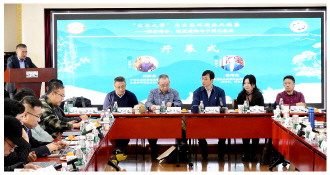
Core Viewpoint - The conference focused on the compilation of the Ecological Environment Code, emphasizing the need for a Chinese expression of ecological law that integrates various academic disciplines and cultural perspectives [3][4][5]. Group 1: Conference Overview - The conference was organized by the Institute of Law at the Chinese Academy of Social Sciences and gathered nearly 50 experts from various universities and research institutions to discuss the modern transformation of ecological civilization discourse [3]. - The event aimed to provide cultural foundations, value support, and theoretical frameworks for the compilation of the Ecological Environment Code, which is considered a significant legislative project following the Civil Code [3][4]. Group 2: Academic Contributions - Scholars discussed the historical and cultural roots of ecological concepts, emphasizing the importance of traditional Chinese views on nature and life continuity in shaping modern ecological governance [4][5]. - The discourse included the evolution of animal rights within legal frameworks, advocating for the recognition of animals as sentient beings in the Ecological Environment Code [4]. - The integration of literature and legal narratives was proposed to translate cultural values into normative expressions within the code, enhancing its cultural vitality [4][5]. Group 3: Theoretical Frameworks - The compilation of the Ecological Environment Code is seen as a systemic reconstruction project that addresses value origins, civilizational order, and modes of expression across various disciplines [5][6]. - The concept of "good law" was highlighted as a guiding principle to promote dynamic evolution and practical integration of legal systems [5][6]. - The need for a narrative that connects legal norms with emotional ties among people, nature, and land was emphasized to foster deeper connections in ecological governance [6]. Group 4: Future Directions - The conference underscored the importance of integrating traditional ecological wisdom with modern governance concepts to create a legal framework that responds to China's modernization and global ecological governance [7]. - The potential of the Ecological Environment Code to provide a model for global climate governance through systematic and multi-faceted governance arrangements was discussed [7]. - The role of artificial intelligence in reshaping energy supply structures and its implications for green energy transition were also highlighted, stressing the need for regulatory guidance [7].
新华鲜报|三审稿亮相!生态环境法典编纂稳步推进
Xin Hua She· 2025-12-22 05:20
Core Viewpoint - The draft of the Ecological Environment Code, which is China's second law named as a "code," is undergoing its third review by the National People's Congress Standing Committee, following its initial presentation in April 2025 and subsequent revisions in September and October 2023 [1]. Group 1: Legislative Structure and Review Process - The Ecological Environment Code draft consists of five parts: General Principles, Pollution Prevention and Control, Ecological Protection, Green Low-Carbon Development, and Legal Responsibilities and Supplementary Provisions [1]. - The draft was split into two batches for the second review, and the revised parts are now being combined for the third review [1]. Group 2: Key Modifications and Enhancements - The third review draft incorporates judicial practice outcomes, enhancing the roles of the People's Courts and People's Procuratorates in ecological environment protection [2]. - It establishes a credit supervision system for ecological environments, including provisions for credit restoration [2]. - The draft strengthens the regulation of monitoring institutions to ensure the quality of ecological environment monitoring data and reduce data falsification [2]. Group 3: Addressing Environmental Challenges - New regulations have been added regarding the management of straw and leaf burning, as well as measures to combat the issue of solid waste being dumped across provinces [2]. - The draft addresses "human-wildlife conflict" by introducing provisions aimed at managing the interactions between humans and wildlife, emphasizing the importance of human safety [2][3]. Group 4: Legal Protections and Responsibilities - A notable addition is the "emergency avoidance" clause, which provides legal protection for individuals who harm wildlife in life-threatening situations, prioritizing human life [3]. - The draft further elaborates on the requirements for green low-carbon development, focusing on the establishment of a circular economy and enhancing resource recycling measures [3]. - It also includes additional legal responsibilities and penalties to ensure effective enforcement of ecological environment laws [3].
新华鲜报丨三审稿亮相!生态环境法典编纂稳步推进
Xin Hua She· 2025-12-22 05:13
Core Viewpoint - The draft of the Ecological Environment Code, after being split and reviewed, is set for its third reading by the National People's Congress Standing Committee on December 22, 2025, aiming to provide stronger legal guarantees for the construction of a beautiful China [1][3][4]. Group 1: Legislative Structure and Content - The Ecological Environment Code is the second law in China named as a "code," consisting of five parts: general principles, pollution prevention, ecological protection, green low-carbon development, and legal responsibilities [6]. - The third draft incorporates feedback from previous reviews and further summarizes judicial practice outcomes, enhancing the roles of courts and procuratorates in ecological protection [7]. Group 2: Regulatory Enhancements - The draft strengthens the ecological environment credit supervision system and introduces provisions for credit restoration, aiming to improve the integrity of environmental monitoring data [7]. - New regulations have been added to manage the burning of straw and fallen leaves, as well as to address the issue of solid waste being transferred across provinces [7]. Group 3: Addressing Human-Wildlife Conflicts - The draft includes provisions to address human-wildlife conflicts, emphasizing the need for scientific protection and management, prioritizing human life [7][8]. - A notable "emergency avoidance" clause has been introduced, which provides legal protection for individuals who harm wildlife in life-threatening situations, reflecting a more mature approach to wildlife protection [8]. Group 4: Green Development and Legal Accountability - The draft further elaborates on the requirements for green low-carbon development, focusing on the establishment of a circular economy and enhancing resource recycling measures [8]. - It also includes additional legal responsibilities and penalties to ensure effective enforcement of environmental laws, aligning with the principle of proportionality in penalties [8].

三审稿亮相!生态环境法典编纂稳步推进
Xin Hua Wang· 2025-12-22 03:51
Group 1 - The Ecological Environment Code draft, which is China's second law named as a "code," is undergoing its third review by the National People's Congress Standing Committee after being split and revised [1] - The draft consists of five parts: General Principles, Pollution Prevention, Ecological Protection, Green Low-Carbon Development, and Legal Responsibilities and Supplementary Provisions [1] - The third review draft incorporates judicial practice outcomes and further clarifies the responsibilities of the People's Courts and People's Procuratorates in ecological environment protection [2] Group 2 - The draft enhances the ecological environment credit supervision system and includes provisions for credit restoration [2] - It emphasizes the importance of monitoring data quality and introduces stricter regulations for monitoring institutions to prevent data falsification [2] - New regulations have been added to manage the burning of straw and fallen leaves, as well as to address the issue of solid waste being dumped across provinces [2] Group 3 - The draft introduces a "state of emergency" clause that provides legal protection for individuals who harm wildlife in life-threatening situations, establishing a principle of prioritizing human life [3] - It further develops the overall requirements for green low-carbon development, focusing on the construction of a circular economy and enhancing resource recycling measures [3] - The draft also includes additional legal responsibilities and penalties to ensure that environmental laws are effectively enforced [3]
“十五五”生态环保工作要抓住哪些关键点?2025年中国环境战略与政策学术年会提出建议
Zhong Guo Huan Jing Bao· 2025-11-10 23:20
Group 1: Core Perspectives - The construction of a Beautiful China is a long-term strategic task and systematic project, with a focus on achieving harmony between humans and nature by 2035 [2][5] - The "14th Five-Year Plan" period is identified as a critical window for comprehensive green transformation in China's economy and society, emphasizing the need for systemic solutions [3][5] Group 2: Green Development and Innovation - Green development is highlighted as a distinctive feature of Chinese modernization, necessitating the acceleration of green productivity and the promotion of systemic governance of ecological pollution [3][6] - The need for a high-level ecological environment technology innovation system is emphasized, focusing on integrating research, technology breakthroughs, and practical applications [12] Group 3: Pollution Prevention and Control - Continuous advancement in the governance of new pollutants is essential for pollution prevention and the construction of a Beautiful China, requiring a full lifecycle risk management approach [4][7] - The implementation of solid waste comprehensive governance actions is necessary to promote source reduction and address solid waste issues in key areas [7] Group 4: Climate Change and Carbon Neutrality - The "14th Five-Year Plan" period is a strategic period for achieving carbon peak and carbon neutrality goals, with a focus on transitioning the energy structure and promoting low-carbon development across various sectors [10][11] - The establishment of a carbon market is seen as a significant institutional innovation to control greenhouse gas emissions and facilitate a comprehensive green low-carbon transition [11] Group 5: Policy and Institutional Reforms - Deepening ecological civilization system reforms is crucial to address complex environmental challenges and enhance the ecological environment governance system [8][9] - The development of green finance is essential for supporting the construction of a Beautiful China, with an unprecedented demand for financing during the "14th Five-Year Plan" period [4][9]
深入学习贯彻习近平法治思想 以高质量立法服务和保障改革发展
Ren Min Ri Bao· 2025-09-17 22:22
Group 1 - The core viewpoint emphasizes the importance of local legislation in supporting the overall development and stability of the country, guided by Xi Jinping's thoughts on socialism with Chinese characteristics for a new era [1][2] - Local People's Congresses have actively played their legislative roles since the 18th National Congress, enhancing legislative quality and creating a new landscape for local legislation [1][2] Group 2 - The emphasis is placed on understanding the decisive significance of the "two establishments" and the "two safeguards," enhancing political consciousness in implementing Xi Jinping's legal thought [2] - Local legislation should align with the strategic planning of the central government, focusing on key areas, emerging fields, and foreign-related legislation to improve the legal system [2] - The compilation of the ecological environment code is highlighted as a major legal construction initiative, aiming to reflect the achievements of ecological civilization and ensure the code is systematic and coordinated [2]
李鸿忠在黑龙江出席全国地方立法工作座谈会并调研时强调 深入学习贯彻习近平法治思想 以高质量立法服务和保障改革发展
Xin Hua Wang· 2025-09-17 08:43
Group 1 - The core viewpoint emphasizes the importance of local legislation in supporting the overall development of the party and the country, guided by Xi Jinping's thoughts on socialism with Chinese characteristics for a new era [1][2] - Local People's Congresses have actively engaged in legislative functions, enhancing legislative quality and creating a new landscape for local legislation since the 18th National Congress of the Communist Party of China [1][2] Group 2 - The need to deepen understanding of the "two establishments" and "two safeguards" is highlighted, aiming to enhance political consciousness and action in implementing Xi Jinping's legal thought [2] - Local legislation should align with the strategic planning of the central government, focusing on key areas, emerging fields, and foreign-related legislation to improve the legal system [2] - The compilation of the ecological environment code is identified as a significant legal construction task, requiring adherence to Xi Jinping's ecological civilization thought and legal thought [2]