白酒行业调整

Search documents
主动调整蓄势能,创新变革塑生态!珍酒李渡发布2025年业绩预告
Ge Long Hui· 2026-02-27 13:39
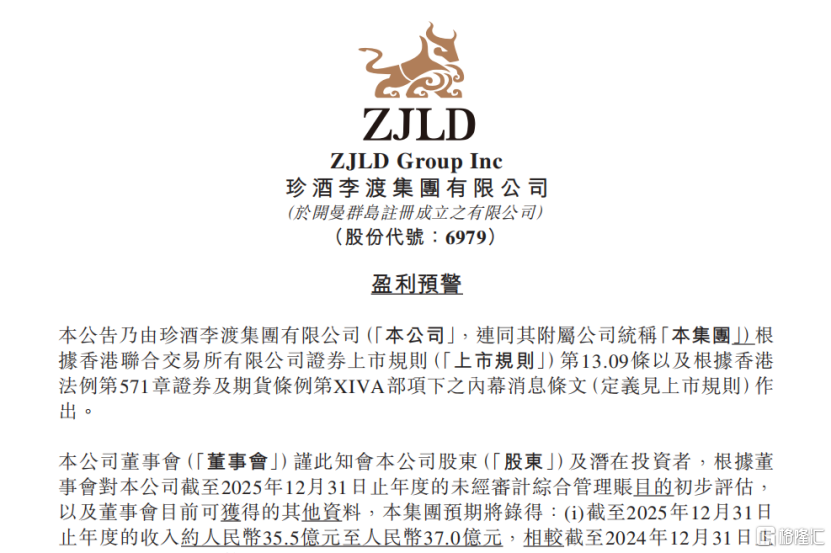
Core Viewpoint - The company, Zhenjiu Lidou, is facing significant challenges in the white liquor industry, with its 2025 performance forecast reflecting a broader systemic adjustment across the sector due to macroeconomic conditions and consumption trends [5][7][8]. Company Summary - Zhenjiu Lidou forecasts revenue between 3.55 billion and 3.7 billion yuan, with adjusted net profit expected to be between 520 million and 580 million yuan for 2025 [1]. - The company is not pursuing short-term growth but is instead focusing on adjusting its development pace through the "Wanshang Alliance," aiming to reshape the industry ecosystem and promote symbiosis among manufacturers [5][11]. - Despite the challenging environment, Zhenjiu Lidou has been one of the most innovative companies in the industry during 2025, implementing seven strategic initiatives to rebuild the industry ecosystem [11][12]. Industry Summary - The white liquor industry in China is experiencing a significant downturn, with 20 A-share listed liquor companies reporting a decline in revenue and net profit by 18.47% and 22.22%, respectively, in the third quarter [7]. - The performance of Zhenjiu Lidou aligns with the overall industry trend, as many companies are facing similar challenges, with several even reporting losses [8]. - The industry is undergoing a systemic adjustment, with companies recognizing the need for comprehensive restructuring to adapt to changing consumer trends and market dynamics [13][19]. - The report from Qiantou Sauce Liquor Studio indicates that the current adjustment phase is expected to lead to a competitive landscape among mainstream sauce liquor enterprises, with a projected increase in brand concentration and growth opportunities [19][20]. Strategic Initiatives - Zhenjiu Lidou's "Wanshang Alliance" has signed contracts with 4,000 alliance supermarkets, with over 2,500 showing better-than-expected sales progress [11]. - The core product "Dazhen" has achieved significant market penetration, covering 280 cities and generating over 900 million yuan in returns [11]. - The company is focusing on building a strong brand persona through its founder, Wu Xiangdong, who has been recognized as one of the "Top Ten Economic Figures of 2025," enhancing the brand's credibility and consumer connection [16]. Future Outlook - The white liquor industry is expected to enter a structural recovery phase in 2026, driven by improved policy environments, restored consumer confidence, and inventory cycle improvements [20]. - Zhenjiu Lidou is positioning itself for future growth by establishing a solid competitive barrier through strategic adjustments and innovations, which are crucial for long-term success in the industry [17][20].

“含酒量”大缩水!马年总台春晚仅4家白酒赞助品牌亮相 酒企正转战短剧短视频新阵地?
Mei Ri Jing Ji Xin Wen· 2026-02-25 09:42
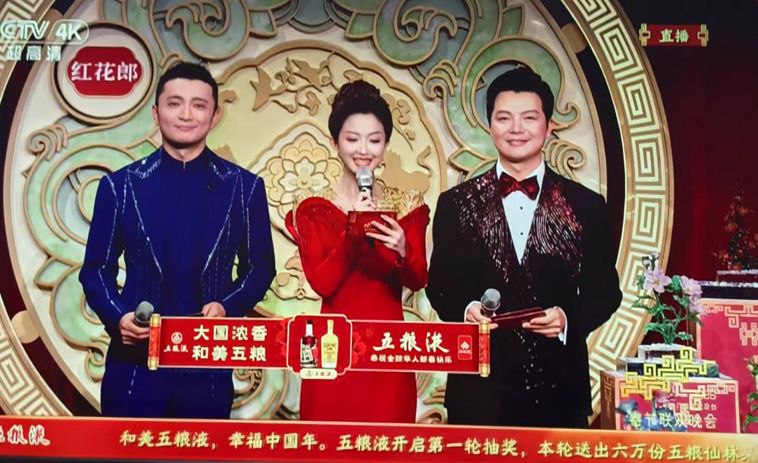
Core Insights - The number of liquor brands sponsoring the CCTV Spring Festival Gala has decreased significantly, from 9 in 2024 and 7 in 2025 to only 4 in 2026, indicating a shift in marketing strategies among liquor companies [1][2][6] - Major liquor brands that remain as sponsors are long-term partners of the gala, focusing on differentiated positioning and interactive collaborations [2][6] - The reduction in sponsorship is attributed to a more rational and diversified approach to marketing, with brands opting for softer product placements rather than traditional sponsorships [5][6][15] Industry Trends - The liquor industry is experiencing a cyclical adjustment, yet the Spring Festival remains a crucial sales period, prompting companies to explore various marketing channels beyond traditional sponsorships [1][6] - Brands are increasingly investing in short videos, micro-dramas, and variety shows as new marketing battlegrounds, reflecting a shift towards more engaging and consumer-centric strategies [9][12][14] - The trend indicates a move from broad exposure strategies to precision marketing, focusing on direct consumer engagement and sales conversion [15][16] Marketing Strategies - Major liquor brands are utilizing innovative marketing techniques, such as integrating products into popular media formats like micro-dramas and short videos, to reach younger audiences [9][12][14] - The collaboration with platforms like Douyin (TikTok) and various streaming services has become a common practice, allowing brands to leverage storytelling to enhance consumer connection [12][14] - The industry's focus is shifting towards creating immersive experiences and interactive content, moving away from mere logo placements to deeper brand integration within entertainment [5][15]
9家变4家,春晚含酒量创新低
盐财经· 2026-02-17 04:07
Core Viewpoint - The article discusses the changing landscape of the Chinese liquor industry, particularly the white liquor sector, as evidenced by the evolving advertising strategies during the 2026 Spring Festival Gala, indicating a shift in market dynamics and competition among leading brands [2][3]. Group 1: Advertising and Brand Presence - The 2026 Spring Festival Gala featured advertisements primarily from four major liquor companies, with Wuliangye being the largest investor, contributing gifts worth 100 million yuan [2]. - The number of white liquor brands participating in the Spring Festival Gala has decreased, with only four brands appearing in 2026 compared to nine in 2024 and six in 2025 [3]. - The use of product placements has also declined, with fewer brands opting for this strategy during the gala, indicating a shift towards more traditional sponsorship roles [3]. Group 2: Market Dynamics and Consumer Engagement - The white liquor market is experiencing intense competition, and while the Spring Festival Gala has historically been effective for brand image building, converting this exposure into sales remains challenging [4]. - Some liquor companies are shifting their marketing strategies towards social media platforms like Douyin and Xiaohongshu, focusing on content marketing related to the Spring Festival and cultural themes [4]. - The industry is moving towards a consumer-centric approach, aiming to reach a broader audience through diverse marketing strategies, while the overall market is expected to continue experiencing structural differentiation and increased concentration [5].





从9家到4家 春晚“含酒量”创新低
Di Yi Cai Jing· 2026-02-17 00:33
Group 1 - The overall presence of liquor brands in the 2026 Spring Festival Gala has decreased, with only four major liquor companies participating compared to nine in 2024 and six in 2025 [1] - Major liquor brands featured include Wuliangye, which was the largest investor, gifting 136,000 items worth 100 million yuan, and Yanghe, which has been the exclusive timekeeper partner for seven years [1][2] - The number of liquor brand placements has also declined, with fewer brands using product placements compared to previous years, indicating a shift in marketing strategies [2] Group 2 - Liquor companies are adjusting their marketing strategies by collaborating with platforms like Douyin and Xiaohongshu, focusing on content marketing around the Spring Festival [3] - Some companies are shifting their focus to local Spring Festivals to strengthen their influence in regional markets, such as Fenjiu sponsoring Beijing Satellite TV's Spring Festival Gala [3] - Since 2025, liquor companies have been transitioning to a consumer-centric growth model, aiming for diverse marketing strategies to reach a broader audience [4]

从9家到4家,春晚“含酒量”创新低
第一财经· 2026-02-17 00:16
Core Viewpoint - The 2026 Spring Festival Gala has seen a decline in the presence of liquor brands, reflecting changes in the white liquor industry amid ongoing adjustments [3][4]. Group 1: Advertising and Brand Presence - The 2026 Spring Festival featured advertisements primarily from four major liquor companies, with Wuliangye being the largest investor, gifting 136,000 items worth 100 million yuan [3]. - The number of liquor brands appearing on the Spring Festival Gala has decreased from 9 in 2024 to 6 in 2025, and further down to 4 in 2026 [3]. - Traditional product placements have also diminished, with fewer brands utilizing this strategy compared to previous years [4]. Group 2: Marketing Strategies - Liquor brands are shifting their marketing strategies, with some, like Jianan Spring and Langjiu, collaborating with platforms like Douyin and Xiaohongshu for content marketing focused on the Spring Festival [5]. - Other companies are opting for local Spring Festival galas to strengthen their regional market influence, such as Fenjiu sponsoring Beijing Satellite TV's gala [5]. Group 3: Industry Trends - Since 2025, the white liquor industry has been transitioning to a consumer-centric growth model, aiming to reach a broader audience through diverse marketing strategies [6]. - The industry is still in an adjustment phase, with expectations of increasing structural differentiation and concentration among liquor companies [6].

从9家到4家,春晚“含酒量”创新低
Di Yi Cai Jing Zi Xun· 2026-02-17 00:01
Group 1 - The overall presence of liquor brands in the 2026 Spring Festival Gala has decreased, with only four major liquor companies participating compared to six in 2025 and nine in 2024 [3] - Major liquor brands featured in the gala include Wuliangye, Yanghe, Gujinggong, and Langjiu, with Wuliangye being the largest investor, contributing gifts worth 100 million yuan [1][3] - The marketing strategies of liquor companies are shifting, with some brands collaborating with platforms like Douyin and Xiaohongshu for content marketing, while others are focusing on local Spring Festival events to enhance regional influence [4] Group 2 - The liquor industry is undergoing a transformation in growth models since 2025, with companies increasingly centering their strategies around consumer needs and diversifying marketing approaches [5] - The liquor market is expected to continue experiencing structural differentiation and increasing concentration, with companies adopting more rational marketing investments [5] - The traditional association of liquor with social interactions and brand recognition remains significant, but the effectiveness of Spring Festival Gala appearances in driving sales is being questioned [3]

习酒大单品价格日跌百元,谁在放量抛售?
Xin Lang Cai Jing· 2026-02-09 05:40
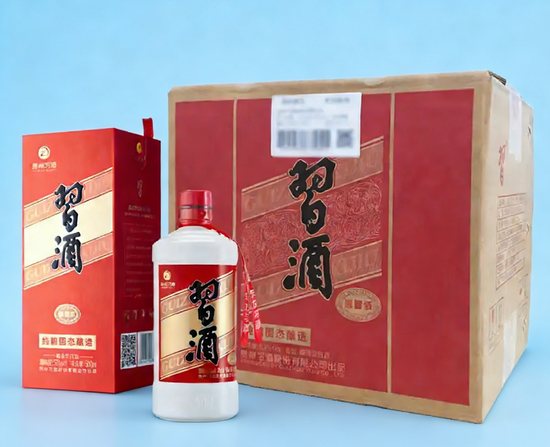
Core Insights - The article highlights a significant price drop for the popular Chinese liquor brand, Xijiu, particularly its flagship product, Yuan Xijiu, which saw wholesale prices plummet from nearly 500 yuan per box to a low of 385 yuan within days, indicating a severe disruption in the pricing structure [3][12][14] - The sudden influx of over 100,000 boxes of Yuan Xijiu into the market has led to a chaotic pricing environment, raising questions about the company's supply chain management and control mechanisms [4][13] - Xijiu is facing dual pressure from both high-end competitors like Moutai 1935 and mid-range brands, leading to a significant decline in market share and pricing power [6][15] Market Dynamics - The price of Yuan Xijiu dropped sharply, with a reported single-day decline of nearly 100 yuan, reflecting a broader trend of excess inventory and aggressive discounting among distributors [3][4] - The high-end product, Junpin Xijiu, also experienced a decline, with its wholesale price falling from 980 yuan per bottle at the beginning of the year to 630 yuan by year-end, a drop of 35.71% [14][17] - The overall sales forecast for Xijiu is projected to decline to approximately 19 billion yuan in 2025, down from 22.447 billion yuan in 2023, indicating a significant drop in market position [17] Strategic Challenges - Xijiu's management has acknowledged the need for improved market order and pricing control, with plans to implement a dual-brand strategy and marketing reforms aimed at stabilizing prices and enhancing brand value [5][18] - The company is also facing challenges from increased competition in both high-end and mid-range markets, with competitors like Moutai and Langjiu exerting pressure on Xijiu's pricing and market share [6][15] - The article emphasizes the importance of addressing supply chain issues, optimizing pricing strategies, and reinforcing brand differentiation to navigate the current market turmoil effectively [18]
净利大幅下滑70%,谁来接盘“入冬”的水井坊
3 6 Ke· 2026-02-04 11:18
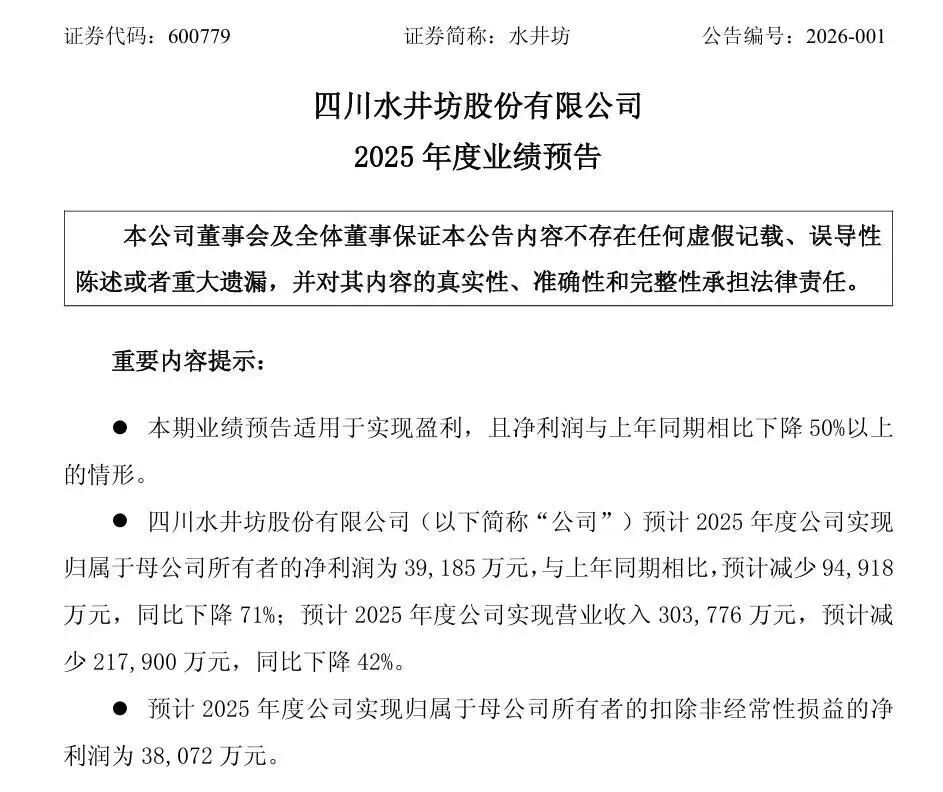
Core Viewpoint - Water Jiufang is facing significant challenges in its development, with a substantial decline in its financial performance for 2025, indicating a critical period for the company [1][8]. Financial Performance - Water Jiufang expects to achieve an operating revenue of 3.038 billion yuan for 2025, a decrease of 2.179 billion yuan, representing a 42% year-on-year decline [1][8]. - The company anticipates a net profit attributable to shareholders of 392 million yuan, down by 949 million yuan, which is a 71% year-on-year decrease [1][8]. - The projected revenue for 2025 marks the lowest since 2021, while the net profit is the lowest since 2018 [8]. Market Context - The white liquor industry is undergoing a deep adjustment phase due to multiple factors, including macroeconomic conditions, industry adjustments, and policy changes, leading to a high inventory level [8]. - Water Jiufang is particularly affected by competition from leading brands like Moutai and Wuliangye, which are expanding into the mid-range market, thereby increasing pressure on Water Jiufang's pricing [9]. Strategic Response - In response to the challenging environment, Water Jiufang is focusing on strengthening the synergy between online and offline channels, actively managing its operations, and maintaining investments in brand building and product innovation [5][9]. - The company is implementing measures to optimize market structure, improve cost efficiency, and enhance productivity while preparing for future competitiveness [5]. Ownership and Management Changes - There are rumors regarding the potential sale of Water Jiufang's shares by its foreign controlling shareholder, Diageo, which is considering various options to streamline its global business portfolio [4][12]. - Diageo currently holds 63.27% of Water Jiufang's shares, but the frequent changes in management have raised concerns about the stability of the company's strategic execution [12]. Potential Acquirers - Speculation about potential buyers for Water Jiufang includes other well-known liquor brands, with the possibility of these companies using Water Jiufang as a platform for expansion rather than focusing on its brand growth [13]. - The Sichuan Liquor Group has expressed interest in acquiring Water Jiufang, which could help it strengthen its market position and align with regional industry consolidation efforts [15].

茅台跌出机会了吗?
格隆汇APP· 2026-01-31 09:06
Core Viewpoint - The recent surge in the liquor sector, particularly in the baijiu market, raises questions about whether this is a temporary spike or a sign of a fundamental reversal in trends [6][12][15]. Group 1: Market Performance - On January 29, the baijiu sector saw an overall increase of over 9% [3]. - Notable companies like Kweichow Moutai and Luzhou Laojiao experienced significant price movements, with Moutai reaching its largest single-day increase in a while [4]. - However, the following day, most companies, except for Huangtai Liquor, saw a decline in stock prices [5]. Group 2: Price Dynamics - The recent stability in the wholesale price of Moutai is attributed to increased demand as the Spring Festival approaches, with some distributors selling out their quotas for January and February [8]. - The wholesale price of Moutai rose by 1,000 yuan in a single day, exceeding 1,700 yuan per bottle [9]. Group 3: Industry Challenges - The baijiu industry faced significant challenges over the past year, with the Shenyuan Baijiu Index dropping over 13% in 2025, and many companies reporting profit warnings [13][14]. - The industry has been in a downturn for five years, with an overall price-to-earnings ratio below 20, indicating a pessimistic market outlook [16]. Group 4: Structural Changes - The production of large-scale baijiu enterprises has halved from 7.86 million kiloliters to 4.15 million kiloliters from 2019 to 2024, while sales revenue has grown from 561.8 billion yuan to 796.4 billion yuan, with a compound annual growth rate exceeding 7% [22][23]. - The market is witnessing a "Matthew Effect," where the top six companies' profit share has increased from 55% in 2014 to 86% in 2024 [32]. Group 5: Consumer Behavior - The consumption landscape is changing, with a significant decline in the consumer base and a high inventory pressure, leading to an average inventory turnover period of 900 days in 2024 [26][27]. - The shift in consumer behavior is evident as Moutai's direct sales through the i Moutai app have increased, allowing for a more stable pricing structure and a healthier consumption ecosystem [39][43]. Group 6: Future Outlook - The baijiu industry is expected to face a prolonged recovery period, with structural opportunities for companies that can navigate the current challenges [70]. - The potential for a rebound exists, but it may take time for the industry to regain its previous growth trajectory [70].
由盈转亏、业绩下滑超85%!2025白酒行业“滑铁卢” 多家上市公司业绩承压
Xin Lang Cai Jing· 2026-01-30 14:01
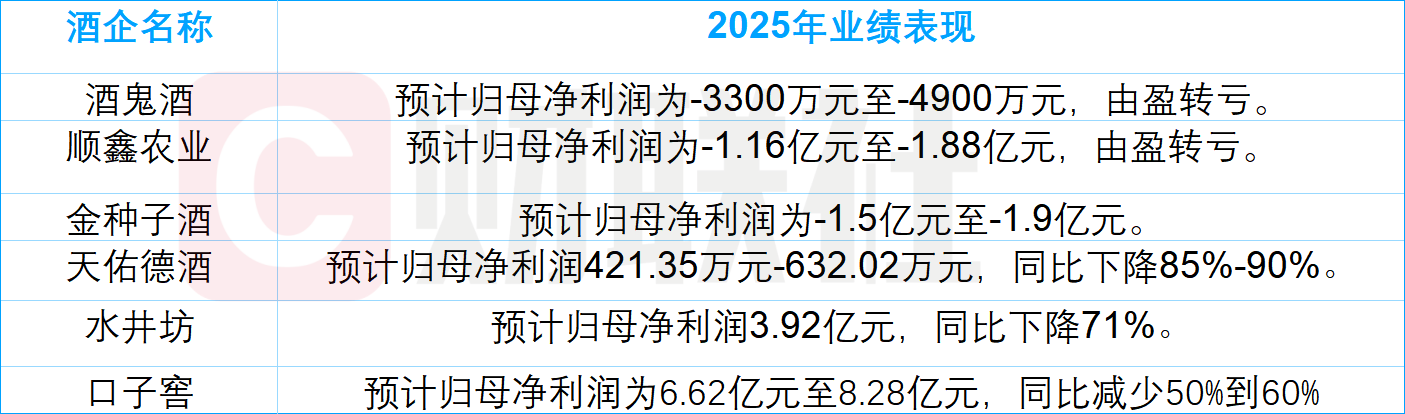
Core Viewpoint - The Chinese liquor industry is facing significant challenges in 2025, with many companies experiencing a shift from profit to loss or a notable decline in performance due to deep industry adjustments and intense market competition [1][3]. Company Performance - JiuGuiJiu (酒鬼酒) expects a net profit loss of 33 million to 49 million yuan for 2025, marking a shift from profit to loss [1][2]. - Shunxin Agriculture (顺鑫农业) anticipates a net profit loss of 116 million to 188 million yuan, also transitioning from profit to loss due to intense market pressure and declining sales [1][2]. - Jinzhongzi Liquor (金种子酒) projects a net profit loss of 150 million to 190 million yuan, remaining in a loss position despite a narrowing of losses compared to the previous year [3]. - Tianyoude Liquor (天佑德酒) expects a net profit of 4.21 million to 6.32 million yuan, reflecting a significant decline of 85% to 90% year-on-year [2][3]. - ShuiJingFang (水井坊) forecasts a net profit of 392 million yuan, down 71% year-on-year, with Q4 net profit declining by 70% [2][3]. - KouziJiao (口子窖) anticipates a net profit of 662 million to 828 million yuan, representing a decrease of 50% to 60% year-on-year [3]. Industry Trends - The liquor industry is entering a deep adjustment phase influenced by macroeconomic cycles, industry adjustments, and policy changes, leading to slow recovery in core consumption scenarios [3]. - High inventory levels and weak terminal sales are common pressures affecting the industry, directly impacting company operations [3]. - Despite the current downturn, there are indications that the industry may gradually enter a recovery phase as macroeconomic conditions improve and consumer demand rebounds [4].