
算力互联

Search documents
(经济观察)中国加快算力基础设施互联互通
Zhong Guo Xin Wen Wang· 2025-12-27 13:04
Core Insights - The article discusses the importance of computing power interconnectivity and the computing power internet as a solution to make computing resources as accessible as water and electricity, highlighting China's efforts to establish a robust computing resource circulation system [1] Group 1: Computing Power Demand and Development - Global demand for computing power driven by artificial intelligence (AI) is growing exponentially, shifting competition from technology to ecosystem collaboration [1] - China ranks second globally in total computing power and intelligent computing power, but faces challenges such as uneven distribution and scheduling issues that need to be addressed through interconnectivity [2] Group 2: Achievements and Future Directions - Significant progress has been made in China's computing power interconnectivity, with a framework established that includes standardization, facility interconnection, and scenario empowerment [2] - The national computing power internet service platform is set to launch in 2024, facilitating unified access and service calls across key regions like Beijing, Shanghai, Sichuan, and Hubei [2] - The opening of the "Hong Kong-Guangzhou" data express line and the launch of the Sichuan hub node are key developments in enhancing regional computing power scheduling [2] Group 3: Application and Market Expansion - The value of computing interconnectivity will ultimately be realized through application scenarios, with AI leading enterprise-level demand and emerging consumer applications like cloud gaming and cloud computing driving service consumption [2] - China Everbright Bank has successfully utilized computing power to support over 120 algorithm models and 840 application scenarios, significantly improving efficiency in generating comprehensive corporate research reports [3] Group 4: Future Focus Areas - Continued focus on key areas is essential for China's computing power interconnectivity, with an emphasis on coordination, rule standardization, technological advancements, and deepening application scenarios [3] - The computing power internet has begun to be applied in fields such as AI, scientific computing, and cloud computing, with a need for further exploration to build a comprehensive computing power internet system [3]
谷歌撼动英伟达绝对统治 亚马逊跟上 产业影响几何?
2 1 Shi Ji Jing Ji Bao Dao· 2025-12-03 12:04
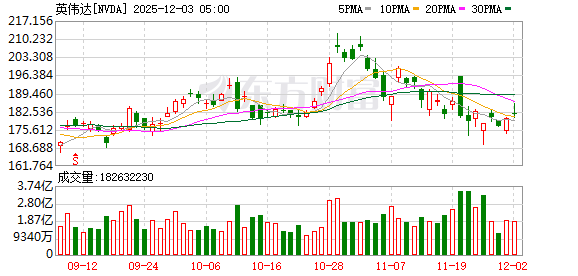
Core Insights - Nvidia is facing increasing competition in the AI chip market, particularly from Amazon's new Trainium3 and Google's Gemini 3, which has led to concerns about Nvidia's market dominance [2][3][6] Group 1: Google TPU Developments - Google has launched its new multimodal model Gemini 3, which significantly enhances its TPU capabilities, with the Ironwood chip achieving over 4 times the performance of its predecessor, Trillium [3] - The Ironwood chip boasts a peak computing power of 425 petaflops and supports 8-bit floating-point calculations, surpassing Nvidia's B200 chip in performance [3] - The memory bandwidth of Ironwood reaches 7.2 terabits per second, slightly lower than Nvidia's B200, but its performance per watt is double that of Trillium [3] Group 2: TPU vs. GPU Dynamics - The core value of Google's TPU lies in its comprehensive technology structure, which enhances scalability and energy efficiency in the era of large models, allowing it to carve out a specialized path in a market dominated by Nvidia's GPUs [4] - Experts suggest that while GPUs offer flexibility, TPUs are more efficient for stable large models, indicating a potential shift in market dynamics as models mature [5] Group 3: Market Reactions and Predictions - The introduction of Google's TPU has raised concerns about Nvidia's position, with Nvidia acknowledging Google's advancements while asserting its continued leadership in AI model deployment [6] - The demand for TPU chips is expected to grow, with Anthropic planning to deploy up to 1 million Google TPUs for training its AI model Claude, and Google exploring partnerships with other tech giants like Meta [5][6] Group 4: Optical Circuit Switching (OCS) Innovations - Google is pioneering OCS technology in its TPU v4 clusters, which enhances system availability and reduces energy consumption by enabling direct optical path switching [7] - The shift towards OCS is driven by the need for higher efficiency in AI computations, as traditional switches struggle with latency and bandwidth limitations [8] Group 5: Investment Opportunities - The anticipated increase in Google's TPU production has led to a surge in interest in the OCS supply chain, with forecasts for TPU production in 2027 and 2028 being significantly raised [8][9] - Companies involved in OCS technology, such as optical component manufacturers, are expected to benefit from this trend, with notable stock price increases observed in related firms [9]



谷歌撼动英伟达绝对统治,亚马逊跟上,产业影响几何?
2 1 Shi Ji Jing Ji Bao Dao· 2025-12-03 12:00
Core Insights - Nvidia is facing increasing competition in the AI chip market, particularly from Amazon's new Trainium3 chip and Google's Gemini3 model, which has been evaluated as superior to OpenAI's GPT series, leading to a decline in Nvidia's stock price [1][3] - Google's upcoming TPU chip, Ironwood, is set to significantly enhance performance, boasting a peak computing power of 425 petaflops and a memory bandwidth of 7.2 TBps, which positions it as a strong competitor against Nvidia's offerings [3][4] - The TPU's architecture, which emphasizes scalability and energy efficiency, is seen as a key advantage over Nvidia's GPUs, particularly in the context of large model training [4][5] Nvidia's Position - Nvidia maintains a competitive edge through three main advantages: access to advanced manufacturing capacity from TSMC, a robust CUDA ecosystem, and a comprehensive system that integrates GPU, networking, and software solutions [5][6] - Despite the challenges posed by TPU, Nvidia asserts its leadership in the industry, claiming to be the only platform capable of running all AI models across various computing scenarios [5] TPU and OCS Technology - Google's TPU is not just about performance metrics; its underlying technology structure allows for better scalability and efficiency in the era of large models [4] - The introduction of Optical Circuit Switching (OCS) technology in TPU clusters enhances system availability and reduces energy consumption, marking a shift towards optical interconnects in AI computing [6][7] - The market is witnessing a surge in interest towards OCS technology, with predictions of increased TPU production, indicating a growing demand for advanced AI chips [7][8] Market Reactions and Predictions - Following the announcement of Gemini3, related stocks have seen significant increases, with companies involved in OCS technology experiencing notable stock price surges [7] - Analysts have revised their forecasts for Google's TPU production, indicating a substantial increase in expected output for 2027 and 2028, reflecting heightened market confidence in TPU's capabilities [6][7]

中原证券通信行业2026年度策略:智启新质 算力互联破浪前行
智通财经网· 2025-11-25 02:52
Core Viewpoint - The report from Zhongyuan Securities indicates that a series of AI industry catalytic events will occur in 2026, strengthening the leading position of top optical module manufacturers due to their technological, customer, and scale advantages. The current valuation of the communication industry index is below the ten-year average, and the industry maintains a "stronger than the market" investment rating based on performance growth expectations and valuation levels [1][2]. Summary by Sections Review of 2025 - In early 2025, the DeepSeek large model boosted market sentiment, and the three major operators completed the deployment of DeepSeek computing power private networks, enhancing their cloud service capabilities. Domestic cloud manufacturers provided positive capital expenditure guidance, leading to an increase in industry valuations. However, from February to April, the industry index experienced significant fluctuations due to concerns over U.S. tariff policies and future demand for optical modules. By mid-April, the easing of tariff policies and validation of AI computing power demand led to a gradual recovery in the industry index and valuations. In late July, North American cloud manufacturers raised their capital expenditure guidance, further catalyzing the industry. Since September, leading manufacturers faced short-term performance fatigue due to product iterations and customer structure adjustments, raising concerns about unclear downstream business models [2]. Outlook for 2026 - A series of AI industry catalytic events are expected, including the mass production of NVIDIA's next-generation Rubin GPU, the release of Google's new large model Gemini, and clear capital expenditure guidance from cloud manufacturers. AI smartphones equipped with large models are anticipated to become personalized smart assistants, potentially driving the next wave of smartphone upgrades. The development of key 6G technologies by telecom operators is expected to accelerate revenue growth from AI computing power. The report is optimistic about the high industry prosperity and strong growth potential of optical modules, optical devices, optical chips, and the increasing penetration of AI smartphones, as well as the stable operations of quality dividend assets in telecom operators [3][4]. Capital Expenditure Outlook for Leading Cloud Manufacturers - The demand for 800G is increasing, and the industry is transitioning from 800G to 1.6T technology. Leading optical module manufacturers are expected to further highlight their advantages due to technological leadership, stable customer relationships, and scalable delivery capabilities. The development of AI is driving the construction of large data centers, benefiting optical device manufacturers. The long R&D and expansion cycles for optical chips create high barriers in technology, talent, customer validation, and capital, leading to a persistent supply-demand gap for certain optical chips. The increasing demand for domestic controllable solutions is expected to translate into performance for domestic computing power. Recommended companies to watch include: NewEase, Huagong Technology, Guangxun Technology, Yuanjie Technology, Shijia Photon, and Taicheng Light [4]. AI Smartphones and Market Trends - Generative AI smartphones are set to provide users with new interactive experiences, multimodal content generation capabilities, personalized services, and innovative application ecosystems. The continuous improvement of edge AI computing power and large model capabilities is expected to further increase the market penetration of AI smartphones. Innovations and upgrades in AI smartphones are likely to lead to higher average selling prices and improved profit margins. The growth in edge AI shipments will drive sustained growth in core product lines of consumer electronics components [5]. Telecom Operators' Performance - The three major telecom operators are considered quality dividend assets with high dividend yield potential, offering cash dividends twice a year. The quality of traditional business revenue is improving, and a decrease in capital expenditure is expected to lower future depreciation and amortization costs, maintaining stable operations. Additionally, telecom operators are likely to leverage their advantages in data centers, big data, and network infrastructure to reconstruct business models with the help of AI. Investment recommendations include focusing on the optical module, optical device, and optical chip sectors, as well as AI smartphone and telecom operator sectors [6].



诺安基金刘慧影:华为三代芯片路线图助力国产大模型迭代加速
Xin Lang Ji Jin· 2025-09-22 05:35
Core Insights - Huawei's Vice Chairman Xu Zhijun presented a clear development roadmap for its Ascend AI chips, targeting a million-card cluster by 2028, indicating a significant leap in computing power [1][2] - The introduction of the "Lingqu" all-optical interconnection protocol is expected to revolutionize the field of computing interconnectivity, enhancing data transfer speeds and overall efficiency [2] Group 1: Huawei's AI Chip Development - Huawei plans to rapidly iterate its Ascend AI chips, with the Ascend 950 series launching in 2026, followed by the Ascend 960 in 2027, and the Ascend 970 in 2028, aiming for a tenfold increase in overall computing power [1][2] - The Ascend 960 chip will achieve a comprehensive doubling of key metrics such as computing power and memory bandwidth, while the Ascend 970 will further enhance interconnect bandwidth and memory bandwidth [1] Group 2: Super Node Technology - The Atlas 950 super node, built on the new "Lingqu" protocol, is anticipated to maintain a leading position in global computing power for the coming years [2] - The establishment of large-scale computing clusters, potentially reaching 500,000 to 1,000,000 cards, will significantly reduce data transfer delays and enhance computational efficiency [2] Group 3: Implications for AI Development - With robust computing infrastructure, China's AI models are expected to experience explosive growth, positioning them among the global leaders in AI technology innovation and application [2]
港股异动 长飞光纤光缆(06869)早盘涨超20%创新高 英伟达发布Scale-across网络
Jin Rong Jie· 2025-08-25 04:02
Group 1 - Changfei Fiber Optic Cable (06869) saw its stock price rise over 20%, reaching a historical high of 44.86 HKD during trading, with a current price of 43.96 HKD and a trading volume of 1.22 billion HKD [1] - NVIDIA announced the launch of NVIDIA® Spectrum-XGS Ethernet, a technology that enables the combination of multiple distributed data centers into a one-gigawatt AI super factory, addressing the limitations of existing commercial Ethernet infrastructure [1] - Open-source securities highlighted that the scale-across technology could become the "third pillar" of AI computing, following scale-up and scale-out, and emphasizes the importance of optical interconnect and related industry opportunities [1] Group 2 - Zhongtai Securities reported that hollow-core fiber, which uses air as a transmission medium, has lower latency and loss, making it a key component for future AI data center interconnects [2] - The first commercial use of hollow-core fiber by China Mobile is expected in July 2025, with Changfei Fiber being the sole bidder at an actual bid price of approximately 36,000 RMB per core kilometer [2] - The report emphasizes the leading capacity level of Changfei Fiber in hollow-core technology and its successful bids in related projects [2]

算力互联里的“破立”之法——从夏日经济看统一大市场建设
Ren Min Ri Bao· 2025-08-12 03:12
Group 1 - The core idea emphasizes the importance of data elements and computing power in building a unified national market, highlighting their inherent advantages such as liquidity, high reusability, intangibility, and non-exclusivity [1][2] - The "East Data West Computing" initiative aims to guide computing power demand from the eastern regions to the western regions, facilitating cross-regional allocation of computing resources and enhancing the digital economy [3] - The construction of a unified data and computing market is essential to address the mismatch between supply and demand, as evidenced by the varying utilization rates of computing resources in different regions [1][3] Group 2 - The integration of computing power aims to break down regional and industry barriers, requiring collaboration among government departments, telecom operators, and internet companies to create a cohesive network [2] - The development of digital twin factories and smart agricultural applications demonstrates the practical benefits of computing power integration, leading to reduced operational costs and improved efficiency [4] - The establishment of a unified market is just the first step; addressing challenges such as data security and user privacy during cross-regional data sharing is crucial for long-term success [4][5]
算力互联里的“破立”之法(评论员观察)
Ren Min Ri Bao· 2025-08-11 22:01
Group 1 - The core idea emphasizes the importance of data elements and computing power in building a unified national market, highlighting their inherent advantages such as liquidity, high reusability, intangibility, and non-exclusivity [1][2] - The "East Data West Computing" initiative aims to guide computing demand from the eastern regions to the western regions, facilitating cross-regional allocation of computing resources and enhancing the digital economy [3] - The construction of a unified data and computing market is essential to address the mismatch between supply and demand, as evidenced by the varying utilization rates of computing resources in different regions [1][3] Group 2 - The integration of computing power is seen as a means to promote high-quality industry development and regional coordination, with Ningxia serving as a national hub for integrated computing networks [3] - Successful examples of computing power integration include the establishment of a "5G + AI digital twin factory" in Guizhou and smart greenhouse applications in Gansu, showcasing the benefits of reduced operational costs and improved efficiency [4] - The article stresses the need for a long-term vision in building a unified market, focusing on solving issues related to data security and user privacy during cross-regional data sharing [4]
算力互联里的“破立”之法(评论员观察) ——从夏日经济看统一大市场建设④
Ren Min Ri Bao· 2025-08-11 21:39
Group 1 - Data elements possess characteristics such as liquidity, high reusability, intangibility, and non-exclusivity, which provide a natural advantage in supporting the construction of a unified national market [1][2] - The "East Data West Computing" initiative aims to orderly guide computing demand from the eastern regions to the western regions, facilitating cross-regional allocation of computing resources and enhancing the digital economy [3] - The construction of a unified data market and computing market is essential to address the mismatch between supply and demand in computing resources, as evidenced by the varying utilization rates in different regions [1][3] Group 2 - The interconnection of computing resources is a key topic for high-quality industry development and regional coordinated development, with Ningxia serving as a national hub for integrated computing networks [3] - The collaboration between companies and telecommunications firms in creating "5G + AI digital twin factories" demonstrates the practical benefits of computing interconnection, such as reduced operational costs and improved efficiency [4] - The establishment of a unified national market is seen as a valuable opportunity for regions to enhance their digital economy and reshape their development advantages [3][4]
人民日报:建好算力互联“高速网”
news flash· 2025-06-26 01:10
Core Insights - The article emphasizes that computing power encompasses not only computational capabilities but also supporting network transport and data storage capabilities [1] - For computing power to be effective, hardware such as servers, chips, and storage devices, along with software including operating systems, cloud computing platforms, and AI frameworks, as well as network connectivity, must all be "online" simultaneously [1] - As of the end of 2024, China's total computing power is projected to reach 280 EFLOPS (exaflops) [1] - The computing power market is experiencing a structural imbalance characterized by both "surplus" and "shortage" [1]