
系统施治

Search documents
综合施策提升基层监督质效
Zhong Yang Ji Wei Guo Jia Jian Wei Wang Zhan· 2025-12-31 01:30
Core Viewpoint - The article emphasizes the need for continuous optimization of grassroots disciplinary inspection and supervision mechanisms, focusing on enhancing the effectiveness of grassroots governance through integrated supervision and collaborative efforts [1][2][3][4][5] Group 1: Focus on Supervision - The primary responsibility is to focus on supervision, integrating resources and utilizing intelligent supervision methods [2] - A collaborative model is established where experienced personnel guide newer members through the entire case handling process [2] - A data-driven approach is adopted, creating a closed-loop model for monitoring and addressing issues in public projects and financial management [2] Group 2: Responsibility and Collaboration - A responsibility system is established to ensure that the main and supervisory responsibilities are aligned, promoting effective leadership and oversight at the grassroots level [3] - Collaborative mechanisms are put in place for unified management of leads and cases, enhancing resource sharing and coordination among various departments [3] - Integration of different supervisory types is encouraged, focusing on key areas such as project bidding and fund management [3] Group 3: Systematic Treatment and Capacity Building - Efforts are made to address challenges in supervision, such as lack of resources and insufficient capabilities, by enhancing training and education for inspection personnel [4] - Grassroots supervision is activated through regular collaborative checks and community engagement, addressing local issues effectively [4] - A focus on case-driven reforms is implemented to identify and rectify weaknesses in institutional frameworks and risk points in power operations [5]
悟规律 明方向 学方法 增智慧丨正风肃纪反腐相贯通
Zhong Yang Ji Wei Guo Jia Jian Wei Wang Zhan· 2025-12-23 00:14
Core Viewpoint - The article emphasizes the importance of integrating discipline, anti-corruption, and ethical governance as a systematic approach to enhance the effectiveness of the anti-corruption campaign in China, highlighting the interconnectedness of these elements in addressing corruption and misconduct [4][5][6][7]. Group 1: Integration of Governance Elements - The integration of ethical governance, discipline enforcement, and anti-corruption efforts is crucial for a comprehensive approach to party self-reform, as these elements support and reinforce each other [5][6][7]. - The article discusses the phenomenon of intertwined misconduct and corruption, indicating that addressing these issues separately would be ineffective, as they often feed into one another [5][6][7]. - A systematic view is necessary to break down functional silos and enhance the overall governance framework, aiming for a synergistic effect where combined efforts yield greater results than isolated actions [7][12]. Group 2: Practical Implementation Strategies - Local governance bodies are encouraged to adopt a systematic approach in their operations, ensuring that ethical governance, discipline enforcement, and anti-corruption measures are implemented in a coordinated manner [8][10][11]. - The use of data analytics and technology is highlighted as a means to enhance the effectiveness of supervision and investigation, allowing for better identification of misconduct and corruption [11][15]. - Continuous education and awareness programs are essential to instill a culture of compliance and integrity among party members, focusing on the importance of adhering to regulations and ethical standards [11][19]. Group 3: Challenges and Responses - The article acknowledges the persistent challenges in the anti-corruption landscape, emphasizing the need for a robust response that combines strict enforcement with proactive measures to prevent misconduct [6][12][14]. - It stresses the importance of maintaining a high-pressure environment for corruption deterrence while simultaneously fostering a positive atmosphere for ethical behavior among party members [6][14]. - The need for a comprehensive evaluation mechanism to assess the effectiveness of anti-corruption measures and ensure accountability is also discussed [13][14].


为县域经济社会发展提供坚强纪律保障
Zhong Yang Ji Wei Guo Jia Jian Wei Wang Zhan· 2025-12-16 23:53
Core Viewpoint - The article emphasizes the importance of county-level development and governance, highlighting the need for effective political supervision to enhance governance efficiency and support economic and social development in counties [1]. Group 1: Political Responsibility and Supervision - The county's disciplinary inspection and supervision commission focuses on building a robust supervisory foundation through mechanisms, responsibility transmission, and team development [2]. - A dual leadership group mechanism has been established for key areas like rural revitalization funding, creating a responsibility chain involving the party committee, government, and supervisory departments [2]. - The county has sent 139 notices to party committees and leaders regarding the implementation of their responsibilities this year [2]. Group 2: Addressing Public Concerns - The supervision efforts are directed at addressing urgent public issues and risks in key areas through targeted investigations and technology [3]. - A comprehensive online and offline clue investigation network has been established, identifying 116 cases of misconduct and corruption [3]. - Specific supervision lists have been created for rural revitalization and healthcare sectors, detailing 7 key supervision areas and 33 corrective measures [3]. Group 3: Systematic Governance Improvement - A closed-loop mechanism of "investigation - rectification - evaluation - establishment" has been implemented to ensure that supervisory results translate into governance effectiveness [4]. - This year, 140 problem clues have been processed, leading to 82 cases being filed and 75 individuals receiving disciplinary action [4]. - The county has resolved 156 urgent public issues and completed 38 significant public service tasks this year [5]. Group 4: Strengthening Results Transformation - The county emphasizes the importance of learning from cases to promote systemic governance, issuing 40 notifications of typical cases and conducting over 190 warning education activities [5]. - Recommendations have been made to relevant departments to improve management practices, resulting in the establishment of 57 new regulations [5].
“大刀阔斧”与“绣花功夫”(思想纵横)
Ren Min Ri Bao· 2025-12-11 22:11
Core Viewpoint - The Central Economic Work Conference held in Beijing on December 10-11 emphasizes the importance of "persisting in reform and enhancing the vitality of high-quality development" as a key task for the upcoming year [1] Group 1: Reform Strategies - The concept of "big knife and axe" symbolizes strong determination and is crucial for strategic direction, deepening institutional reforms, and breaking through key areas [2] - Historical reforms have included supply-side structural reforms and market access system reforms, which have released significant vitality in economic and social development [2] - The need for a spirit of innovation and courage to tackle major issues decisively is highlighted for future reforms [2] Group 2: Precision in Implementation - "Embroidery skills" represent a meticulous approach to policy implementation, requiring in-depth research and precise identification of issues [3] - Successful reforms depend on detailed execution and responsibility allocation, ensuring that policies are effectively implemented [3] Group 3: Interrelationship of Approaches - "Big knife and axe" and "embroidery skills" are complementary; macro-level strategic decisions create a foundation for micro-level detailed management [4] - Administrative reforms that reduce bureaucratic hurdles allow for a more conducive environment for businesses, enabling a focus on detailed regulatory oversight [4] - Effective implementation of grand strategies relies on meticulous execution to avoid distortions in the final stages of policy application [4] Group 4: Unified Approach - The current complex development environment necessitates a balanced application of both "big knife and axe" and "embroidery skills" by party members and cadres [5] - There is a call for courage in decision-making and a commitment to excellence in execution, avoiding superficial approaches while focusing on significant issues [5] - The combination of bold reforms and detailed work is essential for overcoming challenges and achieving the goals of Chinese-style modernization [5]
学纪知纪明纪守纪丨把“关键小事”办到群众心坎上
Zhong Yang Ji Wei Guo Jia Jian Wei Wang Zhan· 2025-11-19 00:05
Core Viewpoint - The article emphasizes the importance of addressing "key small matters" that affect people's livelihoods, highlighting the need for effective supervision and problem-solving mechanisms to enhance public trust and satisfaction [5][18]. Group 1: Supervision Mechanisms - The article discusses the implementation of a mechanism that allows for direct engagement with the public to gather their concerns, focusing on social assistance, agricultural policies, and infrastructure development [2][15]. - It stresses the need for a problem-oriented approach, concentrating on urgent issues that the public is most concerned about, such as rural revitalization, education, healthcare, and environmental safety [4][6]. Group 2: Collaborative Efforts - The article highlights the importance of collaboration among various departments to ensure effective supervision and problem resolution, advocating for a system that integrates feedback from the public into governance [13][14]. - It mentions the necessity of establishing a closed-loop governance mechanism to address persistent issues and improve the overall effectiveness of public service [16][18]. Group 3: Focus on Public Concerns - The article underscores the significance of identifying and addressing the specific concerns of the public, using data-driven approaches to analyze and prioritize issues that require immediate attention [10][18]. - It points out that seemingly minor issues often reflect deeper systemic problems and should be treated with the same urgency as larger issues [11][20]. Group 4: Continuous Improvement - The article advocates for ongoing evaluation and adjustment of strategies to ensure that the measures taken are effective and responsive to the public's needs, emphasizing the importance of transparency and accountability in governance [12][14]. - It encourages a proactive stance in supervision, where officials actively seek out and address public grievances rather than waiting for complaints to arise [20][21].
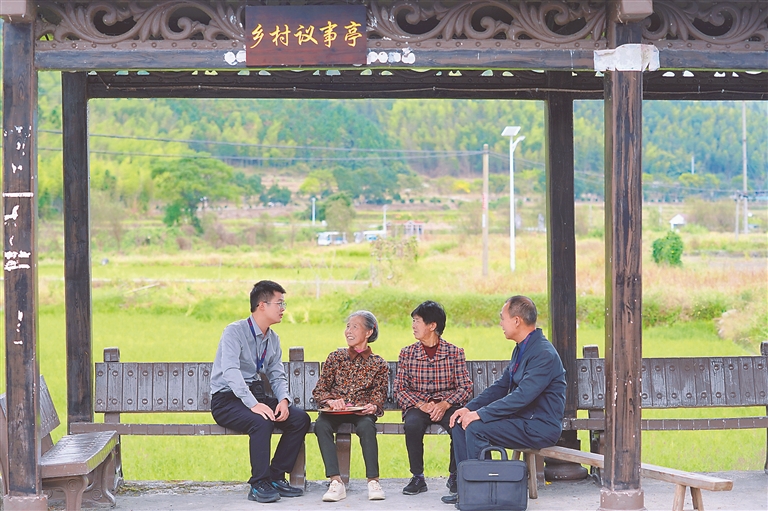
笔谈 | 深化系统施治 提升治理效能
Zhong Yang Ji Wei Guo Jia Jian Wei Wang Zhan· 2025-11-12 23:58
Group 1 - The 20th Central Commission for Discipline Inspection's Fourth Plenary Session emphasizes enhancing the quality and effectiveness of grassroots disciplinary inspection and supervision [1] - The session calls for a systematic approach to governance, focusing on the integration of various supervisory mechanisms such as inspections, audits, and financial oversight to analyze political ecology and identify integrity risks [1][2] - There is a push for collaborative supervision among departments and regions, utilizing technology for precise problem-solving in supervision [1] Group 2 - The importance of case investigation is highlighted, advocating for a comprehensive approach that integrates supervision, case handling, rectification, and governance [2] - The session stresses the need for targeted warning education for different levels of personnel, including key minority groups and young cadres, using real cases to enhance the effectiveness of education [2] - Regular quality assessments of cases are mandated to ensure that each case withstands scrutiny from practice, the public, and history [2] Group 3 - Strengthening the capabilities of grassroots disciplinary inspection and supervision personnel is deemed crucial for extending strict party governance and protecting public interests [3] - The session promotes ideological guidance and practical training for personnel, encouraging a mentorship system to enhance skills and problem-solving abilities [3] - There is a focus on optimizing team structure and enhancing legal and regulatory compliance in grassroots disciplinary inspection work [3]
悟规律 明方向 学方法 增智慧 | 标本兼治 系统施治
Zhong Yang Ji Wei Guo Jia Jian Wei Wang Zhan· 2025-11-04 00:35
Core Viewpoint - The article emphasizes the importance of a comprehensive approach to anti-corruption efforts, advocating for a system that integrates deterrence, prevention, and education to effectively combat corruption in a sustained manner [1][2][5]. Summary by Relevant Sections Anti-Corruption Strategy - The strategy of "integrated prevention, deterrence, and education" is essential for enhancing the effectiveness of anti-corruption measures, addressing the complex nature of corruption that intertwines with various social, political, and economic factors [3][6][11]. - The historical context of the Communist Party's anti-corruption efforts illustrates the evolution of strategies from punitive measures to a more holistic approach that includes education and institutional reform [4][5]. Current Challenges - The current landscape of corruption is characterized by new forms of hidden and sophisticated corrupt practices, necessitating a robust and adaptive response that includes continuous monitoring and reform of existing systems [6][12][19]. - The need for a high-pressure environment to deter corruption is highlighted, with data showing significant actions taken by disciplinary bodies, such as handling 1.976 million cases and initiating 789,000 investigations in a recent period [8]. Implementation of Anti-Corruption Measures - The article outlines the necessity of a multi-faceted approach that combines strict enforcement, institutional checks, and educational initiatives to create a culture of integrity among party members and public officials [10][20][22]. - Emphasis is placed on the importance of integrating various measures to ensure that deterrence, prevention, and education work synergistically, enhancing the overall effectiveness of anti-corruption efforts [11][17]. Cultural and Educational Aspects - Strengthening the ideological foundation of anti-corruption through education and cultural initiatives is crucial for fostering a long-term commitment to integrity among officials [10][16][21]. - The promotion of a clean governance culture and the establishment of a robust educational framework are essential for instilling values that resist corruption [16][22].
昆山:提升农村“三资”监管质效
Xin Hua Ri Bao· 2025-10-30 22:35
Core Viewpoint - The Kunshan Municipal Commission for Discipline Inspection and Supervision is focusing on addressing corruption and misconduct in rural collective economies, aiming to protect the financial interests of villages and enhance transparency in public power management [1][2] Group 1: Strengthening Oversight - The Commission is implementing a comprehensive approach called "check, rectify, and govern" to safeguard village collective finances and tighten the management of public power [1] - A thorough investigation of the "three assets" (land, funds, and resources) across 164 administrative villages and agricultural communities is being conducted to ensure accurate data collection and management [1] Group 2: Systematic Improvement - The Commission has introduced new policies and guidelines, including the "Work Opinions on Promoting the Quality and Efficiency of Rural Collective Economy" and the "Supervision Management Measures for Agricultural Land Shareholding Cooperatives (Trial)" [2] - Significant asset integration has occurred, with 184.9 acres of scattered assets consolidated and 24.91 million square meters of old assets renovated, alongside the introduction of 32 new agricultural investment and village-level projects totaling over 7 billion yuan [2] Group 3: Enhanced Transparency and Efficiency - The implementation of a "Big Data Supervision Platform for Grassroots Public Power" allows for online approval of 7,054 village-level projects, enhancing the efficiency, standardization, and transparency of power operations at the village level [2]
以自我革命精神深化作风建设
Hai Nan Ri Bao· 2025-08-20 01:20
Group 1 - The core viewpoint emphasizes the importance of style construction as a fundamental guarantee for the development of the Party's cause, particularly in the context of the Hainan Free Trade Port entering a new phase of operation [1] - The leadership's role as a "key minority" is crucial for demonstrating and guiding the political ecology, requiring them to lead by example and address challenges in infrastructure and institutional innovation [2] - A three-tier governance mechanism is proposed, focusing on prevention, identification of "micro-corruption," and innovative education to strengthen discipline awareness among Party members [3] Group 2 - The principle of addressing both symptoms and root causes in style construction is highlighted, advocating for a combination of strategic and tactical approaches to maintain continuous pressure and accountability [4] - The need for a political ecology that integrates "dare not corrupt, cannot corrupt, and do not want to corrupt" is emphasized, with a focus on high-pressure tactics against corruption and the establishment of a culture of integrity [5] - A flexible strategy for confronting complex contradictions is discussed, advocating for targeted measures and support for innovative efforts while maintaining fairness and order in the construction of the Free Trade Port [6][7] Group 3 - The concept of "systematic governance" is introduced, which includes a collaborative institutional framework, integrated supervision mechanisms, and a multi-faceted approach to promote integrity and governance [8]
标本兼治做好“后半篇文章”
Zhong Yang Ji Wei Guo Jia Jian Wei Wang Zhan· 2025-07-10 00:19
Group 1 - The core viewpoint emphasizes the need for a systematic approach to corruption governance, focusing on both case handling and broader systemic reforms to enhance overall effectiveness [1][3][4] - The importance of warning and deterrence through case studies is highlighted, suggesting that disciplinary education should be integrated throughout the entire process of case handling [1][2] - The necessity of deepening systemic treatment by linking case investigations with broader governance strategies is stressed, aiming to prevent minor issues from escalating into major problems [3][4] Group 2 - Strengthening disciplinary education is crucial, with a focus on integrating core regulations into daily practices and enhancing the understanding of compliance among party members [2][3] - Establishing long-term mechanisms for targeted governance is essential, which includes identifying and addressing systemic vulnerabilities within organizations [4] - The need for a robust follow-up and supervision mechanism is emphasized to ensure that corrective actions are effectively implemented and monitored [4]