
考古中国

Search documents
新春走基层 | 在古都洛阳,触摸中华文明传承发展的时代脉搏
Xin Lang Cai Jing· 2026-02-14 03:01
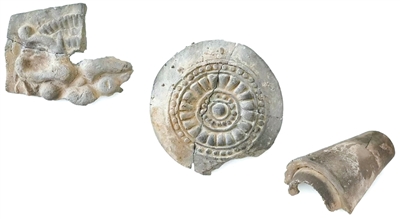
时值腊月,古都洛阳年味渐浓。但对于考古人而言,"年味"有着独特的定义。它不在熙攘的人群间,在整理一年收获时的满满成就感里;不在喧闹的集市 里,在规划来年工作的清晰构想里。 隋唐洛阳城正平坊遗址内,发掘人员迎着冬日难得的暖阳,细致地勾勒着唐代池苑的边界;东周手工业作坊遗址里,考古人俯身于深坑,寻觅着2000多年前 工匠留下的蛛丝马迹;偃师古城村遗址驻地,寒风掠过田野,工作人员正在室内对出土的陶片和建筑构件进行分类。 从夏商奠基到汉魏辉煌,洛阳这座"五都荟洛"的古城,正以一个个考古发现,向公众诉说着中华文明完整而连续的生命故事。 足迹坚实:服务大局与守护根脉 "昔三代之居,皆在河洛之间。"洛阳的独特,在于历史的持续演进在这里未曾中断。这里是国务院首批公布的历史文化名城,有着5000多年文明史、4000年 建城史和1500多年建都史。丝绸之路、大运河、万里茶道在此交汇;二里头、偃师商城、汉魏故城等五大都城遗址沿洛河蜿蜒分布,宛如一部摊开在大地上 的立体史书。这些历史,正被考古人的手铲一页页证实。 "近年来,洛阳积极参与中华文明探源工程、'考古中国'重大项目和夏商文明研究工程,实施偃师古城村遗址、洛阳东周王城七里河官 ...


国家文物局:优化博物馆和社会文物管理服务
第一财经· 2026-01-12 15:09
Group 1 - The core viewpoint of the article emphasizes the need to enhance the utilization of cultural relics and optimize museum and social relic management services, as discussed in the national cultural relics bureau meeting [3] - The meeting outlined the importance of systematic protection and the completion of the fourth national cultural relics census, as well as the establishment of a long-term safety mechanism for cultural relics [3] - There is a focus on deepening archaeological and civilization research, implementing major projects like the "Archaeological China" initiative, and expanding international cultural heritage exchanges [3] Group 2 - The article highlights the necessity for strengthening management and enhancing educational and technological support for cultural relics, aiming for high-quality and sustainable development in the cultural relics sector [3]

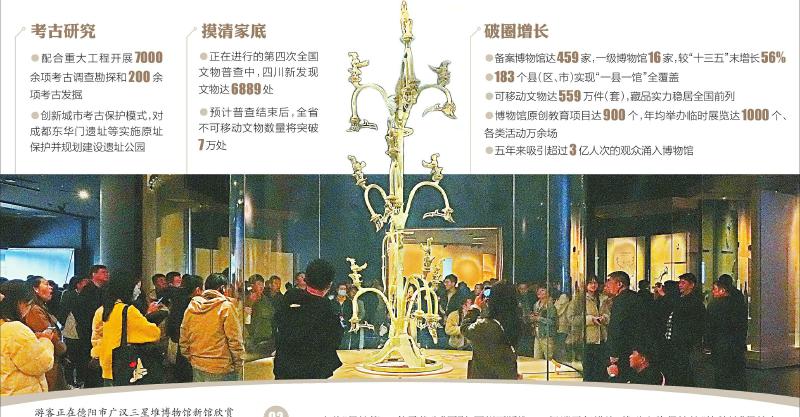
四川不断摸清文物家底,预计第四次全国文物普查结束后—— 不可移动文物数量将突破7万处
Si Chuan Ri Bao· 2025-12-13 01:32
Core Achievements in Cultural Heritage Development - During the "14th Five-Year Plan" period, Sichuan has made significant advancements in archaeological research, cultural heritage protection, and museum construction, achieving historic milestones in these areas [2][3]. Archaeological Research - Sichuan, as the birthplace of ancient Shu civilization, has focused on major projects like "Archaeological China" and "Chinese Civilization Exploration," leading to groundbreaking discoveries that reshape academic understanding [3]. - Over the past five years, Sichuan has conducted more than 7,000 archaeological surveys and over 200 excavations, ensuring that engineering projects and cultural heritage protection go hand in hand [3]. Cultural Heritage Protection - Sichuan has discovered 6,889 new cultural heritage sites during the ongoing fourth national cultural heritage census, with the total number of immovable cultural heritage sites expected to exceed 70,000 [4]. - Innovative protection mechanisms have been introduced, including cross-provincial cultural heritage joint protection and incentive policies like "floor area ratio rewards" to enhance sustainability in cultural heritage protection [4]. - The province has also implemented measures to address extreme weather impacts on cultural heritage, transitioning from reactive to a balanced approach of both reactive and preventive protection [4]. Revolutionary Cultural Heritage - The protection and utilization of revolutionary cultural heritage have been notably effective, with over 300 projects established, contributing to local economic development [5]. Museum Development - Sichuan has seen a significant increase in the number of museums, with 459 registered museums and 16 first-class museums, marking a 56% growth since the end of the "13th Five-Year Plan" [6]. - The province's museums have hosted over 3 billion visitors in the past five years, with a focus on enhancing visitor engagement through various educational programs and exhibitions [6][7]. - Technological innovations have played a crucial role in enhancing the preservation and presentation of cultural heritage, utilizing advanced techniques like 3D scanning and digital restoration [7]. Future Outlook - Looking ahead to the "15th Five-Year Plan," Sichuan aims to continue prioritizing cultural heritage protection, value excavation, and public benefit initiatives to support the construction of a culturally strong province [7].
考古探方连缀出文明演进长卷
He Nan Ri Bao· 2025-11-27 23:35
Core Viewpoint - The 2025 Summer Cultural Forum held in Zhoukou highlights the significance of archaeological findings in understanding the formation of Chinese civilization, particularly during the Xia Dynasty, which is crucial for the 5000-year history of Chinese civilization [1] Group 1: Archaeological Achievements - During the "14th Five-Year Plan" period, Henan Province has made significant archaeological discoveries, including 12 major findings that were published on the National Cultural Heritage Administration's "Archaeological China" platform [2] - Henan has led the nation with a total of 55 projects recognized as national top ten archaeological discoveries, reflecting the central role of the Central Plains in the development of Chinese civilization [2] Group 2: Key Archaeological Sites - The Gongyi Shuanghuashu site, dating back approximately 5300 years, is a significant settlement from the Yangshao culture, providing critical materials for understanding the origins of Chinese civilization [3] - The Erlitou site is identified as the late capital of the Xia Dynasty and has been repeatedly recognized as a top archaeological discovery [3] - The Huaiyang Shizhuang site is the earliest known granary city from the Xia Dynasty, offering valuable insights into early state grain storage and management [3] - The Zhengzhou Shangdu Shuyuan Street cemetery represents the highest status noble burial site discovered in the early Shang Dynasty [3] Group 3: Ongoing Archaeological Initiatives - Henan Province has conducted over 7500 archaeological exploration projects and more than 1300 excavation projects during the "14th Five-Year Plan" period, leading to numerous important discoveries [4] - The province's "archaeology first, then land transfer" policy has set a national precedent, influencing the newly revised "Cultural Relics Protection Law of the People's Republic of China" [4] - Future plans include advancing archaeological reforms and enhancing research capabilities to promote the study of Chinese civilization and achieve high-quality development in archaeology [4]
国家文物局发布石峁遗址最新考古科学研究成果
Yang Shi Xin Wen· 2025-11-27 01:27
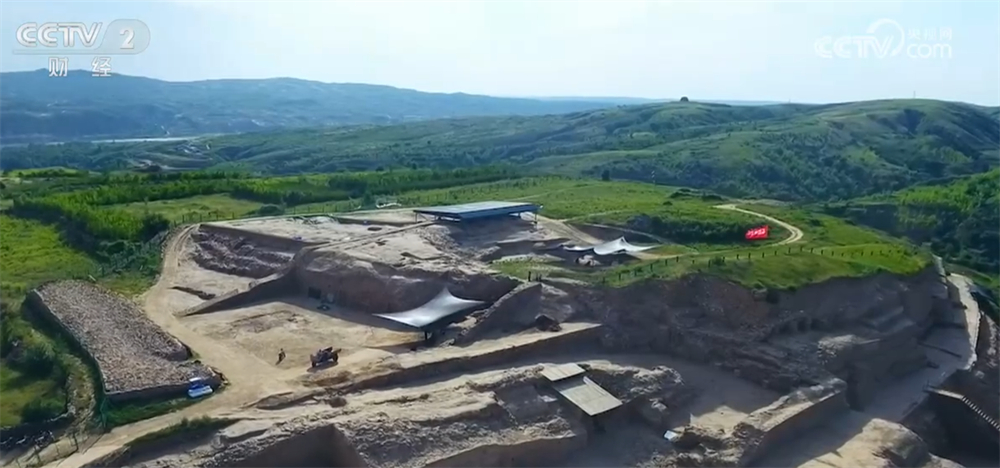
Core Insights - The National Cultural Heritage Administration held a press conference to present the latest scientific research findings on the Shimao site, highlighting the significance of archaeological studies in understanding early Chinese civilization [1][3]. Group 1: Research Findings - A research team from the Institute of Vertebrate Paleontology and Paleoanthropology conducted genomic studies on 169 ancient human bone samples from the Shimao site and surrounding areas, confirming that the Shimao culture's main population originated from the late Yangshao culture in northern Shaanxi [3]. - The study revealed close connections between the Shimao culture and other cultural groups, including the Jin Nan Taosi culture, northern agricultural populations, and southern rice-farming communities, indicating extensive interactions among prehistoric agricultural and pastoral communities [3]. - The research reconstructed family lineages spanning four generations within the Shimao ancient city, providing insights into the patrilineal social hierarchy and its implications for understanding the formation and development of early Chinese states [3]. Group 2: Future Initiatives - The National Cultural Heritage Administration plans to continue advancing the exploration of Chinese civilization origins and major archaeological projects, emphasizing interdisciplinary collaboration and the role of technological archaeology in deepening the study of Chinese civilization's origins [5].

多元文化汇为一体的长卷(考古中国)
Ren Min Ri Bao· 2025-10-17 22:13
Core Insights - The archaeological work in Xinjiang has significantly advanced since 2017, with a five-year plan established by the National Cultural Heritage Administration to enhance systematic and focused archaeological research [3][4] - Key findings include the establishment of a cultural system for the Bronze and early Iron Ages, revealing clearer cultural landscapes and chronologies in various regions of Xinjiang [4][6] - The discoveries at the Shichengzi site have provided valuable insights into the Han Dynasty's military and administrative history in the region, confirming its significance as a military outpost [4][6] Archaeological Developments - The comprehensive research on early civilizations in Xinjiang has led to breakthroughs in understanding the historical development of the region, particularly regarding the thirty-six states of the Western Regions during the Han Dynasty [4][6] - The excavation of the Kucha Friendship Road cemetery has filled gaps in archaeological research from the Spring and Autumn period to the Ming and Yuan dynasties, showcasing the cultural customs and social life of ancient Kucha [6][7] - Significant progress has been made in the archaeological work related to the Northern and Western Protectorates during the Tang, Song, and Yuan dynasties, clarifying the Northern Protectorate system [6][7] Museum Development - The rapid development of museums in Xinjiang includes the completion of eight new municipal-level museums and 36 county-level museums, contributing to a comprehensive museum layout in the region [7][8] - The establishment of the first underground museum in Xinjiang, the Kucha Wei-Jin Ancient Tomb Museum, has received widespread acclaim for its innovative approach to showcasing archaeological findings [6][7] Cultural Significance - The archaeological efforts in Xinjiang are crucial for understanding the rich and diverse characteristics of Chinese civilization and the formation of a multi-ethnic national identity [7][8] - Ongoing research supports the narrative of cultural exchange and integration between the Central Plains and Xinjiang, highlighting the region's historical importance in the broader context of Chinese history [6][7]
镜观·回响丨中华文化跃动传承之力
Xin Hua She· 2025-10-06 10:15
Core Viewpoint - The article emphasizes the importance of protecting and inheriting traditional Chinese culture as a fundamental aspect of building a strong socialist cultural nation Group 1: Cultural Heritage and Archaeology - Under the guidance of Xi Jinping's cultural thought, the protection and inheritance of excellent traditional culture have been continuously strengthened, with significant archaeological projects revealing the evolution of Chinese civilization [7] - The discovery of the Dawangkou culture in Shandong has pushed back the historical timeline of prehistoric culture in the region by over 2000 years, providing essential historical sources for the origins of Chinese civilization [11] - The Xixia Tombs, recognized as the largest and most complete archaeological site of the Xixia dynasty, serve as irreplaceable evidence of the dynasty's history and its role as a hub on the Silk Road [13] Group 2: Technological Integration in Cultural Preservation - The use of advanced technologies such as digital scanning and modeling is being employed to preserve and document cultural heritage, as seen in the digital archiving efforts at the Longmen Grottoes [24][26] - The integration of new technologies and creative expressions is revitalizing traditional culture, allowing static artifacts to "come to life" and engage younger generations [28][30] Group 3: Cultural Innovation and Modern Expression - Cultural products inspired by ancient artifacts, such as those from the Sanxingdui site, are being designed to resonate with contemporary audiences, emphasizing meaningful cultural IP [32] - Immersive experiences, such as the "Digital Dunhuang" exhibition, utilize VR technology to allow visitors to engage deeply with cultural narratives and historical contexts [36]
透过三个坐标,感知博物馆史诗般进步
Ren Min Ri Bao· 2025-10-04 21:50
Core Viewpoint - The museum sector in China is experiencing unprecedented growth and transformation, with a significant increase in the number of museums and public engagement, reflecting a deep cultural confidence and innovation in the industry [1][11]. Group 1: Growth and Development of Museums - By the end of 2024, there will be 7,046 registered museums in China, an increase of over 330 times since the founding of New China [1]. - 91.46% of museums are free to the public, with an expected 1.49 billion visitors in 2024, averaging more than one visit per person in China [1]. - The development of museums has become a vital part of showcasing national history and fostering national identity [2]. Group 2: Cultural Significance and Public Engagement - Museums serve as living embodiments of historical continuity, essential for understanding both ancient and modern China [2]. - The public's enthusiasm for museums has reached unprecedented levels, with innovative exhibitions and educational programs enhancing visitor experiences [1][5]. - The integration of cultural and tourism sectors has led to new trends, such as visiting museums during holidays and the popularity of museum-themed products [7]. Group 3: Innovation and Reform - The museum sector is undergoing significant reforms aimed at optimizing structure and enhancing functionality by 2025 [6]. - Technological advancements, such as digital preservation, are being utilized to share cultural heritage with a broader audience [8]. - The creative transformation of traditional culture within museums is fostering a vibrant and contemporary cultural landscape [9]. Group 4: International Engagement - Chinese museums are increasingly showcasing their cultural heritage on the global stage, with significant exhibitions planned for international audiences [10]. - The participation in international museum associations and hosting global events reflects China's commitment to cultural exchange and collaboration [10]. - The confidence and openness of Chinese museums contribute to the global dialogue on civilization and cultural understanding [10].
数览“十四五”时期考古工作成就 文化遗产在保护中利用、成果惠及更多群众
Yang Shi Wang· 2025-09-26 08:44
Core Insights - The National Cultural Heritage Administration announced significant achievements in archaeological work during the "14th Five-Year Plan" period, highlighting the progress made in various key areas of human and cultural history [2][4]. Group 1: Achievements in Archaeology - During the "14th Five-Year Plan," 21 major "Archaeological China" projects were systematically advanced, with 1,284 proactive archaeological projects being solidly implemented [4]. - New advancements were made in critical fields such as human origins, agricultural origins, and the development of a unified multi-ethnic state [4]. - The "Archaeological China" initiative has led to the release of 107 archaeological achievements across 32 sessions, showcasing a million years of human history, ten thousand years of cultural history, and over five thousand years of civilization history [7]. Group 2: Cultural Heritage Utilization - China has established a comprehensive identification system for its civilization, consisting of 150 major heritage sites, 65 national archaeological parks, and over 240 archaeological museums [9]. - Sichuan Province emphasizes the utilization of cultural heritage in its protection efforts, ensuring that the benefits of heritage conservation reach more people [9]. - The province has developed several national archaeological parks and is enhancing cultural tourism routes, transforming the approach from protecting individual heritage sites to revitalizing cultural pathways [11]. Group 3: Innovative Protection Measures - Chengdu has pioneered a "pre-archaeology, post-transfer" model for archaeological work, effectively protecting underground cultural relics [13]. - The city has introduced the first domestic cultural heritage protection policy regarding "floor area ratio" rewards, allowing certain heritage sites to be excluded from construction density calculations, thus mitigating impacts on urban development projects [13].
新华全媒头条|谱写向“绿”向“新”的协奏曲——黄河上游生态保护和高质量发展的甘肃实践
Xin Hua She· 2025-09-16 11:00
Core Viewpoint - Gansu Province is actively implementing ecological protection and high-quality development strategies in the Yellow River basin, focusing on water conservation, pollution prevention, and sustainable development to ensure clean water flows downstream [1][3][13]. Group 1: Ecological Protection Efforts - Gansu is responsible for significant ecological restoration and water conservation in the Yellow River basin, with a commitment to addressing water and soil loss, pollution, and ecological degradation [1][8]. - The province has invested over 5 billion yuan in integrated protection and restoration projects in the Gannan Yellow River upstream water conservation area since 2021, achieving a vegetation coverage of 98.4% in the region [5][6]. - The outflow of the Yellow River at Maqu County has increased to 17.3 billion cubic meters, a nearly 50% improvement compared to a decade ago [6]. Group 2: Water and Soil Conservation - Water and soil loss is a critical issue in the Gansu section of the Yellow River, with 47,100 square kilometers affected as of 2019 [8][11]. - Gansu has developed unique models for soil erosion control, focusing on preventing soil loss and improving ecological conditions through various land management practices [8][11]. - The "Green Full of Longzhong" initiative has been implemented in Dingxi City since 2020, successfully retaining over 37 million tons of sediment annually [9]. Group 3: Pollution Control Measures - Gansu has undertaken comprehensive pollution control measures, including shutting down wells, upgrading wastewater treatment facilities, and implementing rainwater and sewage separation projects [13]. - The chemical oxygen demand (COD) concentration from wastewater treatment plants has been reduced from 50 mg/L to 30 mg/L following upgrades [13]. - By 2024, the proportion of water quality rated as good in the Yellow River basin is expected to reach 97.56%, an increase of 4.88 percentage points year-on-year [13]. Group 4: Sustainable Development and Innovation - Gansu is pursuing a green development path by implementing water-saving reforms and promoting circular economy practices, with a focus on sustainable agricultural and industrial practices [15][16]. - The province's water usage per unit of GDP and industrial output has decreased, with figures of 41.8 cubic meters and 15.8 cubic meters respectively for 2024, showing a reduction compared to previous years [15]. - Gansu is leveraging its resource advantages to promote strategic emerging industries, with the share of these industries in the province increasing from 12.4% in 2019 to 16.2% currently [16]. Group 5: Cultural and Tourism Development - The Yellow River basin is not only a natural resource but also a cultural heritage site, with efforts to promote and preserve the cultural significance of the region [18]. - In 2024, the nine cities and states in the Gansu Yellow River basin are expected to receive 320 million tourists, generating 230 billion yuan in tourism revenue, reflecting a growth of 14.3% and 24.7% respectively [19]. - The revitalization of the region has led to increased entrepreneurial opportunities, as seen in the rise of local businesses catering to tourism [19].