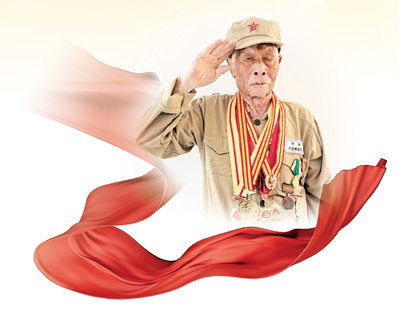
艰苦奋斗精神

Search documents
村史馆里照见过去和未来
Ren Min Ri Bao· 2026-02-23 09:42
王经臣一生见到过许多奖状。若问他最看重的,一定是挂在山东临沭县曹庄镇朱村村史馆里的那张《小 麦丰产奖状》。 正月初五,77岁的义务讲解员王经臣又一次站在泛黄的奖状前,为游客讲述朱村的往事。 来自山东日照的教师张育河和儿子凑近端详,这是奖给小麦丰产先进单位曹庄人民公社朱村生产队的。 "那时候啥条件?出门要爬坡,下地先过河。"王经臣提高了声调,"老一辈就靠'一根扁担两根绳',冬干 三九,夏干三伏,硬是把粮食亩产提了上去。这艰苦奋斗的精神,就是咱朱村的魂!" 张育河的儿子仰起小脸问:"爷爷,我不怕苦,也能得奖状吗?" 经历战火纷飞的年代、度过艰苦奋斗的日子,朱村人想将一段段"来时路"珍藏。带着父亲的叮嘱,王经 臣在村里的支持下四处搜集史料。2013年,朱村建起山东省首个村级档案馆,存下7000多卷(件)档 案。 "生活一天比一天好,但我们不能忘记历史,不能忘记那些为新中国诞生而浴血奋战的烈士英雄,不能 忘记为革命作出重大贡献的老区人民。"2013年11月25日,习近平总书记来到朱村,观看这个抗战初期 就建立党组织的支前模范村村史展。 王经臣当时站在人群中,眼眶发热。 村史馆不仅记录过去,更照见朱村的现在与未来,一股 ...
刘大姐有了专属免费摊位|新春走基层
Xin Lang Cai Jing· 2026-02-23 01:13
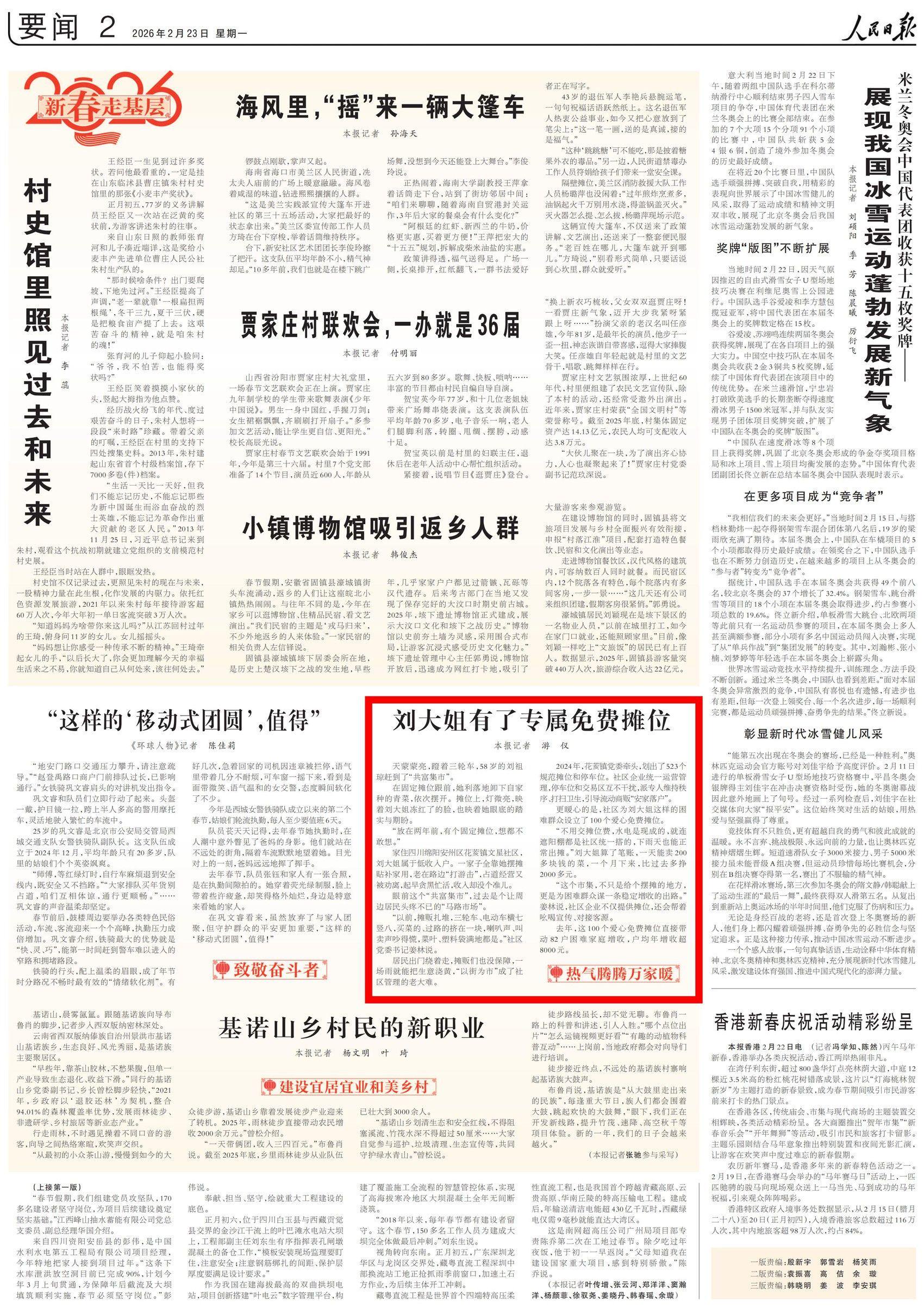
转自:人民日报 2026年2月23日 星期一 王经臣一生见到过许多奖 状。若问他最看重的,一定是挂 在山东临沭县曹庄镇朱村村史 馆里的那张《小麦丰产奖状》。 正月初五,77岁的义务讲解 员王经臣又一次站在泛黄的奖 状前,为游客讲述朱村的往事。 来自山东日照的教师张育 河和儿子凑近端详,这是奖给小 菱丰产先进单位曹庄人民公社 朱村生产队的。 "那时候啥条件?出门要爬 坡,下地先过河。"王经臣提高了 声调,"老一辈就靠'一根扁担两 根绳',冬干三九,夏干三伏,硬 是把粮食亩产提了上去。这艰 苦奋斗的精神,就是咱朱村 的魂!" 张育河的儿子仰起小脸问: "爷爷,我不怕苦,也能得奖 状吗?" 王经臣笑着摸摸小家伙的 头,竖起大拇指为他点赞。 经历战火纷飞的年代、度过 艰苦奋斗的日子,朱村人想将一 段段"来时路"珍藏。带着父亲 的叮嘱,王经臣在村里的支持下 四处搜集史料。2013年,朱村建 起山东省首个村级档案馆,存下 7000多卷(件)档案。 "生活一天比一天好,但我 们不能忘记历史,不能忘记那些 为新中国诞生而浴血奋战的烈 士英雄,不能忘记为革命作出重 大贡献的老区人民。"2013年 11月25日,习近平总书记来到 ...

石油红一样喜庆
Zhong Guo Jing Ji Wang· 2026-02-15 09:41
桐34站单井拉油站点属于华北油田采油四厂,于1985年建成首条向北京供输天然气的管道,1990年为北 京第十一届亚运会供气34万立方米。 2月14日,腊月廿七,记者驱车一路往南,前往北京市大兴区采育镇采油四厂桐34站单井拉油站点。与 人们印象中油田一般都远离城市不同,这个采油小站离北京天安门广场的直线距离只有30公里。 经过两个多小时车程,道路两旁的高楼渐渐稀少,远远望见一片空旷地上,孤零零矗立着一座采油站。 进到站里,只见一位身穿红色工服的师傅正踮着脚贴春联,手里还攥着未贴实的福字:"你们到得真 早,过年那几天任务重,怕耽误生产,咱就提前把春联贴上,年味先闹起来。" 他叫熊步斌,今年55岁,负责油水井日常巡检维护、油罐测液位和拉油工作。不大的平房,隔成四小 间,就是值班室。熊步斌的爱人罗大姐正好来送饭,没唠两句吐槽道:"他呀,不爱逛街更不爱买新衣 服,每年过年换的就是单位发的工服。"边说边递上一套崭新的工服。熊步斌接过工服笑着说:"这么多 年我早就习惯了天天穿工服,再说了,'石油红'也是红嘛,一样喜庆。" 熊步斌守了两年的小站,管理着一口采油井、五口闲置井和一口注水井。1991年桐34-4井投产,投产时 日 ...
“任何时候,艰苦奋斗的精神不能丢”
Xin Lang Cai Jing· 2026-01-03 04:51
Core Viewpoint - The article emphasizes the dedication and resilience of oil workers in harsh conditions, highlighting their commitment to ensuring safe oil and gas supply while drawing inspiration from past generations of oil workers [1] Group 1: Worker Commitment - The station manager at Tarim Oilfield, Ma Jinlong, conducts inspections in severe weather, stressing the importance of safety in oil and gas supply [1] - Engineer Liu Jun recalls a critical moment during a routine inspection where he detected a gas leak, showcasing the responsibility felt by workers in the field [1] - Zhang Yahui and Aimaitejiang, engineers at the "West-to-East Gas Transmission" project, express their commitment to their work and the value they find in their roles, encouraging young people to join the industry [1] Group 2: Legacy and Modernization - The article reflects on the evolution of working conditions in the oil industry, noting that modern workers benefit from advanced technology compared to previous generations [1] - Workers emphasize the importance of passing down the spirit of hard work and dedication from older generations to ensure the continued success and safety of oil and gas operations [1]
【连续报道·报效祖国 建功西部】“任何时候,艰苦奋斗的精神不能丢”
Xin Lang Cai Jing· 2026-01-02 18:29
Core Insights - The article highlights the dedication and resilience of oil workers in challenging environments, emphasizing their commitment to ensuring safe oil and gas supply [1][2] Group 1: Worker Commitment - Workers like Ma Jinlong and Liu Jun are actively involved in ensuring the safety and efficiency of oil and gas operations, even in harsh weather conditions [1] - The article illustrates the emotional and physical challenges faced by these workers, who often sacrifice personal time for their responsibilities [2] Group 2: Technological Advancements - The narrative contrasts past and present working conditions, noting that modern workers now utilize advanced technology and digital equipment compared to their predecessors [2] - The use of intelligent and digital tools has improved operational efficiency, allowing workers to focus on safety and performance [2] Group 3: Legacy and Inspiration - The article emphasizes the importance of passing down the spirit of hard work and dedication from previous generations of oil workers to the current workforce [2] - Workers express a strong sense of value and purpose in their roles, encouraging young people to join the industry and experience the fulfillment it offers [2]
“小我”也能担大义(抗战烽火中的华侨华人)
Ren Min Ri Bao Hai Wai Ban· 2025-12-07 22:54
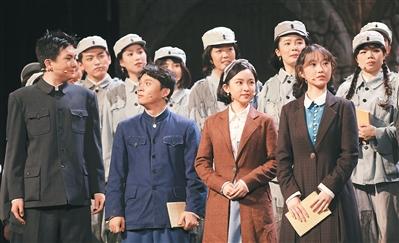
Core Viewpoint - The article highlights the story of Chen Fangxin, who performed in the play "Shanbei School," portraying her grandmother Chen Rimei, a patriotic figure who contributed to the anti-Japanese war and the construction of New China, emphasizing the importance of inheriting the spirit of patriotism from previous generations [2][6][10]. Group 1: Historical Context - The play "Shanbei School" is set against the backdrop of the full-scale outbreak of the Anti-Japanese War, telling the story of the Shanbei School's establishment during a time of national crisis and its role in training revolutionary leaders [4]. - Over a short period, Shanbei School trained more than 6,000 anti-Japanese cadres, who immediately went to the front lines to join the national united front against Japan [4]. Group 2: Personal Connection - Chen Fangxin's portrayal of her grandmother in the play serves as a personal connection to the historical narrative, allowing her to experience a "reunion" with her grandmother through performance [4][7]. - Chen Rimei's journey from Malaysia to Yan'an in 1938, influenced by the book "The Road to Yan'an," reflects the actions of many overseas Chinese who contributed to the war effort [5]. Group 3: Themes of Patriotism and Legacy - The article emphasizes the theme of patriotism, with Chen Fangxin stating that her grandmother's story is a microcosm of many overseas Chinese youths who acted for their country [10]. - The play includes poignant moments that evoke the sacrifices made by young revolutionaries, reinforcing the idea that ordinary individuals can become heroes in critical moments [7][11]. Group 4: Cultural Significance - The performance aims to educate audiences about the contributions of overseas Chinese during the Anti-Japanese War, highlighting the importance of remembering one's roots and the sacrifices made for the nation [10][11]. - Chen Fangxin expresses a desire to pass on her grandmother's spirit of perseverance and dedication to future generations, emphasizing the need to cherish the present while honoring the past [10][11].
抗战烽火中的科学仪器:从破庙里走出的"战时仪器厂"
仪器信息网· 2025-09-06 03:58
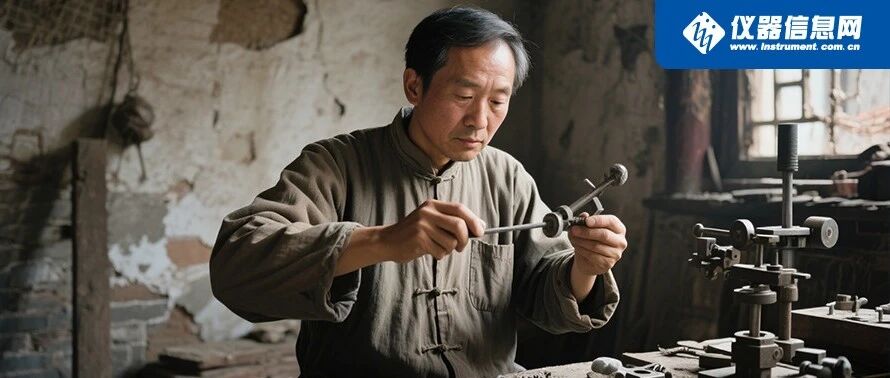
Core Viewpoint - The article discusses how Chinese scientists developed scientific instruments during the Anti-Japanese War, overcoming severe challenges and laying the foundation for the development of scientific instruments in modern China [3][4]. Group 1: Challenges in Instrument Development - Resource scarcity was the biggest obstacle for scientific instrument development during the war, as coastal industrial areas were occupied, forcing research institutions to relocate to remote areas [4]. - The migration of research institutions, such as the Central Research Institute and Peking Research Institute, faced significant difficulties, leading to the loss of many precision instruments and research equipment [4][5]. - Despite the challenges, some scientists chose to stay and contribute to the war effort, exemplifying the conflict between talent loss and dedication [4][5]. Group 2: Achievements Under Difficult Conditions - The first high-magnification microscope in China was developed in 1938 by a team led by Yan Jici, using limited resources and local craftsmanship [7]. - The team produced 500 microscopes with a magnification of 1500 times, along with over 300 sets of rangefinders and telescopes for military use [7][10]. - They also created 200 leveling instruments, which played a crucial role in military mapping and engineering projects during the war [10]. Group 3: International Support - During the war, the U.S. provided limited scientific instruments through the "Flying Tigers" and the Hump airlift, which were essential for medical and military purposes [11]. - The Soviet Union's support was critical in the early years of the war, supplying basic experimental equipment to maintain research activities [11]. - Overseas Chinese scientists also made significant contributions, such as Zhao Zhongyao, who safely transported valuable materials for nuclear physics research [12]. Group 4: Legacy and Impact on Post-War Development - The technological legacy from the war period directly influenced post-war scientific instrument development in China, with techniques and knowledge being passed down [13]. - The training of talented scientists during the war, such as Yang Zhenning and Li Zhengdao, laid the groundwork for future advancements in various scientific fields [13]. - The spirit of self-reliance and hard work fostered during the war became a driving force for China's scientific policies and technological independence [13][17]. Group 5: Post-War Instrument Industry Development - After the war, China's scientific instrument development relied heavily on Soviet assistance, leading to the establishment of key manufacturing facilities [15]. - The 1960s and 1970s marked a shift towards independent innovation, with significant achievements in precision instruments and high-energy physics [15][16]. - The reform and opening-up period brought new opportunities for the scientific instrument industry, with initiatives like the "863 Program" supporting high-end instrument research [16].
从濠江流向黄河:人民音乐家冼星海的“家国乐章”
Xin Hua She· 2025-08-29 15:16
Core Viewpoint - The article highlights the legacy of the renowned Chinese composer Xian Xinghai, emphasizing his contributions to patriotic music during the Anti-Japanese War, particularly through his famous work "Yellow River Cantata," which continues to inspire generations of Chinese people [1][11]. Group 1: Historical Context - Xian Xinghai was born in Macau and became a significant figure in Chinese music, known for his deep love for the country and his commitment to using music as a tool for national salvation [2][5]. - His early life experiences, including exposure to traditional sea shanties, shaped his musical talent and patriotic sentiments [4][5]. - After studying music in France, he returned to China and immediately engaged in the anti-Japanese movement, creating popular revolutionary songs [6][8]. Group 2: Musical Contributions - Xian Xinghai's most notable work, "Yellow River Cantata," was composed in a short span of six days, reflecting his intense passion and dedication to the cause [9][10]. - The cantata premiered successfully and became a symbol of resistance, with performances across China and translations into multiple languages, solidifying its status as a global anthem against fascism [9][11]. - His works, including "Yellow River Boatmen's Song" and "Defend the Yellow River," are characterized by their use of Chinese melodies and themes, resonating deeply with the Chinese populace [9][10]. Group 3: Legacy and Influence - Xian Xinghai's music has been performed in various significant events and continues to be a part of educational curricula, showcasing its enduring relevance [11]. - Commemorative activities celebrating his contributions have taken place both domestically and internationally, reflecting the "Xinghai spirit" of patriotism and dedication [11][12]. - His daughter noted that his ability to connect personal suffering with the struggles of the people contributed to the timeless power of his music [11].
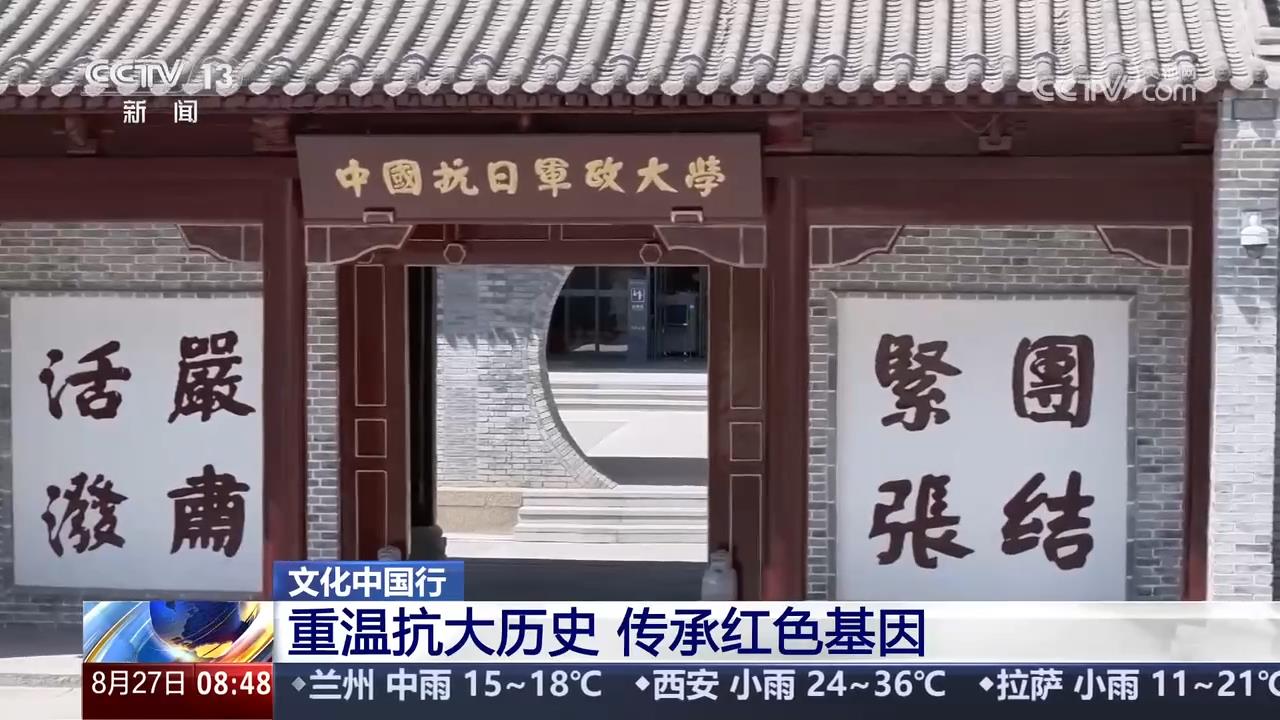
文化中国行丨窑洞做教室、砖石当桌椅 重温抗大里的热血青春
Yang Shi Wang· 2025-08-27 05:06
Core Viewpoint - The article highlights the historical significance and educational impact of the Chinese People's Anti-Japanese Military and Political University, emphasizing its role in training revolutionary leaders during a critical period in Chinese history [1][3][5]. Group 1: Historical Context - The university was established in 1936 in the context of urgent needs for leadership training during the Chinese resistance against Japanese invasion [3][5]. - It was initially located in Wayaobao and later moved to Yan'an in January 1937, where it was renamed and opened its doors to revolutionary youth across the nation [5][9]. Group 2: Educational Philosophy and Achievements - The university's motto, "Unity, Tension, Seriousness, and Vitality," encapsulated its mission to train a large number of cadres during a time of national crisis [3][9]. - Between July 1937 and June 1939, over 30,000 young students were accepted, with more than half attending the university for education [7][9]. - The university maintained high educational standards despite challenging conditions, covering subjects such as international politics and economic philosophy [13][15]. Group 3: Legacy and Influence - The university's influence extended beyond its immediate educational goals, as it laid the groundwork for numerous other institutions, including over 30 cadre schools established in the Yan'an area [15]. - The legacy of the university continues to resonate, with former students like 99-year-old Sun Youjie emphasizing the importance of passing down revolutionary traditions to future generations [17][19].
“有人民群众支持,我们就能夺取最后的胜利”(时空对话)
Ren Min Ri Bao· 2025-08-25 22:27
Core Points - The article highlights the life and experiences of Li Linchang, a centenarian who participated in the anti-Japanese war, emphasizing his dedication and sacrifices during that period [3][4][5]. Group 1: Personal Background - Li Linchang was born in 1923 in Hebei Province and joined the anti-Japanese armed forces in 1938, driven by a desire for revenge after his father was killed by Japanese soldiers [3][5]. - He faced numerous dangers during the war, including being injured multiple times and narrowly escaping death [3][6]. Group 2: War Experiences - Li Linchang served as a communication officer before being selected for a guerrilla unit, where he utilized local knowledge to conduct anti-Japanese operations [7][8]. - He and his comrades developed innovative strategies to evade enemy spies and maintain contact with local populations, which significantly contributed to their success [7][8]. Group 3: Legacy and Values - Li Linchang emphasizes the importance of hard work and being useful to the country, instilling these values in his family [9][10]. - He actively shares his war stories with younger generations to ensure that the sacrifices made during the war are not forgotten [10].