资金流

Search documents
Hudson Pacific Properties (NYSE:HPP) 2026 Conference Transcript
2026-03-02 20:12
Summary of Hudson Pacific Properties (NYSE:HPP) 2026 Conference Call Company Overview - **Company**: Hudson Pacific Properties (HPP) - **Industry**: Real Estate Investment Trust (REIT) - **Portfolio**: 19 million sq ft of high-quality office and studio assets located in major West Coast markets including the Bay Area, Los Angeles, Seattle, and Vancouver, with a new studio in New York [4][5] Key Themes 1. **2025 Reset**: - Strengthened balance sheet through $330 million in asset sales and over $2 billion in capital transactions - Reduced net debt by 22% and increased liquidity to $934 million - Achieved $26 million in G&A and interest savings [5][6] 2. **2026 Earnings Growth**: - Focus on capturing flight to quality in the office market - Leasing momentum with 518,000 sq ft of leases signed in Q4, leading to a total of 2.2 million sq ft for the year, the second strongest since 2019 [6][7] - Occupancy increased by 40 basis points sequentially [6] Financial Performance - **FFO Guidance**: Reinstated full-year FFO guidance for the first time in nearly two years, driven by stability in leasing and reduced costs [12][14] - **Occupancy Goals**: Targeting an average occupancy of 80%-82% by year-end, with a current occupancy of 76.3% [26][27] - **Pipeline**: 2.3 million sq ft of leasing pipeline, with 500,000 sq ft in late-stage negotiations [30][45] Market Dynamics - **Leasing Activity**: - 30%-35% of the pipeline represents net growth, with 75% being new leases and 25% renewals [45] - 50% of the pipeline is tech-related, with a third being AI-focused [47] - Strong demand in San Francisco and Silicon Valley, with positive absorption rates [8][17] - **Impact of AI**: - AI growth is a significant driver in the Bay Area, with limited immediate impact on tenant space requirements [23][24] - Average lease terms and sizes have increased year-over-year [24] Studio Business - **Quixote Investment**: - Acknowledged write-down on Quixote, aiming for break-even by year-end through operational improvements [32][36] - Sunset Studios are nearly fully leased, indicating strong demand in the studio sector despite market fluctuations [34][35] Capital Allocation and Strategy - **De-leveraging Plan**: - Targeting $200 million to $300 million in FFO accretive asset sales to further reduce leverage [8][52] - Focus on disciplined capital recycling and only deploying capital when returns are clear and attractive [8][54] - **Market Conditions**: - Los Angeles market recovery is lagging due to political and safety concerns, but upcoming events like the FIFA World Cup and Olympics may drive demand [58][60] Additional Insights - **Political Environment**: The political climate in Los Angeles is seen as a deterrent for investment, with potential improvements contingent on upcoming elections [58][59] - **AI Solutions**: Implementing AI tools for leasing efficiency, with expectations for shorter lease documentation and improved access to market data [64][71] Conclusion - Hudson Pacific Properties is positioned for growth in 2026, with a focus on improving occupancy, leveraging market dynamics, and optimizing its portfolio through strategic asset management and capital allocation. The company is navigating challenges in the Los Angeles market while capitalizing on opportunities in tech-driven markets.

本周哪些行业有追涨和抄底机会?
HUAXI Securities· 2026-01-18 12:27
Quantitative Models and Construction Methods Moving Average Trend Model - **Model Name**: Moving Average Trend Model - **Model Construction Idea**: The model evaluates industry trends using four moving averages and combines three moving average indicators to derive a trend score[2][24] - **Model Construction Process**: 1. **Moving Average Arrangement**: When a shorter-term moving average is above a longer-term moving average, it is considered a bullish arrangement and scores 1 point; conversely, a bearish arrangement scores -1 point[2][24] 2. **Moving Average Spread**: Calculate the price difference between adjacent moving averages and take the average of all differences[2][24] 3. **Moving Average Temporal Change**: When the price of a moving average increases compared to the previous day, it scores 1 point; when it decreases, it scores -1 point[2][24] 4. Combine the three indicators and take the absolute value to get the moving average score. Rank the scores from high to low to identify industries with clear upward or downward trends[2][24] - **Model Evaluation**: This model effectively identifies industries with clear trends by combining multiple moving average indicators[2][24] Capital Flow Model - **Model Name**: Capital Flow Model - **Model Construction Idea**: The model measures changes in industry capital flow using the capital inflow rate[3][26] - **Model Construction Process**: 1. Calculate the capital inflow rate as the ratio of active net capital inflow to transaction amount[3][26] 2. For each industry, calculate the change in recent capital inflow rate relative to historical capital inflow rates[3][26] 3. Rank the changes in capital inflow rates from high to low to identify industries with the most significant capital inflow increases[3][26] - **Model Evaluation**: This model effectively identifies industries with significant capital inflow changes by comparing recent and historical inflow rates[3][26] Combined Moving Average Trend and Capital Flow Model - **Model Name**: Combined Moving Average Trend and Capital Flow Model - **Model Construction Idea**: The model combines moving average trend scores and capital flow scores to select industries with clear trends and high capital inflow rankings[4][27] - **Model Construction Process**: 1. Calculate the moving average trend score for each industry[2][24] 2. Calculate the capital flow score for each industry[3][26] 3. Combine the moving average trend scores and capital flow scores to rank industries[4][27] - **Model Evaluation**: This model effectively identifies industries with clear trends and significant capital inflows by combining two different indicators[4][27] Model Backtest Results - **Moving Average Trend Model**: - Top-ranked industries: Non-ferrous metals, communication, electronics[9] - **Capital Flow Model**: - Top-ranked industries: Media, computer, electronics[9] - **Combined Moving Average Trend and Capital Flow Model**: - Top-ranked industries: Electronics, media, non-ferrous metals, machinery equipment, computer[10]
量化市场追踪周报:资金流未见明显结构切换,建议适当控制仓位-20251207
Xinda Securities· 2025-12-07 07:31
- The report does not contain any quantitative models or factors for analysis[1][2][3]
7月2日【中銀做客】:恆指、小米、比亞迪、建行、中廣核電力
Ge Long Hui· 2025-07-02 18:36
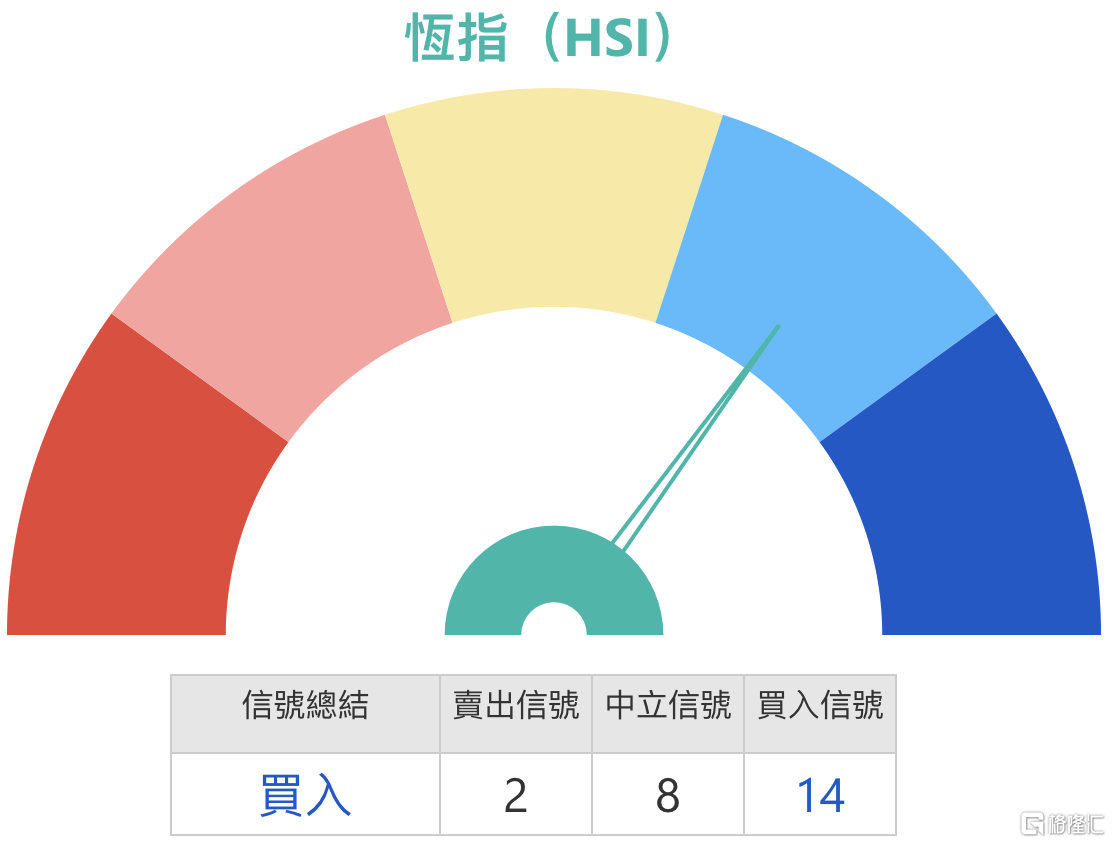
Market Overview - The Hang Seng Index (HSI) has shown a strong performance over the past six months, starting at 19,600 and reaching a high of 24,800, with a current level around 24,200, indicating a fluctuation of over 5,000 points [1] - The pharmaceutical sector has been the best-performing industry, with notable stocks like Kangfang Biotech (9926), China Biologic Products (1177), and WuXi Biologics (2269) showing exceptional gains [1] - Technology stocks, particularly Xiaomi (01810), have also performed well, with a 74% increase, while NetEase (09999) and Kuaishou (01024) saw gains of 50% and 48%, respectively [1] IPO and Derivative Market - The overall Hong Kong stock market has strengthened significantly in the first half of the year compared to 2023, with notable IPOs such as CATL and increased interest in consumer stocks like Pop Mart (9992) [2] - The issuance of structured products has been active, with the market responding to stock price movements, particularly for high-performing stocks [2] Investment Signals - The current sentiment in the market shows a bullish outlook, with 70% of investors holding bullish positions in HSI bull certificates, while 30% are bearish [5] - Caution is advised as the market lacks strong momentum, and there may be a potential pullback to around 23,700 before any further upward movement [5] Stock Analysis - Xiaomi has recently launched a new product, the YU7 car, which received 200,000 orders within an hour, driving its stock price to around 61, marking a 74% increase in the first half of the year [9] - BYD's sales in June reached 382,000 vehicles, with stock prices showing resilience around the 120 mark, indicating potential for further gains [13] - China Construction Bank has seen its stock price rise above 8, with a strong buy signal indicated for its derivatives [16] - China General Nuclear Power (01816) has shown a steady upward trend, with a buy signal for its structured products [19]