
量子信息

Search documents
“合肥人才嘉年华”元宵节上演
Xin Lang Cai Jing· 2026-02-27 16:24
转自:新安晚报 3月3日(元宵节)下午2时起,"志同到合才聚江淮"2026年"合肥人才嘉年华"——新质生产力青年人才 大型招聘会(元宵专场)将在合肥骆岗公园盛大举行。届时,"皖美之瞳"灯光秀将继续轮播,以一座城 的满满诚意,向天下英才发出滚烫邀约。 (来源:新安晚报) 为了让求职者更高效地对接心仪企业,活动现场不仅专门设立职业指导专区,邀请专家为高校毕业生答 疑解惑;同时,精心准备的政策咨询台也将提供人才政策、就业创业一站式咨询服务,确保政策红利直 达快享。值得一提的是,本次招聘活动线上同步发力,7000余家单位参与云端招聘,拿出众多岗位供求 职者选择。据合肥发布 当天下午,骆岗公园航站楼二楼城市展厅将汇聚大约200家重点单位,包括在肥上市公司、高校院所、 重点产业链企业及国有企事业单位,提供1万个急需紧缺岗位,涵盖人工智能、量子信息、新能源汽 车、生物医药等新质生产力核心领域。 ...
从农村少年到SCI作者,90后无臂博士用脚趾书写逆袭人生!
Huan Qiu Wang Zi Xun· 2026-02-26 06:05
来源:科技日报 "风物长宜放眼量",这是太原理工大学数学学院博士生王海港社交账号的名字,也是他的座右铭。 8岁意外失臂,他却以脚为手,在求学路上步步攻坚,在科研领域默默深耕。不久前,王海港以第一作 者身份撰写的研究论文在《自然》旗下系列期刊《通讯·物理》上发表。 "没有捷径,只能多写、多练。"这是王海港摸索出的唯一方法。写字姿势改了又改,只为写得快一点, 再快一点。 2015年,他以591分的高考成绩考入山东科技大学数学与应用数学专业;2020年,他毅然拒绝父母陪读 的请求,独自背着沉甸甸的行囊,从山东飞往山西,走进太原理工大学,开启了硕博连读的篇章。 "数学能让我静下心踏实做事。"王海港说,考研时得知数学专业有量子信息研究方向,从小热爱自然科 学的他,没有丝毫犹豫便选择了这个前沿领域。彼时的他,没想过难度有多大,只知道"自己喜欢、适 合,就值得去拼"。 王海港。 王海港说:"尽管身体有缺憾,但精神始终向阳,所有苦难都能化作前行的力量。" 1997年,王海港出生在山东潍坊的一个农村家庭。8岁那年,一场意外让他失去了双臂。近两个月的住 院治疗,记忆里满是撕心裂肺的疼。出院后,他成了那个躲在屋里不愿出门的孩子。陌 ...

安徽深入实施量子信息“千家场景”行动 2026年将推动超300个应用场景落地
Zheng Quan Ri Bao Wang· 2026-02-25 12:06
"省新质生产力投资平台今年全年将完成20亿元左右投资,重点投早、投小、投长期、投硬科技。"安徽 省发展和改革委员会主任陈军表示,在未来产业场景、载体、生态方面,对未来产业标杆应用场景和商 业化应用解决方案,每个给予100万元一次性奖励;对新纳入省级未来产业先导区筹建清单的地区,最 高可给予1000万元支持;对在省创新创业大赛中获奖的未来产业项目最高可给予50万元奖励。 近年来,安徽抢抓机遇前瞻布局未来产业,率先出台全国首部省级未来产业法规,量子科技产业集聚企 业数量居全国首位,截至目前,安徽已集聚中电信量子信息科技集团有限公司、科大国盾量子技术股份 有限公司、本源量子计算科技(合肥)股份有限公司(以下简称"本源量子")等多家量子企业,覆盖量 子通信、量子计算、测量三大领域的产业链。 值得一提的是,安徽量子产业链企业正以技术创新拓宽场景应用边界,在人工智能安全等领域实现突 破。例如,生成式人工智能的快速发展推动了图像合成技术的日益成熟。尽管逼真的AI生成图像解锁 了多元应用场景,却也带来了数字伪造与虚假信息传播的风险,使得行业对AI生成图像检测技术的需 求愈发迫切。在此背景下,本源量子与安徽大学研究团队展开合作 ...
王海港:无臂博士的量子科研路
Ke Ji Ri Bao· 2026-02-24 23:04
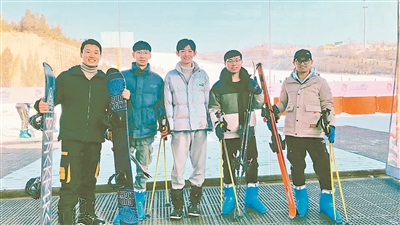
图为王海港(左三)和同学一起滑雪。 受访者供图 ◎科技日报记者 韩 荣 "风物长宜放眼量",这是太原理工大学数学学院博士生王海港社交账号的名字,也是他的座右铭。 8岁意外失臂,他却以脚为手,在求学路上步步攻坚,在科研领域默默深耕。不久前,王海港以第一作 者身份撰写的研究论文在《自然》旗下系列期刊《通讯·物理》上发表。目前,王海港已经以第一作者 身份发表了四篇SCI论文,在微观的量子世界里,走出了一条属于自己的自强之路。 王海港依稀记得,出院一个月后,在姐姐的鼓励下,他试着用脚夹起铅笔在纸上写字。"日出江花红胜 火,春来江水绿如蓝。能不忆江南?"短短几句古诗,他忍着钻心的疼痛写了很久,尽管字迹硕大,笔 画也歪歪扭扭,可那笨拙的字迹却像一束光,照亮了全家人灰暗的心房。 在家人的陪伴下,他开始了一场与命运的较量。从零学习用脚生活、用脚写字,这一学,就是数十年。 最初练习写字时,脚趾磨出的血泡破了又起,起了又破,最后结成厚厚的茧;膝盖跪得红肿发紫,连走 路都一瘸一拐,腿脚抽筋更是家常便饭。 "没有捷径,只能多写、多练。"这是王海港摸索出的唯一方法。写字姿势改了又改,从最初脚后跟与小 脚趾着地、其余脚趾悬空的笨拙,到高 ...
安徽推进量子信息场景应用 发射商业卫星有奖补
Zhong Guo Xin Wen Wang· 2026-02-24 15:35
《政策举措》显示,2026年,安徽新质生产力投资平台全年将完成20亿元左右投资,重点投向种子期、 初创期硬科技企业;对未来产业标杆应用场景和商业化解决方案,每个给予100万元一次性奖励,新纳 入省级未来产业先导区筹建清单的地区最高可获1000万元支持。 据安徽省发展和改革委员会主任陈军介绍,安徽还建立健全"科学家+企业家+投资家"的咨询机制,提 升前沿技术战略预判能力;坚持"产业出题、科技答题",持续推进重点领域关键核心技术攻关,围绕全 球技术前沿开展创新研发和产业孵化;布局一批概念验证中心、中试基地和顶尖孵化器,打通前沿技术 成果转化堵点。 中新网合肥2月24日电 (记者张俊)记者24日从安徽省发展和改革委员会获悉,2026年,安徽将深入实施 量子信息"千家场景"行动,推动超300个应用场景落地。 当日,安徽对外发布《关于巩固拓展经济稳中向好势头若干政策举措》(以下简称《政策举措》),聚焦 量子信息产业落地,深入实施"千家场景"行动,明确2026年推动超300个量子应用场景落地,同时征集 遴选60个左右省级标杆应用场景和标志性产品;对获批频轨资源并成功发射入轨投运商业卫星,单颗给 予最高50万元奖补;对省级 ...
“十四五”时期青海省藏语新词术语规范化工作成效显著
Xin Lang Cai Jing· 2026-02-23 18:39
Core Viewpoint - The standardization of Tibetan new terms in Qinghai Province during the "14th Five-Year Plan" period aims to strengthen the awareness of the Chinese national community, promote healthy and harmonious language use, ensure precise information dissemination, and support technological innovation and cultural security, thereby providing a solid linguistic foundation for high-quality economic and social development in Qinghai Province [1] Group 1 - The Qinghai Provincial Tibetan Terminology Standardization Committee has collected, translated, reviewed, and published over 5,000 frequently used new terms in politics, economy, technology, and culture, issuing 26 editions of the "Tibetan New Terms Bulletin" [2] - The published entries focus on new terms, commonly used terms, and current event terminology, covering key areas such as "artificial intelligence, quantum information, life health," "big data, blockchain, information platforms," "carbon neutrality, carbon peak, carbon capture, new energy vehicles," and "epidemic prevention, black soil beach governance" [2] - The standardization efforts have effectively eliminated conceptual confusion and communication ambiguities, ensuring timely and accurate dissemination of new concepts and terms related to major events, meetings, and policies [2] Group 2 - The next steps involve actively adapting to the rapid social development and the emergence of new concepts, industries, and models by further strengthening the standardization of new terms and improving the terminology standardization work mechanism [3] - There is a focus on continuously optimizing the technical support system for standardization work to enhance scientific rigor and efficiency, promoting the social application of standardized terminology results [3]
开年,合肥赚翻了
Xin Lang Cai Jing· 2026-02-19 07:48
Core Insights - Hefei is emerging as a significant hub for advanced industries, showcasing its strengths in quantum information, fusion energy, and deep space exploration during the Spring Festival Gala [3][4][20] - The city is set to witness China's largest IPO this year with Changxin Technology, which is expected to exceed a market value of 1 trillion yuan [4][20] - Hefei has established a "Quantum Avenue" with over 30 quantum technology companies located in close proximity, indicating a burgeoning quantum industry [3][20] Industry Developments - Hefei's investment in fusion energy is gaining momentum, with significant projects like the EAST and CRAFT facilities, which are attracting numerous related enterprises [10][27][28] - The city is recognized as a "Quantum City," with 85% of its quantum enterprises concentrated in the high-tech zone, leading to the development of world-class achievements such as the "Mozi" quantum satellite [11][27][32] - The deep space exploration sector is also thriving, with nearly 50 projects being incubated in the deep space exploration laboratory, attracting leading commercial aerospace companies [11][28] IPO Trends - Hefei is experiencing a wave of IPOs, with 88 companies listed on A-shares and 20 on the Sci-Tech Innovation Board by 2025, ranking fifth and second among provincial capitals respectively [30] - Changxin Technology is preparing for an IPO with a fundraising target of 29.5 billion yuan, following a significant investment history [30][31] - Other notable companies like Sunshine Power and quantum firms such as Guoyi Quantum and Benyuan Quantum are also pursuing IPOs, reflecting the city's growing financial landscape [31][32] Investment and Innovation - Hefei's government has made substantial investments in technology, with over 100 billion yuan allocated during the 14th Five-Year Plan, positioning it as a leader in R&D spending among provincial capitals [15][33] - The city is leveraging its academic resources, particularly from the University of Science and Technology of China, to foster innovation and attract talent, akin to Silicon Valley's relationship with Stanford [15][32]
开年,合肥赚翻了
投资界· 2026-02-19 07:37
Core Viewpoint - Hefei is emerging as a significant hub for advanced industries, particularly in quantum information, fusion energy, and deep space exploration, as showcased during the Spring Festival Gala [2][3][4]. Quantum Information - Hefei is recognized as the "Quantum City," with over 85% of the country's quantum enterprises located in its high-tech zone, including notable achievements like the "Mozi" quantum satellite and the "Nine Chapters" quantum computer [9][12]. - The city is witnessing a wave of IPOs in the quantum sector, with companies like Guoyi Quantum and Benyuan Quantum preparing for public offerings, supported by leading scientists from the University of Science and Technology of China [10][12]. Fusion Energy - Hefei is making strides in fusion energy, with projects like the EAST and CRAFT facilities achieving significant milestones, including the "billion-degree seconds" world record [8][9]. - The establishment of Fusion New Energy, backed by local investment and major companies, is positioning Hefei as a leader in the fusion energy sector, with nearly 60 related enterprises in the area [8][9]. Deep Space Exploration - The city is developing a deep space exploration laboratory that is incubating around 50 projects related to satellite manufacturing and aerospace applications, attracting top commercial space enterprises [9][10]. - Hefei's deep space initiatives are part of a broader strategy to enhance its technological capabilities and innovation landscape [9]. Investment and Economic Growth - Hefei is experiencing a surge in IPO activity, with projections indicating that by 2025, it will have 88 A-share listed companies, ranking fifth among provincial capitals [10][11]. - The city has invested heavily in technology, with over 100 billion yuan allocated during the 14th Five-Year Plan, making it a leading city in R&D spending among provincial capitals [13].



美中合作基金会执行主席:理解中国发展的务实理念与共赢底色
Xin Lang Cai Jing· 2026-02-19 01:26
原标题:理解中国发展的务实理念与共赢底色(国际论坛·读懂中国·读懂中国式现代化) 只有理解中国取得成功的深层原因,才能有效构建更具建设性和前瞻性的美中关系 过去数十年间,中国经济发展的规模、速度及其对世界的深远影响,在人类历史上前所未有,远超多数 人的预期。中国的发展实践表明,中国特色社会主义制度能够引领国家实现现代化。 为什么中国能够取得如此辉煌的成就?又凭借何种路径走向成功?回答这些问题至关重要。只有理解中 国取得成功的深层原因,才能有效构建更具建设性和前瞻性的美中关系。 理解中国发展的务实理念与共赢底色,方能让美国在复杂多变的世界中,真正读懂中国。对美国而言, 最优选择绝非将中国视为对手,而是以伙伴相待,携手将合作机遇转化为两国人民的切实利益,营造利 于双方乃至全球共同繁荣的发展环境。 (作者为美中合作基金会执行主席) 来源:人民日报 作者: 约翰·米勒—怀特 中国式现代化之所以取得显著进展,一个重要原因在于中国始终重视中长期战略规划的制定与高效实 施。无论是产业转型升级、基础设施完善,还是关键核心技术攻关,中国既保持政策连续性与稳定性, 又根据形势变化适时调整发展节奏与重点,为企业和投资者营造了稳定、 ...

7分钟迸发的“皖美”气质
Xin Lang Cai Jing· 2026-02-17 20:42
Core Viewpoint - The event showcased a blend of cutting-edge technology and cultural elements, highlighting Anhui's advancements in quantum information, fusion energy, and deep space exploration through a visually stunning performance at the Spring Festival Gala [1][2]. Group 1: Technological Innovations - The performance featured AI technology from a local company in Anhui, which integrated multiple advanced image and video generation models to create a comprehensive visual production system [1]. - The main stage design, "Eye of Wisdom," symbolized the spirit of innovation, reflecting the three major technological fields of Anhui: quantum information, fusion energy, and deep space exploration [1]. Group 2: Cultural Integration - The event included a collective appearance by three academicians representing Anhui's three major technological high grounds, emphasizing the importance of deep space exploration, nuclear fusion, and quantum technology [2]. - The performance provided an immersive experience, merging technology with culture, and showcased Anhui's significant progress in the fields of quantum information, fusion energy, and deep space exploration [2].