量子计算技术

Search documents
美国可以靠AI打破中国稀土主导权?“极不现实”
Guan Cha Zhe Wang· 2026-02-15 12:48
Core Viewpoint - The United States is eager to break China's dominance in critical mineral sectors, particularly in rare earths, and is exploring the use of AI and quantum computing to develop alternative materials, aiming to reduce geopolitical risks in supply chains [1][2]. Group 1: AI and Quantum Computing Potential - AI and quantum computing are proposed as "dual engines" that could help design alloys using abundant materials, potentially shortening the time required to obtain critical materials from 10-20 years to just a few years [2]. - Current AI technology is not yet capable of delivering substantial results in mining and materials, and many ideas surrounding these technologies are seen as hype rather than practical solutions [2][4]. Group 2: China's Competitive Advantage - China has invested heavily in AI, advanced computing, and materials science, maintaining a significant lead in innovation speed and capabilities in creating new materials [2][5]. - The complete industrial ecosystem that China has built over decades makes it unrealistic for the U.S. to challenge China's position in the short term [5]. Group 3: Challenges in Material Development - Transitioning from alloy design to commercial-scale production is a lengthy process, and historical trends suggest that attempts to reduce reliance on one material often lead to increased dependence on another [4]. - Even if the U.S. successfully designs new materials in laboratories, challenges such as material stability, scalability, and cost control must be addressed before industrial application can occur [5].


2026WAIC UP丨神州数码王冰峰:量子计算的真正价值在于有效解决实际痛点的“可用性”
Huan Qiu Wang· 2026-01-21 09:53
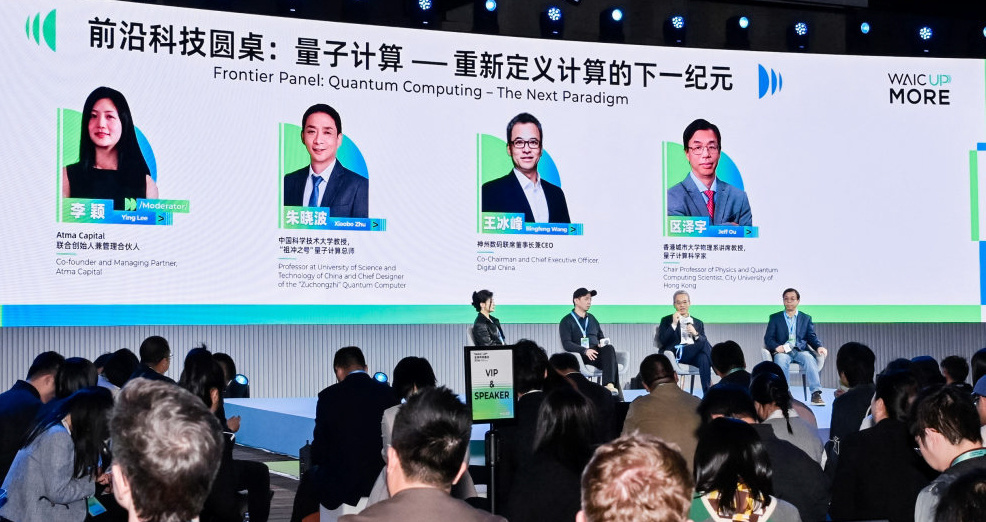
Core Viewpoint - The World Artificial Intelligence Conference (WAIC) has made its debut in Hong Kong, focusing on the future of quantum computing and its potential commercial applications [1]. Group 1: Quantum Computing Technology - Wang Bingfeng, co-chairman and CEO of Digital China, analyzed various major technological routes in quantum computing, including superconducting, ion trap, neutral atom, photonic, and CMOS technologies [3]. - While superconducting technology has made significant progress, it faces challenges such as engineering, cooling systems, wiring, qubit lifespan, noise, and I/O bottlenecks [3]. - Silicon-based CMOS technology, leveraging existing semiconductor industry advancements, may possess underestimated scalability potential [3]. Group 2: Commercialization and Practical Applications - The focus should shift from building a universal quantum computer to addressing specific practical problems that quantum computing can solve [5]. - The hybrid approach of accelerating computation alongside quantum computing is expected to enhance overall computational capabilities [5]. - Digital China aims to create a platform that connects cutting-edge technology with industry needs, facilitating the integration of new computing capabilities into future enterprises [5]. Group 3: Future Perspectives - As AI continues to evolve and enhance productivity, quantum computing is anticipated to bring disruptive changes to computational infrastructure [5]. - The true value of quantum computing lies in its ability to effectively address real-world pain points and enhance usability [5]. - Wang Bingfeng encourages the younger generation to adopt a "superposition state," mastering their specialties while also exploring related fields to maximize their potential [6].

寻找下一个英伟达?瑞穗分析师推荐量子股,但需耐心等待
Xin Lang Cai Jing· 2025-12-11 17:49
Core Viewpoint - The quantum computing market is projected to reach $205 billion within the next 10 years, with recommendations for investors to buy stocks of IonQ, Rigetti, and D-Wave despite current unstable revenues [1][6]. Market Potential - The total revenue for IonQ, Rigetti, and D-Wave is expected to be only $140 million this year, while their market capitalizations are significantly higher, with D-Wave and Rigetti exceeding $8 billion and IonQ over $17 billion [2][8]. - The quantum computing market could reach $50 billion in revenue by 2030, representing 36% of the projected $150 billion market potential at that time [2][8]. - By 2040, quantum computing companies may capture 16% of the overall computing market opportunities [2][8]. Company Analysis - IonQ is considered a leader in the industry due to its lower error rates and longer coherence times, with a target price of $90, indicating a potential upside of 74% from its recent closing price [3][9]. - Rigetti has a target price of $50, suggesting a 91% upside from its recent closing price, with potential to achieve significant scalability through its quantum bit targets [4][10]. - D-Wave is recognized as the undisputed leader in quantum annealing technology, with a target price of $46, indicating a potential upside of approximately 71% [4][10]. Technological Impact - Quantum computing is expected to bring a significant transformation to high-performance computing, potentially achieving performance improvements over classical computing by more than 10,000 times [5][11]. - The technology is anticipated to address complex problems in fields such as cryptography and machine learning that current computers cannot solve [5][11].



Will IonQ Be a $1 Trillion Company 10 Years From Now?
The Motley Fool· 2025-11-23 10:00
Core Viewpoint - IonQ is positioned as a leader in the quantum computing sector due to its superior accuracy and technology, but the overall market potential may be smaller than anticipated, raising questions about its future valuation [1][6][7]. Company Overview - IonQ currently has a market capitalization of approximately $16 billion and is recognized for having the most accurate quantum computing technology available [1][4]. - The company utilizes a trapped ion approach, which is more accurate and cost-effective compared to superconducting methods [3]. Technology and Performance - IonQ has achieved a two-qubit gate fidelity of 99.99%, setting a world record and significantly outperforming competitors who are striving for 99.9% accuracy [5]. - The trapped ion technology allows operations at room temperature, enhancing its practicality and accuracy [3]. Market Potential - Projections for the quantum computing market suggest a cumulative total of about $72 billion by 2035, indicating that annual market value will be considerably smaller [6]. - Even with optimistic assumptions of a 30% profit margin and a 30 times earnings multiple, IonQ's potential valuation would be around $648 billion, which is below the $1 trillion target [6][7]. Investment Outlook - The current sell-off in quantum computing stocks may present a better buying opportunity for investors in the future, as IonQ is expected to maintain its leadership position in the industry [8].


霍尼韦尔公布2025年第三季度业绩并上调全年指导范围
Xin Lang Cai Jing· 2025-10-30 10:08
Core Insights - Honeywell reported strong Q3 2025 financial performance, with sales reaching $10.4 billion, a 7% year-over-year increase, driven by double-digit growth in the commercial aftermarket [1] - The company raised its full-year organic growth and adjusted EPS guidance, reflecting confidence in ongoing business transformation and market demand for innovative solutions [1] Financial Performance - Q3 sales were $10.4 billion, up 7% year-over-year, with organic sales growth of 6% [1] - Operating income decreased by 6% year-over-year, while segment profit increased by 5% to $2.4 billion [1] - Q3 adjusted EPS was $2.82, a 9% increase year-over-year, while operating cash flow was $3.3 billion, up 65% [1] Business Transformation - Honeywell is progressing with the spin-off of its Solstice Advanced Materials business, expected to complete on October 30, 2025, which will impact full-year sales by $700 million and adjusted EPS by $0.21 [1] - The company plans to split into three publicly traded entities by the second half of 2026, focusing on automation and aerospace businesses [1] - Recent restructuring efforts aim to streamline operations and enhance value creation, with a new reporting structure set to begin in Q1 2026 [1] Future Outlook - Honeywell expects full-year sales guidance of $40.7 billion to $40.9 billion, with organic sales growth of approximately 6% [1] - Adjusted EPS guidance has been raised to $10.60 to $10.70, reflecting a 10-cent increase from previous estimates [1] - The company remains optimistic about maintaining growth momentum into Q4 2025, supported by a strong order backlog and recurring revenue growth from connected products and services [1]

复创共赢,安启未来|2025复星全球投资峰会成功举行
投中网· 2025-10-30 07:22
Core Insights - The summit focused on the integration of technological innovation and industrial innovation, aiming to explore new opportunities for high-quality development through collaboration with ecological partners [3][4]. Group 1: Summit Overview - The "Shanghai Jiading New Quality Productivity Summit and 2025 Fosun Global Investment Summit" was held in Shanghai, gathering over 400 guests including government officials, experts, and business leaders [3]. - The theme of the summit was "Fosun's Innovation for Win-Win Future," emphasizing the cultivation of new quality productivity [3][4]. Group 2: Key Speeches - Shanghai's Economic and Information Commission highlighted Fosun's contributions to high-quality industrial development and the city's modernization strategy [5]. - Fosun International's Chairman, Guo Guangchang, discussed the dual-driven strategy of "industrial operation + industrial investment," focusing on core sectors such as biomedicine and smart manufacturing [7]. - The Secretary of the Jiading District Committee, Xiao Wengao, outlined Jiading's positioning and industrial layout, emphasizing collaboration with Fosun [8]. - Fosun's Co-Chairman, Wang Qunbin, shared the company's achievements in innovation and value realization, stressing the importance of global collaboration [9]. Group 3: Investment Strategies - Fosun's Executive President and Chief Investment Officer, Tang Bin, outlined future investment strategies focusing on sectors like semiconductors and biomedicine, utilizing various financial tools for comprehensive service [13]. - The summit facilitated six significant agreements and initiatives aimed at enhancing collaboration between government and enterprises, reinforcing the industrial cluster advantages in Jiading [21]. Group 4: Insights on Technology and Industry - The Director of Shenzhen International Quantum Research Institute, Yu Dapeng, discussed the transformative potential of quantum computing, predicting a global industry scale of $800 billion by 2035 [16]. - The Director of the Yangtze River Delta National Technology Innovation Center, Liu Qing, emphasized the need for mechanisms to bridge the gap in technology transfer and highlighted successful collaborations in biomedicine and smart manufacturing [18]. Group 5: Future Directions - The summit included discussions on investment in new quality productivity, smart healthcare, and AI applications, proposing a path for industry upgrades and capital deployment [26]. - Fosun's investment arm, Fosun Chuangfu, has invested in nearly 300 companies, with a management asset scale exceeding 50 billion yuan, focusing on sectors like new information technology and smart manufacturing [29].

Honeywell(HON) - 2025 Q3 - Earnings Call Transcript
2025-10-23 13:30
Financial Data and Key Metrics Changes - Honeywell raised its 2025 EPS guidance for the third time this year, with earnings per share in Q3 reported at $2.86, up 32% year over year, and adjusted EPS at $2.82, up 9% year over year [5][17] - Organic sales growth accelerated to 6% year over year, with orders growing 22% organically to $11.9 billion [16][17] - Free cash flow for Q3 was $1.5 billion, down 16% from the prior year due to capital expenditures timing and higher working capital [18] Business Line Data and Key Metrics Changes - Aerospace Technologies grew 12% organically, driven by strength in commercial aftermarket and defense [18] - Industrial Automation sales increased 1% organically, while segment margin declined to 18.8% due to inflationary pressures [19][20] - Building Automation achieved 7% organic sales growth, with margin expanding 80 basis points year over year [20] - Energy and Sustainability Solutions saw a 2% organic decline, with segment margin flat at 24.5% [21] Market Data and Key Metrics Changes - North America and the Middle East led regional growth, while Europe experienced organic growth for the fourth consecutive quarter [20] - Orders in Aerospace showed strong double-digit growth across all end markets, with a book-to-bill ratio of 1.2 [18] Company Strategy and Development Direction - Honeywell is planning to realign its automation business structure in 2026, focusing on four segments: Aerospace Technologies, Building Automation, Process Automation and Technology, and Industrial Automation [10][12] - The company is simplifying its portfolio and reducing legacy liabilities, including divesting Bendix asbestos liability and terminating an indemnification agreement for $1.6 billion [9][10] - Honeywell aims to leverage its R&D investments to drive growth through innovative products and solutions [16][34] Management's Comments on Operating Environment and Future Outlook - Management expressed confidence in the company's ability to navigate macroeconomic uncertainties and highlighted strong order growth as a positive indicator for future performance [16][35] - The company anticipates a return to margin expansion in 2026, driven by improved pricing strategies and operational efficiencies [36][78] Other Important Information - The spin-off of Solstice Advanced Materials is expected to reduce 2025 sales by $700 million and adjusted EPS by approximately $0.21 [22][24] - Honeywell's recent capital raise for its quantum computing venture, Continuum, is expected to support its growth potential [14][36] Q&A Session Summary Question: What is the expected margin decline for Energy and Sustainability Solutions (ESS) in Q4? - Management indicated that the decline is primarily due to mix issues and expects ESS margins to normalize in 2026 [40][42] Question: What are the growth prospects for the Industrial Automation segment? - Management noted that while there are timing variabilities, they are optimistic about margin expansion and backlog improvements in Industrial Automation [48][49] Question: How is the Aerospace division managing destocking? - Management believes that destocking is largely behind them and expects sequential improvements in margins going into 2026 [50][51] Question: What is the pricing strategy across the organization? - Management emphasized a focus on preserving margins while maintaining volume, with expectations for improved pricing in 2026 [75][78] Question: What are the growth opportunities in the sensor business? - Management highlighted strong growth potential in the sensor business across aerospace, medical devices, and industrial sectors [102]
量子计算重大突破!但90%股民都忽略了关键信号
Sou Hu Cai Jing· 2025-10-23 08:00
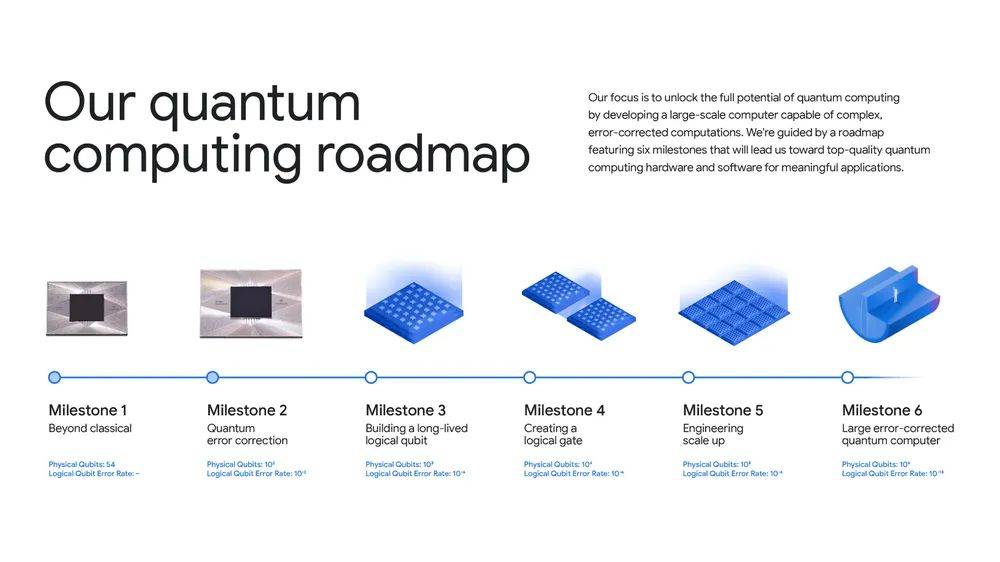
Core Insights - The recent breakthrough in quantum computing by Google has raised concerns among ordinary investors about their ability to compete in a market dominated by AI and quantitative trading [1][3] - Major technological advancements often create wealth for a few while leaving retail investors as "the bag holders" [3] - The disparity in information access means that institutional investors often capitalize on opportunities before retail investors can react [3][5] Investment Dynamics - Institutional investors tend to complete their positions before retail investors notice significant movements in related stocks [3][5] - Successful stocks often exhibit two characteristics: active institutional buying and a necessary "washing out" process to eliminate weak hands [3][5] - Traditional technical analysis is becoming less effective compared to quantitative trading methods, which can better track fund movements [3][5] Market Behavior - The active levels of institutional and retail funds can indicate potential stock movements, as seen in the case of stocks like Cambrian [5][7] - The quantum computing breakthrough serves as a reminder that investors must adapt their strategies to remain competitive in a rapidly evolving market [7][8] - Investors are encouraged to develop a "correction system" to identify genuine fund movements and avoid being misled by superficial market signals [7][8]

中航证券:国内量子计算呈现多元发展良好态势 把握量子前沿科技领域机会
Zhi Tong Cai Jing· 2025-10-14 06:29
Core Insights - The synergy between quantum computing and AI is expected to inject new momentum into the quantum computing industry and open new pathways for AI development [1][2] - The quantum computing industry is currently at a critical stage of technological breakthroughs, application exploration, and industry cultivation [2] - Domestic companies in the quantum frontier technology field are relatively advanced and comprehensive, likely to benefit from the rapid growth of this emerging industry [1] Quantum Information - Quantum information encompasses three main application areas: quantum computing, quantum communication, and quantum measurement, which have the potential to break through the limitations of classical information technology [1][2] - The global quantum computing technology market was valued at $1.1 billion in 2022 and is projected to grow to approximately $7.6 billion by 2027, with a compound annual growth rate (CAGR) of 79.72% from 2022 to 2030 [2] Quantum Communication and Measurement - Quantum communication is currently the only communication method proven to be unconditionally secure, with practical applications advancing rapidly [3] - The global quantum communication industry is expected to reach $7.85 billion by 2030, while the quantum precision measurement market is projected to grow to $2.527 billion by the same year [3] Investment Opportunities - Companies to watch in the quantum industry include Guodun Quantum (688027.SH), Hexin Instruments (688622.SH), Keda Guochuang (300520.SZ), Shenzhou Information (000555.SZ), Electric Science Cybersecurity (002268.SZ), and Jida Zhengyuan (003029.SZ) [4]




Rigetti Computing涨超25%!摩根大通公布十年1.5万亿美元投资计划,量子计算股集体狂欢
美股IPO· 2025-10-14 00:17
Core Viewpoint - JPMorgan Chase has launched a ten-year initiative called the "Safety and Resilience Initiative," with a total investment of $1.5 trillion aimed at enhancing the economic security and resilience of the United States [2][6]. Investment Areas - The initiative will focus on four major sectors: supply chain manufacturing, defense aerospace, energy technology, and frontier technologies, with a total of 27 sub-sectors targeted for investment [2][3]. - Specific areas of investment include critical minerals, pharmaceutical precursors, robotics, defense technology, autonomous systems, drones, battery storage, grid technology, artificial intelligence, cybersecurity, and quantum computing [3][4]. Financial Commitment - JPMorgan Chase plans to invest up to $10 billion in equity and venture capital to support the growth and innovation of related companies [7]. - The initiative is expected to release an additional $500 billion in financing compared to a "normal scenario" [6]. Market Impact - Following the announcement, stocks in quantum computing surged, with Rigetti up 25%, D-Wave up 23%, Arqit up 20%, IONQ up 16%, and Quantum Computing up 12% [4][6]. Strategic Goals - The initiative aims to accelerate investment in critical sectors and eliminate barriers to development, such as excessive regulation and bureaucratic delays [6]. - JPMorgan Chase will also leverage its asset and wealth management departments to facilitate funding without using its own capital [6].