隐形加班

Search documents
猝死程序员妻子最新发声:继续为高广辉维权,追讨 7 年加班费,已起诉 2 个造谣者
程序员的那些事· 2026-03-13 14:57
Core Viewpoint - The article discusses the case of Gao Guanghui, who was recognized as having died from work-related causes, highlighting the challenges faced in obtaining this recognition and the broader implications for labor rights and corporate responsibility in the context of overwork and hidden overtime [3][4][7]. Group 1: Work-Related Death Recognition - Gao Guanghui's death was officially recognized as a work-related injury on February 13, 2026, after a lengthy and challenging process [3][7]. - The recognition process faced significant hurdles, including the classification of work hours, work location, and the nature of work performed, with strict regulations complicating the situation [3][9]. - The company employed a "non-fixed working system" to evade responsibility, lacking necessary documentation to support this classification, and had not paid any overtime for seven years [3][10][12]. Group 2: Legal and Corporate Accountability - Gao's widow has filed legal claims regarding health rights, mishandling of personal belongings, and unpaid overtime, while also pursuing action against online defamers [4][12]. - The company has not made any institutional changes to prevent similar incidents and continues to recruit new employees, raising concerns about its commitment to employee welfare [14][16]. - There have been reports of three employee deaths within the company by 2025, indicating a troubling pattern that requires further investigation [14].


冲上热搜!人大代表说“年轻人11点一定要睡觉”
21世纪经济报道· 2026-03-06 06:37
Group 1 - The core viewpoint of the article emphasizes the need for young people to prioritize sleep and manage work-related stress, as highlighted by NPC representative Song Zhaopu's advice to sleep by 11 PM to protect health [1] - The discussion around "involution-style overtime" and "invisible overtime" has gained traction during the Two Sessions, with multiple representatives suggesting a reduction in unnecessary overtime [3][4] - NPC member Lu Ming calculated that the average weekly working hours are 48.6 hours, which translates to over 6 days of work per week, squeezing out personal time for relationships and family [4][9] Group 2 - Lu Ming also pointed out that relying on extended working hours for profit stifles innovation, as it consumes valuable time that could be spent on industry upgrades [4][10] - The upcoming EU legislation in 2027 prohibiting forced labor could pose trade barriers for products labeled with "high-intensity overtime," highlighting the economic implications of overtime practices [5] - Lu Ming proposed a "combination prescription" to address these issues, including management empowerment through technology, results-oriented assessments, and pilot programs for flexible work [7][10] Group 3 - NPC member Lv Guoquan criticized the "overtime culture" that is often disguised as diligence, leading to employee burnout and a lack of clear boundaries between work and personal life [8][10] - The concept of "offline rest rights" was emphasized, which allows workers to refuse work-related communications outside of agreed working hours, advocating for legal protections to establish clear work-life boundaries [8][10] - The article discusses the negative impact of "involution-style overtime" on both individual well-being and overall economic efficiency, suggesting that it reduces consumer vitality and increases societal anxiety [10][11]

“年轻人11点一定要睡觉”,多位代表委员发声
第一财经· 2026-03-06 02:41
Group 1 - The core viewpoint of the article emphasizes the importance of work-life balance and the need to address issues related to "invisible overtime" and "workplace culture" that pressures employees to work beyond their limits [3][4][5] - National representatives are advocating for the establishment of a "right to offline rest," which allows employees to refuse work-related communications outside of agreed working hours [5] - The discussion highlights the negative impact of excessive working hours on personal life and mental health, with suggestions for legislative measures to protect workers from forced overtime [4][5] Group 2 - Representative Song Zhaopu suggests that young people should prioritize sleep, specifically recommending a bedtime of 11 PM to maintain health [1] - The concept of "invisible overtime" is critiqued, with statistics indicating an average weekly working time of 48.6 hours, which encroaches on personal time for relationships and family [4] - The article mentions the potential future impact of the EU's "Anti-Forced Labor Act," which could impose trade barriers on products associated with high-intensity overtime [4]

32岁程序员周末晕倒后猝死,该给“随时随地办公”设红线了
Xin Lang Cai Jing· 2026-01-22 06:52
Core Viewpoint - The tragic death of 32-year-old programmer Gao Guanghui has sparked widespread social concern regarding excessive work hours and the phenomenon of "invisible overtime" in the workplace [2][3][5]. Group 1: Incident Details - Gao Guanghui experienced sudden health issues on November 29, 2025, and was declared clinically dead due to cardiac arrest, suspected to be caused by a syndrome related to cerebral ischemia [2]. - Prior to his death, Gao had communicated about work tasks, indicating he had four pending assignments due on the day of his death, suggesting he was under pressure to complete work [2]. - During his medical emergency, Gao was still engaged in work-related communications, highlighting the blurred lines between work and personal time [2]. Group 2: Work Conditions - There are concerns regarding whether Gao had been subjected to excessive overtime, as evidence suggests he returned home late on multiple occasions, with the latest recorded time being 23:58 during November [3]. - The legal framework in China stipulates a maximum of eight working hours per day and an average of 44 hours per week, with strict limits on overtime, raising questions about compliance in Gao's case [3]. - The phenomenon of "invisible overtime" has been acknowledged by judicial authorities, emphasizing the need for clear definitions and protections for workers engaged in online tasks [4]. Group 3: Recommendations for Improvement - The incident serves as a warning for companies to establish clear boundaries for remote work, focusing on efficient management rather than merely extending work hours [5]. - There is a call for enhanced legal protections and enforcement against companies that violate labor laws, to deter such practices and protect workers' rights [5]. - Workers are encouraged to recognize the importance of health and to assert their rights against unreasonable overtime demands, fostering a healthier work-life balance [5].

合理认定“隐形加班”,平衡劳资权益
Nan Fang Du Shi Bao· 2025-10-27 05:25
Core Viewpoint - The case highlights the issue of "invisible overtime," where employees are required to work outside of regular hours, including holidays, through communication platforms like WeChat, and the legal recognition of such work as eligible for compensation [1][2][3] Group 1: Legal Recognition of Invisible Overtime - The court ruled that the employee's use of WeChat for work during holidays constituted overtime, leading to a compensation order of 5,000 yuan [1] - The judgment emphasizes that even outside of traditional working hours, employees engaged in work-related activities via instant messaging should receive appropriate remuneration [2][3] Group 2: Criteria for Recognizing Invisible Overtime - The court established that "invisible overtime" should be recognized based on whether the employee provided "substantial labor," which includes factors like "work compulsion," "interruption of rest time," and the exertion of "mental or physical effort" [3] - Simple acknowledgments or brief responses in messaging platforms are generally not considered as overtime, ensuring a balanced approach to labor rights [3] Group 3: Implications for Labor Rights and Employer Costs - The ruling aims to protect labor rights while also considering the financial implications for employers, preventing an unreasonable expansion of labor rights that could increase operational costs [3] - The case serves as a reference for other courts, promoting a more reasonable recognition of overtime in the context of modern communication practices [3]
节假日被老板@算加班?法院详解
Yang Shi Wang· 2025-10-26 05:48
Core Viewpoint - The court ruling in Xiangtan recognizes that handling work-related tasks via WeChat or similar platforms after hours constitutes overtime work, leading to the requirement for companies to pay overtime compensation [1][2]. Group 1: Case Summary - Engineer Xiao Wei, after being required to work during holidays and after hours, sued his former employer for unpaid overtime, resulting in a court ruling that awarded him 5,000 yuan in overtime pay [2]. - The court found that Xiao Wei's activities, such as attending meetings and reporting work progress via WeChat during holidays, constituted substantial labor and thus qualified as overtime [2][3]. Group 2: Criteria for Overtime - The Xiangtan court established that "invisible overtime" is determined by whether the employee provided "substantial labor," which includes factors like mandatory work assignments, occupation of rest time, and the need for mental or physical effort [3]. - Simple acknowledgments like "received" or "okay" do not qualify as overtime, but sustained engagement in complex tasks does [3]. Group 3: Legal Framework - According to Article 44 of the Labor Law of the People's Republic of China, overtime pay is mandated under three conditions: extended work hours, work on rest days without compensatory time off, and work on statutory holidays, with respective pay rates of 150%, 200%, and 300% of the regular wage [4]. - The law does not specify the location or form of work, meaning that overtime pay is required regardless of whether the work is performed in the office or remotely [4]. Group 4: Evidence and Rights - The court advised employees to preserve all evidence of overtime work, including chat records, emails, and meeting logs, to support their claims [5]. - Employees are encouraged to confirm work details in writing when asked to work overtime and to assert their rights if unpaid overtime becomes a norm, with options to escalate to labor authorities if necessary [6].
用一起起案例厘清“隐形加班”的权责边界
Bei Jing Qing Nian Bao· 2025-07-29 11:04
Core Viewpoint - The court in Wuhan has confirmed that handling work-related tasks via WeChat during rest periods qualifies as overtime, emphasizing the recognition of "invisible overtime" rights for workers [1][3]. Group 1: Legal Confirmation of Overtime - The case involving a worker, Ms. Li, illustrates that substantial work performed during rest periods, such as responding to WeChat messages and completing tasks, constitutes overtime [4]. - The court's ruling aligns with the evolving nature of labor, where traditional concepts of work hours and locations are increasingly flexible [3][4]. Group 2: Characteristics of "Invisible Overtime" - "Invisible overtime" often goes unrecognized, with many workers experiencing it as a sunk cost, where their efforts do not translate into visible rights [3]. - The court's decision reinforces the idea that any substantial labor contribution, regardless of location or prior approval from the employer, should be recognized as overtime [4]. Group 3: Implications for Labor Rights - Each successful case regarding "invisible overtime" serves to advance the understanding and legal framework surrounding workers' rights, potentially leading to clearer standards and broader protections [5]. - The ongoing exploration of "invisible overtime" rights is crucial for ensuring that workers' contributions are acknowledged and compensated appropriately [5].

用人单位频繁在下班后线上开会、培训,劳动者诉至法院成功获赔
Xin Jing Bao· 2025-07-07 13:51
Core Viewpoint - The case highlights the legal implications for companies that frequently schedule online meetings and training sessions outside of regular working hours, potentially leading to labor disputes and financial liabilities for unpaid overtime [1][4]. Group 1: Case Background - The case involves a worker, Wang, who claimed that his employer frequently scheduled online meetings and training sessions after work hours, infringing on his personal time [1][2]. - Wang was employed as an engineer from July 10, 2020, until the unilateral termination of his contract on June 30, 2023, and sought compensation for overtime pay totaling 32,000 yuan for extended hours, 49,000 yuan for rest days, and 3,300 yuan for statutory holidays [2][3]. Group 2: Evidence and Court Findings - Wang provided evidence including meeting records and chat screenshots to demonstrate that the company indeed held multiple online activities outside of regular working hours [2][3]. - The court found that the evidence presented by Wang was sufficient to prove that the company arranged meetings and training sessions during non-working hours, thus validating his claims for overtime compensation [3][4]. Group 3: Legal Implications for Companies - Companies that impose mandatory online meetings during non-working hours may face legal risks, including the obligation to pay overtime and the potential for decreased employee morale and increased turnover [5]. - The court emphasized that while workers have the burden of proof regarding overtime claims, if the employer fails to provide evidence to counter the claims, they may bear the negative consequences [4][5]. Group 4: Recommendations for Companies - Companies are encouraged to foster a positive corporate culture by restructuring work hours and compensation systems to respect employees' right to rest while maintaining productivity [5]. - It is advisable for companies to prioritize scheduling meetings during regular working hours or to adopt asynchronous training methods that allow employees to choose their participation times [5].
利用AI推动线上劳动计薪取酬法治化
Ren Min Wang· 2025-06-15 00:43
Core Viewpoint - The recent court ruling in Beijing regarding "invisible overtime" has established a legal precedent for compensating workers who engage in work-related activities during off-hours, highlighting the need for clearer regulations and protections for digital laborers [1][2][3] Group 1: Legal Implications - The court's decision mandates that companies must pay overtime for work conducted during late hours and holidays, effectively addressing the issue of "invisible overtime" that has previously evaded legal scrutiny [1] - The ruling sets a practical judicial standard for recognizing "invisible overtime" as involving significant labor that occupies rest time, even in the absence of traditional attendance records [2] Group 2: Industry Practices - Many companies have implemented strict "overtime approval systems" while simultaneously expecting employees to be available at all times, creating a paradox that complicates workers' rights [1] - Companies often use tactics such as substituting overtime pay with "on-call allowances" or manipulating wage structures to obscure actual compensation for overtime work [1] Group 3: Technological and Ethical Considerations - The proliferation of digital communication tools has blurred the lines between work and personal time, leading to a culture where constant availability is seen as a professional requirement [2] - There is a call for the establishment of a unified "online labor monitoring platform" to proactively identify and address risks associated with invisible overtime through data analysis [3] Group 4: Recommendations for Improvement - To combat the issue of invisible overtime, a multi-faceted approach is suggested, including legislative measures to define online labor standards and the introduction of a "right to disconnect" for workers [2][3] - The integration of AI and data-sharing technologies is recommended to accurately track and compensate for online labor, ensuring that every minute of substantial work is recognized and rewarded [3]
强制加班、隐形加班时有发生,劳动者应如何维权?
Nan Fang Du Shi Bao· 2025-05-15 16:15
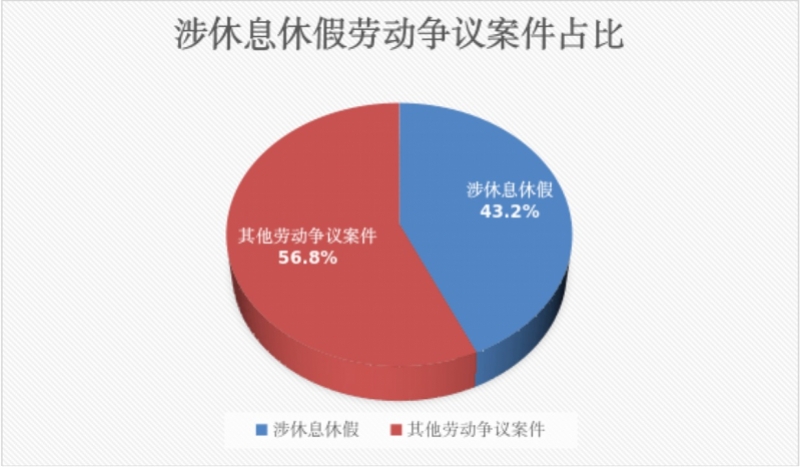
Core Viewpoint - The phenomenon of forced overtime and hidden overtime is prevalent, with some employers viewing overtime as a corporate culture to motivate employees to extend working hours and forgo vacations to create value for the company [1][7][8] Group 1: Trends in Labor Disputes - The number of labor dispute cases related to rest and vacation rights has been increasing annually, with 4,942 cases out of 11,440 total labor disputes from 2022 to 2024, accounting for approximately 43.2% of all labor disputes [2][3] - The number of cases adjudicated has risen from 1,266 in 2022 to 1,982 in 2024, indicating a consistent upward trend [2] Group 2: Nature of Disputes - Laborers' claims often involve multiple requests, including statutory annual leave wages, overtime wages, sick leave wages, and enforcement of labor contracts, reflecting a complex and intertwined nature of disputes [5] - Among the cases involving overtime wages, 705 cases (41.6%) pertained to delayed overtime, while 1,469 cases (86.7%) involved rest day overtime, and 792 cases (46.7%) related to statutory holiday overtime [5] Group 3: Reasons for Disputes - The primary reasons for disputes include statutory annual leave (3,479 cases, 70.4%), overtime wages (1,740 cases, 35.2%), and sick leave (227 cases, 4.6%) [6] - Cases where employers restrict laborers' vacation rights through regulations accounted for 598 cases (12.1%), while unreasonable refusals of vacation requests made up 421 cases (8.5%) [6] Group 4: Outcomes of Disputes - In the last three years, 76.9% of cases adjudicated in favor of laborers, with 32.7% of cases fully supporting claims for unpaid annual leave wages [6] - For overtime wage claims, 26.4% of cases fully supported laborers' requests, while 52.8% were partially supported [6] Group 5: Recommendations for Laborers - Laborers are advised to enhance their awareness of legal rights and maintain evidence of their work hours and communications to avoid disputes [8][9] - It is recommended that laborers carefully review labor contracts and company regulations regarding vacation rights and raise objections to any unreasonable restrictions [8][9]