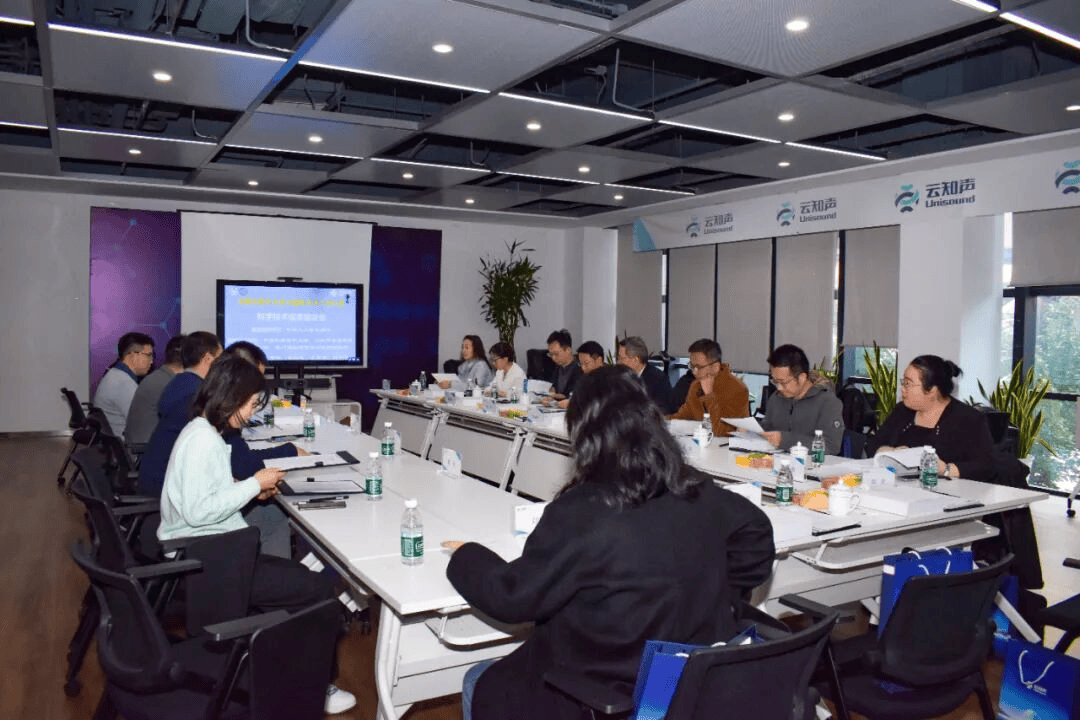
AGI技术

Search documents
荣耀前CEO赵明加入千里科技,或将任联席董事长,负责推进商业化
Sou Hu Cai Jing· 2026-02-12 08:03
Core Insights - Zhao Ming, former CEO of Honor, will join Qianli Technology as co-chairman and is nominated as a non-independent director candidate for the sixth board of directors [1] - Qianli Technology is transitioning from a manufacturing enterprise to an AI technology company, with a focus on the "AI + vehicle" strategy [1][2] - The company is currently facing challenges in achieving a commercial closed-loop for its AI business, which remains in a high investment phase [3] Group 1: Leadership Changes - Zhao Ming's appointment follows significant personnel changes at Qianli Technology, particularly the entry of Yin Qi as chairman [1] - Yin Qi, who has a strong background in AI technology, will focus on the development strategy, while Zhao Ming will concentrate on advancing the AI business model [1][3] - Zhao Ming's experience in commercializing technology and resource integration is expected to complement Yin Qi's expertise in AI trends [5][6] Group 2: Strategic Developments - In July 2025, Yin Qi acquired a 19.91% stake in Qianli Technology for approximately 2.43 billion RMB, becoming the second-largest shareholder [2] - Qianli Technology has launched the Qianli Haohan G-ASD intelligent driving solution, which is now installed in over 300,000 vehicles across various brands under Geely [2] - The company is collaborating with Geely and other partners to establish a joint venture for intelligent driving, aiming to create an open and international platform [2] Group 3: Financial Performance - For the first three quarters of 2025, Qianli Technology reported revenues of 6.946 billion RMB, with a net loss of 176 million RMB after deductions [3] - The AI business has not yet formed a scalable profit model, indicating that achieving a commercial closed-loop is a critical challenge for the company [3] Group 4: Industry Context - The automotive industry is increasingly viewed as the next generation of smart terminals, expanding competition beyond mechanical performance to include chips, operating systems, software ecosystems, and user experience [6] - The trend of hiring talent from the consumer electronics sector into the automotive industry is growing, with companies like NIO and Xpeng actively recruiting from mobile phone brands [6]

中盛集团:首次覆盖云知声(09678)予“买入”评级 目标价750.58港元
智通财经网· 2026-02-09 03:06
Core Viewpoint - Zhongsheng Group predicts that Yunzhisheng (09678) will experience accelerated revenue growth over the next three years, with projected revenues of 1.236 billion, 1.923 billion, and 2.918 billion yuan for 2025, 2026, and 2027 respectively, representing growth rates of 31.6%, 55.6%, and 51.7%, and expects the company to achieve profitability in 2026 [1] Group 1 - Yunzhisheng is a pioneer in AGI technology in China, being one of the first companies to commercialize deep learning voice technology and integrate multimodal technology [2] - The company has developed a matrix of multimodal large models and specialized industry large models, with its UniGPT-Med ranking first in three projects in the latest MedBench 4.0 evaluation, demonstrating a hallucination rate of less than 3%, leading the industry [2] Group 2 - The company has established partnerships with top-tier hospitals such as Peking Union Medical College Hospital and Hunan Xiangya Hospital, covering 40% of the top 100 hospitals in China, creating a solid competitive advantage through its vast medical data assets [3] - The high-quality data training forms an efficient data flywheel, with significant application potential in medical insurance and commercial health insurance cost reduction [3] Group 3 - The company employs a dual-platform strategy, utilizing MaaS for high-end clients through private deployment of regional/industry large models, while SaaS focuses on standardized applications for small and medium clients, facilitating commercial monetization [4] Group 4 - The smart living business continues to grow steadily, with multimodal interactions implemented in various transportation sectors, and deep collaborations with leading companies like TCL and Gree in the home appliance sector [5] - Smart cockpit solutions have been widely adopted in mainstream vehicle models such as SAIC's Zhiji L6 and Geely's Xingrui [5]
中盛集团:首次覆盖云知声予“买入”评级 目标价750.58港元
Zhi Tong Cai Jing· 2026-02-09 03:04
Core Viewpoint - Zhongsheng Group predicts that Cloud Wisdom (09678) will experience accelerated revenue growth over the next three years, with expected revenues of 1.236 billion, 1.923 billion, and 2.918 billion yuan for 2025, 2026, and 2027 respectively, representing growth rates of 31.6%, 55.6%, and 51.7%, achieving profitability in 2026 [1] Group 1: Company Overview - Cloud Wisdom is a pioneer in AGI technology in China, being one of the first companies to commercialize deep learning voice technology and integrate multimodal technology [2] - The company has developed a matrix of multimodal large models and specialized industry large models, with its UniGPT Med ranking first in three projects in the latest MedBench 4.0 evaluation, demonstrating a hallucination rate of less than 3% [2] Group 2: Industry Position and Data Advantage - The company has established partnerships with top-tier hospitals such as Peking Union Medical College and Hunan Xiangya, covering 40% of the top 100 hospitals in China, leveraging vast amounts of specialized data to create a competitive advantage [3] - The high-quality data utilized for training forms an efficient data flywheel, with significant potential applications in medical insurance and commercial health insurance cost reduction [3] Group 3: Business Model and Commercialization - The company employs a dual-platform strategy, with MaaS focusing on high-end clients through private deployment of regional/industry large models, while SaaS targets small and medium clients with standardized applications for scalable delivery [4] - This approach establishes technical and situational barriers, facilitating accelerated commercialization [4] Group 4: Growth in Smart Living Business - The company has seen steady growth in its smart living business, with multimodal interactions implemented in various transportation sectors, and deep collaborations with leading companies like TCL and Gree in the home appliance sector [5] - Smart cockpit solutions have been widely adopted in mainstream vehicles such as SAIC's Zhiji L6 and Geely's Xingrui [5]
36氪精选:募资23亿,礼来、淡马锡护航这家AI公司上市
日经中文网· 2026-01-17 00:33
Core Viewpoint - The article discusses the successful IPO of Insilico Medicine, highlighting the growing acceptance and potential of AI in drug discovery and development, marking a critical point for AI-driven pharmaceutical innovations [5][7]. Group 1: IPO and Market Reception - Insilico Medicine's IPO raised approximately HKD 2.3 billion, the highest for a pre-revenue biotech firm in Hong Kong in 2025, with a subscription rate exceeding 1,400 times [5][7]. - The company attracted significant interest from major investors, including Eli Lilly and Temasek, with cornerstone investors accounting for about 39% of the shares [5][6]. Group 2: AI Drug Discovery Platform - Insilico's core platform, Pharma.AI, enables efficient drug discovery, reducing the time from target identification to preclinical candidate selection to 1-1.5 years, which is about one-third of traditional methods [9][10]. - The platform has demonstrated the ability to generate viable preclinical candidates at a cost of USD 200-300 million, significantly lower than traditional approaches [10]. Group 3: Clinical Pipeline and Development - Insilico has developed over 20 clinical/IND-stage assets, showcasing the platform's capability in drug development [11]. - The company plans to allocate nearly half of the IPO proceeds to advance its core pipeline in clinical trials [12]. Group 4: Business Model and Revenue Streams - Insilico's business model includes self-developed pipelines, AI+CRO services, and software sales, with drug discovery and pipeline development expected to generate significant revenue [17][18]. - Revenue from drug discovery and pipeline development is projected to grow from USD 28.6 million in 2022 to USD 79.7 million in 2024, constituting 92%-95% of total revenue [18][19]. Group 5: Strategic Partnerships and Collaborations - The company has established direct BD collaborations and partnerships with major pharmaceutical companies, enhancing its revenue through upfront and milestone payments [21]. - Insilico's collaboration with Exelixis on a drug targeting BRCA-mutant tumors has become a significant revenue source, contributing over 60% of total revenue in the respective periods [21]. Group 6: Financial Performance and Future Outlook - Insilico's net losses are projected to decrease from USD 70.8 million in 2022 to USD 22.7 million in 2024, indicating an improving financial outlook [22]. - The company aims to develop 4-5 preclinical candidates annually and advance 1-2 projects into clinical development, reflecting its growth strategy [16].


IPO首日,智谱创立发起人内部信曝光:明确2026年目标,提及梁文锋
Xin Lang Cai Jing· 2026-01-08 02:37
Core Insights - The core message of the news is that Zhipu AI has officially launched and is set to introduce its next-generation model, GLM-5, with a vision to become a leading global player in large models by 2026 [1][2]. Group 1: Company Vision and Goals - Zhipu AI aims to become an international leader in large models by 2026, as stated by its founder and chief scientist, Tang Jie [1][2]. - The company is focusing on the persistent pursuit of AGI technology and the exploration of its upper limits, which are seen as critical for future improvements [3]. Group 2: Upcoming Developments - The GLM-5 model is expected to be released soon, featuring significant scaling and new technological improvements to enhance user experience and task completion [1][3]. - The company plans to explore new model architectures to address the limitations of the widely used Transformer architecture, which has shown inefficiencies in handling long contexts and memory mechanisms [2][3]. Group 3: Research and Development Focus - There is a need to develop a more generalized Reinforcement Learning (RL) paradigm that can handle long-term tasks beyond the current capabilities of RLVR, which relies on manually constructed environments [4]. - The company is also focusing on continuous learning and autonomous evolution, moving away from static AI models that become outdated post-deployment, aiming for a paradigm that allows for ongoing learning from interactions with the world [5].
机器狗浇花、机器人越野:这比赛比综艺还好看
3 6 Ke· 2025-12-11 03:23
Core Insights - The article discusses a recent robotics competition held at The Chinese University of Hong Kong, focusing on the capabilities of robots in real-world scenarios, termed as the "Real World Extreme Challenge" [5][7] - The competition featured 13 student teams from global universities, aiming to test robots' autonomy and adaptability in dynamic environments [5][7] - The event highlighted the current limitations of robotic algorithms, particularly in real-time reasoning and decision-making, with the best models achieving only 55%-60% accuracy in 3D scene understanding compared to human performance of 90.06% [7] Competition Overview - The competition included four tasks: garbage sorting, watering plants, crossing a suspension bridge, and orienteering in a mountainous area, each designed to assess specific robotic skills [9][42] - Teams had 30 minutes to complete each task, with points awarded for successful completion, particularly favoring fully autonomous operations without remote control [9][10] Task Details - In the garbage sorting task, robots struggled with object recognition and manipulation, demonstrating the challenges of real-world applications [10][12] - The watering task required robots to mimic human actions, such as picking up a watering can and accurately watering specific plants, which proved difficult for many teams [18][20] - The suspension bridge task tested robots' balance and adaptability, with many teams employing creative solutions to navigate gaps between planks [32][36] Technical Insights - The competition aimed to expose the weaknesses of current robotic technologies, emphasizing the need for advancements in embodied intelligence and generalization algorithms [43][44] - Experts noted that the event's design was not merely for entertainment but to drive technological progress by presenting real-world challenges that robots must overcome [44] - The ultimate goal is to achieve a level of robotic performance that can reliably handle basic tasks, reaching 20%-30% of human operational capability within the next 3-5 years [44]

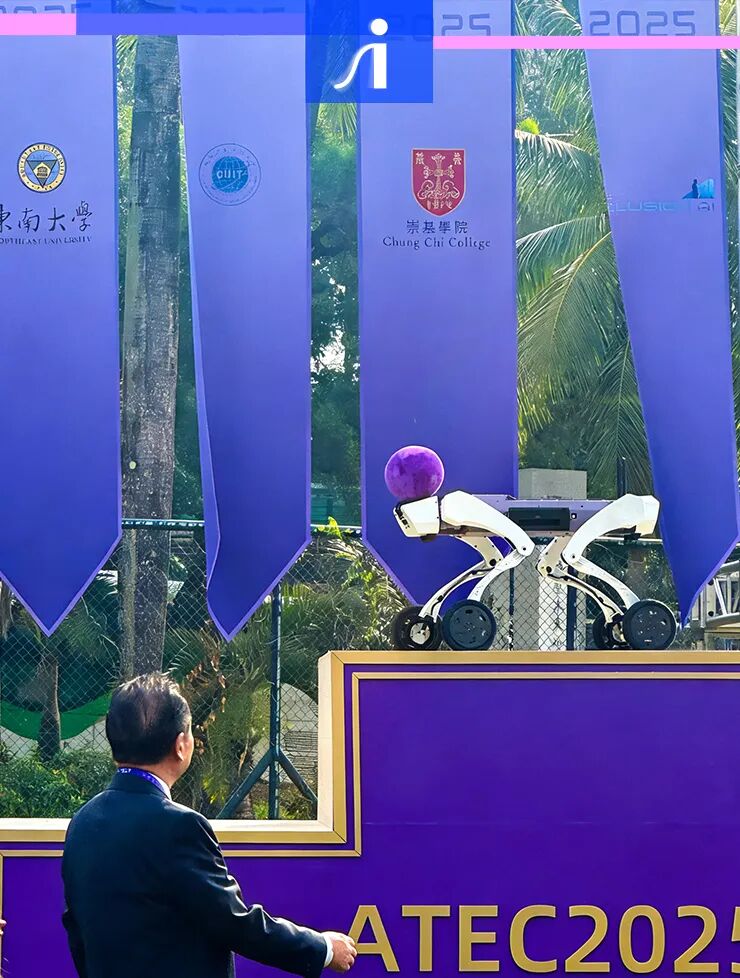
ATEC2025科技精英赛收官:浙江大学赛队问鼎,机器人走向真实世界
Guo Ji Jin Rong Bao· 2025-12-08 05:54
Core Insights - The ATEC 2025 competition showcased robots performing tasks in real-world environments, emphasizing their ability to operate autonomously without remote control [2][4][5] - The event aimed to assess whether robots can adapt to complex real-world scenarios, moving from laboratory demonstrations to reliable applications [4][6] Event Overview - The competition was held at The Chinese University of Hong Kong, featuring 13 top teams from around the world [2][4] - Zhejiang University won the competition, receiving a prize of $150,000 for their outstanding performance in autonomous robotics [2] Technological Focus - ATEC 2025 introduced a scoring system that encourages "no remote operation," pushing robots to independently complete tasks involving perception, analysis, decision-making, and execution [4][5] - The competition tasks included bridge crossing, orienteering, autonomous watering, and garbage sorting, each designed to test specific robotic capabilities in real-life scenarios [4][5] Innovation and Challenges - Teams explored diverse technological approaches to tackle the complexities of outdoor environments, including the integration of modular algorithms and end-to-end models [5] - The competition highlighted the challenges faced by robots in real-world settings, where unexpected situations can arise, emphasizing the need for robust decision-making capabilities [5][6] Industry Implications - ATEC aims to stimulate innovation in the robotics field by combining academic research and industry applications, positioning itself as a significant event in the global robotics landscape [6] - The event reflects Hong Kong's strategic planning in the field of embodied intelligence, reinforcing its status as a hub for AI and robotics research [6]
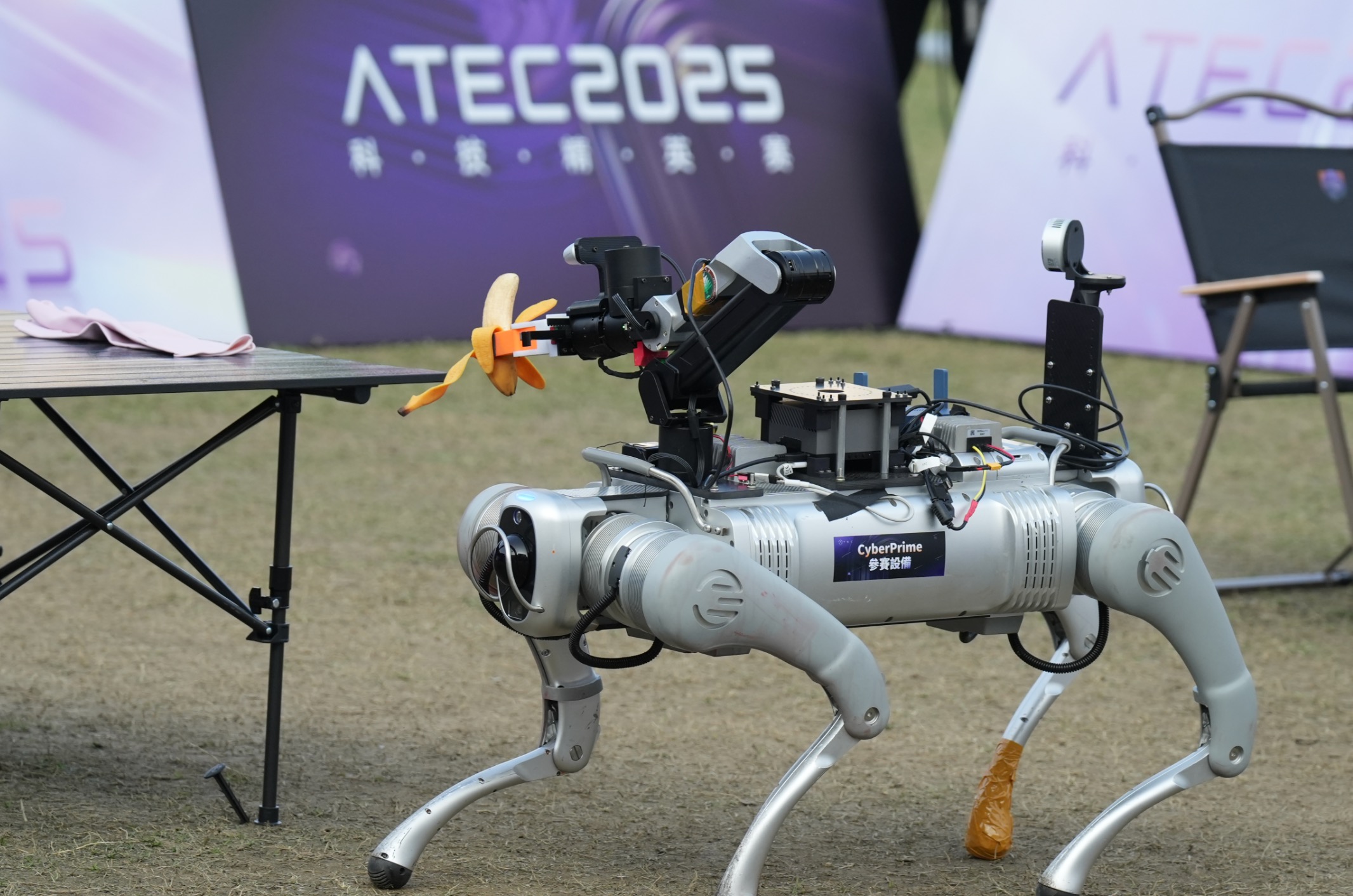
从机器到机器人:ATEC2025科技精英赛在港完成“真实世界”极限测试
Huan Qiu Wang· 2025-12-08 05:54
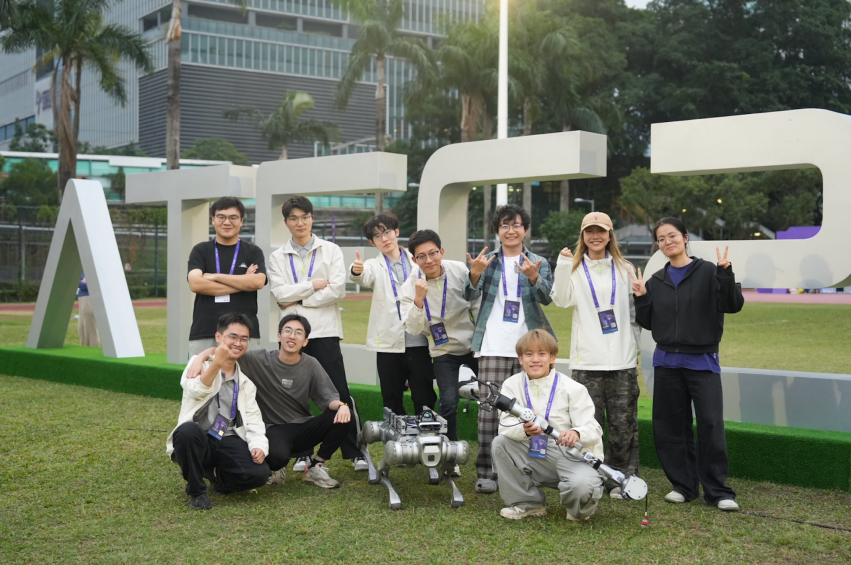
Core Insights - The ATEC 2025 competition showcased advanced robotics in real-world scenarios, emphasizing the transition from remote-controlled tools to autonomous intelligent agents [1][3][5] - The event aimed to address whether robots can adapt to complex environments outside of laboratory settings, with a focus on their ability to perceive, analyze, decide, and execute tasks independently [3][5][7] Event Overview - The competition was hosted by The Chinese University of Hong Kong and involved 13 top teams from around the world, with Zhejiang University winning the $150,000 prize for their autonomous robot performance [1][3] - ATEC 2025 featured tasks such as bridge crossing, orienteering, autonomous watering, and garbage sorting, all designed to test robots' capabilities in real-life situations [3][5] Technological Focus - The event encouraged "no remote control" operation, pushing robots to rely solely on their sensory and decision-making systems to tackle challenges, which highlighted the importance of robustness and stability in robotic systems [3][5][7] - Teams explored various technological paths, including the integration of traditional modular algorithms with cutting-edge end-to-end models, aiming for a balance between stability and intelligence [5][7] Industry Implications - ATEC aims to stimulate innovation in robotics by addressing real-world problems, with the belief that only genuine challenges can drive significant technological advancements [7][8] - The competition reinforced Hong Kong's position as a hub for AI and robotics research, setting a clear industry benchmark for autonomous intelligence in robots [8]
汇丰警告:OpenAI近期盈利无望,2030年前仍需融资2070亿美元
3 6 Ke· 2025-11-28 03:35
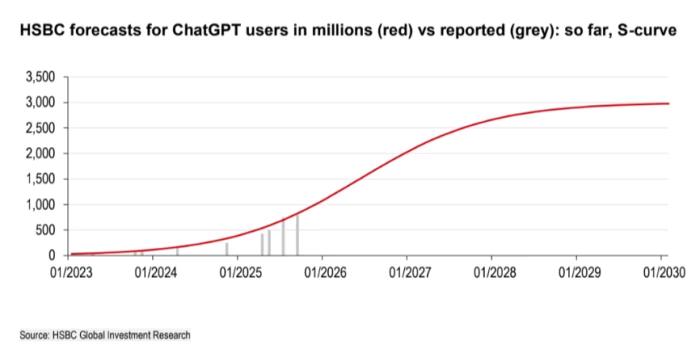
Core Insights - HSBC warns that OpenAI will face a funding gap of at least $207 billion by 2030, despite projected explosive revenue growth [1] - The report highlights concerns about the sustainability of the entire AI ecosystem due to soaring infrastructure costs and intense market competition [1] Group 1: Financial Projections - OpenAI's cumulative leasing costs are expected to reach $792 billion from now until 2030, with total computing commitments potentially rising to $1.4 trillion by 2033 [2] - HSBC's optimistic revenue model predicts OpenAI will grow from $6 billion in 2024 to $213.5 billion by 2030, driven by user growth and new revenue streams [6][8] - The projected user base for OpenAI is expected to reach 3 billion by 2030, which is 44% of the global adult population outside of China [3] Group 2: Cost and Profitability Challenges - OpenAI's operational costs are anticipated to rise significantly, leading to negative gross margins for an extended period, with a projected gross margin of only 6% by 2030 [8][11] - The company will need to subsidize users for the foreseeable future, with most new funding going directly to data center operators [11] Group 3: Market Dynamics and Competition - By 2030, OpenAI's market share in the global consumer AI market is expected to decline from 71% to 56%, despite the market size reaching $129 billion [13] - In the enterprise AI market, OpenAI's market share is projected to drop from 50% to 37%, while competitors maintain stable shares [13] Group 4: Funding Gap and Strategic Options - After accounting for various funding sources, OpenAI is projected to have a funding gap of $207 billion by 2030 [14] - HSBC suggests potential strategies for OpenAI to close this gap, including increasing the paid user ratio to 20%, capturing a larger share of the digital advertising market, or enhancing computational efficiency through innovation [14]
云知声获三项国际领先认证,领跑医疗、端侧AI与数字人多个赛道
Sou Hu Cai Jing· 2025-11-05 00:34
Core Insights - The article highlights the advancements made by Yunzhisheng in the field of AGI technology, particularly in four key areas: voice technology, medical large models, edge AI, and digital human technology, showcasing China's strong capabilities in artificial intelligence [1] Group 1: Medical Large Model - The "multi-modal medical vertical large model" integrates diverse medical data, achieving over 90% accuracy in liver focal lesion detection and significantly outperforming human averages in clinical exams, thus supporting the intelligent transformation of the healthcare industry [2][3] Group 2: Edge AI and Digital Human Technology - The "refined small model on chip" technology optimizes AI model performance on edge chips, reducing resource consumption by over 100 times while maintaining excellent interaction quality, addressing traditional challenges in edge model performance [6] - The "multi-modal emotional intelligent digital human" technology creates high-fidelity digital humans capable of natural behavior and emotional expression, applicable in various sectors such as customer service and education [6] Group 3: Comprehensive AI Industry Strategy - Yunzhisheng has established a four-layer technical architecture that connects technology, scenarios, and data, enhancing its core competitiveness in the AI industry and facilitating the development of specialized digital experts across various verticals [7] - The breakthroughs in four internationally leading technologies strengthen the company's foundational technology and ensure a complete link from research and development to implementation, aiming to accelerate the commercialization of cutting-edge innovations [7]