
AI支付

Search documents
决策到交易“关键一跃” AI付掀起新一轮卡位战
Zhong Guo Jing Ying Bao· 2026-02-27 18:39
Core Insights - The article discusses the rapid adoption and commercialization of AI payment systems, particularly focusing on Ant Group's "AI Pay" and its implications for the future of payment methods in the AI era [2][6][7]. Group 1: AI Payment Adoption - Ant Group announced that its "AI Pay" user base has surpassed 100 million, with payment transactions exceeding 120 million, marking a significant milestone for AI-native payment products [2]. - JD Technology has also launched "JD AI Pay," integrating it into its JoyAI App and smart glasses, indicating a shift towards AI-driven retail transaction models [2][6]. - Industry experts believe that AI payment systems are preparing the groundwork for large-scale commercialization of AI agents, positioning companies to capture new market opportunities [2][6]. Group 2: Evolution of Payment Processes - AI Pay represents a shift from traditional payment methods, embedding payment processes within service interactions, allowing users to complete transactions through voice commands or other AI-driven interfaces [3][4]. - The payment chain has evolved from a traditional five-link model to a six-link model, introducing an "AI agent" that facilitates payment instructions while maintaining user authorization for transactions [4][11]. - Experts predict that within 5 to 8 years, the number of payment instructions initiated by AI could surpass those initiated by humans, although the responsibility for transactions will remain with users [4][11]. Group 3: Competitive Landscape - Major players are positioning themselves in the AI payment space as a new entry point in the AI era, with the ability to convert AI traffic into commercial transactions being a key competitive advantage [2][6]. - The article highlights that AI payment systems will complement existing payment methods like QR code payments, rather than replace them, indicating a collaborative evolution in payment technologies [5][6]. Group 4: Market Potential and Future Outlook - The global market potential for AI agents is projected to reach $5 trillion by 2030, emphasizing the significant economic impact of AI-driven payment systems [9]. - The introduction of standardized protocols, such as the Universal Commerce Protocol by Google and the Agentic Commerce Protocol by OpenAI, aims to facilitate seamless transactions across multiple platforms [9][10]. - The establishment of the ACT protocol by Alipay aims to create a framework for AI commercial transactions, addressing concerns about user authorization and transaction traceability [10]. Group 5: Challenges and Considerations - Despite the rapid development of AI payment systems, challenges remain, including the need for deeper integration across various merchant services, standardization of industry protocols, and user trust in security and privacy [11]. - The article notes that while AI payment systems enhance transaction efficiency, they still require user confirmation for payments, maintaining the existing responsibility framework among users, payment institutions, and merchants [11].

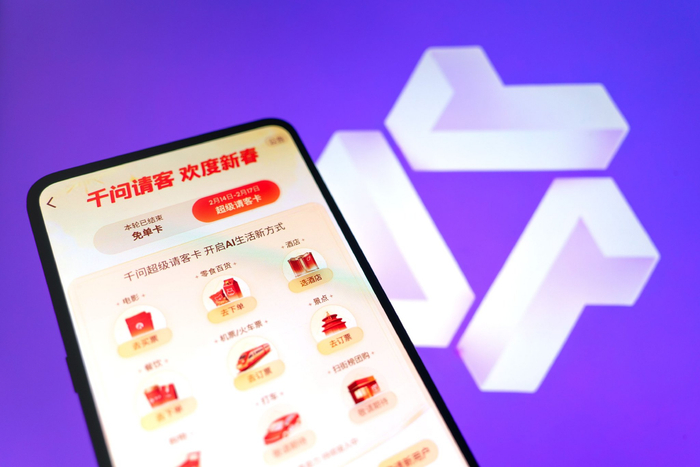
春节国内出游5.96亿人次背后有哪些新变化
Xin Hua Wang· 2026-02-27 07:05
2026年春节假期,国内游客人数和花费均创历史新高。 文化和旅游部数据显示,2026年春节假日9天,全国国内出游5.96亿人次,国内出游总花费8034.83亿 元,与2025年春节8天假日相比,分别增加0.95亿人次和1264.81亿元。 2026年2月19日,小朋友在江苏省海安市花海里花木市场文创基地挑选非遗彩灯。新华社发(顾彬斌 摄) 公路自驾出行需求充分释放 交通运输部数据显示,节日期间,公路自驾出行需求充分释放,日均自驾出行规模近2.7亿人次,同比 增长8.3%,占出行总量的86%。 从纳入国家充电设施监测服务平台的5.33万台高速公路充电桩的统计来看,自2月15日至2月23日,高 速公路电动汽车充电次数共计602.1万次,充电量达到14976.75万千瓦时,日均充电量1664.08万千瓦时,较 去年春节日均增长52.01%,创历史新高。 随着充电服务保障越来越好,越来越多人选择新能源车自驾出行。节日期间,全国高速公路日均通行 新能源车辆1152万辆,同比增长34%。 此外,小微型客车租赁成为交通消费场景新的增长点,日均租赁车辆约65万辆,同比增长15%。 2026年2月22日,江苏省扬州市境内的润扬 ...

跨境火热、AI爆发!春节消费支付数据“开门红”
Bei Jing Shang Bao· 2026-02-24 10:55
2026年"史上最长春节假期"催热消费市场。近日,支付巨头微信、支付宝纷纷披露春节数据,数据显示,旅行、跨境、县域等多维度消费全面爆发,AI技术 对支付场景、民生服务开启深度重构。另据银联、网联交出的除夕支付数据,从49.31亿笔交易总量、每秒14.47万笔的瞬时峰值,同比21.64%、7.18%的增 长,不难看出,春节支付行业呈现着消费复苏与技术应用同步推进的新格局。 跨境支付的双向狂欢 微信支付端,春节消费迎来"开门红",数据显示,春节期间旅行、生活娱乐线下交易笔数同比涨幅均超20%,其中,"生肖游"正成为超长假期出行的新时 尚。带"马"字的目的地热度高涨,除了去马耳他、罗马尼亚感受异国风情,马来西亚与马尔代夫更是实实在在地迎来大波中国游客潮,线下交易消费金额同 比分别大涨131%和186%,马来西亚小程序春节期间交易金额同比增长超140%。 在"生肖游"走红的同时,亚洲国家和地区依然是国人出行的首选"心头好"。中国澳门与中国香港交易笔数同比分别提升39%和24%,与泰国、韩国、马来西 亚稳居境外线下交易笔数Top5。此外,受冬奥会驱动,意大利小程序春节期间交易金额同比增长超190%,在马年春节一跃成为全 ...


蚂蚁集团:春节期间支付宝“AI付”用户数突破1亿
Sou Hu Cai Jing· 2026-02-23 02:22
Group 1 - The core idea of the news is the launch and features of "Alipay AI Pay," an innovative payment experience designed for the AI era, allowing users to place orders and make payments while interacting with AI [4] - "AI Pay" has been implemented in various AI scenarios, including partnerships with companies like Qianwen, Rokid, and Luckin Coffee [2] - The service was officially launched on February 6, with a promotional campaign offering users a 25 yuan free drink voucher [2] Group 2 - Alipay AI Pay includes three layers of security: users must manually authorize account binding upon first use, identity verification is required during payment through facial recognition, fingerprint, or password, and a multi-dimensional risk control system is in place to intercept potential risks [4] - Alipay promises a compensation guarantee with the slogan "You dare to pay, I dare to compensate," enhancing user confidence in the payment process [4]

支付宝“AI付”支付超1.2亿笔 开启AI支付时代
Zheng Quan Ri Bao· 2026-02-13 17:03
Core Insights - Alipay's "AI Payment" has achieved over 120 million transactions in just one week, making it the world's first AI-native payment product to surpass 100 million transactions [1] - "AI Payment" is designed as a secure and convenient payment service for the AI era, already implemented in various AI scenarios such as Qianwen, Rokid, and Luckin [1] - Following the launch of the "30 Billion Free Order Activity" by Alipay's Qianwen App, "AI Payment" is rapidly gaining popularity [1] - Earlier in January, Alipay's "Tap to Pay" also reached over 100 million daily transactions, covering more than 2,200 daily life scenarios [1] - Both innovative payment services from Ant Group have crossed the "billion-level" threshold, contributing to the explosive growth of the AI industry and new consumption [1]
1.2亿笔“AI付”背后的支付新范式
2 1 Shi Ji Jing Ji Bao Dao· 2026-02-13 05:15
Core Insights - The article highlights the significant impact of AI payment services, particularly Alipay's AI payment, which has achieved over 1.2 billion transactions in just one week, marking a milestone in the integration of AI into everyday consumer transactions [2][5][13]. Group 1: AI Payment Breakthrough - The "Qianwen" app initiated a massive 30 billion yuan subsidy campaign, resulting in over 10 million AI order placements within 9 hours, showcasing the explosive capability of AI in consumer scenarios [1]. - Alipay's AI payment service has become the world's first AI-native payment product to surpass 1 billion transactions, indicating a shift in payment paradigms [2][5]. - The success of Alipay's AI payment is not an isolated incident; it follows the earlier achievement of over 100 million daily transactions with the "Tap to Pay" feature, demonstrating a broader trend of AI and new consumption models emerging [7]. Group 2: Redefining Transaction Paradigms - Alipay's AI payment has restructured the interaction logic from "users seeking services" to "services embedded in conversations," allowing users to access various services through natural language within a single app [11]. - A new trust mechanism has been established, leveraging 20 years of user trust to ensure secure payments through identity verification and a multi-dimensional risk control system [12]. - The year 2026 is being recognized as the "Year of AI Agent Payments," with a consensus forming around the transition from auxiliary roles to execution capabilities in payment systems [12]. Group 3: ACT Protocol and Future Implications - Alipay's introduction of the ACT (Agentic Commerce Trust) protocol facilitates standardized multi-tasking and collaboration among AI agents, paving the way for scalable and replicable AI payment solutions [14][15]. - The timing of Alipay's ACT protocol coincides with Google's launch of a universal commerce protocol, indicating a synchronized approach among tech giants in redefining commercial systems for AI agents [16]. - The ACT protocol aims to establish new rules for commercial interactions, focusing on "delegated authorization" and creating traceable, verifiable transaction logs for AI-executed trades [17].

1.2亿笔“AI付”背后的支付新范式
21世纪经济报道· 2026-02-13 05:07
Core Insights - The article highlights the significant impact of AI payment services, particularly Alipay's "AI Pay," which has achieved over 1.2 billion transactions in just one week, marking it as the world's first AI-native payment product to surpass this milestone [3][4][5]. Group 1: AI Payment Breakthrough - The "Qianwen" app initiated a massive 30 billion yuan subsidy campaign, resulting in over 10 million AI order placements within just 9 hours, showcasing the explosive capability of AI in consumer scenarios [1]. - Alipay's "AI Pay" has integrated payment directly into AI applications, eliminating the need for users to navigate away from the app for transactions, thus enhancing user experience [1][4]. Group 2: New Interaction and Trust Mechanisms - The shift from "users seeking services" to "services embedded in conversations" represents a fundamental change in interaction logic, allowing users to access various services through natural language within a single app [4][5]. - Alipay has established a trust network for its AI payment service, utilizing a multi-dimensional risk control system and user identity verification methods to ensure secure transactions [5]. Group 3: Industry Evolution and Future Prospects - The introduction of the ACT (Agentic Commerce Trust) protocol by Alipay signifies a new standard for AI-driven transactions, addressing the need for a structured approach to AI executing user intentions [6]. - The ACT protocol aims to create a traceable and verifiable operation log for AI-executed transactions, positioning Alipay as a leader in the evolving landscape of AI payment infrastructure [6][7].

“京东AI付”正式发布,在智能眼镜、JoyAI App等场景“落地”
Guang Zhou Ri Bao· 2026-02-13 03:18
至于支付安全方面,京东科技表示,"京东AI付"具备"动态语音指令+活体声纹识别"的双重金融级验证 方案;同时基于算法优化,在防录音攻击、防声纹合成等攻防测试中表现优异,可充分满足金融级安全 场景需求,切实保障交易安全。 (文章来源:广州日报) 2月13日,记者获悉,京东科技正式发布新型支付方式"京东AI付",用户凭借语音即可便捷、安全支 付。据介绍,"京东AI付"搭载了京东JoyAI大模型能力,适用于AI助手、智能终端等多种软硬件载体, 目前已实现在万能数字人助手JoyAI App上通过"万能博士"点外卖,还能够在智能眼镜场景通过购物智 能体JoyGlance上的AI支付全链路。 此前,京东科技发布了基于京东JoyAI大模型能力的购物智能体JoyGlance,用户戴上智能眼镜,无需掏 出手机,仅需一眼注视、一句指令,即可丝滑完成从识别到支付的全流程购物。此次"京东AI付"的落 地,进一步升级了在支付环节的智能体验,可在支付环节支持用户语音直接唤起更换不同支付方式,比 如可以根据自己的用卡情况,直接以语音形式更换不同银行卡,流畅地切换不同支付方式。 此外,在智能体执行的下单支付流程中,"京东AI付"已实现在万能 ...
刘强东新动作,京东AI伸向支付
财联社· 2026-02-12 14:06
Core Viewpoint - JD Technology has launched a new payment method called "JD AI Pay," which integrates its self-developed JoyAI model, featuring multi-modal understanding, contextual awareness, and real-time risk interception [3][4]. Group 1: JD AI Pay Features - "JD AI Pay" allows users to make payments without leaving the payment page or manually entering passwords, significantly simplifying the transaction process [3]. - The system can accurately identify user intent and dynamically verify identity based on environmental factors, biometric features, and behavioral habits [3]. - The payment method has been implemented in two scenarios: through the JoyAI App and JD's smart glasses, JoyGlance, enabling voice-activated purchases [3]. Group 2: Security Measures - To ensure fund security, JD AI Pay employs an end-cloud collaborative risk control architecture, conducting local voiceprint and liveness detection while analyzing transaction risks in real-time [3]. - If any anomalies are detected, such as non-personal voice or high-risk merchants, the process will be interrupted, triggering secondary verification [3]. Group 3: Competitive Landscape - JD Technology's entry into the AI payment sector is part of a broader trend, with Alibaba also launching the ACT protocol to facilitate AI interactions across platforms [5][6]. - The ACT protocol allows AI to execute order operations while keeping payment authorization under user control, enhancing user experience [6]. - Internationally, companies like Google and Anthropic are developing their own protocols, focusing on communication standards and security boundaries for AI agents in payment processes [7][8]. Group 4: Strategic Analysis - Analysts suggest that JD's approach focuses on consumer experience innovation, while Ant Group emphasizes risk control to build merchant trust, creating a differentiated competitive landscape [8]. - The competition in the AI payment sector is shifting from technical superiority to seamless user experience and ecosystem development, indicating a need for internet giants to innovate rapidly [8].


您用过吗?支付宝AI付笔数超1.2亿
Bei Jing Ri Bao Ke Hu Duan· 2026-02-12 06:06
Core Insights - The rapid adoption of AI payment solutions is transforming the payment industry, with Alipay's "AI Pay" achieving over 120 million transactions in just one week, making it the first AI-native payment product to surpass 100 million transactions globally [1][2] - Other major internet companies, such as JD.com, are entering the AI payment space, indicating a competitive landscape and a shift towards voice-activated payment solutions [1][2] Group 1: AI Payment Adoption - Alipay's "AI Pay" allows users to complete transactions through voice commands without navigating through multiple interfaces, streamlining the payment process [1][2] - The service has expanded its application scenarios through the Qianwen App, supporting various everyday services like food delivery, shopping, and travel bookings [1][2] Group 2: Industry Transformation - The integration of AI in payment systems is expected to create a new cycle of significant changes in the industry, moving towards a more seamless shopping and payment experience [2] - Analysts suggest that users will gradually adapt to conducting various commercial activities in an AI environment, potentially extending this model to offline payment scenarios [2] Group 3: Security Measures - Alipay has implemented a three-tier security system for "AI Pay," requiring users to manually authorize account binding upon first use, and verifying identity through facial recognition, fingerprints, or passwords during transactions [2] - Despite these security measures, there are still user concerns regarding trust, particularly around the initial authorization and agreement signing processes, indicating that widespread adoption may take time [2]