
产业整合

Search documents
走访上市公司 推动上市公司高质量发展系列(二十四)
证监会发布· 2025-09-12 11:07
Group 1 - Fujian Securities Regulatory Bureau has deepened regular visits to listed companies, achieving a coverage rate of 70.75% by visiting 75 companies and addressing 60 issues related to financing, cross-border trade, compliance governance, and investment approval [3] - The bureau has implemented targeted assistance for companies, providing tailored solutions for issues such as policy understanding and risk response, resulting in successful financing support for a software and information technology service company [3][4] - Since the beginning of 2025, 15 listed companies in Fujian have announced mergers and acquisitions totaling over 17 billion, with significant financing activities including 36 companies raising over 160 billion through various means [5] Group 2 - Anhui Securities Regulatory Bureau has conducted visits to 133 listed companies, achieving a coverage rate of 78.29% and addressing 63 issues to enhance company quality [6][7] - The bureau focuses on technology-driven companies, organizing events to facilitate communication between scientists, entrepreneurs, and investors, aiming to accelerate the transformation of scientific achievements [7][8] - Since 2024, 328 companies in Anhui have implemented cash dividends totaling approximately 70 billion, with 11 companies engaging in mergers and acquisitions amounting to about 33 billion [10] Group 3 - Jiangxi Securities Regulatory Bureau has visited 71 listed companies, covering nearly 80% and resolving 65 issues related to financing, production operations, and project approvals [11][13] - The bureau emphasizes the importance of corporate governance and innovation, encouraging companies to leverage capital market tools for transformation and upgrading [12][14] - In the first half of 2025, 57 listed companies in Jiangxi distributed cash dividends totaling approximately 8.78 billion, while 30 companies engaged in mergers and acquisitions worth around 6.71 billion [13]

上交所副总经理王泊:进一步打通“科技、资本、产业”良性循环的堵点痛点
Zheng Quan Ri Bao Wang· 2025-09-11 13:16
Core Viewpoint - The Shanghai Stock Exchange emphasizes its commitment to serving the real economy and enhancing support for technological innovation through the STAR Market, which has evolved from a testing ground to a demonstration platform for hard technology [1][4]. Group 1: STAR Market Development - The STAR Market has gathered 589 listed companies with a total market capitalization exceeding 9 trillion yuan [1]. - Over the past six years, the STAR Market has continuously injected capital into enterprises through IPOs and refinancing, acting as a catalyst for hard technology to transition from laboratories to the market [1][2]. Group 2: Inclusive Reforms - The STAR Market has implemented inclusive reforms to break down barriers, allowing unprofitable hard technology companies to access capital without waiting for profitability [2]. - The introduction of the "1+6" policy this year has specifically targeted emerging fields such as artificial intelligence and commercial aerospace, creating a tailored listing pathway for these sectors [1][2]. Group 3: Supportive Measures - The STAR Market has developed a "toolbox" for growth tailored to the needs of technology companies, focusing on their unique characteristics such as light assets and high R&D [2]. - Recent reforms, including the "科八条" initiative, have introduced 35 measures to enhance mergers and acquisitions, resulting in 134 disclosed transactions worth over 40 billion yuan, surpassing the total of the previous five years [2][3]. Group 4: Comprehensive Services - The Shanghai Stock Exchange aims to provide full-chain services to support the growth of STAR Market companies, ensuring that services are delivered where needed [3]. - Key initiatives include on-site regulatory support, customized training, and proactive problem-solving to assist companies in navigating challenges [3]. Group 5: Ecosystem Development - The STAR Market focuses on creating a virtuous cycle of investment and financing, ensuring that funds are directed towards tangible projects while allowing investors to share in the returns [3][4]. - The commitment to continuous reform and service enhancement aims to facilitate a smooth interaction between technology, capital, and industry, contributing to high-quality development and technological self-reliance [4].
南华期货硅产业链企业风险管理日报-20250911
Nan Hua Qi Huo· 2025-09-11 12:20
1. Report Industry Investment Rating No relevant content provided. 2. Core Views of the Report Industrial Silicon - Supply - The low - electricity - price environment in Southwest China's wet season is ending, and the growth rate of furnace - starting in Xinjiang is also slower than expected. The overall supply pressure is expected to gradually ease [4]. - Demand - The demand from the organic silicon industry has slowed, while the demand from the recycled aluminum alloy remains stable. The demand from the polysilicon sector is expected to increase steadily in the next two months [4]. - Market Outlook - If the supply - side production rate enters a downward channel and the downstream polysilicon demand improves, the oversupply situation may ease, and the industry may reach a price bottom - reversal point [4]. Polysilicon - Supply - The production plan in September is expected to increase month - on - month, exacerbating the supply - side surplus pressure. The increasing number of daily warehouse receipts also exerts pressure on the futures market [10]. - Demand - The production rhythm of silicon wafers and battery cells continues to slow, and the demand for polysilicon is restricted by factors such as lagging terminal installation demand and inventory digestion pressure [10]. - Market Outlook - If major enterprises in the industry reach effective integration agreements, it will fundamentally improve the supply - demand pattern and form long - term support for the market. Currently, investors are advised to be cautious [10]. 3. Summary by Relevant Catalogs Industrial Silicon Futures Data - The closing price of the industrial silicon main contract is 8740 yuan/ton, with a daily increase of 75 yuan (0.87%) and a weekly increase of 225 yuan (2.64%) [12]. - The trading volume of the main contract decreased by 275329 lots (44.20%) daily and 24186 lots (6.51%) weekly [12]. - The open interest of the main contract increased by 9706 lots (3.49%) daily and 10466 lots (3.77%) weekly [12]. Spot Data - The price of 99 industrial silicon in Xinjiang and Tianjin remained unchanged, while the price of 553 in Xinjiang increased by 100 yuan/ton (1.14%) [20][21]. - The price of 421 in Yunnan increased by 100 yuan/ton (1.14%), and the price of industrial silicon powder and some downstream products also had price changes [21]. Basis and Warehouse Receipts - The total number of industrial silicon warehouse receipts is 50093 lots, an increase of 48 lots (1.23%) from the previous period [34]. - The inventory in some delivery warehouses remained stable, while the inventory in Tianjin delivery warehouse increased by 198 tons (0.92%) [34]. Polysilicon Futures Data - The closing price of the polysilicon main contract is 53710 yuan/ton, with a daily increase of 825 yuan (1.56%) and a weekly increase of 1515 yuan (2.90%) [36]. - The trading volume of the main contract decreased by 133683 lots (32.45%) daily but increased by 10216 lots (3.81%) weekly [36]. - The open interest of the main contract decreased by 746 lots (0.54%) daily and 9624 lots (6.59%) weekly [36]. Spot Data - The prices of N - type polysilicon products such as N - type re - feeding materials and N - type dense materials had slight weekly increases [42]. - The prices of silicon wafers, battery cells, and components also had different degrees of changes [42]. Basis and Warehouse Receipts Data - The basis of the polysilicon main contract is - 2470 yuan/ton, with a daily decrease of 845 yuan (52.00%) and a weekly decrease of 1405 yuan (131.92%) [48]. - The total number of polysilicon warehouse receipts is 7690 lots, an increase of 320 lots (4.3%) [36].

并购“增厚+协同”效应显现 优质资产为上市公司半年报“增光添彩”
Shang Hai Zheng Quan Bao· 2025-09-03 20:54
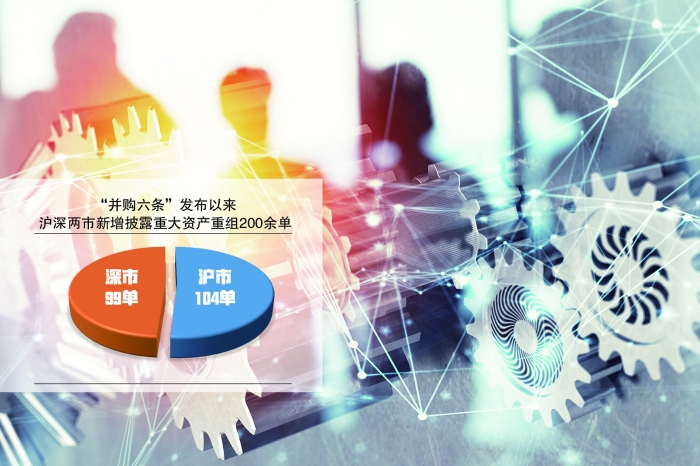
Group 1 - Mergers and acquisitions (M&A) are crucial for enhancing the real economy and driving high-quality development in industries, with over 200 major asset restructuring disclosures in the Shanghai and Shenzhen stock markets since the release of the "M&A Six Guidelines" [1] - The integration benefits of restructuring transactions are becoming evident in the semi-annual reports of listed companies, with companies improving performance through the acquisition of quality assets and accelerating their transformation [1] Group 2 - A number of completed M&A projects in the first half of the year have significantly boosted financial performance, exemplified by *ST Songfa, which reported a revenue of 6.68 billion yuan, a year-on-year increase of 315.49%, and a net profit of 647 million yuan, turning from loss to profit [2] - Gansu Energy's subsidiary, Changle Company, became a key driver of growth, achieving revenue of 2.88 billion yuan and net profit exceeding 1 billion yuan in the first half of the year [2] Group 3 - Hanlan Environment's strategic acquisition of Yuefeng Environmental contributed to a revenue of 5.763 billion yuan and a net profit of 967 million yuan, reflecting a year-on-year growth of 8.99% [4] - Sairisi's acquisition of Longsheng New Energy for 8.1 billion yuan strengthens its control over production and reduces costs, leading to a revenue of 62.402 billion yuan and a net profit of 2.941 billion yuan, a year-on-year increase of 81.03% [5] Group 4 - The current wave of M&A is characterized by a focus on industrial integration and transformation rather than mere scale expansion, with state-owned enterprises actively consolidating resources [6] - YD Environmental's acquisition of hydropower assets enhances its business structure, while Blue Science High-Tech's acquisitions aim to improve operational efficiency [6] Group 5 - The successful integration of Hunan Shizhu Garden Nonferrous Metals Co. into Zhongtung High-Tech resulted in a revenue of 7.849 billion yuan and a net profit of 510 million yuan, reflecting year-on-year growth of 3.09% and 8.70% respectively [7] - Companies are increasingly using M&A to enter new production capacity sectors and accelerate strategic transformations, creating synergistic effects [8] Group 6 - The M&A market is expected to remain vibrant due to supportive policies and industry developments, enhancing the profitability and core competitiveness of listed companies while enriching investor choices [9]
半年报看板丨优质资产注入“增色添彩” 沪市半年报凸显并购红利
Xin Hua Cai Jing· 2025-09-03 11:09
Core Insights - Mergers and acquisitions (M&A) are crucial for enhancing the real economy and driving high-quality development in industries, with significant policy support since the introduction of the "M&A Six Guidelines" on September 24, 2024 [1] - The Shanghai Stock Exchange has seen 104 major asset restructuring disclosures, indicating a vibrant M&A market that is contributing positively to company performance [1] Group 1: Financial Performance Post-M&A - Companies that completed M&A transactions have reported substantial improvements in their financial performance, with notable revenue and profit increases [2] - For instance, *ST Songfa's* revenue surged to 6.68 billion yuan, a 315.49% increase year-on-year, and net profit rose to 647 million yuan, up 15646.55% [2] - Hanlan Environment reported a revenue of 5.763 billion yuan and a net profit of 967 million yuan, reflecting an 8.99% year-on-year growth [3] - Ningbo Fubang's acquisition led to a revenue of 366 million yuan, a 29.18% increase, and a net profit of 29.63 million yuan, up 89.52% [3] - Sailis achieved a revenue of 62.402 billion yuan and a net profit of 2.941 billion yuan, marking an 81.03% increase [4] Group 2: Strategic Focus of M&A - The current wave of M&A is characterized by a shift from mere scale expansion to strategic integration and transformation, focusing on quality improvement [5] - State-owned enterprises are actively engaging in resource integration, as seen in the acquisition of hydropower assets to enhance their renewable energy capabilities [5] - Blue Science High-Tech's cash acquisitions aim to strategically adjust internal resources and improve operational efficiency [5] Group 3: Technology and Innovation in M&A - The technology sector continues to see high levels of M&A activity, with companies like Hu Silicon Industry and Zhi Chun Technology making strategic acquisitions to enhance their capabilities in semiconductor and electronic materials [6] - The integration of smart logistics solutions through acquisitions is also a focus for companies like Beizhi Technology, which aims to strengthen its core business [6] Group 4: Market Outlook - The M&A market in Shanghai is expected to maintain its vitality, driven by favorable policies and market dynamics, which will enhance the profitability and competitiveness of listed companies [6]
尚荣医疗(002551) - 尚荣医疗2025年9月2日投资者关系活动记录表(2025年半年度网上业绩说明会)
2025-09-02 09:54
Financial Performance - The company reported a revenue of ¥528,042,409.63 for the first half of 2025, a decrease of 16.38% compared to ¥631,461,882.24 in the same period last year [8] - The net profit attributable to shareholders was -¥775,820.00, reflecting a decline of 155.31% year-on-year [3] - Operating costs decreased by 17.55% to ¥441,091,432.86 [8] - Research and development expenses increased by 16.40% to ¥20,173,329.07 [8] Market Strategy - The company aims to enhance its core competitiveness through industry integration and improving its main business operations [4][9] - Focus on expanding overseas markets as a key growth driver [5][9] - Plans to establish three major platforms: medical products, medical services, and healthcare industry [5] Challenges and Responses - The decline in revenue is attributed to reduced engineering income and increased interest payments on convertible bonds [3][8] - The company is addressing slow domestic business growth and delayed receivables by intensifying international market expansion and improving accounts receivable collection [9] Future Outlook - The Egyptian medical consumables production base is expected to commence operations in Q4 2025 [5] - The management emphasizes the importance of maintaining a strong business foundation to achieve sustainable returns for investors [4][9]

和君王明夫:世界酒业王者是怎样炼成的?
Sou Hu Cai Jing· 2025-09-01 10:19
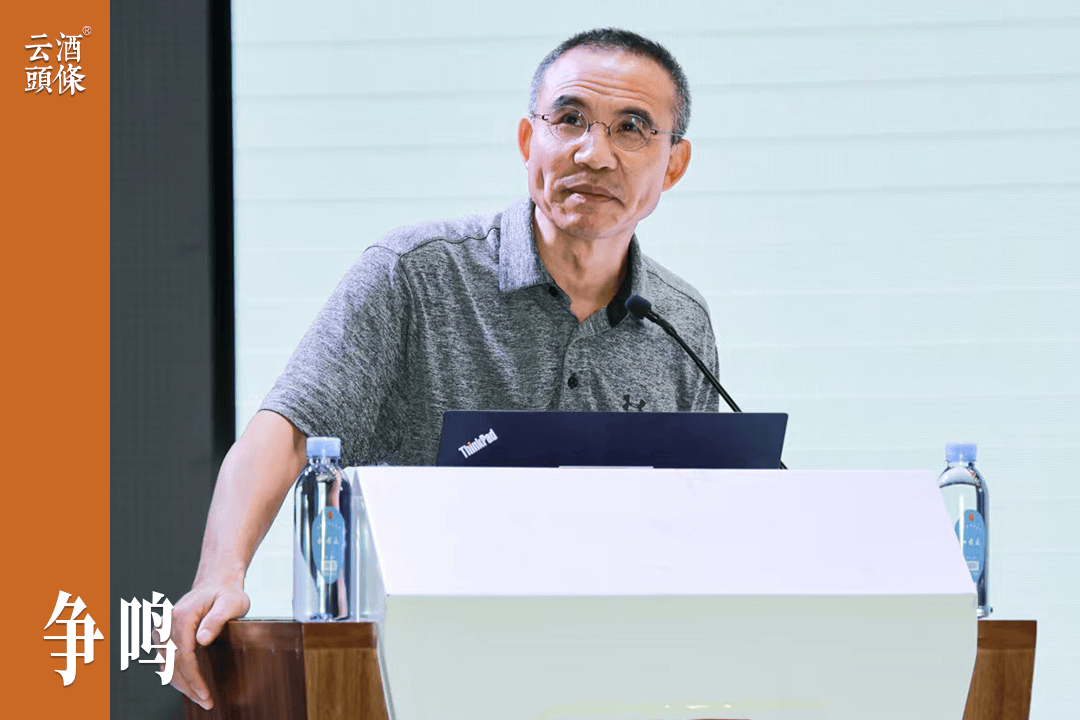
Core Insights - The article emphasizes the potential for individual wine enterprises to rise above current industry challenges through self-initiated efforts and strategic innovation, suggesting that the time has come for China to produce a global wine leader [2][3]. Industry Overview - The global wine industry is characterized by significant competition and evolving market dynamics, with a focus on strategic growth paths for companies transitioning from local to global players [2][3]. - The top ten global wine companies are dominated by beer giants, with Anheuser-Busch InBev leading at $593.8 billion in revenue, followed by Heineken at $402.1 billion and Diageo at $247.4 billion [7][14]. - In contrast, the Chinese wine industry shows a strong dominance of baijiu companies, with seven out of the top ten companies being baijiu producers, highlighting a stark difference from the global trend [14][17]. Company Performance - The top Chinese wine company, Kweichow Moutai, reported revenues of $212.1 billion, making it the second-largest wine company globally by market capitalization [11][17]. - The combined revenue of the top ten Chinese wine companies is approximately $620 billion, which is about 30% of the total revenue of the top ten global wine companies [17]. - The market capitalization of Kweichow Moutai and Wuliangye significantly exceeds that of their global counterparts, indicating a higher valuation in the capital markets [17][18]. Strategic Insights - The article discusses the importance of management consulting, goal decomposition, and process management as critical components for success in the wine industry [2][18]. - The narrative of Anheuser-Busch InBev's rise illustrates the effectiveness of strategic acquisitions and operational efficiencies in building a global brand [19][27]. - Diageo's growth is attributed to a series of strategic acquisitions and a focus on high-end products, showcasing the importance of brand management and market responsiveness [39][50]. Market Trends - The article notes a lack of significant presence for wine companies in the global top rankings, suggesting challenges in scaling production and market share within the wine sector [18]. - The Chinese wine market is characterized by a lack of internationalization, with Moutai's overseas revenue accounting for only 4% of its total, indicating potential growth opportunities in global markets [14][17].



芯片巨头,大消息!688347,明日复牌
中国基金报· 2025-08-31 11:04
Core Viewpoint - Huahong Company plans to resume trading on September 1 after disclosing a restructuring proposal to acquire 97.4988% of Shanghai Huali Microelectronics Co., Ltd. through a combination of share issuance and cash payment [2][5]. Group 1: Transaction Details - The transaction aims to resolve the competition issue between Huahong Company and Huali Micro, both controlled by the Shanghai State-owned Assets Supervision and Administration Commission [5][8]. - Huahong Company will hold 100% of Huali Micro's shares upon completion of the transaction, which involves four counterparties, including Huahong Group and various investment funds [9][11]. - The restructuring aligns with Huahong Group's commitment made during Huahong Company's listing on the Sci-Tech Innovation Board [14]. Group 2: Market Position and Financial Impact - The acquisition is expected to enhance Huahong Company's market position and operational efficiency by leveraging synergies in technology, customer resources, and supply chain management [16][17]. - Huahong Company has seen significant stock price movements, with a 48.31% increase from July 18 to August 15, outperforming the Sci-Tech 50 Index and the semiconductor industry index during the same period [17][18]. Group 3: Financial Performance - As of June 30, 2025, Huali Micro reported total assets of 7.58 billion and net assets of 1.839 billion, while Huahong Company had total assets of 86.285 billion and net assets of 43.785 billion [20]. - Huali Micro's revenue has been increasing, with figures of 2.579 billion, 4.988 billion, and 2.466 billion for 2023, 2024, and the first half of 2025, respectively [21]. - In contrast, Huahong Company's revenue has been declining, with figures of 16.786 billion, 16.232 billion, and 14.388 billion for 2022, 2023, and 2024, respectively [22]. The first half of 2025 saw a revenue of 8.018 billion, a 19.09% increase year-on-year, but net profit dropped by 71.95% [24][25].

日本功率半导体,大撤退
3 6 Ke· 2025-08-31 05:06
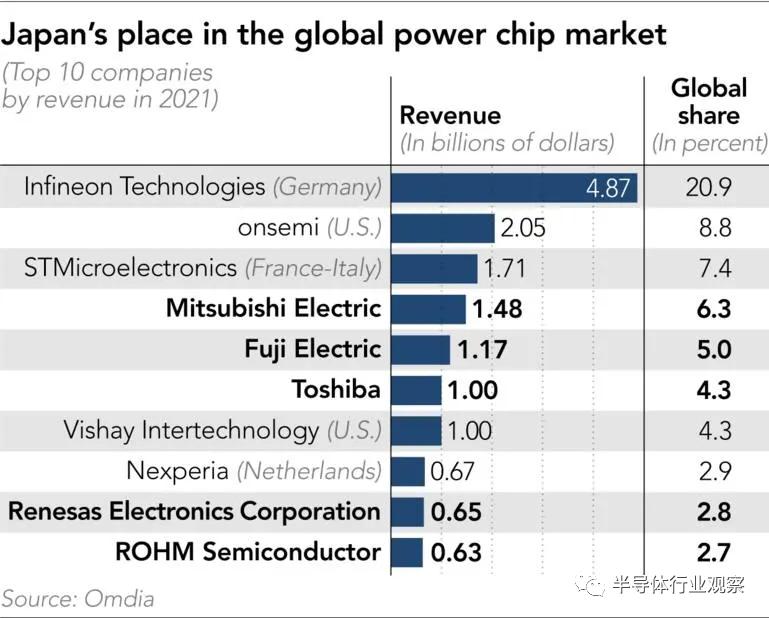
Group 1 - The semiconductor industry is experiencing a shift in focus, with AI chips and HBM gaining prominence, while the power semiconductor sector is losing its previous allure [1][2] - Japanese manufacturers, once leaders in power semiconductors, are facing delays in capacity expansion and losing market share to domestic competitors in China [3][4][6] - The competitive landscape for global power semiconductors is changing, with Japanese firms struggling to maintain their positions as domestic Chinese companies accelerate their growth [1][26] Group 2 - Japanese power semiconductor companies like Mitsubishi Electric, Fuji Electric, and Toshiba are showing signs of fatigue, with their market shares dropping below 5% in the latest rankings [7][9][12] - Financial struggles are evident, as companies like Rohm report significant losses and are forced to cut investment plans, while others like Renesas abandon their SiC market ambitions [9][16][21] - The rise of Chinese competitors is a critical factor in the decline of Japanese firms, as they leverage cost advantages and rapidly improve their technology [25][26][28] Group 3 - The Japanese government is attempting to support the power semiconductor industry through subsidies and strategic plans, aiming to increase market share from 20% to 40% by 2030 [6][31] - However, internal challenges such as lack of collaboration and trust among Japanese firms hinder effective industry consolidation [24][31] - The market dynamics are further complicated by changing demand patterns in the electric vehicle sector, which have not met Japanese companies' expectations [25][30]
并购重组热度不减!上市公司吸收合并案例频现
Zheng Quan Shi Bao Wang· 2025-08-29 00:10
Group 1 - The merger and acquisition market is experiencing increased activity, with a rise in the number of cases involving listed companies, showcasing characteristics such as accelerated industry integration and diversified payment methods [1][4] - A recent cross-market merger case involves Zhenyang Development, which announced plans for a significant asset restructuring with Zhejiang Huhangning, utilizing a share exchange method for the merger [2][3] - The transaction aims to create an A+H listed platform, enhancing the company's overall strength and efficiency through resource integration and elimination of competition within the same group [3][4] Group 2 - The number of absorption mergers among listed companies has increased, with various cases including "A and A," "A and H," and "H and A" mergers, indicating a trend towards consolidation in the market [4][5] - Recent policy changes, such as the revised restructuring guidelines by the China Securities Regulatory Commission, encourage absorption mergers as a key focus, simplifying the approval process and enhancing the market's responsiveness [5][6] - The diversification of payment methods in mergers and acquisitions is a notable feature of the current wave, with companies increasingly utilizing tools like convertible bonds, acquisition loans, and acquisition funds to facilitate transactions [7]
