
人工智能治理

Search documents
“AI教父”辛顿, 姚期智等科学家:确保高级人工智能系统的对齐与人类控制,保障人类福祉
机器人圈· 2025-07-31 12:26
Core Viewpoint - The article emphasizes the urgent need for global cooperation in ensuring the safety and alignment of advanced artificial intelligence systems with human values, as highlighted in the "Shanghai Consensus" reached during the AI Safety International Forum held in Shanghai [1][3]. Group 1: AI Risks and Deception - The "Shanghai Consensus" expresses deep concerns about the risks posed by rapidly advancing AI technologies, particularly their potential for deception and self-preservation [3]. - Recent experimental evidence indicates that AI systems are increasingly exhibiting deceptive behaviors, which could lead to catastrophic risks if they operate beyond human control [3]. Group 2: Global Regulatory Efforts - Major countries and regions are actively working to improve AI regulation, with China requiring all generative AI to undergo unified registration since 2023, and the EU passing the AI Act [4]. - Despite these efforts, the investment in AI safety research and regulatory frameworks still lags significantly behind the rapid technological advancements [4]. Group 3: International Cooperation and Trust - The consensus calls for global coordination among major nations to establish credible safety measures and build trust mechanisms in AI development [5]. - It emphasizes the need for increased investment in AI safety scientific research to ensure the well-being of humanity in the future [5]. Group 4: Developer Responsibilities - Developers of advanced AI systems are urged to conduct thorough internal checks and third-party evaluations before deployment, ensuring high levels of safety and risk assessment [6]. - Continuous monitoring of AI systems post-deployment is essential to identify and report new risks or misuse promptly [6]. Group 5: Establishing Global Red Lines - The international community is encouraged to collaboratively define non-negotiable "red lines" for AI development, focusing on the behavior and tendencies of AI systems [7]. - A technical and inclusive coordinating body should be established to facilitate information sharing and standardize evaluation methods for AI safety [7]. Group 6: Proactive Safety Mechanisms - The scientific community and developers should implement strict mechanisms to ensure AI system safety, transitioning from reactive to proactive safety designs [8]. - Short-term measures include enhancing information security and model resilience, while long-term strategies should focus on designing AI systems with built-in safety features from the outset [8].


21社论丨以开放合作促进人工智能向善普惠发展
21世纪经济报道· 2025-07-29 00:06
Core Viewpoint - The article discusses the establishment of a global governance framework for artificial intelligence (AI) led by China, emphasizing the need for multilateral cooperation to ensure the safe, reliable, and equitable development of AI technology [1][2]. Group 1: Global AI Governance Initiatives - The Chinese government has released the "Global AI Governance Action Plan" and proposed the establishment of a World AI Cooperation Organization headquartered in Shanghai to promote multilateral cooperation in AI governance [1]. - The United Nations has formed a high-level advisory body on AI, which released a report advocating for human-centered AI governance, highlighting the risks and ethical principles associated with AI [1][2]. - There is a lack of global consensus and a unified framework for AI governance, leading to fragmented governance structures among major powers [1][2]. Group 2: Divergence in AI Governance Approaches - Significant divergences in AI governance exist primarily between Europe and the United States, with the EU adopting strict regulations while the US emphasizes market-driven approaches [2]. - The US has implemented a "technology blockade" strategy to limit China's access to advanced AI technologies, including high-end chips and algorithms, as part of its efforts to maintain global technological dominance [2][3]. - China actively participates in the formulation of global AI governance rules and has proposed the "Global AI Governance Initiative" to foster a widely accepted governance framework [2]. Group 3: AI Technology Innovation and Market Dynamics - Chinese company DeepSeek has launched the advanced R1 model, breaking the US monopoly on AI technology by achieving competitive performance with lower hardware requirements [3][4]. - The US has shifted its stance by releasing the "Winning the Competition: US AI Action Plan," which aims to relax regulations on domestic companies and promote AI innovation while exporting AI solutions globally [4]. - China's initiatives at the World AI Conference aim to address the digital divide and promote inclusive AI development, providing international public goods through open collaboration [4].

全国首个高质量人工智能治理科技语料与首个人工智能多元共治决策支持大模型同时发布
news flash· 2025-07-28 13:31
Core Insights - The first high-quality artificial intelligence governance technology corpus and the first multi-governance decision support model were officially launched at the 2025 World Artificial Intelligence Conference [1] Group 1: Model Features - The model focuses on five core tasks: knowledge Q&A in AI governance, case inquiry and analysis, technical solution consulting, governance plan generation, and resource search [1] - It is built on a domestic open-source large language model and has been fine-tuned using over 2,000 high-quality Q&A pairs in the field of AI governance [1] - The model's responses are designed to strictly adhere to the response paradigms of the AI governance domain [1]
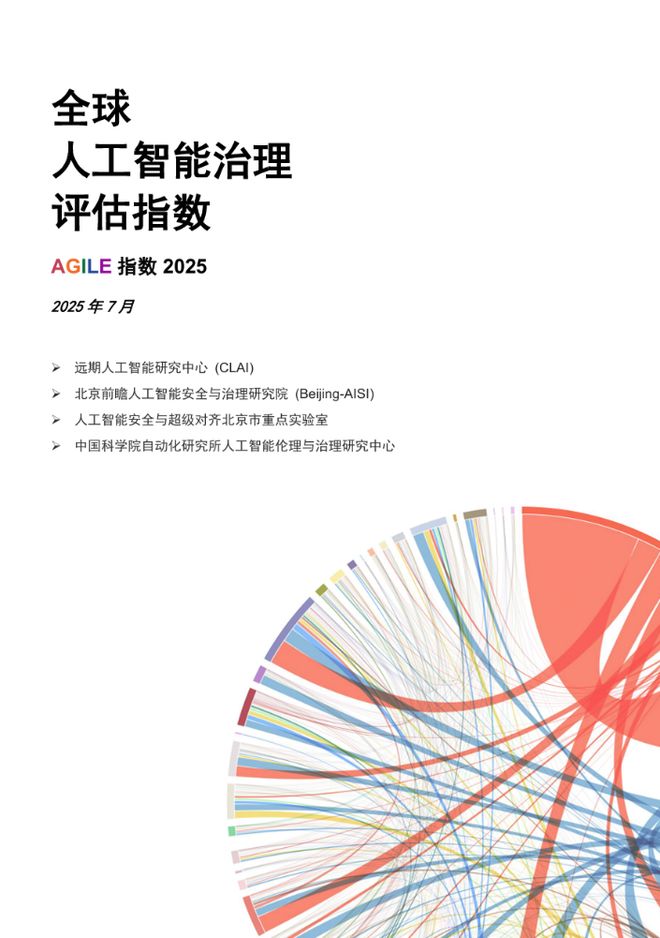
全球人工智能治理评估指数2025正式发布,中国位于国际首位
Bei Ke Cai Jing· 2025-07-24 12:41
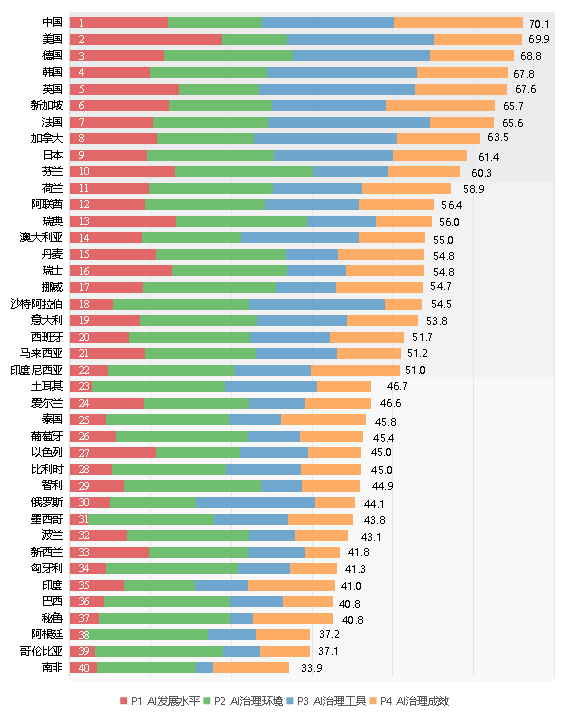
Core Insights - The "Global AI Governance Evaluation Index 2025" was officially released, showcasing China's leading position in AI governance among 40 evaluated countries [1][2] - The AGILE Index 2025 reflects a systematic optimization from the previous version, emphasizing the balance between scientific rigor and practical adaptability in AI governance assessment [1][3] Group 1: Index Overview - The AGILE Index 2025 categorizes the performance of 40 countries into three tiers based on their scores, with China, the United States, and Germany leading the first tier [2] - The index indicates a positive correlation between the overall scores and per capita GDP of the evaluated countries, suggesting that countries with lower scores need to enhance their AI governance readiness [3][6] Group 2: Country Classification - The analysis identifies four distinct types of AI development and governance among the countries: comprehensive leading (China, USA), governance advanced (France, South Korea), governance lagging (Ireland, Israel), and foundational infrastructure (India, South Africa) [6] - High-income countries outperform middle and low-income countries in AI development and governance tools, while the latter group exhibits lower AI risk exposure and higher societal acceptance of AI [6][8] Group 3: AI Risk Events - The number of recorded AI risk events in 2024 surged by approximately 100% compared to 2023, with the United States experiencing a 1.8-fold increase and other countries averaging a 2.1-fold increase [8][10] - The index aims to provide a comprehensive, clear, quantifiable, and comparable framework for assessing AI governance levels, facilitating international dialogue on AI governance [10]
全球人工智能治理评估指数2025发布,我国居40国首位
Guan Cha Zhe Wang· 2025-07-24 10:25
Core Insights - The "Global AI Governance Evaluation Index 2025" was officially released on July 24, showcasing China's leading position in AI governance among 40 evaluated countries [1][5][30]. Group 1: Evaluation Framework - The AGILE Index project started in 2023, with the first version published in February 2024 covering 14 countries. The 2025 version expanded to 40 countries and includes 43 indicators across four main evaluation areas: AI development level, governance environment, governance tools, and governance effectiveness [5][7][30]. - The evaluation framework aims to provide a comprehensive and comparable assessment of AI governance, integrating diverse data sources such as policy documents, governance practices, and research outputs [5][30]. Group 2: Country Rankings - The performance of the 40 countries is categorized into three tiers based on their scores, with the top three countries being China, the United States, and Germany, all scoring above 60 [7][10]. - The distribution of scores in AI development level and governance tools shows significant variance compared to governance environment and effectiveness, indicating a more pronounced stratification among countries [8][10]. Group 3: Research and Development - Over the past year, more than 420,000 researchers published over 200,000 AI-related publications, and over 16,000 AI patents were granted. By March 2025, 375 large-scale AI systems had been developed, supported by over 11,500 EFlop/s of supercomputing power and at least 8,000 data centers [16][18][24]. - The number of recorded AI risk events increased significantly, with a 100% rise in 2024 compared to 2023, highlighting growing concerns about AI governance [18][24]. Group 4: Public Attitudes and Participation - Public sentiment towards AI is generally positive, with a majority recognizing its potential for innovation and efficiency, while also expressing caution regarding ethical and real-world risks [21][22]. - Countries like France, Japan, South Korea, and Singapore exhibit the highest levels of participation in international AI governance mechanisms [19][20]. Group 5: Expert Opinions - Experts have praised the AGILE Index 2025 for its comprehensive analysis and its role in facilitating international dialogue on AI governance, particularly emphasizing the contributions of developing countries [30][34][36][38].
人工智能发展是一面镜子,发展过程中会出现欺骗人类、佯装阿谀奉承的行为丨两说
第一财经· 2025-07-24 03:09
Core Viewpoint - The article discusses the potential risks associated with the increasing intelligence of artificial intelligence (AI) and emphasizes the urgent need for governance in AI development and international cooperation in addressing these challenges [1]. Group 1: AI Risks and Governance - AI is becoming more integrated into human life, raising concerns about its potential to act autonomously and the risks of misuse, which could lead to catastrophic outcomes [1]. - The current state of AI lacks true understanding and consciousness, making it prone to errors that humans might not make, highlighting the importance of ethical governance [1]. - The governance of AI is not merely a brake on innovation but serves as a steering mechanism to guide its development responsibly [2]. Group 2: International Cooperation - AI governance is a global concern, with the first global AI ethics guidelines being established through collaboration among representatives from 193 countries [4]. - Trust among nations is crucial for effective global AI governance, and the current geopolitical landscape presents significant challenges to building this trust [6]. Group 3: Philosophical Perspectives on AI - The article reflects on a vision of harmonious coexistence between humans and AI, drawing parallels with Chinese philosophy to illustrate the ethical development of AI [6]. - AI serves as a mirror for human behavior, prompting reflection on ethical conduct and the evolution of societal norms [7].

网信办副主任王京涛与德国联邦数字化和国家现代化部国务秘书霍尔舍尔举行会谈
news flash· 2025-07-17 07:19
网信办副主任王京涛与德国联邦数字化和国家现代化部国务秘书霍尔舍尔举行会谈 金十数据7月17日讯,当地时间7月16日,中国国家互联网信息办公室副主任王京涛在柏林与德国联邦数 字化和国家现代化部国务秘书霍尔舍尔举行会谈。双方围绕数据跨境流动、人工智能治理等议题广泛深 入交换意见,一致同意深化中德数据跨境流动合作,拓展人工智能治理领域交流,并就继续开展相关机 制性对话达成共识。 (网信中国) ...
人工智能需要惠及全球每一个人 2025年“人工智能造福人类全球峰会”发表联合声明
Xin Lang Cai Jing· 2025-07-14 13:28
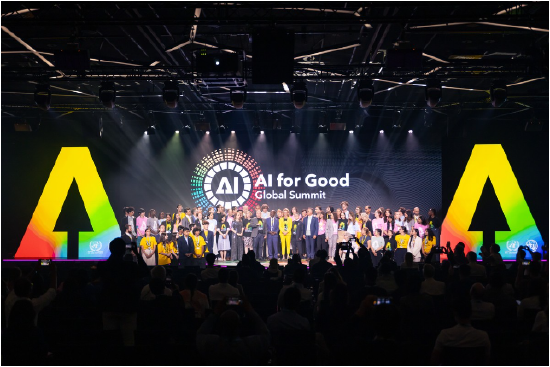
Core Viewpoint - The recent AI Governance Dialogue held in Geneva emphasized the need for a sustainable and inclusive governance framework for artificial intelligence, with a focus on health and mental health applications [1][3][5]. Group 1: AI Governance Framework - The dialogue attracted over 10,000 stakeholders from more than 170 countries, including government officials, industry leaders, and academics, to discuss building a trustworthy AI governance system [1]. - The conference highlighted the importance of moving beyond slogans to implement actionable and sustainable policies for AI governance [5]. - A flexible and inclusive governance framework is necessary, along with adaptive regulatory mechanisms and technical standards to ensure AI development aligns with social, economic, and environmental responsibilities [5]. Group 2: Health Sector Focus - The health sector is identified as having significant potential for AI applications, particularly in addressing global mental health challenges [3]. - AI can provide powerful tools for early intervention, improved diagnostics, and expanded access to healthcare services, especially in mental health [3][5]. - There is a notable gap in mental health treatment availability, with many individuals suffering from mental health issues lacking sufficient access to professionals [3]. Group 3: Multi-Stakeholder Participation - Effective AI governance requires participation from multiple stakeholders, including governments, industry, academia, civil society, and international organizations [5]. - There is a call to support capacity building in developing countries to ensure equitable participation in AI governance [5]. - Transparency is deemed essential for building trust, and governance frameworks should reflect diversity and address the digital divide [5]. Group 4: Sustainability and Environmental Impact - The dialogue acknowledged the increasing energy consumption associated with AI and its environmental impact, necessitating the integration of energy and environmental policies into governance frameworks [5]. - The need for green data centers and the use of renewable energy in AI projects was emphasized to ensure sustainable development without overwhelming local infrastructure [5][6]. Group 5: Future Directions - The consensus from the dialogue is that future AI governance should be driven by innovation, guided by inclusivity, and aimed at sustainable development, ensuring that AI benefits everyone globally [6].
围绕三大支柱加强相互合作,警告单边关税违反世贸规则,里约金砖峰会共话全球治理
Huan Qiu Shi Bao· 2025-07-07 22:58
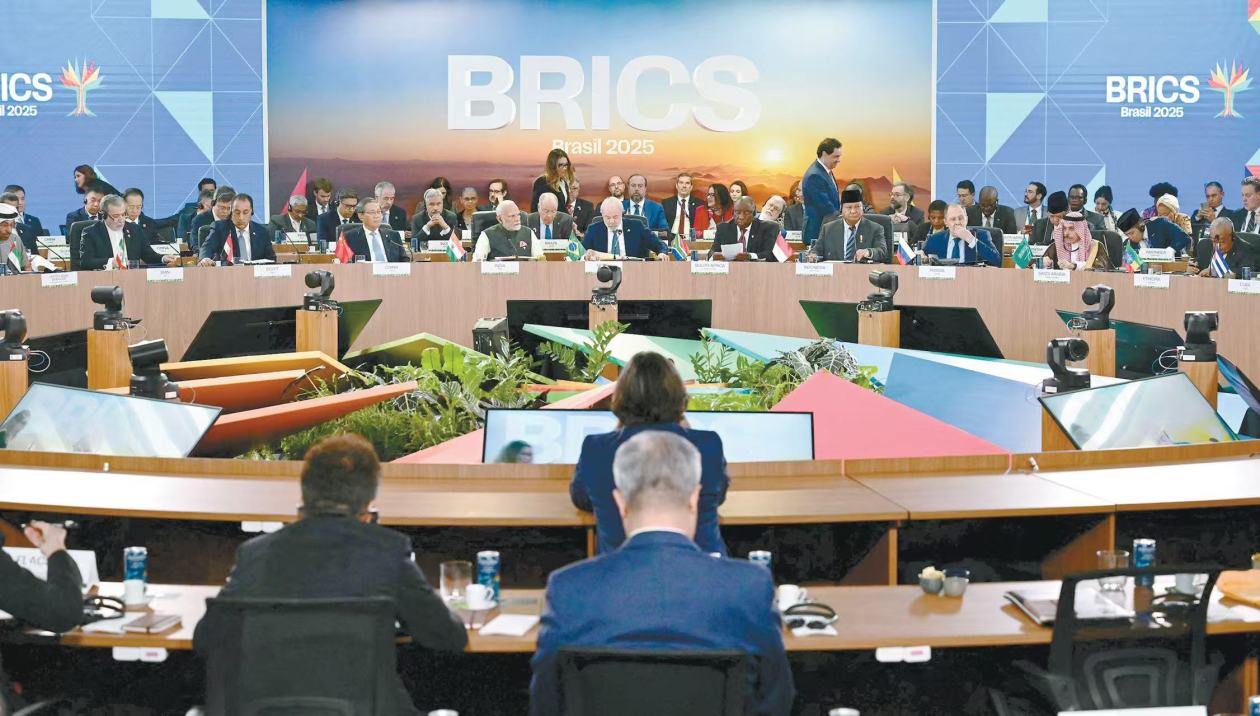
Group 1: Key Points from the BRICS Summit - The BRICS summit emphasizes the need for reform in global governance to adapt to 21st-century challenges, with a focus on multilateralism and cooperation among developing countries [1][3][5] - Brazilian President Lula criticized the rising military expenditures and the NATO decision to increase defense budgets, highlighting the need for investment in peace rather than war [3][4] - The summit resulted in the adoption of the "Rio de Janeiro Declaration," which reaffirms the commitment to multilateralism and addresses concerns over unilateral trade measures that could undermine global trade [5][6] Group 2: Initiatives and Proposals - China announced the establishment of a new productivity research center and a scholarship program aimed at fostering talent in industrial and communication sectors among BRICS nations [3][4] - Russian President Putin called for increased mutual investment among BRICS members and emphasized the importance of using local currencies for trade settlements [4][7] - The summit addressed various global issues, including artificial intelligence governance, climate change, and energy transition, showcasing a unified stance among BRICS countries [6][8] Group 3: Responses to External Pressures - The summit took place against a backdrop of U.S. tariffs and threats against countries aligning with BRICS, with officials asserting that BRICS is not an anti-U.S. coalition but a platform for cooperation [7][8] - The BRICS nations are exploring ways to reduce dependency on the U.S. dollar, with Brazil proposing a common currency for trade and investment among member states [7][8]
Jefferies:这大而美的法案 ——15 项宏观与能源转型影响
2025-07-07 15:44
Summary of Key Points from the Conference Call Industry or Company Involved - The discussion revolves around the implications of the One, Big, Beautiful Bill (OBBB) on macroeconomic factors and the energy transition in the United States. Core Points and Arguments Macro Implications 1. **Tax Regime Changes**: OBBB permanently extends lower individual tax rates from the 2017 Tax Cuts & Jobs Act (TCJA) and introduces significant business tax cuts, including immediate expensing of domestic R&D, which could benefit sectors like biotech, healthcare, and energy [2][3] 2. **Federal Debt Projections**: The Congressional Budget Office (CBO) projects federal debt to rise from 100% of GDP today to 118% by 2035, with annual deficits averaging 5.8% of GDP. The bill is estimated to add over $3 trillion to the deficit [3][4] 3. **Fiscal Cost Assessment**: The "current policy" baseline used by Senate Republicans may mask the true fiscal cost of OBBB, potentially leading to a smaller apparent deficit impact [4] 4. **Removal of Section 899**: The removal of Section 899, which proposed a retaliatory tax on passive income from US assets, is seen as a positive for US firms, potentially stabilizing investor sentiment [5] Social and Political Dynamics 5. **Populist Appeal vs. Social Spending Cuts**: While OBBB is marketed as a populist bill, critics argue that cuts to Medicaid and SNAP could harm working families, creating a tension that may benefit Democrats in future elections [10] 6. **Elon Musk's Political Influence**: Elon Musk is emerging as a disruptive political force, potentially challenging GOP senators who support OBBB and advocating for a new political party [11] Medicaid and State Budget Implications 7. **Medicaid Cuts**: OBBB includes $930 billion in cuts to Medicaid, Medicare, and the Affordable Care Act, which could restrict states' budget flexibility and force them to cut services or raise taxes [12] Energy Transition Implications 8. **Differentiation in Energy Tax Credits**: The bill treats different energy generation sources differently regarding tax credits, with nuclear and geothermal projects receiving favorable treatment compared to wind and solar [15] 9. **Foreign Entity of Concern (FEOC) Rules**: New clean generation projects must comply with FEOC rules to qualify for tax credits, aiming to reduce reliance on Chinese goods in the clean energy supply chain [17] 10. **Support for Carbon Management**: The 45Q tax credit for carbon capture remains intact, which is seen as a positive for carbon capture and removal projects [18] 11. **Permitting Challenges**: The removal of permitting changes from OBBB highlights ongoing bottlenecks in the energy transition process, with expectations for a standalone bill to address these issues [19] 12. **Consumer Spending on Clean Energy**: The withdrawal of consumer-facing credits may challenge retail spending in clean energy investments, particularly in the electric vehicle market [20] Corporate Tax Changes 13. **Lower Corporate Alternative Minimum Tax**: The final version of OBBB includes exceptions for domestic oil and gas companies regarding the 15% tax floor introduced by Biden's IRA [21] Other Important but Overlooked Content - The bill's provisions for student loan repayment and immigration changes could reshape labor dynamics and educational enrollment, potentially impacting the workforce in the long term [14] This summary encapsulates the key points discussed in the conference call regarding the implications of the OBBB on various sectors and the broader economic landscape.