人机交互

Search documents
手机厂商纷纷押注新赛道 竞逐人机交互下半场
Zheng Quan Shi Bao Wang· 2025-08-25 23:12
Core Viewpoint - The mobile industry is increasingly investing in mixed reality (MR) and augmented reality (AR) technologies, reflecting a strategic shift to explore new opportunities in human-computer interaction, driven by growth anxieties in the traditional smartphone market [1] Group 1: Industry Developments - Following Apple's launch of its MR headset, companies like Vivo and Honor are entering the MR space, while Xiaomi has recently introduced its first AI glasses [1] - Huawei and OPPO have also ventured into AR and AI glasses, indicating a broader trend among smartphone manufacturers to diversify their product offerings [1] Group 2: Market Challenges - Apple's initial MR headset faced poor sales and has since been discontinued, highlighting potential market challenges for new entrants [1] - Xiaomi's AI glasses experienced a wave of returns, suggesting consumer hesitance or dissatisfaction with new technology [1] Group 3: Strategic Implications - The push into MR and AR technologies by these companies is seen as a proactive measure to capitalize on future human-computer interaction opportunities, rather than a mere reaction to current market conditions [1] - This trend also reflects the overall anxiety within the industry regarding growth prospects in the traditional smartphone segment [1]


手机厂商涌入新赛道 竞逐人机交互下半场
Zheng Quan Shi Bao· 2025-08-25 18:16
Core Insights - The mixed reality (MR) market is still in its early stages, with various smartphone manufacturers like vivo, Honor, Xiaomi, Huawei, and OPPO entering the space, reflecting a broader industry anxiety about growth opportunities beyond traditional smartphone sales [1][2][4] - Vivo has launched its first MR headset, the vivo Vision Exploration Edition, which is currently the lightest MR headset on the market at 398g, but it has not yet disclosed pricing [2][3] - Apple's Vision Pro headset, launched in 2024, initially saw high demand but faced challenges due to high pricing and a lack of ecosystem, leading to disappointing sales figures of less than 500,000 units by the end of 2024 [2][3] Market Trends - The retail volume of China's consumer-grade XR devices, including VR, MR, and AR, reached 307,000 units in the first half of 2025, marking a 17.6% year-on-year increase, while the VR/MR segment saw a decline of 25.6% [3] - Analysts attribute the decline in VR device sales to a "content drought," with most products focusing on entertainment without compelling applications for broader audiences [3] - The global VR/MR shipment is expected to reach 5.6 million units by 2025, potentially growing to 14.4 million units by 2030 [4] Industry Dynamics - Smartphone manufacturers are leveraging their supply chain advantages and experience in hardware-software integration to enter the MR market, which is seen as a way to expand business boundaries amid a saturated smartphone market [4][5] - The demand for immersive and interactive experiences is increasing, with MR applications expected to grow in sectors like education, healthcare, entertainment, and industry [5] - The shift towards MR is viewed as a response to "second curve" anxiety, as hardware sales plateau, prompting companies to explore new growth avenues [5][6] Technological Challenges - Experts highlight several bottlenecks in the MR and robotics integration, including the need for high-performance sensors, real-time data processing, low-latency communication, and mature AI algorithms [6][7] - MR technology is seen as a crucial interface for robotic control, providing enhanced environmental perception and interaction capabilities [6][7] - Companies venturing into robotics from the MR space must overcome challenges related to supply chain reliability, real-world data collection, and system integration [7]
从实验室到竞技场:钢铁舞者的 “出道记”
Bei Ke Cai Jing· 2025-08-18 15:21
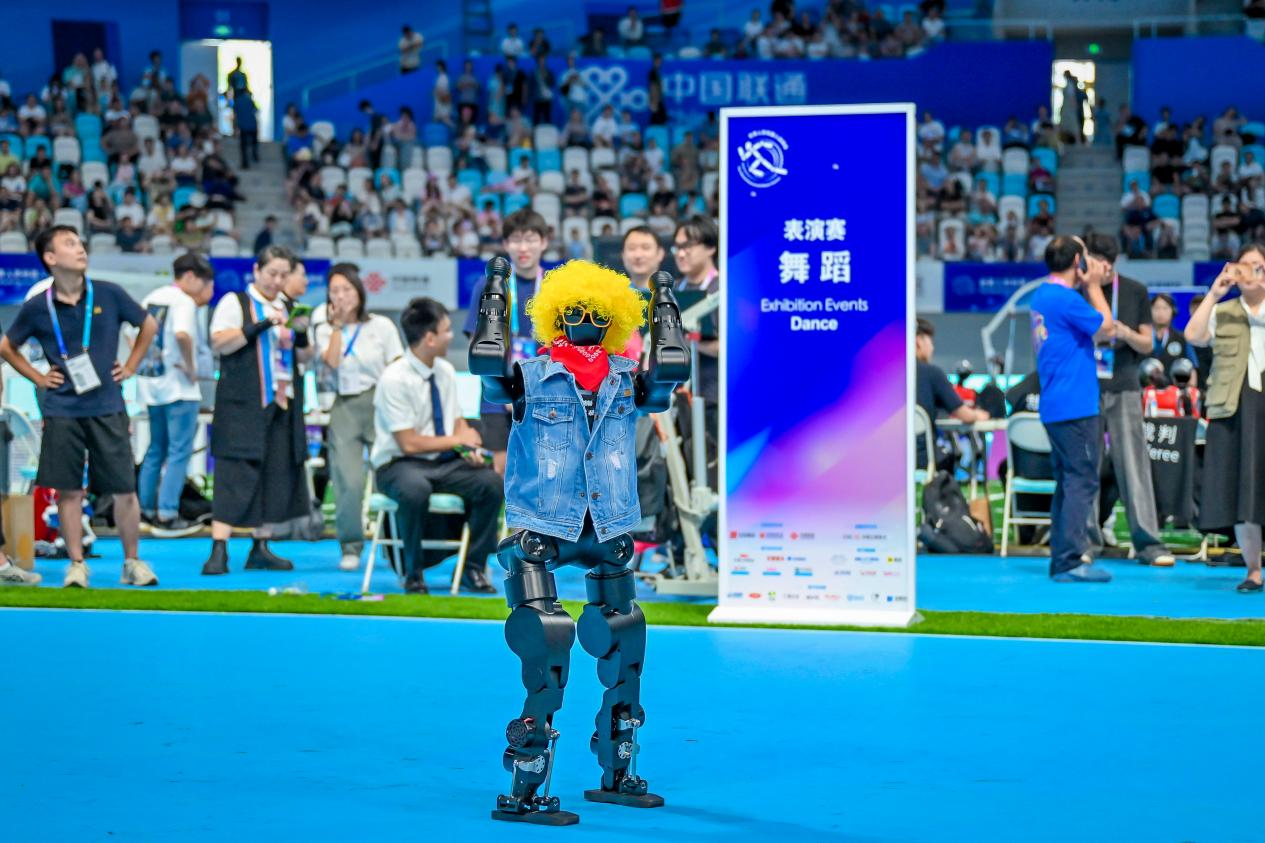
Core Points - The 2025 World Humanoid Robot Games showcased the integration of technology and art through performances by humanoid robots, highlighting their capabilities in dance and martial arts [2][4][22] - The event emphasized the challenges faced by participating teams, including adjustments to robots due to different performance environments and the need for real-time problem-solving [5][6][9][10] Group 1: Event Overview - The event featured 26 robot champions and concluded successfully with a performance set to the theme song "Light Years" [2] - The performances included group dances and martial arts, attracting significant attention and showcasing the artistic potential of robots [4][22] Group 2: Technical Challenges - Robots faced difficulties adapting to the soft flooring of the performance venue, requiring adjustments to their balance algorithms [5][6] - Transportation issues led to minor damages in some robots, necessitating on-site repairs and quick adaptations by engineering teams [9][10] Group 3: Performance Preparation - The preparation involved extensive training and motion capture to ensure robots could perform complex dance movements accurately [16] - The collaboration between human dancers and robots aimed to create a seamless integration of movements, enhancing the overall performance quality [15][16] Group 4: Scoring and Judging - A specialized scoring system was developed for robot performances, incorporating additional criteria for the complexity of movements [17][18] - Judges focused on artistic expression, movement clarity, and overall impact, with specific attention to the coordination among robots during group performances [20][21] Group 5: Future Implications - The event highlighted the potential for humanoid robots to enhance human-robot interaction, particularly in social and artistic contexts [24][25] - The successful integration of dance and technology in this event may pave the way for future advancements in robotics and their applications in everyday life [26]

在电竞生态与AI眼镜的双轨上加速跑
Zhong Guo Zheng Quan Bao· 2025-08-17 20:07
Core Viewpoint - The article highlights the significant growth potential of smart glasses as the next generation of consumer electronics, emphasizing the integration of AI with everyday life and the importance of understanding young consumers' needs [1][2][3]. Company Performance - In the first half of 2025, the company achieved a revenue of 1.388 billion yuan, representing a year-on-year growth of 13.19%, and a net profit of 14.3353 million yuan, reflecting a 69.31% increase [2]. - The company plans to double the number of its esports hotels, responding to the demand from young consumers for spaces to socialize and play games [2]. Market Expansion - The company aims to increase its overseas market sales to 60% within the next three to five years, with 40% of total sales already coming from international markets in 2024 [2]. - The company is entering the North American market, expecting to achieve annual sales growth of 100% in the coming years [2]. Industry Trends - The smart glasses industry is described as being in its early stages, with intense competition expected to reduce the number of brands significantly [3]. - The global smart glasses market is projected to reach a shipment volume of 14.518 million units by 2025, with AI glasses expected to see a 225.6% year-on-year growth [3][4]. Product Development - The company is focusing on creating a benchmark product that is lightweight and equipped with advanced AI capabilities for seamless daily interactions [4]. - The company has established a joint venture for the research and development of smart glasses, aiming to enhance optical performance and user comfort [5]. Future Outlook - The company is committed to maintaining high levels of R&D investment in smart glasses, recognizing the long-term nature of product development in this sector [5].
黄仁勋子女成长史
投资界· 2025-08-17 08:36
Core Viewpoint - The article discusses the career paths of Jensen Huang's children, Madison and Spencer, who have both risen to executive positions at NVIDIA, highlighting their unconventional journeys and the importance of their roles in the company's future directions in simulation and robotics [2][27]. Group 1: Madison Huang - Madison Huang, aged 34, is currently the Senior Director of the Omniverse software department at NVIDIA, with an annual income of $1.1 million for the fiscal year 2025 [4][15]. - She joined NVIDIA in 2020 as a marketing intern and has since held various positions, including Campaign Marketing Manager and Senior Product Marketing Manager, before becoming Senior Director in March 2025 [5][6]. - Madison's educational background includes a Bachelor's degree in Culinary Arts Management and an MBA from London Business School, showcasing a diverse skill set before her tenure at NVIDIA [7][12]. Group 2: Spencer Huang - Spencer Huang, aged 35, serves as the Robotics Product Line Manager at NVIDIA, focusing on AI models and simulation software for robotics, with a reported annual salary of $530,000 [15][17]. - He joined NVIDIA in 2022, initially as a product manager for the Isaac Sim Cloud team, and has a technical background that includes additional courses in human-computer interaction and an MBA from New York University [17][22]. - Prior to his role at NVIDIA, Spencer was a bar owner for eight years, where he established a successful cocktail bar that received international recognition [23][27].


混搭宇树机器人“跨界”参赛 奥运健儿亮相世界人形机器人运动会
Bei Ke Cai Jing· 2025-08-15 03:35
Group 1 - The 2025 World Humanoid Robot Games opened on August 14 in Beijing, featuring 280 teams from 16 countries, showcasing various robot teams alongside a unique team of former Olympic athletes [1][2] - The athletes, who have backgrounds in diverse sports such as taekwondo, boxing, volleyball, swimming, and synchronized swimming, formed the "Olympic Team" to compete alongside robots in the combat challenge [2][4] - The combat robots used in the event are the Unitree G1 robots, which demonstrated advanced capabilities in executing punches and side kicks, and quickly regaining balance after being struck [5][6] Group 2 - The market director of Yushu Technology highlighted the successful integration of software and hardware in their robots, which contributed to the robots' performance during the event [6] - Former boxing champion and coach expressed that the event evoked memories of past Olympic competitions, emphasizing the flexibility and competitiveness of the robots, and suggesting potential future applications in training and education for athletes [6][7] - The athletes noted that controlling robots in competition allows them to leverage their Olympic experience without the constraints of physical endurance, representing a fusion of technology and sports [7]


AI眼镜,可以戴上的“随身视界”
新华网财经· 2025-08-12 04:02
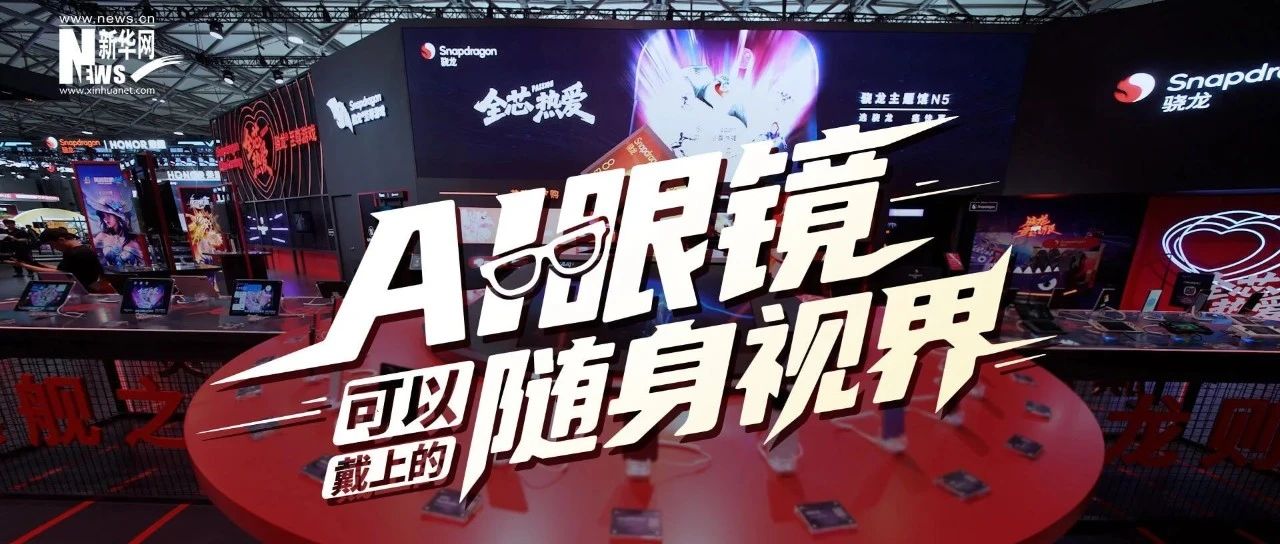
Core Viewpoint - The article discusses the emerging competition in the next-generation wearable device market, particularly focusing on AI glasses, which are expected to redefine human-computer interaction and become a new super terminal for users [2][10]. Group 1: Market Trends and Growth - The Chinese smart glasses market is projected to reach a shipment volume of 2.907 million units in 2023, representing a year-on-year growth of 121.1%, with AI glasses penetration expected to exceed 60% [7]. - The year 2025 is anticipated to be a pivotal year for smart glasses entering the mass market, with a focus on software and hardware integration and industry collaboration [14]. Group 2: Technological Innovations - The first-generation Snapdragon AR1+ platform, which is 20% smaller than its predecessor, enables smart glasses to run a 1 billion parameter language model independently, without relying on cloud or smartphone connectivity [10]. - AI glasses are being designed to provide various functionalities such as navigation, translation, and teleprompter capabilities, enhancing user experience through lightweight and comfortable designs [5][6]. Group 3: Industry Perspectives - Industry experts believe that AI glasses will serve as a key entry point for multi-modal AI, allowing for a seamless integration of AI technologies into consumer experiences [12]. - Companies like Xiaomi are focusing on creating aesthetically pleasing and functional smart glasses, aiming to leverage China's large optical eyewear consumer base to drive industry growth [11][14]. Group 4: Future Outlook - The integration of AI and XR technologies in smart glasses is expected to accelerate the arrival of the metaverse application era, marking a shift from smartphone-based mobile computing to XR glasses as the core computing platform [11][12]. - The development of a robust ecosystem around smart glasses, encompassing various applications and content, is seen as essential for the industry's future success [9][14].
2025机器人创投主题交流会举办 顶尖机器人创业者、投资人、产业代表云集
Zheng Quan Shi Bao Wang· 2025-08-10 16:09
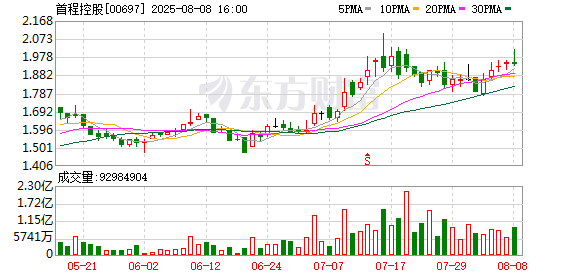
Group 1 - The 2025 World Robot Conference (WRC) is taking place, with a focus on the "robot mass production year" and discussions on core technology breakthroughs, application scenario expansion, and the evolution of the financing environment [4][6] - Shoucheng Holdings has established and manages the "Beijing Robot Industry Development Investment Fund" with a total scale of 10 billion RMB, investing in leading companies in the robotics sector [2][4] - The event aims to create a resource-rich ecosystem for the robotics industry, emphasizing the importance of collaboration among academia, industry, and government [6][7] Group 2 - Key figures in the robotics industry discussed the future direction of embodied intelligence, highlighting its complexity and the potential of combining VFM and LLM technologies for task planning [6][7] - The "2025 Most Investable Robot Companies TOP 20" and "2025 Most Growth-Potential Robot Companies TOP 30" lists were released, featuring companies like Beijing Humanoid Robot Innovation Center and Amiao Robotics [9] - The focus has shifted from team backgrounds to the ability to mass-produce and implement robotics solutions in real-world applications [8]
数字华夏携众产品亮相2025世界机器人大会
Zheng Quan Ri Bao Wang· 2025-08-10 09:01
Group 1 - The 2025 World Robot Conference (2025WRC) opened in Beijing on August 8, showcasing the latest advancements in robotics, including the digital Huaxia's robot family members [1] - Digital Huaxia, a technology company established just over a year ago, has made significant breakthroughs in human-robot interaction, with its robot Xiaolan capable of mimicking 22 human expressions and engaging in interactive games [2] - The company has introduced the latest iteration of Xiaolan, the Xiaolan S02, which addresses challenges in eye tracking and lip synchronization, marking a step towards more human-like interaction [2] Group 2 - Xiaolan has successfully served various sectors, including government offices, ICT manufacturers, and major banks, enhancing marketing effectiveness and reception efficiency through interactive experiences [3] - The IP robot Xingxingxia, the third humanoid robot from Digital Huaxia, has received over 100 orders and is designed for high aesthetics and emotional intelligence, adaptable to multiple scenarios [3] - Digital Huaxia envisions technology as a bridge to connect with human emotions, aiming to create intelligent systems that truly understand and respect human dignity [3]
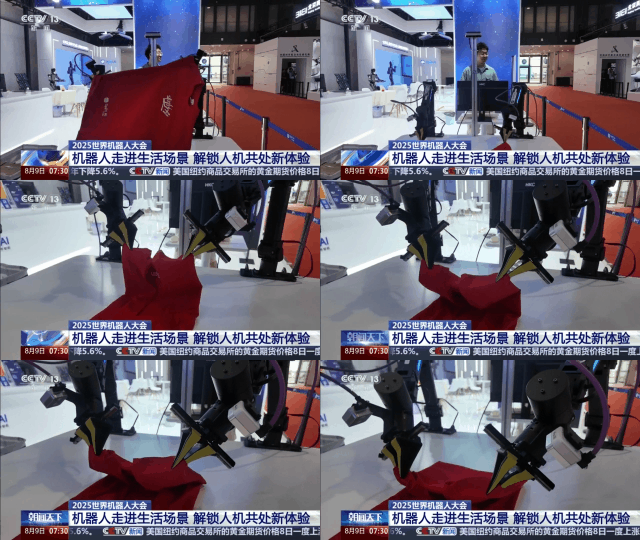
会叠衣做饭有温度 解锁“人机共处”新体验
Qi Lu Wan Bao· 2025-08-09 02:32
Core Insights - The 2025 World Robot Conference in Beijing showcased the evolving perception of robots, highlighting their practical applications in daily life beyond mere technical demonstrations [1] - Robots are increasingly being integrated into household tasks, such as folding clothes, demonstrating high efficiency and organization [2] - The design and functionality of robots have advanced, allowing them to provide companionship and emotional value, moving away from traditional "iron man" aesthetics [4] Industry Developments - Exhibitors presented robots capable of high-dynamic and delicate tasks, simulating human muscle responses, thus enhancing their utility as helpers [4] - Advanced sensors have been developed to accurately recognize user force and direction, enabling more natural human-robot interactions without reliance on remote controls [6] - Innovations in voice interaction technology have led to smoother human-robot communication experiences, marking a significant shift in interaction methods [9] Technological Breakthroughs - The conference highlighted breakthroughs in the robot industry chain, with robots now capable of performing high-risk tasks and achieving autonomous decision-making [10] - A humanoid robot capable of self-recharging was introduced, featuring 52 degrees of freedom and a dual-battery system that allows continuous operation during battery swaps [10] - A new industrial robot weighing 270 kilograms has achieved significant advancements in stability, trajectory precision, and reliability, filling a technological gap in the domestic market [12] Market Performance - Recent data indicates that in June 2025, China's industrial robot production reached 75,000 units, a year-on-year increase of 37.9%, while service robot production hit 1.479 million units, growing 18.3% year-on-year [15] - Cumulative production figures for the first half of 2025 show a total of 370,000 industrial robots and 8.824 million service robots, reflecting a robust growth trajectory in the industry [15]