
全球治理倡议

Search documents
坚定文化自信 建设文化强国丨提升中华文明传播力影响力
Zhong Yang Ji Wei Guo Jia Jian Wei Wang Zhan· 2026-01-08 23:51
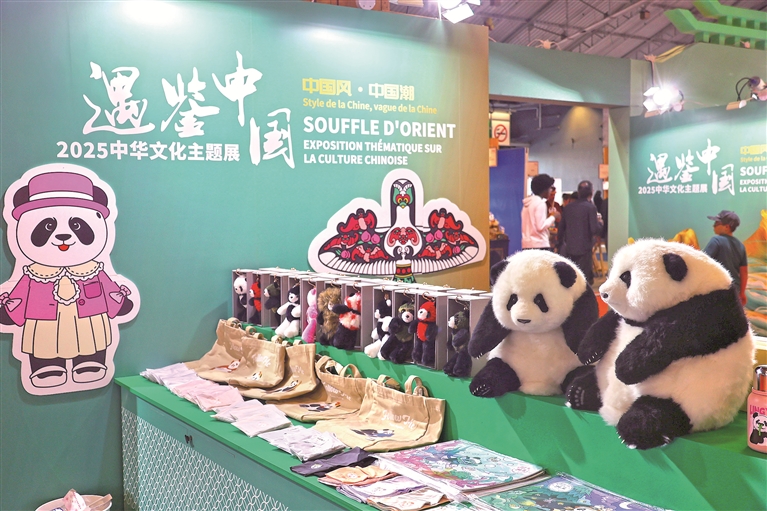
Group 1 - The "Encountering China" 2025 Chinese Culture Theme Exhibition is showcased at the Paris International Fair, emphasizing the importance of cultural strength in China's modernization efforts [2] - The Central Committee's suggestions for the 15th Five-Year Plan focus on enhancing the influence of Chinese civilization, reflecting the leadership's commitment to international communication [2][3] - The report from the 20th National Congress highlights the need to present a credible, lovable, and respectable image of China through storytelling rooted in its rich civilization [3][5] Group 2 - The historical continuity of Chinese civilization is crucial for effectively communicating China's past, present, and future to the world [3][4] - The integration of Marxism with over 5,000 years of Chinese civilization provides a profound cultural foundation for the socialist path with Chinese characteristics [4] - The emphasis on cultural exchange and mutual learning among civilizations is seen as a vital force for human progress and world peace [7][9] Group 3 - China's global initiatives, including the Global Development Initiative and Global Security Initiative, aim to address contemporary challenges while promoting traditional values of mutual benefit and inclusivity [6][8] - The promotion of cultural products, such as online literature and games, is driving international interest in Chinese culture, showcasing a blend of ancient and modern elements [11] - The establishment of various cultural alliances and the facilitation of cultural exchanges through events and festivals are enhancing people-to-people connections between China and other countries [10]

中国—非盟战略对话联合新闻公报
Ren Min Ri Bao· 2026-01-08 22:50
Group 1 - The core viewpoint of the article highlights the strengthening of cooperation between China and the African Union (AU) in various fields, including modernization and global governance, as well as China's zero-tariff measures for Africa [1][2] - Both parties emphasized the importance of upholding the legitimate rights and interests of the Global South and supporting each other in maintaining core interests and major concerns [1] - The AU reaffirmed its commitment to the One China principle, recognizing the People's Republic of China as the sole legitimate government representing all of China, and supporting China's efforts for national reunification [1] Group 2 - The dialogue included discussions on aligning China's 14th Five-Year Plan with the AU's Agenda 2063, focusing on effective implementation and mutual support for major initiatives [2] - Both sides agreed to enhance communication and coordination on significant initiatives, including China's Global Security Initiative and the AU's flagship projects like the African Continental Free Trade Area [2] - The parties reiterated their commitment to effectively implement signed cooperation agreements and memorandums of understanding, aiming to better benefit the peoples of China and Africa [2]
2026年“中非人文交流年”开幕式在非盟总部举行
Xin Lang Cai Jing· 2026-01-08 20:05
Core Viewpoint - The opening ceremony of the 2026 "China-Africa Cultural Exchange Year" emphasizes the importance of cultural cooperation and mutual understanding between China and Africa, as articulated by Chinese Foreign Minister Wang Yi and supported by various African leaders [1][2][3]. Group 1: Significance of the Event - The 2026 "China-Africa Cultural Exchange Year" is a significant initiative agreed upon by Chinese President Xi Jinping and African leaders, aimed at enhancing cultural exchanges and cooperation [1]. - Wang Yi highlighted the historical ties and mutual support between China and Africa, emphasizing that people-to-people exchanges are the foundation of their friendship [2]. Group 2: Current Global Context - Wang Yi noted that the world is undergoing unprecedented changes, with the Global South, represented by China and Africa, rising in prominence, while also facing challenges such as power politics and violations of international norms [3]. - The need for solidarity and cooperation between China and Africa is more critical than ever, as both regions seek development and modernization [3]. Group 3: Future Cooperation - Both sides expressed a commitment to deepen cooperation in various fields, including culture, education, tourism, and youth exchanges, to further advance China-Africa relations [3][4]. - African leaders praised China's support and expressed a desire to collaborate within the framework of the China-Africa Cooperation Forum and the Belt and Road Initiative [4].
商务部关于印发《企业境外履行社会责任工作指引》的通知
Shang Wu Bu Wang Zhan· 2026-01-06 16:51
Core Viewpoint - The Ministry of Commerce has issued guidelines for Chinese enterprises to fulfill their social responsibilities abroad, aiming to enhance sustainable development and contribute to the economic and social development of host countries [1][3]. Group 1: General Principles - The guidelines are designed to align with the concept of building a community with a shared future for mankind and to implement various global initiatives [3]. - Enterprises are encouraged to integrate social responsibility into their international business strategies and governance mechanisms [4]. - Compliance with both Chinese and host country laws regarding social responsibility is emphasized [5]. Group 2: Supporting Economic Development in Host Countries - Enterprises should adapt their operations to local conditions and deepen cooperation in capital, industry, and technology [9]. - The guidelines advocate for investment in local industries to support economic growth and transformation [9][10]. - Companies are encouraged to enhance infrastructure quality and connectivity in host countries [11]. Group 3: Improving Local Livelihoods and Social Harmony - Enhancing local welfare is a key focus, with an emphasis on small-scale projects that support poverty alleviation [19]. - Companies must adhere to local labor laws and ensure fair treatment of employees [20][21]. - Establishing effective communication with local communities is crucial for fostering long-term relationships [26]. Group 4: Environmental Protection and Green Transition - Companies are required to comply with local environmental laws and integrate green practices into their operations [30]. - The guidelines promote participation in global climate governance and the development of low-carbon solutions [30][34]. - Enterprises should conduct environmental impact assessments before initiating projects [35]. Group 5: Promoting Healthy Industry Development - Establishing compliance management systems and adhering to legal and ethical standards is essential [39]. - Companies are encouraged to prioritize quality management and innovation in their products and services [40]. - Fair competition and collaboration within the industry are emphasized to maintain a healthy business environment [42]. Group 6: Enhancing Capacity for Social Responsibility - Companies should develop a robust social responsibility management system and integrate it with their business strategies [51]. - Regular reporting and transparency in social responsibility practices are encouraged [58]. - Engaging with local governments and communities to communicate contributions to sustainable development is vital [59].
现代院年度战略报告:中国之治为动荡世界注入更多稳定性
Xin Lang Cai Jing· 2026-01-06 11:13
Group 1 - The report highlights a profound shift in the international order by 2025, with increasing deficits in peace, development, security, and governance, necessitating new ideas and solutions for global governance [1] - China is positioned as a stabilizing force in the world economy amidst turbulence, emphasizing its commitment to multilateralism and the principles of the UN Charter [1] - The world economy is entering an unusual new cycle characterized by both fragility and resilience, with the future dependent on strategic choices made by countries as past technological revolutions and industrial changes lose their benefits [1] Group 2 - The report predicts significant changes in the U.S. under a potential second term for Trump, with intensified political polarization and potential increases in social and political violence affecting domestic and foreign policy effectiveness [2] - In 2026, China will focus on high-quality development and high-level security, continuing proactive diplomacy to maintain regional stability and lead global governance reforms [2] - The report notes an increase in global geopolitical competition, with middle powers like Turkey, Brazil, and South Africa playing a more prominent role in conflict mediation and climate governance, accelerating the process of global multipolarity [2]
“为构建更加公正合理的国际秩序指明方向”
Ren Min Ri Bao· 2026-01-06 02:01
Core Viewpoint - The global governance initiative proposed by President Xi Jinping aims to address the inequalities and injustices in international relations, providing a Chinese solution for a more just and reasonable international order [3][4]. Group 1: Global Governance Initiative - The initiative emphasizes the importance of respecting sovereignty and practicing multilateralism, advocating for equal participation of all countries in international affairs [4]. - It aims to bridge the global governance deficit and address global development challenges through dialogue and cooperation based on mutual respect and equality [3][5]. Group 2: China's Role and Contributions - China has actively promoted cooperation under international multilateral mechanisms such as the Shanghai Cooperation Organization and BRICS, contributing to global governance and peace development [4]. - The Belt and Road Initiative (BRI) is highlighted as a platform for cooperation that respects the resource endowments and development plans of global South countries, promoting mutual benefits and common development [4][5]. Group 3: Iraq's Economic Development - Iraq faces numerous challenges in its socio-economic development, but it has signed several cooperation agreements with China under the BRI framework to enhance practical cooperation in economic and livelihood sectors [5]. - The cooperation between Iraq and China is seen as a way to strengthen friendly relations and address global challenges collectively, aiming for a more harmonious development future [5].
中国和巴基斯坦第七次外长战略对话联合新闻公报
Xin Hua She· 2026-01-05 04:18
Core Points - The seventh round of China-Pakistan Foreign Ministers' Strategic Dialogue was held from January 3 to 5, 2026, focusing on enhancing bilateral relations and cooperation across various fields [2] - Both sides agreed to strengthen strategic communication and deepen mutual trust, emphasizing the importance of their partnership for regional peace and development [2][3] - The dialogue marked the initiation of activities to commemorate the 75th anniversary of diplomatic relations between China and Pakistan, aiming to solidify friendship and explore new cooperation areas [2] Bilateral Relations - China and Pakistan reaffirmed their status as all-weather strategic partners, with a commitment to mutual support on core interests [3] - Pakistan expressed appreciation for China's development achievements under President Xi Jinping and acknowledged the "Fourteenth Five-Year Plan" and the upcoming "Fifteenth Five-Year Plan" [3] - Both countries reiterated their support for each other's sovereignty and territorial integrity, with Pakistan firmly backing China's stance on Taiwan and other sensitive issues [3] Security Cooperation - Both nations emphasized a "zero tolerance" approach to terrorism and agreed to enhance counter-terrorism cooperation to ensure the safety of Chinese personnel and projects in Pakistan [4] - They called for international cooperation against terrorism and opposed double standards in counter-terrorism efforts [4] Economic Collaboration - The dialogue included discussions on the China-Pakistan Economic Corridor (CPEC), with plans to upgrade the CPEC to a "2.0 version" focusing on industries, agriculture, and mining [4] - Both sides agreed to deepen cooperation in trade, investment, information technology, and cultural exchanges, leveraging the Khunjerab Pass for enhanced economic ties [4] Space Cooperation - The two countries expressed satisfaction with the expanding cooperation in space, with hopes for Pakistani astronauts to visit the Chinese space station [5] Regional Stability - Both sides reaffirmed the importance of maintaining peace and stability in South Asia and emphasized dialogue to resolve disputes [6] - They discussed the situation in Jammu and Kashmir, with China reiterating its stance on the historical nature of the issue [6] Global Governance - China and Pakistan committed to promoting a fair global governance system and supporting multilateralism, opposing hegemonism and unilateral actions [7] - They agreed to maintain close communication on Afghanistan, encouraging an inclusive government and countering terrorism [7] Middle East Peace Efforts - Both nations called for an unconditional and comprehensive ceasefire in Gaza and supported the establishment of an independent Palestinian state [8] - They expressed concerns over the situation in the West Bank and committed to working with the international community for peace in the Middle East [8]
阔步而行的中国为2026的世界注入信心
Xin Lang Cai Jing· 2026-01-05 02:16
Group 1 - China's economy is projected to grow at around 5% in 2026, maintaining its position among the world's major economies, with a total economic output expected to reach 140 trillion yuan, contributing approximately 30% to global economic growth [1][2] - The World Intellectual Property Organization reported that China's innovation index has entered the global top ten for the first time, indicating a significant advancement in new productive forces and growth advantages [2] - China is committed to enhancing global governance and promoting peace, responding to the increasing frequency of local wars and cross-border conflicts, and has received support from over 150 countries and international organizations for its global governance initiatives [4][5] Group 2 - China is actively promoting high-level openness in response to unilateralism and protectionism, with the Hainan Free Trade Port set to officially launch by the end of 2025, providing a stable platform for international economic cooperation [5] - The upcoming year marks the beginning of China's 15th Five-Year Plan, with a focus on high-quality development, deepening reforms, and achieving common prosperity, as international institutions have raised their growth forecasts for China [7] - China will host significant diplomatic events in 2026, including the 70th anniversary of diplomatic relations with Africa and the second China-Arab States Summit, reinforcing its commitment to global peace and development [7]

“为完善全球治理提供行动路径”
Ren Min Ri Bao· 2026-01-04 23:38
Core Viewpoint - The global governance initiative emphasizes the construction of a more just and reasonable global governance system, providing a new path for the world to overcome turmoil [2][3] Group 1: Global Governance Initiative - The initiative is based on the principles of maintaining the UN Charter, advocating for sovereign equality, adherence to international law, and promoting multilateralism [2] - It aims to enhance the representation and voice of developing countries in global governance, addressing systemic marginalization issues they face [2] - The initiative supports the UN as the main platform for countries to coordinate actions and respond to challenges collectively [2] Group 2: China's Role in Global Development - China advocates for international development cooperation through its global development initiative, promoting prosperity through development, security through dialogue, and mutual understanding through cultural exchange [3] - The Belt and Road Initiative has significantly improved infrastructure and trade conditions in participating countries, helping them better integrate into global supply chains [3] - China's commitment to high-level opening-up and multilateralism creates conditions for inclusive and resilient economic globalization, benefiting trade partners [3] Group 3: ASEAN and China Cooperation - The global governance initiative aligns with ASEAN's vision of sovereign equality, multilateralism, and inclusive development, facilitating deeper strategic partnerships between ASEAN and China [3] - Strengthening cooperation between ASEAN and China is seen as beneficial for regional prosperity and stability, serving as a model for implementing the global governance initiative and enhancing cooperation among developing countries [3]
2025年宣传思想文化事业谱写时代新篇章
Zhong Yang Ji Wei Guo Jia Jian Wei Wang Zhan· 2026-01-04 14:49
Group 1 - The year 2025 marks the conclusion of the "14th Five-Year Plan" and the planning of the "15th Five-Year Plan," as well as the 80th anniversary of the victory in the Chinese People's War of Resistance Against Japanese Aggression and the World Anti-Fascist War [1] - Under the guidance of Xi Jinping's cultural thought, the propaganda and ideological cultural front has made significant progress in promoting contemporary Chinese Marxism and deepening its understanding among the public [2][4] - The publication of important works such as "Xi Jinping's Economic Writings" and "Xi Jinping's Thoughts on the Rule of Law" has contributed to a more complete theoretical framework [4] Group 2 - The commemoration of the 80th anniversary of the victory in the Anti-Japanese War has been a focal point for promoting patriotism and national spirit, with significant media coverage and public engagement [7][8] - The use of advanced broadcasting technology during the commemoration event reached an audience of 4.3 billion, showcasing the event's impact [7] - Various media outlets have produced over 1 million reports related to the anniversary, generating over 766 billion online clicks [15] Group 3 - The promotion of cultural heritage and the protection of cultural relics have been emphasized, with significant achievements in preserving and recognizing cultural sites [31][32] - The integration of culture into economic development has been highlighted, with cultural products and events driving economic growth and consumer engagement [33][34][35] - The rise of cultural participation among the public has been noted, with millions engaging in cultural activities and creative expressions [37][38] Group 4 - The promotion of Chinese cultural values and narratives on the global stage has been a priority, with initiatives aimed at enhancing China's soft power and international image [39][40][41] - The response to international criticisms and the promotion of China's perspectives on global governance have been actively pursued [42] - The success of cultural IPs and media productions has demonstrated the increasing global influence of Chinese culture [43][44]