农业现代化

Search documents
新华社权威快报|向新向智!2025年我国农业现代化水平持续提升
Xin Hua She· 2026-01-22 02:20
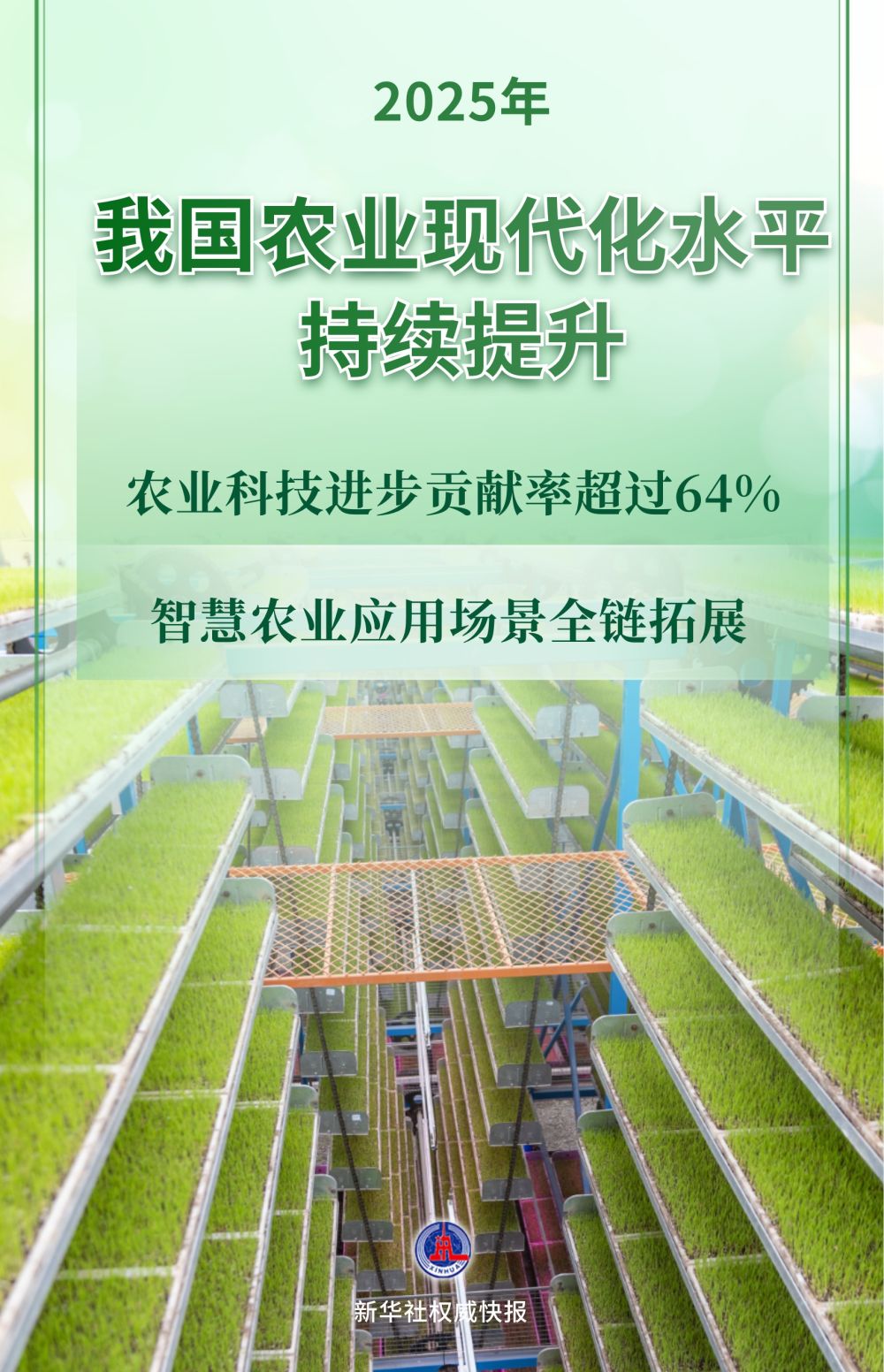
2025年 我国农业现代化水平 指数量 农业科技进步贡献率超过64% 海报制作:韩佳诺 新华社国内部出品 农业农村部1月22日在国新办举行的新闻发布会上发布信息显示,2025年我国农业现代化水平持续提升,农业科技进步贡献率超过64%。 2025年我国支持新建和改造提升高标准农田7568万亩,累计建成超10亿亩。种业振兴行动扎实推进,农机装备研发应用加快发展,智慧农业应 用场景全链拓展,农业绿色转型步伐加快。 记者:古一平、韩佳诺 智慧农业应用场景全链拓展 ...

福建三明:科技联农,绘就山区农业现代化新图景
Zhong Guo Xin Wen Wang· 2026-01-21 08:15
Core Viewpoint - The agricultural sector in Sanming City is experiencing significant growth through innovative practices and collaborations, particularly in the cultivation of snow lotus mushrooms, which are expected to yield substantial market potential and improve soil quality [1][2]. Group 1: Agricultural Innovations - The snow lotus mushroom cultivation utilizes waste from winter pear tree pruning, with 20 acres successfully planted and the first harvest already completed [1]. - Sanming City has established a modern seed industry expert team, including 13 academicians, to ensure alignment between research and production needs [2]. - The city promotes over 30 modern agricultural technology demonstration bases annually, covering various sectors such as hybrid rice seed production and edible mushroom cultivation [2]. Group 2: Economic Growth Projections - The total output value of agriculture, forestry, animal husbandry, and fishery in Sanming City is projected to reach 64.65 billion yuan by 2025, with an average annual growth rate of over 4.5% during the 14th Five-Year Plan period [1]. - The city has established partnerships with institutions like Fujian Agriculture and Forestry University and Nanjing Agricultural University to focus on efficient planting and deep processing of agricultural products [1]. Group 3: Technical Support and Training - Sanming City has promoted 201 "Five New" technologies and provided agricultural production technical guidance to 7,000 individuals [3]. - Local agricultural technicians are specialized in various sectors, with over 120 focusing on hybrid rice seed production and more than 80 on tea and edible mushroom industries [3].
2025年中国固定资产投资表现与结构特征分析
Sou Hu Cai Jing· 2026-01-20 09:03
值得关注的是,高技术产业成为投资亮点,信息服务业投资激增28.4%,航空、航天器及设备制造业投资也实现16.9%的增长。这些数据充分体现 了科技创新在推动经济增长中的重要作用,也为未来发展注入了新的动能。 从月度数据来看,12月份固定资产投资(不含农户)环比下降1.13%,反映出年末投资活动存在一定的季节性波动。这种现象可能与资金结算、 项目收尾等因素有关,也反映出当前经济环境下投资决策的谨慎态度。 综合来看,2025年中国固定资产投资呈现出"总量承压、结构优化"的特点。传统领域面临深度调整,而新兴领域则表现出强劲的发展势头。这种 结构性分化为政策制定者提供了重要参考,未来需进一步关注传统与新兴之间的平衡,以推动投资结构的持续优化。 从主要投资领域来看,基础设施投资同比下降2.2%,反映出公共项目推进节奏有所放缓;而制造业投资则实现0.6%的增长,显示出产业升级的持 续动力。相比之下,房地产开发投资大幅下滑17.2%,成为影响整体投资的重要因素。与此同时,商品房市场同样承压,新建商品房销售面积减 少8.7%,销售额下降12.6%。 从三次产业的角度看,第一产业投资增长2.3%,第二产业投资增长2.5%,第三产 ...

【渭南】冬日大棚孕育增收希望
Shan Xi Ri Bao· 2026-01-19 23:17
Core Viewpoint - The integration of smart agricultural technologies and modern farming practices is transforming traditional agricultural methods, leading to increased productivity and income for farmers in the region [1][2][3]. Group 1: Smart Agricultural Practices - The use of self-developed inflatable film in greenhouses significantly improves winter insulation, allowing for the successful cultivation of cherry tomatoes that are shipped to major cities [1]. - The implementation of an internal environment control system enables intelligent management of humidity, light, and carbon dioxide levels, enhancing crop growth [1]. - Farmers are utilizing mobile technology to remotely control greenhouse equipment, optimizing growing conditions and increasing yields [2]. Group 2: Collaborative Farming Models - The "Party Branch + Cooperative + Farmer" model in the region promotes collective farming efforts, improving technical support and market access for farmers [2]. - The introduction of multi-crop rotation systems, such as "Western Sweet Melon + Peach + Cherry," allows for year-round production and benefits over 200 local farmers [2]. Group 3: Market Expansion and Product Diversification - The rise of e-commerce and live streaming has expanded the market reach for local products like the fragrant tree shoots, with daily online orders exceeding a hundred [3]. - Plans to develop new products such as fragrant tree sauce and tea are underway, further diversifying the product offerings [3]. Group 4: Agricultural Modernization and Policy Support - The implementation of the "Billion-Level Facility Agriculture" project has led to the establishment of modern agricultural facilities, including seedling centers and cold storage [3]. - The region's agricultural transformation is characterized by a shift from scale expansion to quality enhancement, contributing to high-quality agricultural development [3].
打造一批农业产业发展高地
Ren Min Ri Bao· 2026-01-19 08:29
Core Viewpoint - The article discusses the recently issued "National Agricultural Modernization Demonstration Zone Creation Work Plan" by the Ministry of Agriculture and Rural Affairs, the Ministry of Finance, and the National Development and Reform Commission, aiming to establish a model for agricultural modernization in China by 2030 [1]. Group 1: Creation Goals - The plan aims to create no more than 500 recognized demonstration zones by 2030 [1]. - It focuses on six types of demonstration zones: grain industry, aquaculture, advantageous specialty industries, smart agriculture, urban agriculture, and dry farming [1]. - The goal is for qualified demonstration zones to achieve basic agricultural modernization ahead of others, establishing a phased construction pattern [1]. Group 2: Creation Tasks - The plan requires clear positioning, application standards, and creation goals for each type of demonstration zone [1]. - It includes "regular tasks + special tasks" to categorize and advance the creation of demonstration zones [1]. - Counties applying for recognition must select a type that meets the application standards and enhance organizational leadership, innovate systems, strengthen resource support, and optimize guidance services [1].
订单直签327辆!江淮1卡2026款收割机运输车发布即热销
第一商用车网· 2026-01-19 07:02
Core Viewpoint - Jianghuai Commercial Vehicles aims to establish the Jianghuai 1 Card as a leading brand in high-end intelligent trucks, aspiring to become a global leader in the industry [2]. Group 1: Event Highlights - The Jianghuai Commercial Vehicles Central Plains User Conference and Harvester Industry Customer Annual Meeting was successfully held on January 16, 2026, in Zhumadian, Henan, gathering over 1,000 attendees to promote rural revitalization and modern agricultural development [3]. - At the event, the 2026 models of Jianghuai 1 Card Junling harvesters were launched, including models A9, V7, Q8, and V8, featuring significant technical upgrades tailored for harvesting scenarios, resulting in 327 orders being placed on-site [5]. Group 2: Industry Insights - Agriculture is fundamental to the nation, and the evolution of the "wheat customer" group reflects the modernization of Chinese agriculture, emphasizing the importance of agricultural machinery transportation in ensuring food security [7]. - Jianghuai Commercial Vehicles has been committed to serving the agricultural sector for 19 years, providing comprehensive service support to over 30,000 harvester users, thus contributing significantly to the mechanization of agriculture and stable grain production [8]. Group 3: User-Centric Innovations - Jianghuai 1 Card has transitioned from being a mere product provider to a partner in wealth creation for wheat customers, developing the "Wheat Customer No. 1" series of specialized transport vehicles that address core user needs such as efficiency, load capacity, and ease of use [11]. - The company has introduced the "Smart Chain • Co-creation" user lifecycle solution, establishing a nationwide service network with over 1,600 service points, and collaborating with financial institutions to lower vehicle purchase barriers for users [12]. Group 4: Customer Testimonials - Users have expressed satisfaction with the Jianghuai 1 Card Junling, highlighting features such as spacious cabins and customized cargo boxes that enhance operational efficiency during the harvest season [13]. - Positive experiences with the company's 24/7 service support have reinforced user confidence, allowing them to focus on their harvesting tasks without worry [14]. Group 5: Future Aspirations - Jianghuai 1 Card is committed to continuing its partnership with users as an "efficient wealth creation partner," leveraging technological innovation to empower rural revitalization and contribute to the agricultural sector's growth [14].


三部门发文重点建设6类国家农业现代化示范区 打造一批农业产业发展高地
Ren Min Ri Bao· 2026-01-18 22:11
Core Viewpoint - The Ministry of Agriculture and Rural Affairs, the Ministry of Finance, and the National Development and Reform Commission have issued a work plan for the creation of national agricultural modernization demonstration zones, aiming to provide practical models for achieving agricultural modernization in China by 2030 [1]. Group 1: Creation Goals - The plan aims to establish no more than 500 recognized demonstration zones by 2030, focusing on six types: grain industry, livestock farming, advantageous specialty industries, smart agriculture, urban agriculture, and dry farming [1]. - The goal is to enable qualified demonstration zones to achieve agricultural modernization ahead of others, creating a phased construction pattern with key breakthroughs [1]. Group 2: Creation Tasks - The plan requires clear positioning, application standards, and creation goals for each type of demonstration zone, incorporating both "regular tasks + special tasks" to advance the creation work [1]. - Counties applying for demonstration zones must select a type that meets the application standards and strengthen organizational leadership, innovate systems and mechanisms, ensure resource support, optimize guidance services, and explore diverse development models [1].
一颗小小“橘灯笼” 改变数百万果农命运
Xin Lang Cai Jing· 2026-01-18 19:30
Core Insights - The article highlights the innovative contributions of Hunan Orange Friends Biotechnology Co., founded by Mo Bocheng, who developed the "Orange Lantern," a pest control device that has significantly reduced economic losses for farmers across China [1][2]. Group 1: Company Overview - Hunan Orange Friends Biotechnology Co. was established in 2017, focusing on the industrialization of pest control technology [2]. - The company has successfully developed the "Orange Lantern," a non-toxic pest trap that mimics fruit to attract and capture pests, helping farmers reduce pest-related economic losses by over 3 billion yuan by 2025 [2]. Group 2: Innovation and Impact - The "Orange Lantern" is designed to be effective for up to one year outdoors, addressing challenges such as maintaining adhesive properties and controlling the volatility of attractants [2]. - The product has been deployed in hundreds of counties across China, benefiting millions of farmers and transforming pest management practices in agriculture [2]. Group 3: Future Directions - The company is pursuing a "dual-wheel drive" business model, focusing on both plant protection technologies and the development of smart agriculture systems, which include modules for pest monitoring, soil moisture, and intelligent irrigation [3]. - Mo Bocheng's vision is to simplify farming and increase farmers' incomes, reflecting a commitment to agricultural modernization and sustainability [3].
传统果品在“养生赛道”闯出“百亿身价”
Xin Hua She· 2026-01-18 09:44
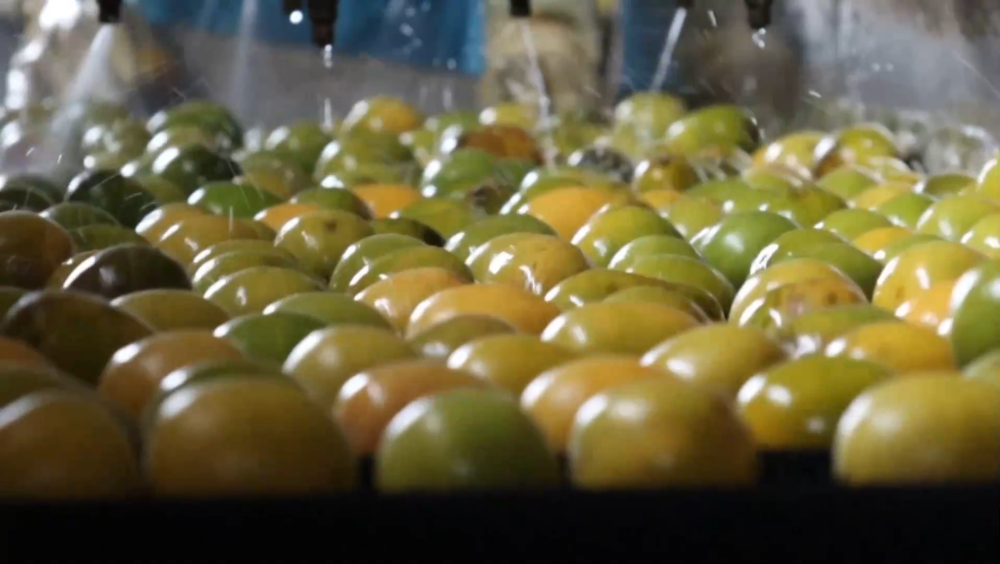
Core Insights - The article highlights the transformation of traditional agricultural products, specifically Yongfu Luo Han Guo and Yangshuo Kumquat, into high-value goods amidst the health consumption upgrade trend in China [1][4] - The full industrial chain for these products has been established, encompassing standardized planting, refined processing, and brand marketing [1] Industry Overview - The total industrial output value for Yangshuo Kumquat and Guilin Luo Han Guo has reached 5 billion and 15 billion respectively, creating employment for over 200,000 people and significantly contributing to rural revitalization and high-quality agricultural development [4] - Under the guidance of the "14th Five-Year Plan," the health tea industry in Guilin is set to enhance its product system and expand the full-chain pathway from "branch to table," converting ecological value into economic benefits [8] Economic Impact - The development of these industries not only accelerates high-quality agricultural growth but also provides a solid industrial foundation and abundant internal motivation for rural revitalization, contributing to a new era of strong agriculture, beautiful countryside, and prosperous farmers [8]
小城大市|传统果品在“养生赛道”闯出“百亿身价”
Xin Hua Wang· 2026-01-18 08:11
Core Viewpoint - The article highlights the transformation of traditional agricultural products, specifically Yongfu Luo Han Guo and Yangshuo Kumquat, into high-value goods, driven by the health consumption upgrade trend, thereby supporting rural revitalization and industrial upgrading [1][3]. Group 1: Industry Overview - The full industrial chain output value of Yangshuo Kumquat and Guilin Luo Han Guo has reached 5 billion and 15 billion respectively, creating employment for over 200,000 people and significantly promoting rural revitalization and high-quality agricultural development [3]. - Under the guidance of the "14th Five-Year Plan" to modernize agriculture, the health tea industry in Guilin is set to enhance its product system and expand the full-chain pathway of specialty fruit products from "branch to table" [4]. Group 2: Economic Impact - The transformation of ecological value into economic benefits allows farmers to share in the dividends of industrial development, empowering them through culture and market efficiency [4]. - This development not only accelerates high-quality growth in traditional agriculture but also provides a solid industrial foundation and abundant internal motivation for rural revitalization, contributing to a new era of strong agriculture, beautiful countryside, and prosperous farmers [4].