区域经济一体化

Search documents
2025年APEC工商领导人峰会开幕
Yang Shi Xin Wen· 2025-10-29 00:55
Core Points - The 2025 APEC Business Leaders Summit opened in Gyeongju, South Korea on October 29 [1] - The theme of this summit is "Bridge, Business, Beyond," featuring 20 thematic meetings focused on regional economic integration, artificial intelligence and digital transformation, and sustainability [1] - Over 1,700 participants are expected to attend the summit [1] Industry Overview - APEC, established in 1989, currently has 21 members and is recognized as the highest-level and most influential economic cooperation mechanism in the Asia-Pacific region [1]
中国—东盟自贸区迈入3.0时代
21世纪经济报道· 2025-10-28 23:53
Core Viewpoint - The signing of the China-ASEAN Free Trade Area 3.0 upgrade protocol marks a significant step in enhancing economic cooperation between China and ASEAN, focusing on new emerging fields and regional trade facilitation [1][5][6]. Summary by Sections Upgrade Protocol Signing - The China-ASEAN Free Trade Area 3.0 upgrade protocol was officially signed on October 28 during the 47th ASEAN Summit in Kuala Lumpur, Malaysia, after more than five months of negotiations [1][2]. - The upgrade negotiations were announced in November 2022 and are set to conclude substantively by October 2024 [1]. Areas of Cooperation - The upgrade protocol encompasses nine key areas: digital economy, green economy, supply chain connectivity, standards and technical regulations, sanitary and phytosanitary measures, customs procedures and trade facilitation, competition and consumer protection, small and medium enterprises, and economic and technical cooperation [1][6][7]. - This reflects a mutual commitment to lead international rule-making and promote cooperation in emerging fields [1][5]. Economic Integration and Trade Relations - China has maintained its position as ASEAN's largest trading partner for 16 consecutive years, while ASEAN has been China's largest trading partner for five years [5][10]. - The protocol is seen as a response to global economic uncertainties, promoting high-quality open cooperation between China and ASEAN [5][6]. Significance of the Upgrade - The upgrade protocol is significant in three aspects: it demonstrates China's commitment to multilateral trade systems amidst rising protectionism, it helps mitigate external risks by deepening regional cooperation, and it represents a higher-level institutional breakthrough beyond tariff reductions [6][7]. - The protocol aims to break down regulatory barriers, particularly in the green economy sector, facilitating trade in environmental products and services [7][8]. Emerging Fields and Future Prospects - The focus on digital and green economies highlights the complementary economic relationship between China and ASEAN, with potential for significant collaboration in these sectors [8][9]. - The protocol is expected to enhance cooperation in high-tech industries, with examples such as Chinese semiconductor companies investing in Malaysia [10][11].


从降关税、扩市场到共建规则
Sou Hu Cai Jing· 2025-10-28 23:12
Group 1 - The signing of the upgraded version 3.0 of the China-ASEAN Free Trade Area agreement in Kuala Lumpur marks a significant enhancement in economic cooperation between China and ASEAN, reflecting their commitment to tackle global economic challenges together [1][3] - The upgrade from earlier versions focuses on institutional cooperation rather than just tariff reductions, incorporating nine new chapters including digital economy, green economy, and supply chain connectivity [1][2] - The transition from "quantitative expansion" to "qualitative improvement" is emphasized, showcasing the deepening of regional economic cooperation and the integration of trade liberalization with institutional governance [1][2] Group 2 - The 3.0 version addresses key global issues such as industrial chain transformation and sustainable economic development, promoting cooperation in emerging fields [2] - Experts anticipate that the upgrade will facilitate deeper integration in digitalization and green transformation, creating job opportunities and enhancing regional economic stability [2] - The agreement is seen as a response to rising trade protectionism and geopolitical conflicts, reinforcing the commitment to free trade and regional cooperation [3]
专访丨期待中日韩以创新合作引领亚太新增长——访中日韩合作秘书处秘书长李熙燮
Xin Hua Wang· 2025-10-28 16:38
Core Viewpoint - The Secretary-General of the China-Japan-Korea Cooperation Secretariat, Lee Hee-seop, emphasizes the importance of trilateral cooperation among China, Japan, and South Korea to lead new growth in the Asia-Pacific region and promote global economic recovery amidst multiple global challenges [1][2] Group 1: Economic Cooperation - The upcoming APEC informal leaders' meeting is expected to generate constructive proposals on trade liberalization, multilateralism innovation, and sustainable trade systems, which will enhance unity and cooperation among member economies [1] - Lee highlights the significant role of China, Japan, and South Korea in the multilateral cooperation mechanism under APEC, advocating for joint efforts to promote free trade system construction and global economic recovery [1] Group 2: Future Economic Drivers - The future economic growth is anticipated to be driven by artificial intelligence, digital revolution, and green industries, necessitating strengthened cooperation among the three countries [1] - Lee notes that China is making substantial efforts in advancing digitalization, artificial intelligence technology, green industries, and technological innovation, which contribute to sustainable development both in China and globally [2] Group 3: Regional Integration - The hosting of APEC informal leaders' meetings by South Korea and China in 2025 and 2026 is viewed as a significant opportunity to promote global economic recovery, free trade, and regional economic integration [2] - Lee expresses high expectations for China's future development and its continued important role in Asia-Pacific economic cooperation [2]
中国-东盟自贸区3.0版助力打造区域经济合作新范式
Xin Hua Wang· 2025-10-28 14:22
Group 1 - The China-ASEAN Free Trade Area (CAFTA) 3.0 version aims to enhance regional economic cooperation by covering nine areas, including digital economy, green economy, and supply chain connectivity [1][2] - The signing of the 3.0 version is expected to provide unprecedented opportunities for Guangxi enterprises to expand into ASEAN markets, with vehicle exports to ASEAN exceeding 200 million yuan [1][2] - Since the establishment of CAFTA, China has maintained its position as ASEAN's largest trading partner for 16 consecutive years, with a total import and export value of 5.57 trillion yuan in the first three quarters of this year, reflecting a year-on-year growth of 9.6% [4] Group 2 - The 3.0 version emphasizes the mutual recognition of standards and conformity assessment results, which will reduce costs and time for enterprises in conducting repeated testing and certification across regional countries [5] - The shift from traditional trade agreements focusing on tariff reductions to a more comprehensive approach addressing rules and regulations represents a significant upgrade in the 3.0 version, promoting deeper economic integration [6] - The 3.0 version is seen as a strategic response to internal and external challenges, aiming to build a more resilient and inclusive regional economic community [2][4]
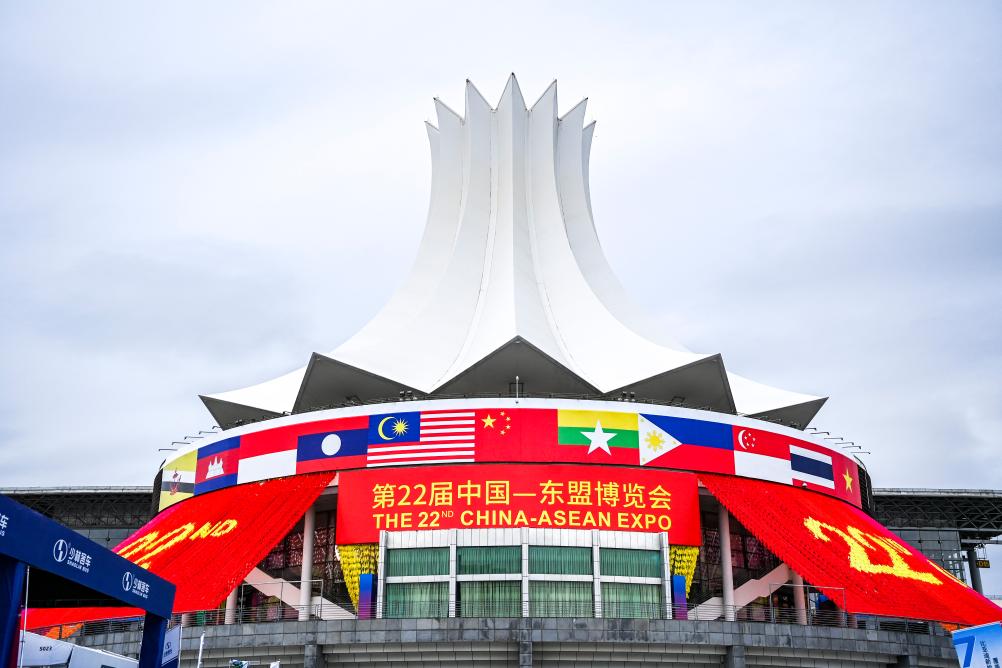
中国—东盟自贸区迈入3.0时代,数字经济、绿色经济合作迎新机
2 1 Shi Ji Jing Ji Bao Dao· 2025-10-28 14:04
Core Points - The China-ASEAN Free Trade Area (CAFTA) has officially entered its 3.0 version with the signing of the upgrade protocol during the 47th ASEAN Summit in Malaysia, marking a significant step in regional economic integration [2][3] - The upgrade protocol expands cooperation into nine key areas, including digital economy, green economy, supply chain connectivity, and standards and regulations, reflecting a mutual commitment to lead international rule-making and promote cooperation in emerging fields [2][4][5] Group 1: Economic Significance - The CAFTA is China's first free trade agreement and plays a crucial role in China-ASEAN economic cooperation, evolving from version 1.0 to 3.0, showcasing efforts towards regional economic integration [3][4] - The signing of the 3.0 upgrade protocol is seen as a vital measure for high-quality open cooperation between China and ASEAN amid global economic uncertainties [4][5] Group 2: Areas of Cooperation - The upgrade protocol covers nine areas, including digital economy, green economy, supply chain connectivity, and technical standards, indicating a shift from traditional trade to a focus on rules and standards [5][7] - The cooperation in digital and green economies is particularly emphasized, with potential benefits for both parties in terms of technology transfer and industry upgrades [8][9] Group 3: Trade Statistics - In the first three quarters of the year, the total trade value between China and ASEAN reached 5.57 trillion RMB, a year-on-year increase of 9.6%, with ASEAN maintaining its position as China's largest trading partner [8][9] - Specific trade growth includes a 28.2% increase in textile machinery exports and a 40.7% increase in rubber imports from ASEAN, highlighting the deepening trade ties [9][10] Group 4: Future Outlook - The CAFTA 3.0 version is expected to enhance regional economic resilience and provide a stable development space for small and medium enterprises by deepening institutional cooperation [5][6] - The ongoing collaboration is anticipated to maximize resource advantages and explore potential in high-tech industries, with Chinese semiconductor companies investing in Malaysia as a notable example [9][10][11]
镜观·回响|培育绿色创新的亚太增长动能
Xin Hua She· 2025-10-28 12:54
Core Viewpoint - The Asia-Pacific region, representing one-third of the world's population and over 60% of the global economy, is a vital growth engine and leader in regional economic integration, with a focus on green innovation as a key driver for sustainable development in 2024 [1][4]. Group 1: Economic Integration and Innovation - The Asia-Pacific region is characterized by its significant contribution to global trade, accounting for nearly half of the total trade volume [1]. - China is actively deepening cooperation in green innovation to enhance development momentum in the Asia-Pacific region [4]. Group 2: Infrastructure and Technological Advancements - The Chancay Port in Peru, a key project under the Belt and Road Initiative, is set to become a major shipping hub connecting Asia and Latin America, officially opening in November 2024 [7]. - The Suzhou Industrial Park, a collaboration between China and Singapore, is a hub for emerging industries such as biomedicine and new materials, fostering AI-driven enterprises [9]. - The Tianjin Eco-City, a significant cooperation project between China and Singapore, showcases smart city infrastructure, including intelligent public services [10]. Group 3: Renewable Energy and Electric Vehicles - Indonesia's first 5G smart warehouse and innovation center was inaugurated, marking a significant step in technological advancement in logistics [12]. - Malaysia's "Durian Cloud Platform," developed by Alibaba Cloud, utilizes smart sensors for agricultural guidance, enhancing productivity in durian farming [13]. - Chile has launched a fully electric public transport system with 121 Chinese-made electric buses, becoming the first city in South America to achieve this milestone [14]. - The solar power projects in Malaysia and Thailand demonstrate China's commitment to providing clean energy solutions in the region [17][19]. Group 4: Automotive Industry Expansion - BYD has announced its plans for passenger vehicle development in South Korea, indicating the brand's expansion in the electric vehicle market [15]. - The 2024 Sydney International Electric Vehicle Expo featured numerous Chinese electric vehicle brands, highlighting the growing interest and market presence in Australia [15].

中国与东盟签署自贸区3.0版升级议定书
证券时报· 2025-10-28 04:59
Core Points - The signing of the China-ASEAN Free Trade Area 3.0 upgrade protocol on October 28 marks a significant achievement in implementing the consensus reached during the 30th anniversary summit of China-ASEAN dialogue relations [1][4] - The protocol reflects a strong commitment to multilateralism and free trade, aiming to create a resilient regional supply chain and a large market based on rules [1][4] Group 1: Importance of the Protocol - The protocol signifies a milestone in deepening economic integration between China and ASEAN, expanding cooperation beyond traditional trade to emerging sectors like digital and green economies [5] - It aims to strengthen the China-ASEAN community by fostering an open, inclusive, and rule-based regional market, supporting peace and prosperity [5][6] Group 2: Background and Negotiation Process - The China-ASEAN Free Trade Area construction began in 2002, with the first version completed in 2010 and the second version in 2015. The 3.0 version negotiations started in November 2022 and are expected to conclude by May 2025 [2][6] - The trade volume between China and ASEAN reached $982.3 billion in 2024, a 17-fold increase since the inception of the free trade area [6] Group 3: Key Features of the Protocol - The protocol introduces five new areas of cooperation: digital economy, green economy, supply chain connectivity, competition and consumer protection, and support for small and medium enterprises [8][9] - It establishes a high-level commitment to trade facilitation and cooperation in both traditional and emerging sectors, enhancing regional economic growth [8][9] Group 4: Main Content of the Protocol - The protocol covers nine major areas, including customs procedures, trade facilitation, and new sectors like digital and green economies [10] - Specific commitments include the establishment of a rules framework for the digital economy, cooperation in green technology, and enhanced supply chain resilience [10][11][12][13][14] Group 5: Implementation of the Protocol - Following the signing, both parties will undergo domestic approval processes to ensure the protocol's early implementation [15]

从互降关税到共建规则——中国-东盟经贸合作持续升级为区域经济注入动能和信心
Bei Jing Ri Bao Ke Hu Duan· 2025-10-28 04:32
相较于早期聚焦削减关税与扩大市场准入的互利合作,3.0版升级议定书标志着双方合作进入制度化的 新阶段,不仅涵盖传统贸易投资领域,还包含数字经济、绿色经济、供应链互联互通、标准技术法规与 合格评定程序、海关程序与贸易便利化、卫生与植物卫生措施、竞争和消费者保护、中小微企业、经济 技术合作等9个新增章节。 观察人士指出,从聚焦货物贸易降关税,到拓展服务贸易扩市场,再到瞄准规则标准促融合,中国-东 盟自贸区不断升级,清晰映射出区域经济合作持续深化的发展轨迹。 菲律宾"亚洲世纪"战略研究所所长赫尔曼·劳雷尔指出,3.0版升级议定书的签署是推动亚太经济一体化 的重要里程碑,标志着中国与东盟经贸关系又一次跨越式升级。"与1.0版的'降关税'、2.0版的'便利 化'相比,3.0版核心特征是'由互降关税向共建规则转变',这为双方合作注入持久动力。" 泰国正大管理学院中国-东盟研究中心主任汤之敏表示,3.0版覆盖数字经济、绿色经济等产业制高点, 通过规则对接、标准互认、机制互通,夯实产业链供应链协作基础。从1.0版到3.0版,自贸区建设步步 升级,迈向包容、现代、全面、互利的自贸协定。 "这是双方合力推动从'量的扩张'向'质的 ...
美国“闭关锁国”,意外助攻中国入群!布局26年,我们反将一军
Sou Hu Cai Jing· 2025-10-28 04:20
Core Points - China has become the first Asian observer of the Andean Community (CAN), with unanimous support from its four member countries: Peru, Ecuador, Colombia, and Bolivia [1][3] - The approval reflects a shift in Latin American countries' alignment towards China, influenced by recent U.S. trade policies that have strained their economies [3][5] Group 1: Background and Context - The relationship between China and the Andean Community dates back to 1999, with a formal consultation mechanism established [6] - Recent U.S. tariffs on Latin American products, including a 50% tariff on copper, have led to significant economic challenges for these countries, prompting them to seek new partnerships [5][6] - China's cooperation proposals have been more appealing to Latin American nations compared to U.S. policies, focusing on practical needs rather than ideological values [6][8] Group 2: Economic Implications - The Andean Community countries control 35% of the world's copper and 28% of lithium resources, which are crucial for China's electric vehicle and AI industries [8][11] - By becoming an observer, China can now participate in setting regional trade standards, enhancing the security of its supply chains [8][11] - The shift from bilateral agreements to regional cooperation mechanisms allows China to mitigate risks associated with policy changes in Latin America [6][8] Group 3: Geopolitical Impact - China's entry into the Andean Community challenges the long-standing U.S. influence in Latin America, traditionally viewed as its "backyard" [8][10] - The unanimous vote signifies a collective response from Latin American countries against unilateralism and a desire for diversified partnerships [10][11] - The collaboration between China and the Andean Community is expected to reshape the development logic in the region, moving towards a more integrated economic framework [10][11]