
大食物观

Search documents
2025国际昆虫蛋白产业大会在京举办
Xin Hua Cai Jing· 2025-11-12 12:43
新华财经北京11月12日电(记者丁雅雯)11月11-12日,2025国际昆虫蛋白产业大会在京召开。与会嘉 宾认为,发展昆虫蛋白产业已成为拓展粮食资源边界、推动农业转型升级的必然选择。 第十四届全国政协常委、科教卫体委员会副主任钱克明指出,当前,在全球面临蛋白资源短缺与生态环 境压力的背景下,昆虫蛋白产业的发展愈发重要。发展昆虫蛋白产业是应对全球蛋白资源短缺的关键举 措与推动可持续发展的重要途径。他建议,进一步强化国际合作与交流,共同推动昆虫蛋白产业的健康 有序发展。 农业农村部原国家首席兽医师(官)、中国乡村发展协会执行副会长兼秘书长李金祥指出,发展资源昆 虫产业是拓展粮食资源边界、践行国家"大食物观"的重要举措和必然选择。为推进该产业高质量发展, 可从以下三方面系统布局:一是加强对昆虫种源的研发与创新,从根本上推动昆虫蛋白产业的发展;二 是进一步提升工业化养殖的工艺和水平,推动"生产模式"的变革;三是拓展高值化应用场景,提升全产 业链竞争力。将昆虫蛋白产业打造成为保障粮食安全、推动乡村全面振兴的新质力量。 中国农业科学院副院长刘现武指出,昆虫蛋白作为一种可持续的新兴营养资源,其巨大价值与潜力在全 球粮食安全 ...
种业“芯”力量蓄势惠州!570个新品种、9大硬核技术即将解锁湾区新“粮”方
Nan Fang Nong Cun Bao· 2025-11-08 09:04
Core Viewpoint - The upcoming 24th Guangdong Seed Industry Expo in Huizhou aims to showcase agricultural innovations and promote food security through advanced seed varieties and technologies [3][4][56]. Group 1: Event Overview - The event will take place on November 11, focusing on the theme "Revitalizing Seed Industry to Strengthen the Foundation, Technology Empowering Agriculture" [3][4]. - It will feature 570 new seed varieties and 9 core technologies, aiming to enhance agricultural productivity and sustainability [22][27]. Group 2: Agricultural Significance - Huizhou is a key city in the Guangdong-Hong Kong-Macao Greater Bay Area, known for its diverse agricultural products, including rice, sweet corn, and various fruits and vegetables [8][9][10]. - The Huizhou Agricultural Science Research Institute has established nearly 7,000 variety observation platforms and promoted over 100 superior new varieties to support local agricultural development [12][13]. Group 3: Technological Innovations - The expo will demonstrate practical applications of 9 efficient cultivation technologies, such as increasing rice yield by 10% and saving 40-50% water in drought-resistant rice cultivation [27][28]. - Innovative techniques will address agricultural production challenges, contributing to high-quality agricultural development [36]. Group 4: Comprehensive Agricultural Chain - A "From Seed to Table" exhibition area will cover various aspects of the agricultural supply chain, including seeds, pest control, seasonal vegetables, and agricultural insurance [38][42]. - The event will also feature local specialty products from various districts, showcasing Huizhou's high-quality agricultural offerings [40][41]. Group 5: Educational Initiatives - The expo will include educational activities for children, allowing them to engage with agricultural science and understand local crops [51][53]. - This initiative aims to foster interest in agriculture and technology among the younger generation, promoting future talent in the industry [50]. Group 6: Future Outlook - The event is positioned as a significant opportunity for modernizing agriculture in the Greater Bay Area, facilitating collaboration among research, enterprises, and farmers [56][58].


中国饭碗如何端得更牢?以怎样面貌迈向农业农村现代化?你好!“十五五”↓
Yang Shi Wang· 2025-11-07 06:50
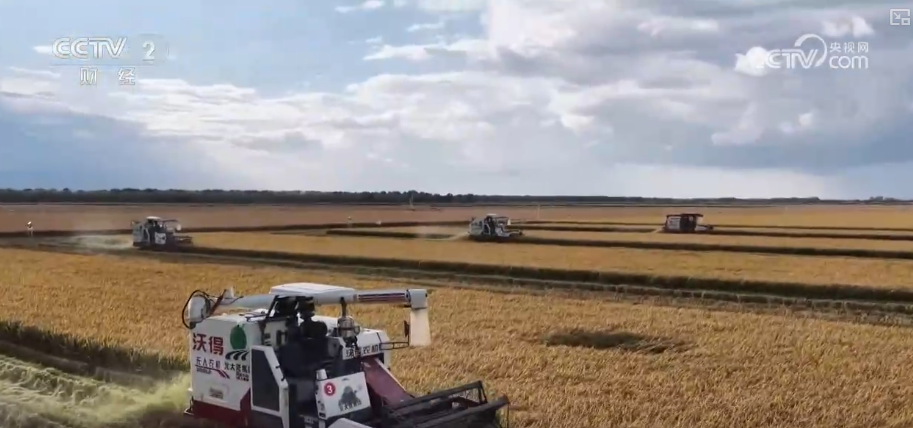
Core Viewpoint - The article emphasizes the importance of modernizing agriculture in China, aiming to transform it into a strong industry and ensure food security for the population of 1.4 billion people. Group 1: Agricultural Modernization - The "14th Five-Year Plan" suggests making agriculture a modernized large industry and accelerating the construction of a strong agricultural nation [1] - China's per capita grain possession has reached 500 kilograms, ensuring food security for its population [1] - The transition from traditional farming methods to modern technology, such as unmanned agricultural machinery, is highlighted as a significant advancement [3][5] Group 2: Technological Advancements - In the Beidahuang region, unmanned farming equipment is now operational, showcasing a shift from skepticism to practical application within five years [3][5] - The precision of unmanned rice harvesters and tractors is noted, with positioning errors controlled within 2.5 centimeters [9] - The mechanization rate at Qixing Farm has reached over 99.8%, indicating a high level of technological integration in farming practices [15] Group 3: Crop Yield and Production - By 2025, Qixing Farm aims to achieve a grain output of 15.22 billion jin from 1.26 million mu of farmland, with a yield exceeding 640 kilograms per mu [10] - The average yield of corn in Ili Prefecture has surpassed 1200 kilograms per mu, with some areas achieving over 1500 kilograms, setting new national records [25] - The total output of aquatic products in China reached 73.58 million tons in 2024, marking a 12.3% increase since 2020, maintaining its position as the world's largest producer [34] Group 4: Future Prospects - The article discusses the potential for continuous improvement in agricultural practices through scientific methods, such as greenhouse seedling cultivation and smart management [19][21] - The development of ecological aquaculture is highlighted, with the expectation that by 2025, the salmon production in Xinjiang will account for one-third of the national total [31][32] - The modernization of agriculture is seen as a way to enhance the comprehensive competitiveness of the agricultural sector [36]
广东耕海牧渔:“粤字号”海鲜的全球大生意
2 1 Shi Ji Jing Ji Bao Dao· 2025-11-06 23:19
Core Insights - Guangdong is transforming traditional fisheries into a modern marine ranching industry cluster worth trillions, integrating high-end manufacturing and digital technology [1][2] - The province has launched 139 modern marine ranching projects with a total investment exceeding 20 billion, producing nearly half of the country's marine fish and leading in marine fish seed production for seven consecutive years [1][2] - The future demand for animal protein, if partially met by fisheries, could create a 60 trillion industry in modern marine ranching [1] Group 1: Industrial Development - Guangdong is addressing the challenges of traditional fisheries in deep-sea environments by developing industrialized deep-sea aquaculture equipment [2] - The province has established a complete industrial chain for marine engineering equipment, including design, manufacturing, and service, supported by leading companies [2] - The deployment of intelligent aquaculture platforms has led to significant value creation across different regions in Guangdong [2] Group 2: Technological Advancements - The introduction of AI, 5G, and big data is revolutionizing the operational efficiency of marine ranches in Guangdong [5] - Smart systems have reduced labor costs by 60% and increased harvest yields significantly through precise feeding [4][5] - The integration of 5G technology ensures high-speed data transmission between deep-sea platforms and onshore command centers, enhancing decision-making and management [5] Group 3: Comprehensive Industry System - Guangdong has developed a comprehensive marine ranching system that includes seedling production, feed, platforms, processing, logistics, and tourism [3] - The province is exporting "Yue" branded seafood to North America, the EU, and ASEAN, extending the global reach of its industry [3] Group 4: Innovative Business Models - The exploration of the "marine ranch +" model combines marine ranching with renewable energy and tourism, creating new growth opportunities [6] - The successful integration of wind power and aquaculture has been demonstrated with the launch of the "Mingyu No. 1" platform, showcasing commercial viability [6] - Coral reef restoration techniques are being employed to revitalize marine ecosystems, enhancing biodiversity and tourism potential [6] Group 5: Future Vision - Guangdong's modern marine ranching development reflects a broader vision of China's marine economy, emphasizing industrialization, intelligence, and integrated supply chains [7] - The provincial government aims to create a world-class blue economy by optimizing resource allocation across various sectors [7]
你好“十五五”丨无人农场“智造”丰收 “中国饭碗”端得更稳
Sou Hu Cai Jing· 2025-11-06 15:56
Core Viewpoint - The article emphasizes the modernization of agriculture in China, highlighting the importance of agricultural development in the national five-year plans and the significant advancements in technology and practices that are transforming the sector. Group 1: Agricultural Modernization - The "14th Five-Year Plan" aims to transform agriculture into a modernized industry and strengthen the agricultural foundation of the country [1] - China's per capita grain possession has reached 500 kilograms, ensuring food security for 1.4 billion people [1] - The integration of technology in agriculture, such as unmanned machinery, has drastically improved efficiency and productivity in farming operations [3][5][9] Group 2: Technological Advancements - The use of unmanned harvesters and precision farming techniques has allowed for operations with minimal human intervention, achieving a positioning accuracy of 2.5 centimeters [5][7] - The mechanization rate in certain farms has reached over 99.8%, showcasing the extent of technological adoption in agricultural practices [17] - The introduction of accelerated breeding techniques has reduced the time required for crop development from ten years to four or five years [23] Group 3: Crop Production and Yield - The total grain output in the region has seen continuous growth, with a reported yield of 15.22 billion pounds from 126,000 acres of farmland [11] - In Xinjiang, the implementation of high-density corn planting techniques has led to record-breaking yields, with average yields surpassing 1,200 kilograms per acre [33] - The overall agricultural technology contribution rate has reached 63.2%, indicating significant advancements in agricultural productivity [25] Group 4: Aquaculture Development - The aquaculture sector in Xinjiang has expanded, with the region producing one-third of the country's self-supplied salmon, highlighting the diversification of agricultural practices [47] - The establishment of a comprehensive cold chain logistics and processing system is aimed at enhancing the value of agricultural products and creating an industry cluster [49] - The total output of aquatic products in China has reached 73.58 million tons, marking a 12.3% increase since 2020 [51] Group 5: Future Prospects - The article suggests that the modernization of agriculture will continue to evolve, attracting both local farmers and international tourists to rural areas [55] - The focus on sustainable practices and technological integration is expected to enhance the competitiveness of the agricultural sector in the coming years [53]
18年科研攻坚,江西晚籼稻迎来“口感革命”
Ke Ji Ri Bao· 2025-11-05 01:01
Core Viewpoint - The article highlights the successful development and promotion of high-quality late indica rice varieties by Jiangxi Agricultural University, which has significantly improved the quality and yield of rice in the middle and lower reaches of the Yangtze River [2][3]. Group 1: Project Achievements - The project "Breeding and Promotion of High-Quality Late Indica Rice Varieties in the Middle and Lower Reaches of the Yangtze River" took 18 years and received the Special Prize for Scientific and Technological Progress in Jiangxi Province [2]. - The project team has developed 30 new varieties of long-grain high-quality double-crop late indica rice, with 58 approvals from national and provincial variety assessments [3]. - The newly developed rice varieties have been promoted over 3.57 million acres, generating an additional benefit of 7.15 billion yuan, significantly enhancing the quality of late indica rice production [3]. Group 2: Technological Innovations - The project addressed existing issues in late indica rice quality, including short grain size and poor taste, by innovating breeding techniques and integrating beneficial genetic markers [2]. - A technical system for breeding high-quality late indica rice was established, focusing on increasing length, lowering gelatinization temperature, and improving taste [2]. - The project has created 25 backbone parental lines, providing a solid material foundation for breeding high-quality late indica rice varieties [2]. Group 3: Future Directions - The project aims to enhance the nutritional elements of rice while ensuring safety and health, potentially incorporating other beneficial ingredients to improve the taste of brown rice [3].
第八届京津冀蔬菜产业发展大会在衡水冀州举办
Zhong Guo Xin Wen Wang· 2025-11-04 17:24
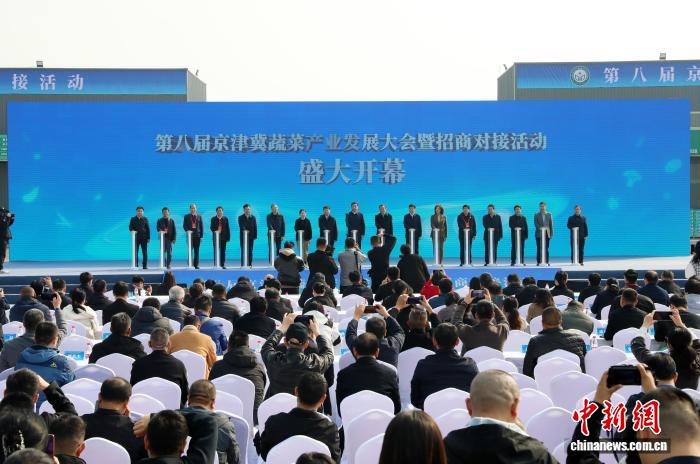
Core Insights - The 8th Beijing-Tianjin-Hebei Vegetable Industry Development Conference and Investment Promotion Event was held in Hengshui, Hebei, showcasing over 2,000 types of agricultural products including premium vegetables, seeds, agricultural materials, and machinery [1][3] Group 1: Event Overview - The conference was co-hosted by the Hebei Provincial Department of Agriculture and Rural Affairs, Beijing Municipal Bureau of Agriculture and Rural Affairs, Tianjin Municipal Agricultural Committee, and Hengshui Municipal Government, attracting over 1,500 participants including renowned vegetable investors, buyers, distributors, and industry experts from across the country [3] - Activities included field observations, investment promotions, production and sales matching, premium displays, a tomato competition, and specialized lectures, highlighting the development achievements of the entire vegetable industry chain in Hebei [3] Group 2: Technological Advancements - The event announced the "Top Ten Promoted Technologies for Vegetable Quality Improvement," promoting new technologies, models, and equipment [3] - Building on last year's release of quality indicators for 10 specialty vegetable varieties, the conference introduced a quality indicator system for 10 additional specialty fruits and vegetables, further enhancing the vegetable standard system in Hebei [3] Group 3: Industry Collaboration - The president of the Hebei Vegetable Industry Association emphasized the strong complementarity of the vegetable industry among the three regions, stating that promoting production and sales connections and investment cooperation is crucial for ensuring stable supply of vegetables and increasing farmers' income [3]
海南“食学教室”公益项目启动 首批惠及32所小学
Hai Nan Ri Bao· 2025-10-31 01:56
Core Insights - The fifth World Food Forum was successfully held in Haikou from October 29 to 30, focusing on key issues such as food education, food safety, and sustainable food systems [1] - The "Food Education Classroom" public welfare project was launched, aiming to promote food education as a foundation for intellectual, moral, and physical education [1] Group 1: Food Education - Food education is considered essential for cultivating healthy eating habits and establishing correct dietary concepts, requiring multi-faceted approaches such as curriculum integration, home-school collaboration, and social support [1] - The "Food Education Classroom" project aims to help children understand the sources of food and nutritional secrets while inheriting the ecological wisdom and inclusive spirit of Hainan's food culture [1] Group 2: Project Implementation - The first phase of the "Food Education Classroom" project will establish 32 classrooms in primary schools, integrating local characteristics and innovative teaching methods [1] - The project will focus on instilling awareness of food conservation and respect for labor, as well as promoting healthy eating habits among students [1] - Hainan Province plans to further improve the food education curriculum system based on the "Food Education Classroom" project [1]
第五届世界食事论坛在海口开幕
Hai Nan Ri Bao· 2025-10-30 01:49
Core Points - The Fifth World Food Forum opened in Haikou, focusing on global food system governance and sustainable development paths [2] - The forum introduced the "Five Food" demand theory, which includes food security, food richness, food safety, food longevity, and food sustainability [2] - The event aims to foster global consensus and practical cooperation to build a safe, healthy, and sustainable global food system [2] Group 1 - The forum gathered representatives from 115 countries and regions, including international organizations, government officials, experts, and industry professionals [2] - Seven thematic units were set up to discuss key issues such as global governance, food security, health longevity, education culture, and climate ecology [2] - The forum aims to contribute wisdom and strength to address food system challenges and promote sustainable development [2] Group 2 - Hainan is actively implementing a "big food concept" by promoting modern seed industry development, strengthening green production, and improving cold chain logistics and smart regulatory systems [2] - The forum will release the "Global Food System and Sustainable Development Goals (SDGs) Report (2025)" and establish international standards for food science terminology and frameworks [2] - A public welfare project called "Food Science Classroom" will be launched as part of the forum's initiatives [2]
大食物观驱动农业变革
Jing Ji Ri Bao· 2025-10-29 22:08
Core Viewpoint - The global agricultural and food security landscape is facing unprecedented challenges due to climate change, geopolitical conflicts, and rising trade protectionism, leading to the emergence of the "big food" concept, which emphasizes a multi-dimensional approach to food security and agricultural modernization in China [1] Group 1: Current Agricultural Situation in China - During the 14th Five-Year Plan period, China has made significant progress in implementing the big food concept, with grain production expected to exceed 1.4 trillion jin in 2024, an increase of 74 billion jin from 2020 [2] - Total livestock production is projected to reach 175 million tons, reflecting an 18.8% increase since 2020, while total aquatic product output is expected to be 73.58 million tons, a 12.3% increase from 2020 [2] - The shift in consumer behavior from "eating enough" to "eating well" indicates a growing focus on nutrition and health, with stable consumption of staple foods and increasing demand for meat, eggs, dairy, fruits, and vegetables [2] Group 2: Challenges and Misconceptions - Despite progress, there are misconceptions and operational challenges in implementing the big food concept, which hinder the coordinated advancement of food and grain security [2] - Some regions focus solely on increasing grain production while neglecting other important agricultural products, and the monitoring and statistical systems for big food are still inadequate [2] - Current agricultural technology efforts are primarily concentrated on major crops, with insufficient support for livestock, fruit, and forage sectors [2] Group 3: Nutritional Focus and Technological Innovation - The big food concept emphasizes diversifying food supply to better meet residents' nutritional needs, advocating for a shift from quantity-focused to quality-oriented food production [3] - There is a need to develop a food nutrition standard system and a new supply guarantee framework aligned with the big food concept [3] - Technological innovation is crucial for realizing the big food concept, with countries that maintain stable food supplies possessing advanced breeding capabilities and integrated research and industry systems [3] Group 4: Key Areas for Implementation - To further implement the big food concept, key areas include scientifically developing resources from forests, grasslands, lakes, and oceans, and optimizing livestock structures to improve protein efficiency [4] - The development of new food production technologies such as vertical farming, algae reactors, cultured meat, and microbial protein is essential for future food industries [4]