庞氏骗局

Search documents
高息“收割”投资者后,鑫慷嘉“人去楼空”,“博傻游戏”何时了
Bei Jing Shang Bao· 2025-07-08 14:49
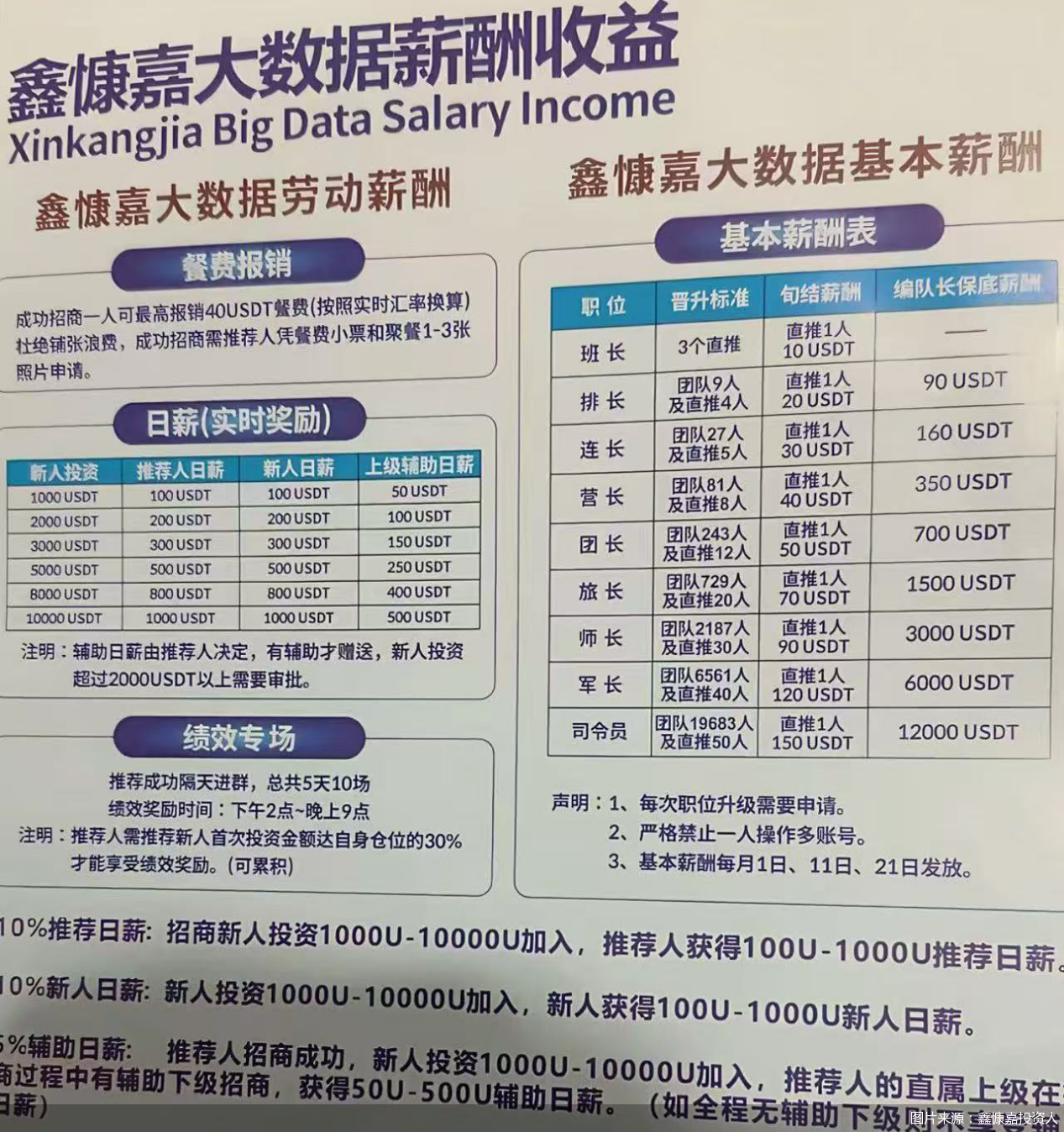
Core Viewpoint - The investment platform "DGCX Xin Kang Jia" has been identified as a fraudulent scheme, attracting approximately 2 million investors with a total involvement of 13 billion yuan, ultimately leading to its inability to process withdrawals and the founder's disappearance [1][5][9]. Group 1: Business Model and Operations - "DGCX Xin Kang Jia" operated under the guise of a virtual currency investment platform, promising daily returns of 1% and utilizing a multi-level marketing structure to recruit new investors [1][3][6]. - The platform falsely claimed to be affiliated with the Dubai Gold and Commodities Exchange (DGCX) and employed high-yield investment strategies to lure participants, which were later revealed to be part of a Ponzi scheme [5][9]. - Investors were encouraged to reinvest their earnings and recruit new members, with rewards structured based on the number of new recruits, creating a cycle of dependency on new investments for returns [6][10]. Group 2: Investor Experiences and Reactions - Many investors reported significant losses, with one individual claiming to have lost over 55,000 yuan (approximately 8,300 USDT) and others expressing frustration over their inability to withdraw funds [2][3]. - Despite the platform's collapse, some individuals continued to invest, demonstrating a willingness to engage in what has been termed a "fool's game" [4][11]. - The platform's operations ceased after it was reported that the founder had fled abroad, leaving investors without recourse [4][8]. Group 3: Regulatory and Legal Context - Multiple law enforcement agencies across various provinces have issued warnings about the risks associated with "DGCX Xin Kang Jia," highlighting its fraudulent nature and lack of regulatory approval [5][9]. - The operating entity, Guizhou Xin Kang Jia Big Data Service Co., Ltd., has been listed in abnormal business operations and has applied for deregistration, indicating its imminent closure [8][9]. - Legal experts have classified the platform's activities as illegal fundraising and fraud, emphasizing the need for investors to be cautious and informed about the legitimacy of investment opportunities [9][12].

“迪拜黄金交易所”暴雷前48小时:18亿稳定币被转移
阿尔法工场研究院· 2025-07-07 15:04
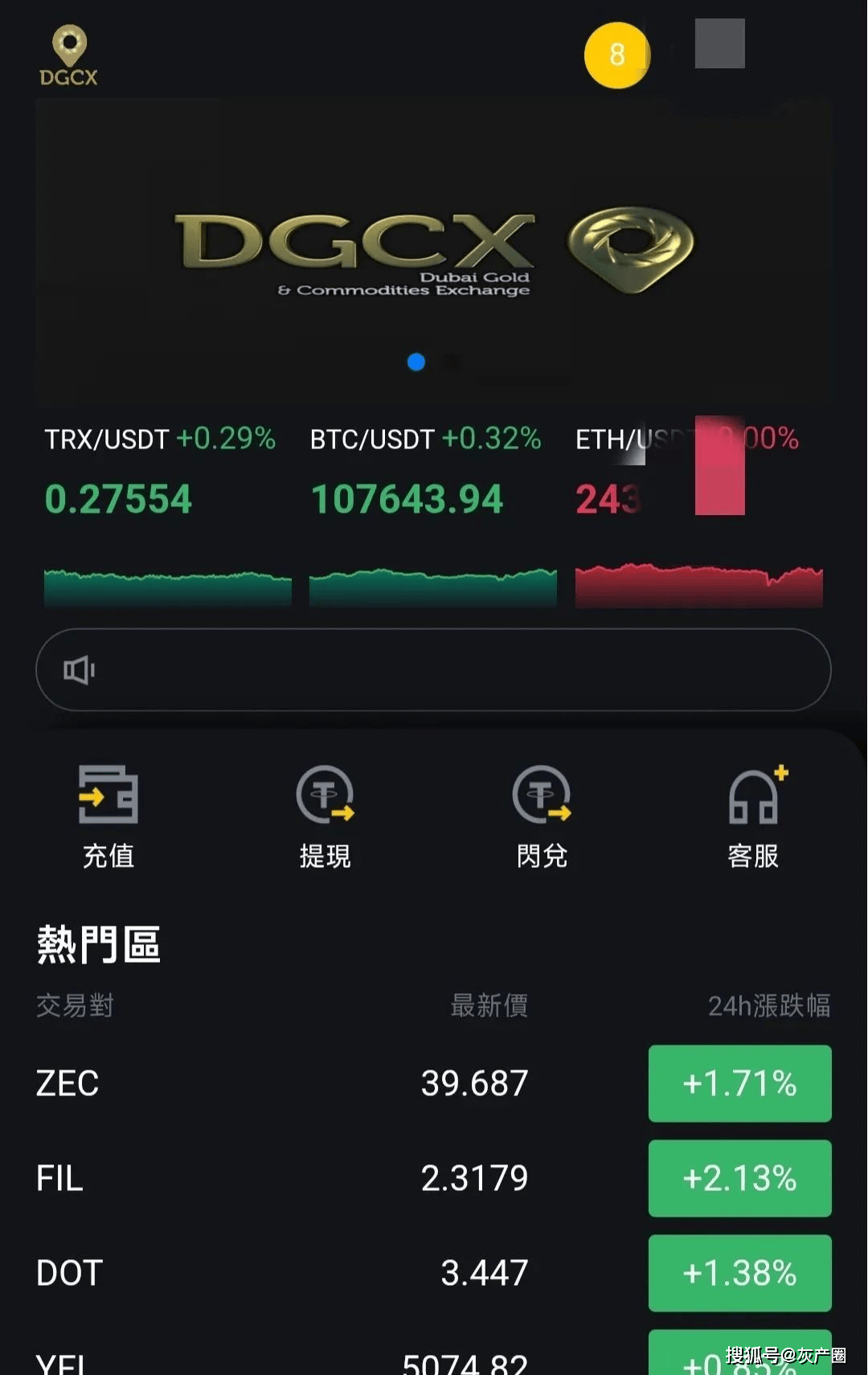
Core Viewpoint - The article discusses the collapse of DGCX Xin Kang Jia, a financial platform that was involved in a Ponzi scheme, highlighting the fraudulent activities and the significant financial losses incurred by investors [1][2][28]. Group 1: Company Overview - DGCX Xin Kang Jia falsely presented itself as a branch of the Dubai Gold and Commodities Exchange (DGCX) [4][6]. - The platform had a membership base of approximately 2 million individuals [8][33]. - The company was registered in Guizhou, China, and underwent a change in legal representation, with the new owner having no actual capital contribution [10][11]. Group 2: Financial Misconduct - Prior to its collapse, DGCX Xin Kang Jia transferred approximately 1.8 billion USDT (around 12.9 billion RMB) to a shell company in the Cayman Islands within 48 hours [28][30]. - The platform's operations were characterized by deceptive practices, including fake data and manipulated investment returns [16][35]. - The platform's leadership reportedly took high commissions, with up to 50% of the funds being siphoned off, leaving little for actual returns to investors [35]. Group 3: Investor Impact - The collapse of DGCX Xin Kang Jia resulted in significant financial losses for investors, reminiscent of previous financial fraud cases in China [2][21]. - Many investors were drawn in by promises of high returns and were encouraged to recruit others, resembling a multi-level marketing scheme [25][24]. - The article notes that despite warnings and previous incidents of financial fraud, new scams continue to emerge, indicating a persistent vulnerability among investors [37][38].
鑫慷嘉130亿涉诈资金经混币器快速跨境转移!又一个“庞氏内核+传销架构+虚拟货币洗钱”的金融骗局跑路了!
Sou Hu Cai Jing· 2025-07-06 04:04
Core Viewpoint - The DGCX Xin Kang Jia financial pyramid scheme has collapsed, affecting approximately 2 million investors and involving hundreds of billions in funds, with a significant amount of assets transferred offshore just before the collapse [1][15][19]. Group 1: Scheme Overview - DGCX Xin Kang Jia was initially launched as a "China Petroleum" app in May 2023, falsely claiming a partnership with China National Petroleum Corporation and later transitioning to the DGCX trading platform [1]. - The scheme promised high returns of 1%-2% daily and over 300% annually, attracting investors with misleading claims about its legitimacy [2][19]. - The platform operated as a centralized trading venue without any legitimate qualifications, manipulating market data behind the scenes [8][19]. Group 2: Operational Structure - The scheme utilized a "militarized" pyramid structure, dividing the country into four major "battle zones" and incentivizing participants to recruit others through commissions and rewards [10][19]. - Participants were required to pay a minimum entry fee of 1,000 USDT, with funds directly controlled by the platform [9][19]. - The internal reward system included various levels of compensation based on recruitment, with significant bonuses for higher ranks [12][19]. Group 3: Investor Impact - Approximately 2 million victims, primarily from lower-tier cities and older demographics, are estimated to have lost hundreds of billions, with 18 billion USDT transferred offshore [15][18]. - Despite multiple official warnings about the scheme's illegitimacy, investor enthusiasm surged, leading to a 217% increase in new registrations within three months of the alerts [16][19]. Group 4: Trends in Financial Fraud - The DGCX Xin Kang Jia case highlights new trends in virtual currency scams, including a combination of Ponzi schemes and pyramid structures, high-return promises, and the use of virtual currencies for transactions [19][20]. - The scheme's operations were characterized by a closed, familiar network approach, making it easier to recruit new participants [21]. - The targeting of small towns and older individuals reflects a growing trend in scams, as these groups often lack information and are more susceptible to influence [22].
海南和杭州惊现过亿骗局-优哩哩,包装跨境电商的USDT资金盘
Sou Hu Cai Jing· 2025-07-02 14:54
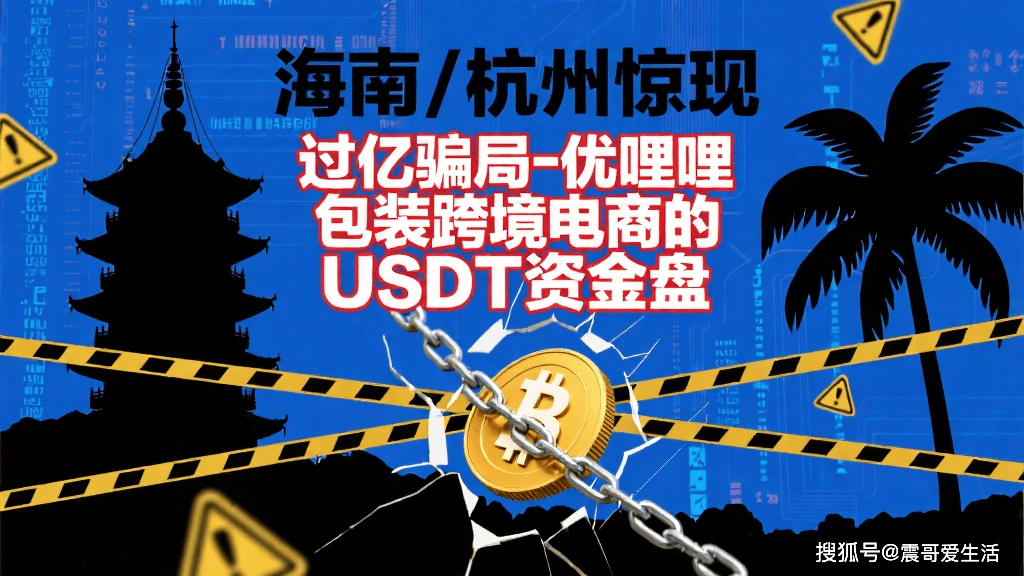
Group 1 - The platform "Youli Li" is being questioned for its legitimacy, with allegations of being a scam involving potentially over a billion in funds [2] - The promotional offer of "register and receive $10,000" is misleading, as the money is not real but a form of their own currency called TK coins, which requires recruitment or investment to convert into cash [4] - Claims of guaranteed returns, such as investing $300 to $20,000 for a 10% profit in 14 days, are deemed unrealistic and indicative of a Ponzi scheme due to lack of transparency and third-party oversight [4] Group 2 - The platform's advertising claims, including being featured on CCTV, are found to be exaggerated, with ads aired at odd hours and lacking credibility [6] - The company promotes its TK coins as a lucrative investment opportunity, but it lacks financial licenses and regulatory oversight, raising red flags about its operations [8] - The business model resembles traditional high-return investment scams, emphasizing the need for potential investors to verify company credentials and regulatory compliance before engaging [8]
从永坤黄金到住范儿,揭秘爆雷新套路
吴晓波频道· 2025-06-26 16:47
Core Viewpoint - The article discusses the phenomenon of multiple companies experiencing financial collapse, highlighting the common traits of these businesses, which include reckless growth, rapid iteration, self-destructive practices, yet they continue to persist in the market [1][44]. Group 1: Company Examples and Impact - Yongkun Gold, with 23 gold stores and 11 jewelry stores in Jiangsu, Zhejiang, and Shanghai, was found unable to fulfill its obligations in May, affecting over 10,000 people and involving an amount as high as 4 billion yuan [1][2]. - The case of Qian Dao Investment, which faced payment issues last year and was discovered to have fake products and shell companies, illustrates the extent of the problem [6][7]. - Jiang Hai Hui Group, which operated for 15 years and claimed government recognition, suddenly collapsed, leaving investors with approximately 28 billion yuan in losses [10]. - The article also mentions the collapse of various companies across different sectors, including home decoration and elderly care, indicating a widespread issue beyond just financial investments [12][19]. Group 2: Common Characteristics of Exploding Companies - The companies involved share common characteristics such as low market entry barriers, rough business operations, and difficulty in controlling service quality [44][45]. - Many of these companies operate in sectors with inadequate regulatory oversight, leading to a proliferation of businesses lacking proper qualifications and operational standards [45][46]. - The article emphasizes that these companies often promise high returns to attract investments, engage in fund misappropriation, and create a false sense of security through misleading advertising [43][44]. Group 3: Consumer Protection and Regulatory Suggestions - Consumers are advised to analyze the rationality of investment projects, check the background of companies, and be cautious of those lacking necessary qualifications [46][47]. - The article suggests that the government should establish a cross-departmental risk prevention mechanism, implement dynamic regulatory policies, and enhance mandatory disclosure standards for companies [51][53]. - It highlights the need for stricter regulations on prepayment systems to prevent companies from misusing funds and to ensure consumer protection [52][53].

出门12名女秘书陪伴,非法敛财100亿,昔日河北首富锒铛入狱记
Sou Hu Cai Jing· 2025-06-24 06:55
Core Insights - The article narrates the rise and fall of Yang Zhuoshu, a once-prominent real estate mogul in China, who was involved in a massive financial fraud that led to his imprisonment for nine years [1][30][32] Group 1: Background and Rise - Yang Zhuoshu was born in 1952 in Heilongjiang and faced early life challenges, including social isolation due to his father's political issues [5] - He transitioned from a struggling student to a successful journalist, eventually becoming the editor-in-chief at a newspaper after publishing over 5 million words [7] - In 1993, he left journalism to enter the real estate market during a downturn, believing that crises present opportunities [9] Group 2: Business Expansion - Yang started his real estate journey by acquiring development rights for 30 acres of land with borrowed funds, which marked a turning point in his career [11] - He launched a successful marketing campaign for a housing project, pricing it significantly lower than the market rate, which attracted substantial investment [13][15] - His company, Zhuoda Group, expanded rapidly across various regions, and by 2001, he was listed as one of China's wealthiest individuals with a net worth of 2.1 billion [17] Group 3: Decline and Fraud - Yang's ambition led him to undertake large-scale projects that often remained unfulfilled, such as a 600 billion investment in a tourism project [19] - He began to engage in risky financial practices, including packaging real estate projects as investment products promising high returns, which attracted around 400,000 investors, many of whom were local elderly individuals [23] - In 2019, as financial troubles escalated, Yang surrendered to authorities, revealing the fraudulent nature of his operations, which were based on unsustainable promises and fabricated contracts [27][29] Group 4: Legal Consequences - In 2022, Yang was sentenced to nine years in prison for illegal fundraising, leaving behind a legacy of financial ruin for countless investors [30] - The article concludes with a reflection on the dangers of high-yield investment schemes and the lessons learned from Yang's downfall, emphasizing the risks of unrealistic financial promises [34]
宁波酒商10亿茅台期货暴雷,老板找不到了
Sou Hu Cai Jing· 2025-06-17 07:55
我发现创业者特别喜欢这样搞啊,先集资后跑路。最近宁波又爆了一个"10亿茅台期货"惊天大雷,十五年的白酒行业创业者失联: 宁波酒商搞茅台期货庞氏骗局,10亿茅台期货暴雷了,他高价收低价卖玩击鼓传花,结果茅台价格暴跌,10亿资金盘崩盘跑 路,投资者血本无归。爆雷前该负责人已办理港澳通行证,公司账户资金清零,公司办公场所人去楼空,仓库货物被转移。 2010年,X老板代理茅台镇酱酒起家 最初是贵州某烧坊酱酒品牌的浙江及江西省级总代理,经营模式也很传统就是一手交钱,一手交货,主要卖茅台镇酱酒(非茅台)。 2020年,X老板开始搞期货 做茅台官方代理门槛挺高的:(1)要交3000万保证金,而且第一次进货要100万以上(省级代理)(2)年流水要达到3500以上,(3) 有稳定的销售渠道,实体店等等, X老板大概率是做不了的。所以做了擦边,(4年后还被茅台起诉过),而且这一年飞天茅台疯涨,散瓶价从2000涨至2800。你说这么赚钱 的事谁看了不眼红? 这个X老板啊,根本就不是茅台正规代理商,拿不到稳定的低价货源。但他脑子活,整了个"茅台期货"的套路——1600一瓶预售飞天茅 台(当时市场价要2200-2800),说好3-6个 ...

老板跑路,卷走天价黄金
36氪· 2025-06-14 08:52
以下文章来源于南风窗 ,作者朱秋雨 南风窗 . 冷静地思考,热情地生活。 | 企业名称 | 浙江永坤控股有限公司 | | | | | | --- | --- | --- | --- | --- | --- | | 法定代表人 | 流 汪国海 【关联企业 14 | 登记状态 (2 | 存续 | 天眼评分 ⑦ | 89 % | | | | 成立日期 | 2014-03-13 | | | | 统一社会信用代码 2 | 91330102093318244G | 注册资本 1 | 10230万人民币 | 实增资本 | 4210万人民币 | | 工商注册号 | 330102000118923 | 纳税人识别号 ① | 91330102093318244G | 组织机构代码 ① | 09331824-4 | | 营业期限 | 2014-03-13 至 2034-03-12 | 纳税人资质 | 增值税一般纳税人 | 核准日期 | ம் | | 企业类型 | 有限责任公司(自然人独资) | 行业 | 商务服务业 | 人员规模 | 50-aa Y | | 参保人数 | 72 2023年报> ~ | 英文名称 | Zhejiang ...

百亿骗局!上线9个月的奥拉丁Orgin如何卷走数十亿资金
Sou Hu Cai Jing· 2025-06-13 01:33
Core Viewpoint - The article discusses the emergence of a blockchain project named "Oladin Origin," which masquerades as a DeFi 3.0 initiative but is revealed to be a Ponzi scheme that has defrauded over 500,000 investors, accumulating more than 10 billion yuan in funds [1][3][21]. Group 1: Project Overview - "Oladin Origin" claims to create the world's first privacy-focused payment ecosystem and a comprehensive Web3 financial ecosystem [1]. - The project attracted over 500,000 members and raised more than 10 billion yuan within nine months, leveraging the reputation of the Olympus DAO core team [3]. - The project outlines a three-phase blueprint, including the use of the algorithmic non-stablecoin LGNS as a financial ecosystem's foundation [7]. Group 2: Mechanisms of Deception - The project employs a complex economic model with six contract systems designed to create an illusion of a closed-loop economy [7]. - It promotes a misleading "economic flywheel theory" that obscures its Ponzi structure [7]. - Users are promised high static returns through staking LGNS, with claims of a daily return of 1.2%, equating to an annualized return of 44% [10]. Group 3: Recruitment and Incentives - The project features a multi-level marketing structure, allowing users to earn commissions through a 15-level referral system [12]. - A strict membership tier system incentivizes users to recruit others, with potential earnings of up to 25% from team performance [13]. Group 4: Control and Manipulation - The project falsely claims that each LGNS token is backed by a stable asset, creating a false sense of security [17]. - The project manipulates token prices through automatic adjustments based on market conditions, allowing the operators to control the market signals [18]. - The design of liquidity and reserve bonds serves as a mechanism for the project to cash out while delaying token sell pressure [19]. Group 5: Warning Signs of Fraud - Promises of unreasonably high returns, such as a daily return exceeding 1%, are indicative of a Ponzi scheme [21]. - The reliance on a multi-level recruitment system is a hallmark of pyramid schemes [22]. - Lack of transparency in contracts and the anonymity of the team raise red flags about the project's legitimacy [23]. - The project employs deceptive marketing tactics, claiming to be an international initiative without substantial operational backing [24].
买黄金的人,要小心了!
大胡子说房· 2025-06-12 11:53
以下文章来源于大胡子财研社 ,作者湾区区长 大胡子财研社 . 真人实地调研,专注楼市研究10余年!大胡子教买房为您带来一手消息,助您预判楼市风向,实现资产 稳步增长! 最近黄金的价格相比关S谈判之后稍微往上涨了一点,最新的黄金价格已经反弹到了3345元/盎 司。 但是我要提醒一下大家,现在买黄金的话,要小心B雷。 最近关于黄金投资出了一档子事,那就是 浙江黄金综合服务商 - 永坤黄金的 庞氏骗局事件。 这件事是怎么回事呢? 简单说,就是投资人发现在永坤黄金购买的黄金产品无法提现了,平台客服电话也不再有人接 听。 一查才发现,这家黄金综合服务商不仅线下的门店没有了,据说连老板都跑路了。 这老板为什么跑路? 因为资金链断了,同时引发了大规模的挤兑。 而且最气人的是,这老板不是没钱,他是把钱都转出去买了比特币,把钱都洗白了。 等同于这人里面赚一道、外面又赚一道。 但是机构买的不是黄金,压根没有那么多现金流兑付,最后结果就只能是B雷。 那为什么这件事引起了很多人的反响? 因为涉及到的资金量太大,据说 涉及到了100多亿的RMB,中招的主要都是浙江本地的老板。 这些老板为什么买这个机构的黄金, 他们其实贪的不是黄金能涨 ...