扩大有效投资

Search documents
加快推动扩大有效投资政策落地实施
Shang Hai Zheng Quan Bao· 2025-10-31 18:21
Core Insights - The National Development and Reform Commission (NDRC) is accelerating the implementation of effective investment policies, with a recent allocation of 500 billion yuan for local government debt to enhance comprehensive financial capacity and expand effective investment [1] - The NDRC has introduced an additional 200 billion yuan in special bond quotas specifically for supporting investment projects in certain provinces [1] - The NDRC is also focusing on the innovation and development of the service industry, identifying multiple trillion-yuan market opportunities, particularly in sectors like gaming and related products [1] - Recent forecasts from international economic organizations, such as the IMF and World Bank, have raised China's economic growth expectations for 2025 by 0.8 percentage points compared to earlier predictions [1] Investment and Policy Measures - The NDRC will supervise and guide relevant provinces in utilizing the new bond quotas effectively, expediting the issuance and use of special bonds, and ensuring timely project commencement to generate tangible work output [1] - A policy document is being developed to enhance the diversified development mechanism of the service industry, aiming to better meet the public's needs and further unlock growth potential in this sector [1] Economic Outlook - The NDRC plans to strengthen the regular policy research and reserve, with timely implementation of measures as needed, in response to the improved economic growth forecasts from international organizations [1]
国家发展改革委:加快推动扩大有效投资政策落地实施
Shang Hai Zheng Quan Bao· 2025-10-31 18:21
Group 1 - The core viewpoint is that China's economy has shown resilience and progress, with a GDP growth of 5.2% year-on-year in the first three quarters, maintaining a leading position among major global economies [1][2] - New policy financial tools have accelerated funding deployment, with 500 billion yuan fully allocated to support over 2,300 projects, totaling an investment of approximately 7 trillion yuan, focusing on digital economy, AI, and urban infrastructure [1] - The National Development and Reform Commission (NDRC) is enhancing support for major economic provinces and key sectors, aiming to expedite project construction and increase effective investment for high-quality development [1] Group 2 - The NDRC is promoting effective investment policies, with an additional 500 billion yuan allocated for local government debt to enhance financial capacity and investment expansion [2] - The life service industry is experiencing rapid innovation and development, creating multiple trillion-yuan market opportunities, particularly in emotional consumption related to gaming and comics [2] - International economic organizations have raised their growth forecasts for China's economy, indicating a positive outlook for 2025, with the NDRC planning to strengthen policy research and timely implementation [2]
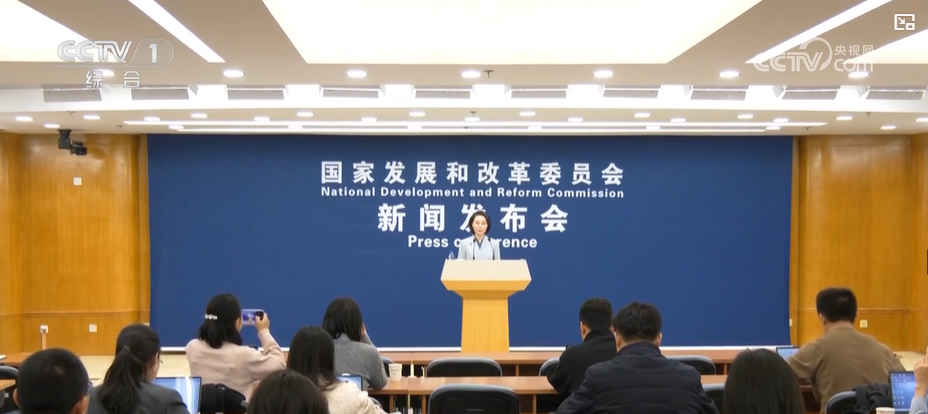
国家发展改革委举行新闻发布会:推动扩大有效投资政策落地实施
Yang Shi Wang· 2025-10-31 16:14
Group 1 - The National Development and Reform Commission (NDRC) has accelerated the implementation of policies to expand effective investment, with a focus on new policy financial tools [3] - A total of 500 billion yuan has been fully allocated to support over 2,300 projects, which are aimed at supplementing project capital and involve a total investment of approximately 7 trillion yuan [3] - Key investment areas include digital economy, artificial intelligence, consumer infrastructure, as well as transportation, energy, and water conservancy [3] Group 2 - The NDRC is actively working on the preparation of the 14th Five-Year Plan, ensuring alignment between provincial and national planning [6] - For the upcoming heating season, the NDRC is focusing on energy supply, resource reserves, and emergency adjustments to ensure a balanced energy supply [7]

5000亿元资金全部投放完毕!国家发展改革委最新发声
Zhong Guo Zheng Quan Bao· 2025-10-31 05:42
Core Viewpoint - The National Development and Reform Commission (NDRC) emphasizes that China's economy has shown resilience and progress amid pressures, with a solid foundation laid in the first three quarters to achieve annual goals [1] Group 1: Economic Performance and Policy Implementation - In the first three quarters, various regions and departments have effectively implemented the decisions of the Central Committee and the State Council, focusing on stabilizing employment, enterprises, markets, and expectations [1] - The NDRC plans to strengthen the regular policy research and reserve, and will timely implement policies as needed to ensure the achievement of economic and social development goals for the year [1] Group 2: Financial Tools and Investment Support - A new policy financial tool has successfully deployed 500 billion yuan, supporting over 2,300 projects with a total investment of approximately 7 trillion yuan, focusing on digital economy, AI, infrastructure, and urban renewal [2] - The NDRC will work with relevant departments to expedite project construction and increase effective investment to promote high-quality development [2] Group 3: Local Government Debt and Investment - The NDRC has introduced an additional 200 billion yuan in special bond quotas to support investment in certain provinces, aiming to enhance local government financial capacity and effective investment [3] - The NDRC will supervise the use of these new quotas to accelerate the issuance and utilization of special bonds [3] Group 4: Logistics Cost Reduction - The total logistics cost for the first three quarters was 14.2 trillion yuan, with a ratio to GDP of 14.0%, marking a 0.1 percentage point decrease from the previous year, maintaining the lowest level since records began [4] - The logistics sector is transitioning towards cost reduction and efficiency improvement, with innovations such as unmanned delivery vehicles and smart lockers being widely adopted [4] Group 5: Energy Supply for Winter - The NDRC is coordinating efforts to ensure energy supply for the winter heating season, focusing on energy supply, resource reserves, and emergency dispatch [5][6] - Measures include daily scheduling, weekly consultations, ensuring stable energy production, and strict adherence to long-term energy contracts to guarantee sufficient supply for residential use [7]
蓝佛安:鼓励吸引民间资本参与重大项目建设,推动扩大有效投资
Zheng Quan Shi Bao Wang· 2025-10-31 05:23
Core Viewpoint - The article emphasizes the role of proactive fiscal policy during the "15th Five-Year Plan" period, focusing on optimizing government investment and encouraging private capital participation in major project construction [1] Group 1: Fiscal Policy and Investment - The Ministry of Finance plans to effectively utilize special bonds and ultra-long-term special treasury bonds to enhance government investment [1] - The investment strategy will prioritize foundational projects, long-term benefits, addressing shortcomings, and structural adjustments [1] - There is a strong encouragement for attracting private capital to participate in significant project developments, aiming to expand effective investment [1]
国家发改委:新增2000亿元专项债券额度支持部分省份投资
2 1 Shi Ji Jing Ji Bao Dao· 2025-10-31 04:49
Core Insights - The National Development and Reform Commission (NDRC) has successfully allocated 500 billion yuan in new policy financial tools, supporting over 2,300 projects with a total investment of approximately 7 trillion yuan, focusing on digital economy, AI, and urban infrastructure [1][2] - The NDRC is accelerating the implementation of effective investment policies, including an additional 200 billion yuan in special bonds to support local government investments [2] - China's GDP grew by 5.2% year-on-year in the first three quarters, maintaining a leading position among major global economies [2][3] Investment and Economic Support - The NDRC, in collaboration with various ministries, has facilitated the rapid deployment of 500 billion yuan to support key sectors and projects, particularly in economic provinces and private investment [1] - An additional 200 billion yuan in special bonds has been allocated to enhance local government financial capacity and stimulate effective investment [2] Economic Performance - In the first three quarters, China's industrial added value increased by 6.2%, marking the highest growth since 2022, with significant contributions from equipment and high-tech manufacturing sectors [2][3] - The retail sales of consumer goods rose by 4.5%, reflecting a 1.2 percentage point acceleration compared to the previous year [2] Innovation and Industry Growth - China's innovation index has entered the global top ten, supporting the development of emerging industries [3] - The added value of the equipment manufacturing and high-tech manufacturing industries grew by 9.7% and 9.6%, respectively, indicating a strong industrial performance [3] Export and Market Resilience - Despite external challenges, China's goods exports maintained a growth rate of 7.1%, with high-tech and high-value-added products seeing significant demand [5] - Exports to Belt and Road countries increased by 12.4%, showcasing a diversified export strategy [5] Future Outlook - The NDRC is confident in achieving annual economic and social development goals, supported by positive forecasts from international economic organizations [6] - Continuous policy implementation and adjustments are expected to further enhance economic performance and investment opportunities [6]
国家发展改革委:新增2000亿元专项债券额度
2 1 Shi Ji Jing Ji Bao Dao· 2025-10-31 04:19
Core Viewpoint - The National Development and Reform Commission (NDRC) is accelerating the implementation of policies to expand effective investment, with a focus on local government debt management and investment projects [1] Group 1: Investment Policy - The NDRC has allocated 500 billion yuan to enhance local government financial capacity and expand effective investment [1] - An additional 200 billion yuan in special bond quotas has been designated specifically to support investment construction in certain provinces [1] Group 2: Implementation and Oversight - The NDRC will supervise and guide relevant provinces in utilizing the new bond quotas effectively [1] - There is an emphasis on accelerating the issuance and use of special bonds, as well as expediting project commencement to quickly generate tangible work output [1]
国家发展改革委:新增2000亿元专项债券额度 支持部分省份投资建设
Xin Hua Wang· 2025-10-31 03:30
Core Viewpoint - The National Development and Reform Commission (NDRC) is accelerating the implementation of policies to expand effective investment, with a focus on utilizing newly allocated funds for local government projects [1] Investment Policy - A total of 500 billion yuan has been allocated in the local government debt limit to enhance local financial capacity and expand effective investment [1] - An additional 200 billion yuan in special bond quotas has been introduced specifically to support investment construction in certain provinces [1] Implementation Strategy - The NDRC will supervise and guide relevant provinces to effectively utilize the new quotas, expedite the issuance and use of special bonds, and accelerate the commencement of projects to quickly generate tangible work output [1]
陕西:投资质效不断提升,重点项目建设加快落地
Zhong Guo Fa Zhan Wang· 2025-10-31 03:08
Core Viewpoint - Shaanxi Province is making significant progress in high-quality project construction and expanding effective investment through various strategies and mechanisms Group 1: Investment Performance - In the first three quarters of this year, fixed asset investment in Shaanxi grew by 2.9%, outperforming the national average by 3.4 percentage points, with industrial investment increasing by 17.8% and manufacturing investment by 19.7% [1] - The investment structure is continuously optimizing, and new growth drivers are being cultivated [1] Group 2: Project Implementation - In the first three quarters, provincial key projects completed investments exceeding 420 billion yuan, with 92% of the 211 planned new projects successfully starting construction, a 9 percentage point increase from the previous year [2] Group 3: Social Investment - 698 major projects suitable for private enterprises were publicly promoted, resulting in intention agreements involving over 29 billion yuan [2] - From January to September, social capital investment grew by 7%, accounting for 81.6% of total investment, an increase of 2.4 percentage points compared to the previous year [2] - Private investment increased by 9.8%, surpassing the national growth rate of 12.9% [2] Group 4: Policy and Process Improvement - The government is enhancing resource allocation efficiency by improving land security, environmental assessments, cultural relic explorations, and project approvals [2] - A management model of "three lists" for project reserves, supporting projects, and attracting projects has been established to strengthen project reserve systems [2] Group 5: Strategic Initiatives - The "Four Go Outs" initiative aims to actively seek policy and funding support, enhance project collaboration, stimulate innovation, and address project implementation challenges [3] - The "Two Contacts" mechanism connects provincial leaders with local governments to ensure comprehensive coverage and improve work efficiency [3] - The province has achieved record levels of national policy funding, industrial investment proportions, and maintained a leading investment growth rate nationally [3]
“十五五”投资:“投资于人”成为主线,“投资于物”布局未来
2 1 Shi Ji Jing Ji Bao Dao· 2025-10-30 00:12
Group 1 - The core idea of the article emphasizes the importance of "investing in people" as a key focus in China's 14th Five-Year Plan, highlighting the need to combine investments in material and human capital to enhance people's livelihoods and promote consumption [1][3][4] - Fixed asset investment in China has reached 50 trillion yuan, with a shift from physical capital to human capital investment being deemed necessary due to declining returns on traditional investments [3][4] - The article outlines specific measures to enhance human capital, including improving population quality through education and healthcare investments, and implementing supportive policies for population growth [3][4][6] Group 2 - The article discusses the strategic emphasis on "investing in material" to layout future industries, with a focus on emerging sectors such as new energy, aerospace, and advanced manufacturing, which are expected to create trillion-yuan markets [5][6] - It highlights the role of technological innovation in driving new industries and enhancing productivity, with a call for deeper integration of technology and industry to support high-quality development [6][7] - The article notes that while fixed asset investment growth has slowed, there is a trend towards optimizing the industrial structure, with significant growth in high-tech sectors [7][8] Group 3 - Effective investment is defined as directing funds towards areas with positive returns and consumer willingness, with a focus on enhancing living standards and fostering new industries [8] - The relationship between central and local government investments is discussed, emphasizing the need for government investments to create a conducive environment for private sector participation and enhance overall investment effectiveness [8]