文明交流互鉴

Search documents
何以三星堆:以古蜀之名 激荡文明回响
Si Chuan Ri Bao· 2025-09-29 06:58
Core Insights - The 2025 Sanxingdui Forum successfully gathered top scholars in the field of archaeology and cultural heritage to explore the global significance of the Sanxingdui civilization and foster dialogue among civilizations [1][2][3] Group 1: Forum Highlights - The forum featured discussions on archaeological research findings, cultural heritage protection, and public archaeology, emphasizing the importance of dialogue in understanding ancient artifacts [2][3] - Experts expressed a strong willingness for international collaboration, highlighting the global reach of China's cultural heritage preservation techniques [2][3] - The forum served as a high-level academic platform for in-depth discussions among experts from various fields, significantly contributing to future research efforts [2][3] Group 2: Cultural Heritage and Innovation - The forum introduced new research topics that expand the understanding of the Sanxingdui civilization beyond individual artifacts to include geographical, resource, and technological contexts [3] - The event aimed to inject vitality into cultural heritage by addressing contemporary challenges in heritage protection and utilization [3][4] - A youth-focused sub-forum emphasized the integration of traditional culture with modern expressions, showcasing the potential for cultural resonance across different backgrounds [4] Group 3: Community Engagement - Local representatives shared experiences of transforming their community through archaeological education and cultural engagement, highlighting the potential for collaborative efforts [5] - The forum included immersive experiences, such as a VR zone, allowing participants to engage with the archaeological site in a novel way [4][5] Group 4: Global Perspectives - International diplomats expressed the profound impact of visiting the Sanxingdui site, underscoring the universal appeal of human civilization [6]
2025中国国际孔子文化节在曲阜尼山举办
Jing Ji Guan Cha Wang· 2025-09-28 11:30
Core Points - The 2025 China International Confucius Cultural Festival opened on September 27, with the theme "Great Confucius, Harmony and Coexistence," aimed at promoting peaceful coexistence among different nations and building a fairer global governance system [1] - The festival includes a grand ceremony to commemorate Confucius's 2576th birthday, featuring traditional rituals and offerings [1] - The event is co-hosted by the Shandong Provincial Government, the Ministry of Culture and Tourism, and the Chinese National Commission for UNESCO, emphasizing international characteristics and cultural exchange [1][2] Group 1 - The festival has evolved from its inception in 1984 as "Confucius's Birthplace Tour" into a globally recognized cultural event over 40 years [2] - Shandong, as the hosting province, is noted for its significant population, cultural heritage, and economic strength, being a crucial birthplace of Chinese civilization and Confucian culture [2]
从黄金水道到文明桥梁
Ren Min Ri Bao Hai Wai Ban· 2025-09-25 22:52
Core Points - The article discusses the significance of rivers, particularly the Yangtze River and the Nile, in shaping ancient civilizations and their cultural heritage [8][12][19] - It highlights the importance of water management tools like the White Crane Beam in China and the Nile Gauge in Egypt, showcasing their roles in agricultural planning and disaster prevention [11][17] - The article emphasizes the ongoing dialogue and collaboration between China and Egypt regarding cultural heritage preservation and ecological sustainability [16][18] Group 1: Historical Significance of Rivers - The Yangtze River and other major rivers have been crucial in the development of ancient civilizations, providing resources and facilitating trade [8][12] - Historical examples include the agricultural innovations and urban planning in ancient Mesopotamia, Egypt, and the Indus Valley, all of which were influenced by river systems [7][9][13] Group 2: Water Management Tools - The White Crane Beam in Chongqing has been used for over 1200 years to monitor water levels and predict agricultural outcomes, demonstrating ancient Chinese wisdom in water management [9][10] - The Nile Gauge, built in 861 AD, served a similar purpose in Egypt, measuring water levels to predict harvests and adjust taxes accordingly [11][12] Group 3: Cultural Exchange and Collaboration - The article discusses the potential joint application for UNESCO World Heritage status for the White Crane Beam and the Nile Gauge, symbolizing a shared cultural heritage [16] - It highlights the importance of cross-cultural dialogue and cooperation in addressing contemporary challenges such as climate change and water resource management [17][18] Group 4: Ecological and Cultural Sustainability - The Yangtze River is positioned as a vital ecological and cultural resource for China, with ongoing efforts to restore its environment and promote sustainable development [17][19] - The article suggests that the shared experiences of river civilizations can inform global strategies for ecological preservation and cultural heritage protection [18][19]


勇担新时代文化使命——从北京文化论坛看全国文化中心建设新进展
Xin Hua She· 2025-09-25 00:33
Core Points - The 2025 Beijing Cultural Forum, themed "Integration of Culture and Technology," gathered over 800 guests from 58 countries to promote cultural prosperity and civilizational exchange [1] - President Xi Jinping emphasized Beijing's historical significance and its role as a witness to the continuity, innovation, unity, inclusiveness, and peacefulness of Chinese civilization in his congratulatory letter [1] - Beijing has been actively implementing Xi Jinping's cultural thoughts, focusing on becoming a national cultural center through various initiatives, including heritage protection and the development of cultural industries [1][8] Group 1: Cultural Development Initiatives - Beijing's cultural initiatives include the successful application for World Heritage status for the central axis, leading to over 100 cultural heritage protection projects [8] - The city is promoting the preservation and revitalization of historical areas through "micro-renovation" instead of large-scale demolition, restoring the spatial layout of the old city [6] - The "Beijing Central Axis Protection and Inheritance Three-Year Action Plan (2025-2027)" aims to enhance the restoration of historical sites along the central axis [8] Group 2: Cultural and Technological Integration - The integration of culture and technology is seen as a driving force for the creative transformation and innovative development of traditional Chinese culture [11] - Digital technologies are being utilized to enhance cultural experiences, such as interactive exhibitions that bring historical artifacts to life [13] - The cultural industry in Beijing showed strong growth, with cultural new economy enterprises achieving revenues of 880.88 billion yuan, a year-on-year increase of 15.9% [13] Group 3: International Cultural Exchange - The forum featured various events, including parallel forums and professional salons, aimed at fostering international cultural exchange [14] - Beijing serves as a cultural bridge, facilitating dialogue and interaction between different cultures, as evidenced by the participation of poets from Latin America and China [16] - The city is enhancing its global cultural presence through initiatives like the "Beijing Gifts" exhibition and the promotion of Chinese creative IPs abroad [18][20]


二〇二五北京文化论坛亮点纷呈、成果丰硕——共绘文化和科技融合发展新图景
Ren Min Ri Bao· 2025-09-24 23:00
Group 1: Core Themes of the Forum - The 2025 Beijing Cultural Forum focused on the integration of culture and technology, with over 800 guests from 58 countries discussing future developments in cultural and technological fusion [1] - The forum featured a main forum, six parallel forums, and over 20 professional salons, showcasing significant achievements in cultural prosperity and civilizational exchange [1] Group 2: Digital Technology in Cultural Heritage - Digital technology is seen as a key tool for the protection and transmission of cultural heritage, with examples such as the digital preservation of the Great Wall using advanced technologies like 3D imaging and virtual reality [2] - The "Cloud-based Central Axis" program has engaged 1.095 million public participants, contributing nearly 89,000 inspection records and almost 170,000 images [2] - The Ministry of Culture and Tourism reported significant advancements in digital heritage initiatives, including the integration of national movable cultural relics data and the documentation of intangible cultural heritage [3] Group 3: Cultural and Technological Synergy - The dual empowerment of culture and technology is identified as a crucial trend for high-quality development in the cultural industry, with projects like "8K theaters" and digital studios being highlighted [4] - The rapid development of information technology is transforming cultural production and dissemination, enabling immersive experiences that transcend geographical and temporal limitations [4] - The integration of technology is viewed as essential for enhancing cultural originality and creativity, with technology serving as a powerful engine for cultural innovation [4] Group 4: Promoting Civilizational Exchange - The forum emphasized the importance of respecting cultural diversity and promoting mutual learning among civilizations as a shared vision for the future [7] - The release of the multilingual book series "Chinese Keywords: Global Civilization Initiative" aims to enhance understanding of China's role in global cultural exchanges [7] - Beijing's ongoing efforts to host international cultural events, such as the Beijing Cultural Forum and the Beijing International Film Festival, are aimed at strengthening global cultural ties [7] Group 5: Future Directions - The China Foreign Languages Publishing Administration plans to create more platforms for cultural exchange and cooperation, contributing to the construction of a community with a shared future for humanity [8]
济宁着力建设世界文化旅游名城
Qi Lu Wan Bao· 2025-09-24 08:55
Group 1 - The core viewpoint emphasizes the role of the Confucius Cultural Festival in promoting cultural exchange and enhancing the construction of a world cultural tourism city [1] - The festival serves as a platform for deepening cultural exchanges and promoting Chinese culture globally through various activities such as the Confucius Memorial Ceremony and global cultural tours [1] - The city has successfully hosted international cultural exchange events, including the World Internet Conference and the Global Media Innovation Forum, showcasing "Confucius's World" to a global audience [1] Group 2 - The initiative focuses on activating new dynamics for cultural inheritance and development, with the Confucius Cultural Festival leading various cultural activities that integrate traditional culture into multiple sectors, including education and spiritual civilization [2] - A diverse range of cultural activities has been organized, such as "Dialogue with Confucius" and "Jining Goodies" creative exhibitions, promoting the integration of excellent traditional culture [2]
去中亚旅行,别忘了到这里看唐朝影像
Jing Ji Guan Cha Bao· 2025-09-23 02:25
Core Viewpoint - The discovery of ancient murals in Uzbekistan reveals significant historical interactions between the Tang Dynasty and Central Asia, showcasing cultural exchanges along the Silk Road [2][14][15]. Archaeological Discovery - The murals were uncovered during a rescue excavation by a Soviet archaeological team in 1965, revealing a large earthen structure and the remnants of a Sogdian palace [2][3]. - The murals, dating back to between 656 and 676 AD, depict various diplomatic missions and cultural events, providing visual evidence of the Tang Dynasty's influence in the region [14][15]. Cultural Significance - The murals illustrate the grandeur of the Sogdian court and the diverse delegations from different regions, including Tang envoys, highlighting the multicultural interactions of the time [4][12]. - Specific scenes, such as the depiction of the Tang emperor and the celebration of the Duanwu Festival, emphasize the cultural richness and the significance of these exchanges [9][10][12]. Artistic Features - The murals are characterized by vibrant mineral pigments, with a total area of approximately 40 square meters, showcasing advanced artistic techniques of the time [3][4]. - The representation of various ethnic groups and their unique attire provides insights into the social hierarchy and cultural diversity of the era [12][15]. Historical Context - The murals serve as a historical record of the Tang Dynasty's peak influence in Central Asia, particularly after the pacification of the Western Turks in 658 AD, which allowed for expanded political and cultural ties [14][15]. - The subsequent decline of Tang influence in the region, marked by the Arab conquests, highlights the shifting dynamics of power and culture in Central Asia [17][18]. Broader Implications - The findings from the murals contribute to a greater understanding of the Silk Road's role in facilitating cultural and economic exchanges between East and West [20]. - Similar archaeological discoveries across various regions, such as Korea and Afghanistan, further illustrate the interconnectedness of civilizations during the Tang Dynasty [19][20].
“欧中应当加强文明交流互鉴”
Ren Min Ri Bao· 2025-09-21 22:41
Group 1 - The significance of global civilization dialogue is emphasized, highlighting the shared goals of peace and prosperity among different cultures [2] - The Chinese Communist Party's focus on people-centered development has led to notable achievements in various fields, which are seen as a reference for other countries [2] - The concept of building a community with a shared future for mankind proposed by President Xi Jinping is recognized as an important contribution to global cooperation and development [2] Group 2 - The long-standing friendship between the Chinese Communist Party and the Spanish Communist Party aims to enhance the quality of life for their people and promote world peace [3] - There is significant potential for cooperation between China and Spain, particularly in the trade of machinery, electronics, and agricultural products [3] - The 50th anniversary of diplomatic relations between China and Europe is highlighted, with a call for increased cultural and economic exchanges [3][4]

东西问·北京文化论坛|埃及汉学家:话剧《茶馆》何以成为文明交流互鉴的“社会镜像”?
Zhong Guo Xin Wen Wang· 2025-09-21 11:38
Core Viewpoint - The play "Teahouse" serves as a "social mirror" for cultural exchange and understanding, highlighting the commonality of human experiences across different cultures [3][4][6]. Group 1: Insights from the Play - The teahouse in the play represents a microcosm of society, showcasing various characters from different walks of life, reflecting their hopes and anxieties about the future [4][6]. - The character Wang Lifafa embodies the struggle of small business owners who wish to maintain stability amidst societal turmoil, illustrating the universal challenges faced by individuals in changing times [6][7]. - "Teahouse" is not only a historical drama but also a humanistic one, prompting reflections on the dignity of ordinary people in the face of larger societal changes [6][7]. Group 2: Cultural Exchange and Understanding - The play can help Egyptian students understand modern China by providing insights into Chinese history, character traits, and emotional responses to change, making it more relatable than traditional history books [7][8]. - Effective translation is crucial for conveying the cultural nuances of the play, ensuring that the audience grasps both the language and the underlying cultural context [8]. - Creating an immersive atmosphere through stage design and performance can enhance the audience's experience, making it easier for them to connect with Chinese culture [8][10]. Group 3: Broader Implications of Cultural Dialogue - The importance of cultural dialogue in fostering mutual trust between nations is emphasized, suggesting that collaboration is essential to address global challenges [11]. - The integration of cultural exchanges, such as China's Belt and Road Initiative and Egypt's Vision 2030, exemplifies how cultural understanding can lead to tangible cooperation and deeper emotional connections between countries [11].

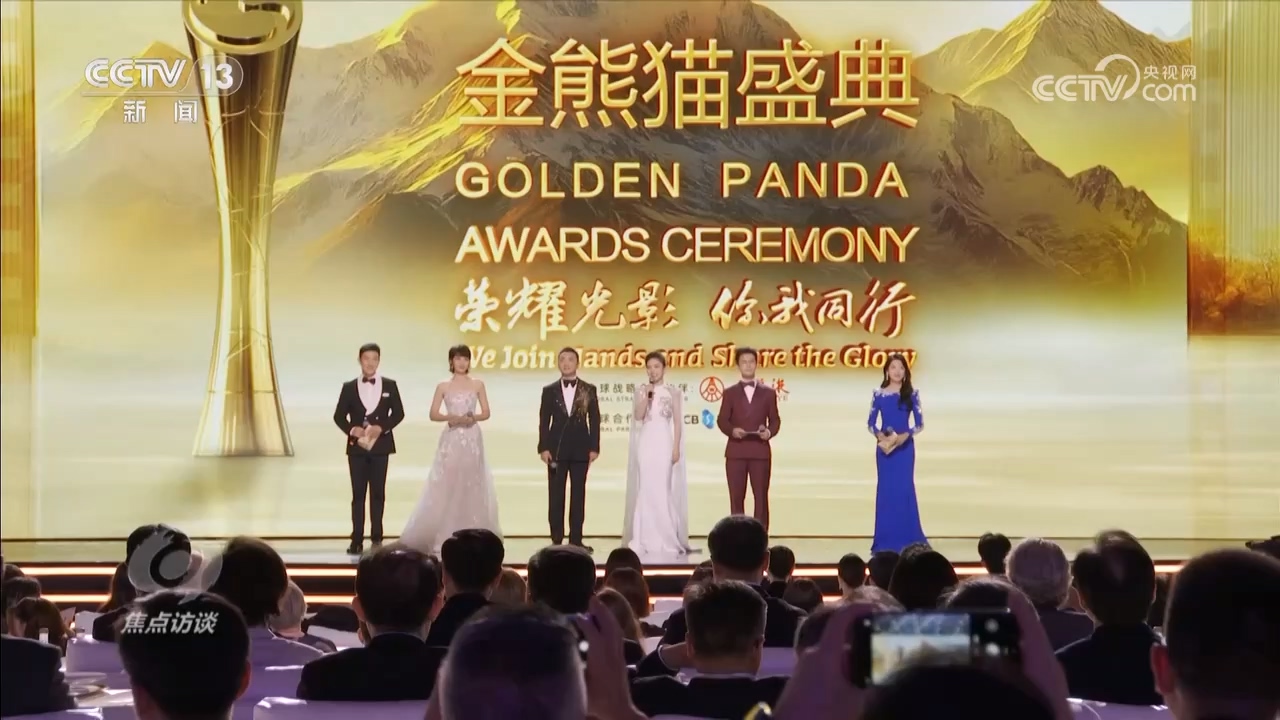
焦点访谈|共赴“金熊猫”之约 尽享文化盛宴
Yang Shi Wang· 2025-09-17 14:18
Core Points - The second Golden Panda Awards took place in Chengdu from September 12 to 13, showcasing films, TV shows, documentaries, and animations from over 120 countries and regions under the theme "Light and Shadow Encounter Beauty" [1][3] - A total of 27 awards were presented, with notable winners including "Ne Zha" for Best Animation, "Still Tomorrow" for Best Film, "Mountain Flowers Blooming" for Best Series, and "New Wilderness" for Best Documentary [3][15][17] - The awards aim to promote cultural exchange and mutual appreciation among different civilizations through the selection of outstanding global film and television works [5][9] Event Highlights - The Golden Panda Awards featured a significant increase in international participation, with 5,343 entries from 126 countries and regions, of which 27% were from China and 73% from abroad [9][12] - The event included the Golden Panda International Cultural Forum, which gathered over 780 guests to discuss cultural dialogue and cooperation across various fields [17][19] - AI technology's role in the film industry was a key topic, with discussions on how it can enhance creativity and production efficiency [19][21] Cultural Significance - The awards serve as a platform for cultural exchange, allowing for a deeper understanding of how different cultures perceive each other’s film and television works [7][11] - The event emphasized the importance of diversity and richness in cultural expressions, showcasing a wide range of genres and production scales [12][13] - The Golden Panda Awards also initiated the "Golden Panda Global Imaging Cooperation Plan" to support the development of global film talent [21][24] Industry Impact - The awards have strengthened their influence in the industry, facilitating the signing of 64 film-related projects with a total investment exceeding 12 billion yuan [24] - The event included initiatives to integrate film with tourism, launching themed travel routes that highlight cultural landmarks in Sichuan [23][26] - The Golden Panda Awards are positioned as a significant event for promoting the development of the film industry and fostering international cultural dialogue [24][26]