
现代农业

Search documents
“秸”尽其用折射现代农业密码(人民时评)
Ren Min Ri Bao· 2025-05-12 22:10
Core Viewpoint - The transformation of straw from a waste product to a valuable resource reflects a significant shift in development concepts, strong support from technological innovation, and precise guidance from national policies, contributing to the establishment of a modern agricultural industry system [1][3]. Group 1: Straw Utilization - The annual production of crop straw in China has reached 867 million tons, with a collection capacity of 733 million tons, resulting in a comprehensive utilization rate of 88.3% [1]. - Straw is now being repurposed into fertilizers, animal feed, energy, and even industrial raw materials, marking a significant advancement in modern agriculture [1][3]. - The utilization of straw as animal feed has seen rapid growth, with an annual utilization rate increasing by approximately 2 percentage points, reaching 173 million tons [2]. Group 2: Technological and Policy Support - The integration of straw return to the field with soil cultivation practices enhances soil organic matter content and improves water and nutrient retention [2]. - The "Accelerating the Construction of an Agricultural Power Plan (2024-2035)" emphasizes the need for a full-chain approach to upgrading the agricultural industry system, with straw utilization exemplifying this upgrade [3]. - The central government's policy supports the comprehensive utilization of straw, aiming for its high-value application and continuous exploration of its potential [4]. Group 3: Environmental and Economic Impact - Straw is being utilized as a clean energy source through methods such as direct combustion, pyrolysis gasification, and biogas production, contributing to energy structure optimization and ecological protection [3]. - Innovative uses of straw, such as serving as a substrate for mushroom cultivation, have opened new avenues for farmers to increase their income and expanded the agricultural industry chain [3]. - The shift from burning straw to fully utilizing it represents a critical step towards achieving a sustainable agricultural model and enhancing overall agricultural efficiency [2][3].
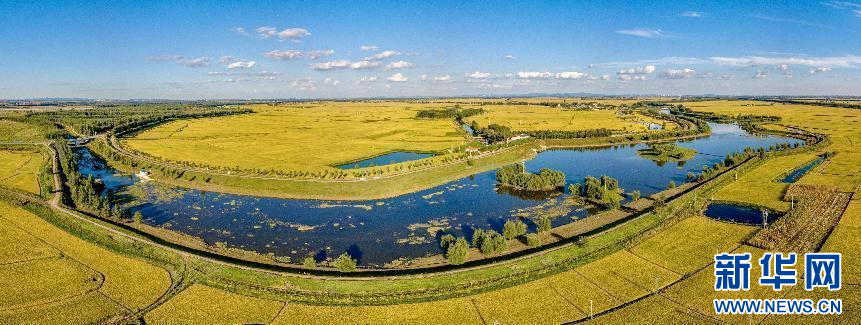
乡村振兴在行动丨酸菜香、肉鸡肥、淡水鱼鲜、稻田画美——<br/>沈阳特色产业助力现代农业“四梁八柱”
Xin Hua Wang· 2025-05-09 01:26
Core Viewpoint - Shenyang is leveraging its unique agricultural resources and modern technology to develop a high-quality agricultural sector, focusing on key industries such as sauerkraut, meat chickens, freshwater fish, and rice paddy art, thereby driving rural revitalization and economic growth [1][4][14] Group 1: Agricultural Development - Shenyang is enhancing its agricultural production through intelligent farming and brand empowerment, transforming local specialties into comprehensive industrial chains [1][4] - The city aims to become a national hub for freshwater fish, with a projected production of 232,000 tons and a fishery output value of 3.34 billion yuan in 2024 [5] - Shenyang's agricultural products are not only meeting local demand but also extending their reach to northeastern provinces and major regions like Beijing-Tianjin-Hebei and the Yangtze River Delta [5] Group 2: Brand and Market Expansion - The "Rice Dream Space" scenic area has gained popularity as a tourist destination, attracting hundreds of thousands of visitors annually and enhancing the brand value of Shenyang rice [6][8] - The city is integrating agricultural production with tourism and cultural branding, aiming to create a strong regional public brand for agricultural products [8][14] - Shenyang is promoting its unique agricultural products, such as sauerkraut and chicken, as key drivers of economic growth and brand recognition [9][14] Group 3: Industry Chain Development - The sauerkraut industry in Shenyang has seen significant growth, with 65 operating companies producing approximately 700 million pounds annually, accounting for 60-70% of national sales [9] - The white feather chicken industry is projected to reach a total industrial chain value of 10 billion yuan in 2024, with a focus on expanding the value chain through processing and branding [13][14] - Shenyang is committed to enhancing its agricultural ecosystem by strengthening leading enterprises and extending the value chain from production to market [14]

交行嘉兴分行助食用菌企业“蘑”力全开
Zheng Quan Ri Bao Zhi Sheng· 2025-05-05 23:46
Group 1 - The core viewpoint of the article highlights the successful implementation of an automated edible mushroom production project by Zhejiang Huashi Biotechnology Co., Ltd., a subsidiary of Jiangsu Hualv Biotechnology Group, which aims to enhance modern agricultural development [1][2] - The project has a total investment of approximately 200 million yuan and is designed to produce 25,000 tons of edible mushrooms annually, covering an area of about 90 acres with six mushroom greenhouses and four supporting facilities [1] - The project utilizes automated production equipment, intelligent environmental control systems, and standardized production management, ensuring that the growth parameters of the golden needle mushrooms meet uniform standards [2] Group 2 - The Agricultural Bank of China’s Jiaxing branch has tailored financial service solutions to meet the funding needs of the project, including a comprehensive review of the company's qualifications and compliance [1] - The bank has successfully completed fixed asset financing of nearly 150 million yuan, with over 100 million yuan already disbursed, facilitated by cross-regional collaboration with the Suqian branch of the bank [1]

从银耳到金耳,小镇食用菌产业的迭代与突破
Qi Lu Wan Bao· 2025-04-30 21:08
Core Viewpoint - The successful cultivation of Jin Ear mushrooms in Xu Zhuang Town represents a new approach to the development of edible mushrooms in Xin County, which is known as the "hometown of Agaricus bisporus" in China [1][2]. Group 1: Historical Development - Xu Zhuang Town began developing the edible mushroom industry in the 1990s, following a structural adjustment in agriculture, with a significant focus on the cultivation of Agaricus bisporus [1]. - The town has received multiple accolades for its contributions to mushroom cultivation, including titles such as "National Small Mushroom New Rural Construction Demonstration Town" and "Shandong Province Small Mushroom New Rural Construction Advanced Unit" [1]. Group 2: Modern Agricultural Practices - The town has adopted a "one village, one product, one characteristic" development strategy, leveraging "Internet+" to enhance modern agricultural production and extend the industrial chain [2]. - The cultivation of Jin Ear mushrooms has been integrated into a comprehensive service model that includes production, processing, sales, and land leasing, showcasing a successful practice in agricultural modernization [2]. - The use of data-driven approaches in mushroom cultivation has replaced traditional experience-based methods, highlighting the impact of modern technology on agricultural practices [2].
带动小农户拥抱“大农业”
Jing Ji Ri Bao· 2025-04-21 21:59
Core Viewpoint - The article emphasizes the importance of smallholder farmers in China's agricultural landscape, highlighting the government's initiative to enhance their capabilities and integrate them into modern agricultural practices [1][2]. Group 1: Current Situation of Smallholder Farmers - Smallholder farmers account for over 98% of agricultural operators in China, with 90% of agricultural workers and 70% of cultivated land [1]. - The development of smallholder farmers faces challenges such as low marketization, limited production scale, and weak bargaining power, which restrict their ability to gain value across the entire agricultural supply chain [2]. Group 2: Government Initiatives - The "Plan for Accelerating the Construction of an Agricultural Powerhouse (2024-2035)" proposes the implementation of a smallholder capacity enhancement project, encouraging cooperative farming and joint production methods [1][2]. - The government aims to improve the organizational and professional levels of smallholder farmers by promoting cooperative operations and establishing industry associations to enhance market competitiveness [2]. Group 3: Support Systems for Smallholder Farmers - A comprehensive social service system targeting smallholder farmers is essential, focusing on providing quality agricultural services in areas such as supply of agricultural materials, green production technologies, and machinery operations [3]. - The integration of modern technologies like big data, IoT, and AI is crucial for improving smallholder farmers' production efficiency and addressing their production and sales challenges [3].
茂名荔枝:“六个最”引领全球荔枝产业发展
Nan Fang Nong Cun Bao· 2025-04-19 02:03
Core Points - Maoming is recognized as the "World Capital of Lychee," being the largest quality lychee production base globally, showcasing the most extensive scale and superior quality in the lychee industry [2][3]. Group 1: Industry Overview - The lychee industry in Maoming is characterized by "six mosts": the longest history, the largest area, the highest yield, the most varieties, the best quality, and the most comprehensive industry [3][4]. - Maoming has a lychee planting history of over 2000 years, starting from the Qin Dynasty, with the lychee from Gaozhou becoming a tribute during the Tang Dynasty [12]. - The total output value of the lychee industry in Maoming exceeds 12 billion yuan, contributing significantly to the local economy [8][9]. Group 2: Production and Quality - The planting area for lychee in Maoming is approximately 1.42 million acres, ranking first in the country [14]. - Maoming's lychee production accounts for about 50% of Guangdong's total, 25% of the national total, and 20% of the global total, meaning one in every five lychees worldwide is produced in Maoming [15]. - There are 81 varieties of lychee cultivated in Maoming, with the premium variety "Bai Tang Ying" being particularly favored by consumers both domestically and internationally [16]. Group 3: Industry Development - Maoming has established a national modern agricultural industry park for lychee and several provincial-level parks, enhancing the overall development of the lychee industry [23][24]. - The region has over 500 lychee processing enterprises, processing more than 50,000 tons of lychee annually, and has seen the establishment of 34 logistics companies and 4,500 e-commerce businesses [30][31]. - The lychee industry in Maoming has been recognized with various awards, including being named an excellent case for high-value trademark brand construction in Guangdong [21][22]. Group 4: Future Prospects - The lychee harvest season is approaching, with early varieties expected to be available from late April to June [33][35]. - A 2025 procurement guide for Maoming lychee has been introduced, allowing buyers to access information on varieties, planting distribution, and sales conditions through QR codes [38][39].

上证现代农业主题指数报1378.67点,前十大权重包含天马科技等
Jin Rong Jie· 2025-04-01 09:05
Group 1 - The Shanghai Modern Agriculture Theme Index closed at 1378.67 points, with a 2.37% increase over the past month, a 2.90% decrease over the past three months, and a 2.90% decline year-to-date [1] - The index comprises 30 listed companies involved in various sectors such as agricultural products, seed industry, feed, animal health and breeding, livestock products, fishery products, and agricultural machinery [1] - The top ten weighted companies in the index include Meihua Biological (15.84%), Beidahuang (8.53%), Hainan Rubber (7.42%), and others, with the Shanghai Stock Exchange accounting for 100% of the index holdings [1] Group 2 - The industry composition of the index shows that agricultural products account for 33.29%, feed for 28.95%, animal health and breeding for 15.05%, livestock products for 9.97%, seed industry for 6.06%, agricultural machinery for 3.50%, and fishery products for 3.19% [2] - The index samples are adjusted biannually, with adjustments implemented on the next trading day following the second Friday of June and December each year [2] - Weight factors are generally fixed until the next scheduled adjustment, with special circumstances allowing for temporary adjustments [2]

中国银行山东省分行“益农快贷”为乡村振兴注入强劲动力
Zhong Guo Jin Rong Xin Xi Wang· 2025-03-24 08:13
Core Insights - The "Yinong Kuai Dai" program by the Bank of China Shandong Branch is providing significant financial support for rural revitalization, particularly during the spring farming season [1][3]. Financial Support for Farmers - The "Yinong Kuai Dai" program offers credit without collateral, with low interest rates, enabling farmers like Wang Meng to secure necessary funds for agricultural activities [2][3]. - In Linyi City, Shandong Province, the program has provided 10.36 million yuan in financial support to 28 farmers and agricultural entities this year [3]. Agricultural Modernization - The program is facilitating the upgrade of agricultural machinery, empowering new farmers by providing timely financial assistance for equipment purchases [4]. - Chen Yongxiang, a farmer and machinery service provider, successfully obtained a loan through the "Yinong Kuai Dai" program, allowing her to expand her machinery fleet and enhance service capabilities [4]. Overall Financial Growth - The Bank of China Shandong Branch has been actively innovating financial service models, with agricultural loan balances reaching nearly 160 billion yuan, and an increase of over 8 billion yuan in the current year [5].
