
育儿补贴政策

Search documents
国家育儿补贴政策落地,广州儿童药生产企业备受鼓舞
Guang Zhou Ri Bao· 2025-07-29 13:36
Group 1: Policy Impact - The implementation of the childcare subsidy system is a significant move by the government to provide cash subsidies to families with children under three years old, starting from January 1, 2025, with an annual subsidy of 3,600 yuan per child [1] - The policy aims to reduce the financial burden of raising children and create a more family-friendly environment, reflecting the government's commitment to child development [1] - Following the announcement, the A-share market saw a surge in stocks related to the baby and child sector, indicating positive market sentiment towards the policy [1] Group 2: Industry Growth - The Chinese baby and child market is expected to experience substantial growth, with projections estimating a market size of 4.2 trillion yuan in 2024, surpassing 5 trillion yuan by 2025, and potentially reaching 10 trillion yuan by 2030 [1] - The industry is currently in a "golden period" of simultaneous quantity and quality improvement, driven by policy support and consumer upgrades [1] Group 3: Company Developments - Yipin Hong Pharmaceutical Group is focusing on the research and production of children's medications, holding 26 registered pediatric drug approvals that cover over 70% of childhood diseases [2] - The company is actively developing more pediatric-specific formulations to address clinical challenges such as medication adherence and safety concerns [2] - Guangzhou Pharmaceutical Group's Baiyunshan has developed a children's version of its popular Banlangen granules, which has received positive market feedback for its effectiveness [2][3]

兴业期货日度策略-20250729
Xing Ye Qi Huo· 2025-07-29 12:51
1. Report Industry Investment Ratings - Index: Bullish [1] - Treasury Bonds: Sideways [1] - Gold: Sideways, with a bullish pattern for silver [4] - Non - ferrous Metals (Copper): Sideways [4] - Non - ferrous Metals (Aluminum and Alumina): Sideways for alumina, cautious and bearish short - term, long - term bullish for aluminum [4] - Non - ferrous Metals (Nickel): Sideways [4] - Lithium Carbonate: Sideways [6] - Silicon Energy: Sideways [6] - Steel and Ore (Threaded Steel): Bullish pattern [6] - Steel and Ore (Hot - Rolled Coil): Bullish pattern [6] - Steel and Ore (Iron Ore): Sideways pattern [7] - Coking Coal and Coke (Coking Coal): Sideways [7] - Coking Coal and Coke (Coke): Sideways [7] - Soda Ash/Glass (Soda Ash): Sideways pattern [7] - Soda Ash/Glass (Float Glass): Sideways pattern [7] - Crude Oil: Sideways [9] - Methanol: Bullish [9] - Polyolefins: Sideways [9] - Cotton: Sideways and bullish [9] - Rubber: Cautiously bullish [9] 2. Core Views of the Report - The overall upward trend of the stock index is clear, and there are opportunities to go long on dips; the bond market is affected by sentiment and the stock - commodity market, with reduced upward pressure but high uncertainty [1] - Gold is in a high - level sideways pattern, and silver has strong support. It is recommended to hold short - put option positions and go long on silver [4] - The copper market is affected by the US copper tariff policy, with high uncertainty and a sideways pattern [4] - Alumina is affected by sentiment in the short - term, with a medium - term surplus pattern; aluminum has clear supply constraints and a relatively stable long - term bullish strategy [4] - Nickel lacks directional drivers and is in a sideways pattern, and the short - call option position can be held [4] - The long - term logic of "anti - involution" in the steel and ore market remains valid, but short - term factors are differentiated. Each variety has different supply - demand situations and corresponding strategies [6][7] - The soda ash market has a supply surplus, and the glass market has a relatively better fundamental situation. It is recommended to hold the long - glass and short - soda ash strategy [7] - The crude oil market is affected by geopolitical factors, with a risk premium increase and a sideways pattern [9] - Methanol has price support, and it is recommended to sell put options [9] - Polyolefins have a low basis, and the futures may continue to fluctuate [9] - Cotton prices may fluctuate in a moderately bullish range before September - October [9] - Rubber is in a situation of both supply and demand increasing, with a sideways price trend [9] 3. Summaries According to Related Catalogs 3.1 Stock Index - On Monday, the A - share market had a narrow - range consolidation, with the ChiNext remaining strong and the trading volume slightly decreasing. The stock index futures were in a high - level consolidation, and the discount of IC and IM widened again [1] - The "anti - involution" sentiment in the market cooled down, and the market returned to a state of rapid sector rotation. The macro - level is affected by Sino - US economic and trade talks, and the fundamental long - term logic of corporate profit repair remains unchanged. The upward trend of the stock index is clear, and attention should be paid to the opportunity to go long on dips [1] 3.2 Treasury Bonds - The bond market rebounded across the board, and the upward pressure on the bond market decreased. The central bank made large - scale net injections, and the liquidity was abundant. The bond market is affected by sentiment and the stock - commodity market in the short - term, with high uncertainty [1] 3.3 Gold and Silver - Gold is in a high - level sideways pattern, lacking short - term drivers. If it pulls back to the lower edge of the operating range since June, short - term long positions can be considered. The gold - silver ratio continues to converge, and silver has strong price support. It is recommended to hold short - put option positions and go long on silver [4] 3.4 Non - ferrous Metals Copper - The Shanghai copper market is mainly affected by the US copper tariff policy. The medium - long - term supply of the mining end is tight, and the short - term import demand depends on policies. The market has high uncertainty and is in a sideways pattern [4] Aluminum and Alumina - Alumina is affected by sentiment in the short - term, with a medium - term surplus pattern. The short - term demand for aluminum is cautious, but the supply constraints are clear, and the long - term bullish strategy is relatively stable [4] Nickel - The supply of nickel has a tight situation in Indonesia's mines and abundant production capacity of nickel iron and intermediate products. The demand is in the off - season. The market "anti - involution" sentiment cooled down, and the nickel price lacks directional drivers, remaining in a sideways pattern. The short - call option position can be held [4] 3.5 Lithium Carbonate - The exchange adjusted the handling fee and daily opening limit, and the long - position sentiment in the lithium carbonate futures market weakened. The supply pattern has limited improvement, and there is still inventory accumulation pressure. Attention should be paid to the mining license approval results of key mines in Jiangxi in early August [6] 3.6 Silicon Energy - The silicon energy market has limited new orders for polysilicon, and downstream procurement is cautious. The industrial silicon market is mainly driven by polysilicon in the early stage, and the fundamental situation has not improved substantially, with the bullish sentiment fading [6] 3.7 Steel and Ore Threaded Steel - The spot price of threaded steel continued to decline, and the basis strengthened significantly. The regulatory tightening cooled the market, and the short - term supply contraction probability is low. The price has strong support, and it is recommended to hold the short - put option position [6] Hot - Rolled Coil - The spot price of hot - rolled coil continued to decline, and the basis also strengthened significantly. The short - term supply contraction probability is low. The price has support, and it is recommended to wait and see [6] Iron Ore - The short - term supply of iron ore is relatively stable, and the long - term price is under pressure. The 9 - 1 positive spread strategy can be patiently held, and the arbitrage opportunity of going long on coking coal and short on iron ore in the 01 contract can be grasped after the sentiment stabilizes [7] 3.8 Coking Coal and Coke Coking Coal - The exchange upgraded risk - control measures, and the coking coal futures price fell sharply. The supply tightening expectation exists, and the fundamentals support the price, but short - term unilateral participation requires caution [7] Coke - The coke spot market is bullish, but the futures price is affected by the decline of coking coal and shows a sideways decline [7] 3.9 Soda Ash and Glass Soda Ash - The soda ash market has a supply surplus, and the demand is affected by "anti - involution". The inventory decreased recently, and attention should be paid to the warehouse receipt pressure. It is recommended to wait and see for new orders and hold the long - glass and short - soda ash strategy [7] Float Glass - The glass market has a relatively better fundamental situation, with continuous inventory reduction. It is recommended to go long on dips or sell put options and hold the long - glass and short - soda ash strategy [7] 3.10 Crude Oil - Geopolitical factors have become the short - term focus of the market, and the risk premium has increased. The OPEC+ may increase production in September. The demand - side support has weakened, and the market is in a sideways pattern [9] 3.11 Methanol - The port inventory of methanol is expected to increase, and the start - up rate of northwest coal - chemical plants is expected to rise. The futures price is higher than the spot price, and it is recommended to sell put options [9] 3.12 Polyolefins - The basis of polyolefins is low, and the futures may pull back. In August, both supply and demand are expected to increase, and the futures will continue to fluctuate [9] 3.13 Cotton - The short - term supply of cotton is tight, and the demand is relatively stable. There is a possibility of additional quotas. Before September - October, the cotton price may fluctuate in a moderately bullish range [9] 3.14 Rubber - The port inventory of rubber is increasing again, and the supply and demand are both increasing. The price is in a sideways pattern, and attention should be paid to the production increase rate in Southeast Asian producing areas [9]
国家育儿补贴方案发布,有望提振母婴产业链
Guoyuan International· 2025-07-29 12:17
Group 1: Policy Overview - The National Childcare Subsidy Policy aims to encourage childbirth and improve the birth support policy system across the country[2] - Starting from January 1, 2025, families can receive an annual subsidy of 3,600 yuan per child until the child turns 3 years old[2] - The subsidy can be claimed online or offline, with local governments having the flexibility to adjust the subsidy amount based on regional conditions[2] Group 2: Financial Implications - The estimated annual subsidy scale is expected to exceed 100 billion yuan, potentially alleviating the pressure of childbirth[3] - Based on data from the National Bureau of Statistics, the number of children under 3 years old is approximately 28.12 million, leading to an estimated annual subsidy distribution of about 101.2 billion yuan[3] - The introduction of this subsidy is anticipated to lower family childbirth costs and boost consumption, particularly in the maternal and infant sectors[3] Group 3: Market Impact - The policy is expected to positively influence the declining trend of newborn numbers, benefiting related industries such as dairy products and education[4][6] - Companies to watch include H&H International (1112.HK) and Mengniu Dairy (2319.HK) in the dairy sector, and Excellence Education Group (3978.HK) in the education sector[6]
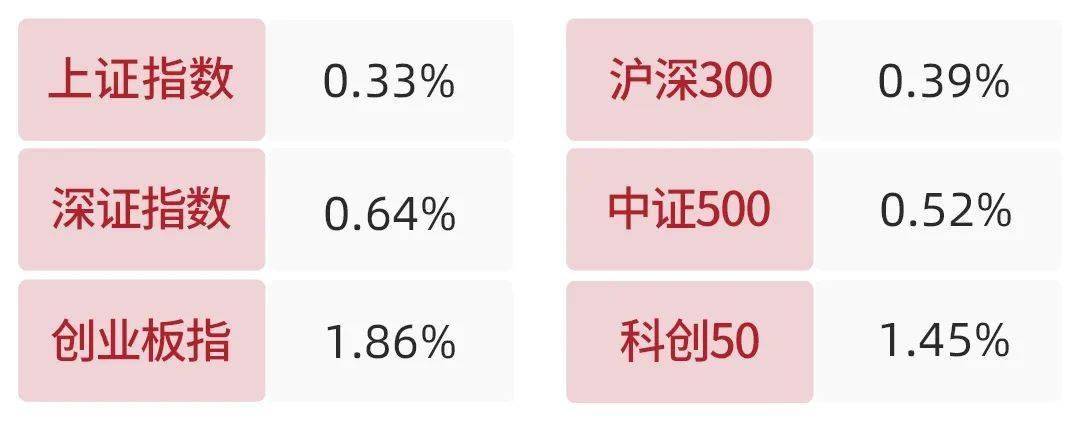
银河日评|创业板指涨1.86%,育儿补贴相关政策落地对市场信心形成提振
Sou Hu Cai Jing· 2025-07-29 12:05
Market Performance - The Shanghai Composite Index increased by 0.33%, while the Shenzhen Component Index rose by 0.64% [1] - Over 2,200 stocks in the two markets experienced gains [1] Industry Performance - The top-performing sectors included Communication (3.29%), Steel (2.59%), and Pharmaceutical & Biological (2.06%) [2] - The sectors with the largest declines were Agriculture, Forestry, Animal Husbandry, and Fishery, Banking, Beauty and Personal Care, Light Industry Manufacturing, and Environmental Protection [2] Key Factors - The Communication sector saw strong performance due to overseas companies reaching historical highs and the potential benefits for domestic computing power supply chains [3] - The Steel sector benefited from "anti-involution" policies that optimized supply-demand dynamics, alongside increased demand from infrastructure and manufacturing [3] - The Pharmaceutical & Biological sector was boosted by agreements with foreign companies for exclusive rights and licenses, creating potential value [3] - The Agriculture, Forestry, Animal Husbandry, and Fishery sector faced challenges from declining pig prices and rising feed costs [3] - The Banking sector was pressured by rapid convergence of futures spreads, reflecting risk-hedging strategies that involved selling bank stocks [3] - The Beauty and Personal Care sector declined due to tightening regulations and a shift in investment from consumer sectors to high-tech sectors [3] Future Outlook - The A-share market is expected to see a combination of policy and industrial upgrades driving continuous style rotation [4] - The cyclical sectors may experience valuation recovery due to "anti-involution" policies and increased infrastructure investment [4] - The technology sector could benefit from breakthroughs in AI technology, changes in the semiconductor industry cycle, and catalysts from mid-year performance reports [4]


一图看懂 | 育儿补贴新政概念股
市值风云· 2025-07-29 10:08
Core Viewpoint - The national childcare subsidy policy will provide an annual subsidy of 3600 yuan per child until the age of three, benefiting over 20 million families each year starting from January 1, 2025 [4][5]. Subsidy Standard - Each child will receive a subsidy of 3600 yuan per year until they turn three years old. For children born before January 1, 2025, who are under three years old, the subsidy will be calculated based on the remaining months [8]. Coverage - The policy applies to all families with children under three years old, regardless of whether they have one, two, or three children, and is uniformly implemented across the country [9]. Application Process - Parents or guardians can apply for the subsidy online through the childcare subsidy information management system or offline, providing necessary documents such as birth certificates and household registration books [10]. Funding Source - The central government will establish a "childcare subsidy fund," providing financial support to eastern, central, and western regions proportionally, with any additional local funding being the responsibility of local governments [11]. Market Impact Analysis - The infant food market is expected to exceed 72 billion yuan, directly benefiting the maternal and infant consumption industry chain [12]. - The childcare industry is projected to reach a scale of 162.1 billion yuan by 2025, with an average annual growth rate of 7.5%, accelerated by the policy [13]. - Demand for children's medical and nutritional health products is anticipated to rise, with the pediatric medication market expected to grow at a rate exceeding 10% annually [14]. Beneficiary Companies - Leading maternal and infant retail companies are expected to benefit directly from increased customer spending and frequency of purchases [15]. - Companies such as Kidswant and Huaiying Room are positioned to gain from the subsidy implementation due to their extensive retail networks and service offerings [16]. - Major players in the infant formula market, like China Feihe and Yili, are likely to see increased demand driven by the subsidy [17][18].





周度经济观察:机构行为调整,市场上涨未完-20250729
Guotou Securities· 2025-07-29 09:38
Economic Overview - In June, industrial enterprise profits worsened further, with a year-on-year decline of 4.3%[9] - The general public budget revenue in June showed a year-on-year growth rate of -0.3%, marking a slight decline of 0.4 percentage points from the previous month[4] - Government fund income in June increased by 20.4% year-on-year, a significant rise of 28.2 percentage points from the previous month[7] Market Trends - The equity market has continued to rise, with the Shanghai Composite Index breaking through the 3500-point level, while the bond market has seen significant adjustments, particularly in the 10-year and 30-year treasury yields[13] - Institutional investors are reducing bond assets and increasing equity assets, reflecting a reversal of behavior seen over the past three years[13] Policy Impact - The "anti-involution" policy has led to significant fluctuations in commodity prices, with expectations that inventory rebuilding and ongoing policy implementation may push prices higher[2] - The introduction of a child-rearing subsidy of 3600 yuan per child per year indicates a shift in policy focus towards consumer and household sectors, although its macroeconomic impact remains limited[12] Future Outlook - The bottom of industrial enterprise profit growth may have been reached, as PPI (Producer Price Index) is expected to stabilize, indicating that the peak pressure on corporate profits may be passing[10] - The ongoing active credit expansion is providing fundamental support for the equity market, with expectations of further upward movement in market levels[15]
一图读懂育儿补贴政策
Yang Shi Xin Wen Ke Hu Duan· 2025-07-29 08:30
坚持统筹衔接、保障公平,与现行民生政策相衔接,确保符合条件的婴幼儿平等享受补贴; 中共中央办公厅、国务院办公厅今天(28日)发布《育儿补贴制度实施方案》,育儿补贴是在全国全面向 群众发放现金补贴,具有开创性意义。 总体要求 《实施方案》明确了总体要求和四个方面的工作要求: 要做到坚持改善民生、惠民利民,有效降低家庭生育养育成本; 其中,对2025年1月1日之前出生、不满3周岁的婴幼儿,按应补贴月数折算计发补贴。对按照育儿补贴 制度规定发放的育儿补贴免征个人所得税。在最低生活保障对象、特困人员等救助对象认定时,育儿补 贴不计入家庭或个人收入。 申领程序及发放渠道 在申领程序上,育儿补贴由婴幼儿的父母一方或其他监护人按规定向婴幼儿户籍所在地申领。主要通过 育儿补贴信息管理系统线上申请,也可线下申请。 育儿补贴的发放渠道为申领人或婴幼儿的银行卡或其他金融账户,鼓励通过惠民惠农财政补贴资金"一 卡通"或婴幼儿的社会保障卡发放。各省份结合实际确定具体发放时间,提高发放效率,确保补贴及时 足额发放到位。 《实施方案》明确了育儿补贴的信息管理要求,以及对育儿补贴制度的实施进行全程监督。《实施方 案》要求加强组织领导,各地制 ...
国盛证券:育儿补贴落地 乳制品机会突出
智通财经网· 2025-07-29 05:54
Group 1 - The implementation of the national childcare subsidy policy is expected to benefit infant formula sales, with a projected increase of 520,000 newborns in 2024, leading to positive growth in first-stage formula sales [1][4] - The subsidy will provide 3,600 yuan per year for each child under three years old, covering all families regardless of the number of children, which is anticipated to gradually improve the birth rate [2][3] - The total subsidy for newborns from 2022 to 2024 is estimated at 156 billion yuan, with a projected subsidy of 10,800 yuan per person for those born after January 1, 2025 [3] Group 2 - Companies like China Feihe are expected to achieve revenues of 9.1 to 9.3 billion yuan in the first half of 2025, with low single-digit growth anticipated for the full year [4] - Yili's revenue from milk powder and dairy products is projected to reach 29.68 billion yuan in 2024, reflecting a year-on-year increase of 7.5%, with a market share of 17.3% in infant formula [4] - Mengniu's milk powder business is expected to generate 3.32 billion yuan in revenue for 2024, showing a year-on-year decline of 12.7%, while its subsidiary, Ruibaoen, is experiencing double-digit growth [4] Group 3 - H&H International Holdings reported a high single-digit growth in infant formula sales for the first half of 2025, with a market share increase in the ultra-premium segment from 13.0% in 2024 to 15.8% in May 2025 [5] - The dairy industry is showing a trend of differentiation, with low-temperature dairy products experiencing growth while ambient products face pressure, indicating a shift in consumer preferences [6] - The implementation of childcare policies is expected to lead to an increase in the number of infants, which may subsequently boost dairy product consumption [6]
军工再度领涨,沪指震荡收红
Hua Tai Qi Huo· 2025-07-29 05:47
Report Industry Investment Rating - Not provided in the given content Core Viewpoints - The implementation of the domestic child - rearing subsidy policy is of positive significance for enhancing fertility willingness and driving related consumption. Attention should be paid to whether the China - US economic and trade negotiations achieve more than expected progress. The market is rotating at the current position. In the short term, it is necessary to observe whether blue - chip stocks start to make up for lost ground, and opportunities in IH can be grasped on dips [3] Summary by Directory Market Analysis - Domestically, the national child - rearing subsidy system implementation plan was officially announced. Starting from January 1, 2025, a child - rearing subsidy of 3,600 yuan per year will be provided for each child until the child reaches the age of 3. Eligible infants under 3 years old can apply for the subsidy, and those born before January 1, 2025, and under 3 years old can receive the subsidy based on the number of months. It is expected that localities will open the application for the subsidy in late August. The China - US economic and trade teams held talks in Stockholm. Overseas, Trump said he might impose a unified tariff of 15% - 20% on imported goods from countries that have not negotiated a separate trade agreement with the US [1] - In the spot market, the three major A - share indexes fluctuated and closed higher. The Shanghai Composite Index rose 0.12% to close at 3,597.94 points, and the ChiNext Index rose 0.96%. The defense and military, non - bank finance, and pharmaceutical biology industries led the gains, while the coal, steel, transportation, and petroleum and petrochemical industries led the losses. The trading volume of the Shanghai and Shenzhen stock markets dropped to 1.74 trillion yuan. In overseas markets, the three major US stock indexes closed mixed, with the Dow Jones Industrial Average falling 0.14%, and the Nasdaq and S&P 500 hitting new highs [2] - In the futures market, the basis trends were differentiated. The basis of IH rebounded, while the discounts of IC and IM deepened. In terms of trading volume and open interest, the trading volume and open interest of IF, IC, and IM increased simultaneously [2] Strategy - The implementation of the domestic child - rearing subsidy policy is positive for fertility willingness and related consumption. Attention should be paid to the progress of China - US economic and trade negotiations. The market is rotating, and short - term attention should be paid to whether blue - chip stocks make up for lost ground. Opportunities in IH can be grasped on dips [3] Macro - economic Charts - The charts include the relationship between the US dollar index and A - share trends, the relationship between US Treasury yields and A - share trends, the relationship between the RMB exchange rate and A - share trends, and the relationship between US Treasury yields and A - share styles [6][8][10] Spot Market Tracking Charts - The daily performance of major domestic stock indexes on July 28, 2025: the Shanghai Composite Index rose 0.12%, the Shenzhen Component Index rose 0.44%, the ChiNext Index rose 0.96%, the CSI 300 Index rose 0.21%, the SSE 50 Index rose 0.00%, the CSI 500 Index rose 0.38%, and the CSI 1000 Index rose 0.35% [13] Futures Market Tracking Charts - The trading volume and open interest of stock index futures: IF trading volume was 92,993 (an increase of 547), open interest was 263,839 (an increase of 3,663); IH trading volume was 46,357 (a decrease of 870), open interest was 95,447 (a decrease of 1,993); IC trading volume was 88,191 (an increase of 11,258), open interest was 228,690 (an increase of 3,134); IM trading volume was 186,257 (an increase of 26,844), open interest was 338,751 (an increase of 11,728) [15] - The basis of stock index futures: for IF, the basis of the current - month contract was - 4.62 (a decrease of 0.26), etc.; for IH, the basis of the current - month contract was 3.23 (an increase of 3.14), etc.; for IC, the basis of the current - month contract was - 49.42 (a decrease of 11.03), etc.; for IM, the basis of the current - month contract was - 55.38 (a decrease of 16.97), etc. [40] - The inter - delivery spread of stock index futures: for example, the spread between the next - month and current - month contracts of IF was - 9.20 (a decrease of 2.40), etc. [44][45][46]
港股行业比较之育儿补贴政策影响分析:重点关注港股大众消费的行业轮动
Shenwan Hongyuan Securities· 2025-07-29 05:46
Group 1 - The report emphasizes that the stock prices of consumer goods in the Hong Kong market are undervalued, with a clear outlook for a rebound driven by relevant policies such as the childcare subsidy policy [4] - The childcare subsidy policy serves as a catalyst for the rotation of the Hong Kong market towards the consumer goods sector, indicating a potential for short-term price recovery [4] - Year-to-date performance from January 2, 2025, to July 21, 2025, shows significant increases in stock prices for various consumer sectors, with entertainment products up 123.5%, jewelry up 119.2%, and cosmetics up 40.5% [4] Group 2 - The report notes that the consumer goods sector is expected to reverse its performance in the medium term, as the fundamentals are still stabilizing, and the market has reflected pessimistic expectations for certain industries [4] - The report highlights that the market sentiment is shifting, with the healthcare, essential consumer goods, and real estate sectors showing poor relative performance over the past two years [4] - The report suggests that the introduction of supportive policies for childbirth will enhance the probability of a turnaround in the consumer goods sector [4] Group 3 - The report argues against the common perception that the fundamentals of the consumer goods sector need improvement, asserting that stock prices are poised for upward movement as they reflect future expectations [5] - It reiterates that investment opportunities in the Hong Kong market are not limited to leading companies, as the overall market sentiment is improving and institutional holdings are expected to rise [5] - The report discusses the concept of "good housing" as a structural increment in the real estate market, which may influence the rotation of industries in the Hong Kong market [5] Group 4 - The report identifies the continuous implementation of supportive policies for childbirth as a significant catalyst for market movement, with recent initiatives including free preschool education [5] - It concludes that the introduction of the childcare subsidy policy reinforces the positive outlook for a bull market in Hong Kong, with expectations for increased investor activity in the consumer goods sector [5] - The report maintains a positive view on the potential for the Hong Kong market to lead the market in a bull phase, with ongoing structural reforms expected to improve macroeconomic conditions and corporate earnings [5]