
金融强国建设

Search documents
权威访谈·开局“十五五”丨营造良好货币金融环境 有力支撑经济高质量发展——访中国人民银行党委书记、行长潘功胜
Xin Hua Wang· 2026-01-22 09:39
Core Viewpoint - The article emphasizes the importance of creating a favorable monetary and financial environment to support high-quality economic development in China, as outlined in the "14th Five-Year Plan" [1]. Group 1: Monetary Policy Implementation - The People's Bank of China (PBOC) will continue to implement a moderately loose monetary policy in 2026, focusing on stabilizing economic growth and ensuring reasonable price recovery [2]. - The PBOC plans to utilize various monetary policy tools, such as reserve requirement ratio (RRR) cuts and interest rate reductions, to maintain ample liquidity and align social financing scale and money supply growth with economic growth and price level expectations [2]. - There is still room for further RRR and interest rate cuts this year, with an emphasis on managing interest rate policies to keep financing costs low [2]. Group 2: Structural Monetary Policy Tools - The PBOC has reduced the interest rates of various structural monetary policy tools by 0.25 percentage points and has established a dedicated 1 trillion yuan relending facility for private enterprises [3]. - The PBOC has increased the relending quota for agricultural and small enterprises by 500 billion yuan to 4.35 trillion yuan and for technological innovation and transformation by 400 billion yuan to 1.2 trillion yuan [3]. - The PBOC aims to maintain stable financial markets and manage expectations, ensuring the RMB exchange rate remains stable at a reasonable level [3]. Group 3: Financial System Development - The PBOC is focused on constructing a scientific and robust monetary policy system and a comprehensive macro-prudential management system as part of the strategy to promote high-quality financial development during the "14th Five-Year Plan" [4]. - Key areas of focus include optimizing the monetary policy target system, improving the mechanism for basic currency issuance, and enhancing the market-based interest rate formation and transmission mechanisms [5]. - The PBOC will also improve the macro-prudential management framework, expanding its coverage to include new areas such as internet finance and non-bank financial institutions [6]. Group 4: Supporting Real Economy - The PBOC aims to enhance financial support for expanding domestic demand, technological innovation, and small and micro enterprises, which are crucial for driving high-quality development [7]. - Specific measures include a dedicated 500 billion yuan relending facility for consumer services and elderly care, as well as promoting the issuance of financial bonds by qualified financial institutions to improve funding supply in the consumer sector [7]. - The PBOC will also increase support for small and micro enterprises by enhancing financing accessibility and convenience, including a dedicated 1 trillion yuan relending facility for private enterprises [8]. Group 5: Global Financial Governance - The PBOC plans to actively promote global financial governance reform and international financial cooperation, emphasizing multilateralism and the opening-up of the financial sector [9]. - Efforts will include enhancing the cross-border payment system for the RMB and participating in international financial governance and cooperation [9]. - The PBOC will also work on building a diverse and efficient global financial safety net to safeguard national financial security [9].
权威访谈·开局“十五五”|营造良好货币金融环境 有力支撑经济高质量发展——访中国人民银行党委书记、行长潘功胜
Xin Hua She· 2026-01-22 09:37
Core Viewpoint - The article emphasizes the importance of creating a favorable monetary and financial environment to support high-quality economic development in China, as outlined in the "14th Five-Year Plan" [1] Group 1: Monetary Policy Implementation - The People's Bank of China (PBOC) will continue to implement a moderately accommodative monetary policy to promote stable economic growth and reasonable price recovery, focusing on integrating both incremental and stock policies [2] - The PBOC plans to maintain ample liquidity by flexibly using various monetary policy tools such as reserve requirement ratio (RRR) cuts and interest rate reductions, with room for further adjustments in 2026 [2][3] - Structural monetary policy tools will be optimized, including a 0.25 percentage point reduction in the interest rates of various structural monetary policy tools and an increase in the quotas for agricultural and small enterprise loans [3] Group 2: Financial System Development - The PBOC aims to construct a scientific and robust monetary policy system and a comprehensive macro-prudential management system as strategic measures for promoting high-quality financial development during the "14th Five-Year Plan" [4] - Key areas of focus include optimizing the monetary policy target system, improving the mechanism for basic currency issuance, and enhancing the market-based interest rate formation and transmission mechanisms [4] Group 3: Support for Real Economy - The PBOC will enhance financial support for key areas such as expanding domestic demand, technological innovation, and small and micro enterprises, which are crucial for high-quality development [6][7] - Specific measures include a dedicated 500 billion yuan for consumer services and elderly care loans, increasing the quotas for agricultural and small enterprise loans, and supporting the issuance of financial bonds by eligible financial institutions [7] Group 4: Global Financial Governance - The PBOC will actively promote global financial governance reform and international financial cooperation, emphasizing multilateralism and the internationalization of the renminbi [8] - Efforts will include deepening institutional openness in the financial sector, enhancing cross-border payment systems, and participating in international financial governance and cooperation [8]
中国人民银行党委书记、行长潘功胜:营造良好货币金融环境 有力支撑经济高质量发展
Xin Lang Cai Jing· 2026-01-22 09:32
Core Viewpoint - The article emphasizes the importance of a favorable monetary and financial environment to support high-quality economic development in China, particularly in the context of the "14th Five-Year Plan" [1][10]. Group 1: Implementation of Monetary Policy - The People's Bank of China (PBOC) will continue to implement a moderately accommodative monetary policy to promote stable economic growth and reasonable price recovery, with a focus on integrating incremental and stock policies [2][11]. - The PBOC plans to maintain ample liquidity and ensure that the growth of social financing and money supply aligns with economic growth and price level expectations, indicating room for further cuts in reserve requirement ratios and interest rates this year [2][11]. - Structural monetary policy tools have been optimized, including a 0.25 percentage point reduction in various structural monetary policy tool rates and the establishment of a 1 trillion yuan special re-loan for private enterprises [3][12]. Group 2: Financial System Development - The PBOC aims to construct a scientific and robust monetary policy system and a comprehensive macro-prudential management system as strategic measures to promote high-quality financial development during the "14th Five-Year Plan" [4][13]. - Key areas of focus include optimizing the monetary policy target system, improving the mechanism for basic currency issuance, and enhancing the market-based interest rate formation and transmission mechanisms [4][14]. - The PBOC will also improve the structure of monetary policy tools to better guide financial institutions in optimizing loan allocations [5][14]. Group 3: Support for Real Economy - The PBOC will enhance support for expanding domestic demand, technological innovation, and small and micro enterprises, which are crucial for promoting high-quality development [6][16]. - Specific measures include a dedicated 500 billion yuan re-loan for consumer services and elderly care, as well as increased re-loan quotas for agricultural and small enterprises [6][17]. - Collaboration with various government departments will be strengthened to improve the effectiveness and accessibility of financial services for small and micro enterprises [7][18]. Group 4: Global Financial Governance - The PBOC will actively promote global financial governance reform and international financial cooperation, emphasizing a commitment to multilateralism and the construction of a fair and resilient global financial governance system [8][18]. - Efforts will include deepening institutional openness in the financial sector, advancing the internationalization of the yuan, and enhancing the cross-border payment system [9][18]. - The PBOC will also participate in international financial governance and cooperation, focusing on global macro policy coordination and the reform of the International Monetary Fund [9][18].
平安证券党委书记、董事长何之江:聚焦主责主业 坚守为民初心 以高质量发展助力金融强国建设
Zhong Guo Zheng Quan Bao· 2026-01-22 00:48
Core Viewpoint - The company emphasizes its commitment to supporting national strategies and enhancing its service capabilities to align with the development of new productive forces in the financial sector [1][2]. Group 1: Strategic Initiatives - The company has led several industry-first initiatives, including the first technology innovation green corporate bond in Tianjin and the first nationwide science and technology convertible bond [1][4]. - The company aims to transform from a traditional intermediary to a value co-creator, focusing on optimizing its business structure and financial product offerings to support the development of new productive forces [2][3]. Group 2: Financial Services and Product Offerings - The company is enhancing its comprehensive service capabilities by developing a multi-product and multi-market financing toolbox, including equity, debt, and asset securitization [3][4]. - In 2025, the company achieved significant milestones, including underwriting 97 technology innovation corporate bonds and asset-backed securities (ABS) totaling 243 billion, and 27 green corporate bonds and ABS amounting to 106 billion [4]. Group 3: Wealth Management and Investor Services - The company is focusing on transforming its traditional brokerage business into a modern wealth management service centered on customer needs, enhancing the client experience through a digitalized operating system [5][6]. - A three-dimensional inclusive finance system has been established, encompassing product offerings, services, and investor education to lower barriers to wealth management services [7]. Group 4: Future Development and Strategic Goals - The company plans to strengthen its role as a financial intermediary to optimize economic structures and enhance value creation through direct financing tools [8][9]. - Risk management is identified as a core operational aspect, with a commitment to building a proactive risk control ecosystem to foster business innovation while managing potential risks [10].
平安证券党委书记、董事长何之江: 聚焦主责主业 坚守为民初心 以高质量发展助力金融强国建设
Zhong Guo Zheng Quan Bao· 2026-01-21 22:04
Core Viewpoint - Ping An Securities is committed to supporting national strategies and enhancing new productive forces through innovative financial services, as highlighted by its pioneering roles in various financial instruments and products [1][2]. Group 1: Commitment to National Strategy - The company emphasizes its mission to serve national strategies and enhance new productive forces, aligning its services with the development of the real economy [1][2]. - Ping An Securities has established a management framework to implement the "Five Major Financial Articles," focusing on technology and green finance [2][3]. Group 2: Financial Services and Product Innovation - The company is transforming from a traditional intermediary to a value co-creator, optimizing its business structure and financial product offerings [2][3]. - Ping An Securities has developed a comprehensive service capability system that includes a multi-layered financing toolbox combining equity, debt, and asset securitization [3][4]. Group 3: Achievements in Financial Instruments - In 2025, Ping An Securities led the issuance of the first data asset ABS in China and the first technology innovation green corporate bond in Tianjin, providing low-cost funding for green transformation [4][5]. - The company has achieved a total equity underwriting scale of 3 billion yuan and has underwritten 97 technology innovation corporate bonds and ABS, amounting to 24.3 billion yuan [5]. Group 4: Wealth Management and Investor Services - Ping An Securities is focused on transforming its wealth management services to meet the growing demand for standardized financial assets and professional management [6][7]. - The company has implemented a three-dimensional inclusive finance system that includes product, service, and education components to enhance investor welfare [8]. Group 5: Strategic Goals and Future Directions - The company aims to strengthen its core competitiveness by enhancing its professional service capabilities and transitioning to a comprehensive financial solution provider [9][10]. - Ping An Securities is committed to risk management and compliance, ensuring a stable development foundation while fostering business innovation [10][11].
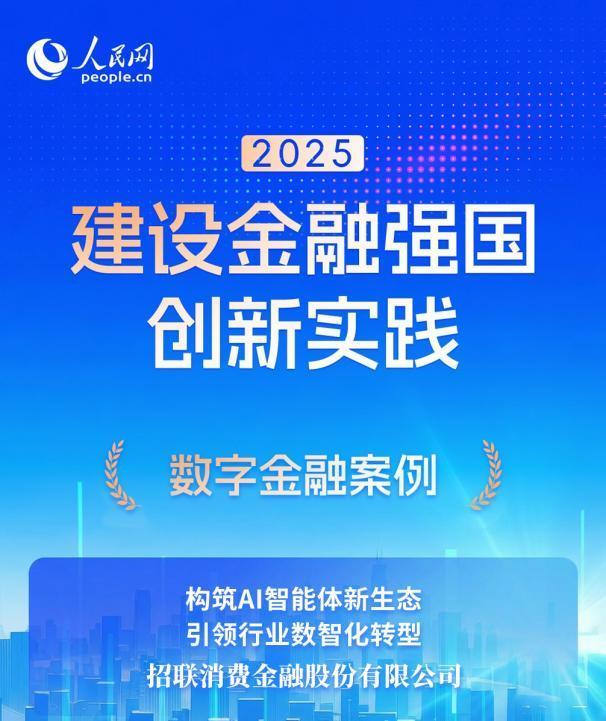
扎实做好金融“五篇大文章” 招联再次入选人民网建设金融强国创新实践案例
Hua Xia Shi Bao· 2026-01-21 08:55
Core Viewpoint - The recent 2025 People's Finance Forum in Beijing recognized the case submitted by Zhuhai Consumer Finance Co., Ltd. (referred to as "Zhuhai") for its innovative practices in building an AI ecosystem and leading the digital transformation of the industry, marking its second consecutive year of receiving this honor as the only consumer finance institution selected [1][3]. Group 1: Recognition and Achievements - Zhuhai was awarded the "Digital Finance" case in the "2025 Construction of a Financial Power" initiative, following its previous recognition in 2024 for its contributions to "Inclusive Finance" [1][3]. - The continuous recognition of Zhuhai highlights its sustained leadership in comprehensive strength and its significant role in promoting financial services for the real economy, providing important references for the industry's high-quality development [3]. Group 2: Technological Innovations - Zhuhai has adopted cutting-edge technologies such as cloud computing, big data, and machine intelligence to enhance its core capabilities, including IT-driven operations, internet risk control, and intelligent services [4]. - The company launched the industry’s first open-source large model "Zhuhai Zhilv," which has undergone two iterations, resulting in the release of the second-generation model with enhanced capabilities for complex business scenarios [4]. Group 3: Consumer Protection Initiatives - In the consumer protection domain, Zhuhai developed the "Zhuhai Zhilv Consumer Protection Intelligent Agent," establishing a three-tiered prevention system that effectively addresses customer complaints and enhances service quality [5]. - The consumer protection intelligent agent can monitor over 60 scenarios, achieving a 90% first-time resolution rate for issues and identifying over 6,000 fraudulent numbers [5]. Group 4: Inclusive Financial Services - Zhuhai has created a digital "self-service" system characterized by "confidence" and "self-healing" services, significantly improving accessibility and convenience for customers [6]. - The "confidence" service allows 40% of customers to complete self-service authentication and approval outside traditional banking hours, benefiting over 15 million customers through reduced costs and interest [6]. - The "self-healing" service has evolved the traditional post-loan interaction model, serving over 200,000 customers and providing relief to more than 420,000 individuals [6]. Group 5: Future Directions - Zhuhai aims to leverage technological advancements to build a more intelligent, efficient, and secure financial service system, enhancing the precision and adaptability of financial services for the real economy [6]. - The company is committed to playing a significant role in the construction of a financial power, focusing on technological innovation and inclusive service to contribute to the broader financial landscape [6].


汇安基金:以专业力量为金融强国建设添砖加瓦
Zhong Guo Zheng Quan Bao· 2026-01-21 00:29
"学习贯彻四中全会精神" 专栏 汇安基金表示,个人系公募基金公司作为行业的一分子,以其灵活机制和专业专注的特点,在服务居民 财富管理、支持创新企业发展、促进市场有效性等方面发挥着独特作用。公募基金的发展必须与国家发 展同频共振,将自身发展融入国家发展大局,才能实现可持续、高质量的发展。 在全面建设社会主义现代化国家新征程上,党的二十届四中全会为推进国家治理体系和治理能力现代化 指明了方向,"十五五"规划建议擘画了经济社会发展的宏伟蓝图。作为现代金融体系的重要组成部分, 公募基金肩负着服务实体经济、促进共同富裕、助力金融强国建设的重要使命。汇安基金深刻领会全会 精神,紧密围绕国家发展战略,积极探索基金行业服务中国式现代化的实践路径。 金融是实体经济的血脉,为实体经济服务是金融的天职。汇安基金深入学习领会全会精神,坚持金融服 务实体经济的根本宗旨,通过专业化投资管理,引导社会资本流向国民经济关键领域和薄弱环节。 聚焦主责主业 在投资实践中,汇安基金注重研究国家产业政策导向,重点布局符合高质量发展要求的产业领域。一方 面,加强对科技创新、绿色低碳、先进制造等战略性新兴产业的研究与投资,助力培育经济发展新动 能;另一 ...
汇安基金: 以专业力量为金融强国建设添砖加瓦
Zhong Guo Zheng Quan Bao· 2026-01-20 21:55
● 本报记者 王宇露 在全面建设社会主义现代化国家新征程上,党的二十届四中全会为推进国家治理体系和治理能力现代化 指明了方向,"十五五"规划建议擘画了经济社会发展的宏伟蓝图。作为现代金融体系的重要组成部分, 公募基金肩负着服务实体经济、促进共同富裕、助力金融强国建设的重要使命。汇安基金深刻领会全会 精神,紧密围绕国家发展战略,积极探索基金行业服务中国式现代化的实践路径。 聚焦主责主业 当前,我国正处于实现中华民族伟大复兴的关键时期,金融作为国家重要的核心竞争力,其健康发展关 系到经济社会发展全局。党的二十届四中全会强调,要坚持和完善社会主义基本经济制度,"十五五"规 划建议进一步明确了构建新发展格局、推动高质量发展的战略部署。公募基金作为连接资本市场与实体 经济的重要桥梁,必须深刻认识到自身在服务国家战略中的定位与责任。 汇安基金表示,个人系公募基金公司作为行业的一分子,以其灵活机制和专业专注的特点,在服务居民 财富管理、支持创新企业发展、促进市场有效性等方面发挥着独特作用。公募基金的发展必须与国家发 展同频共振,将自身发展融入国家发展大局,才能实现可持续、高质量的发展。 金融是实体经济的血脉,为实体经济服务 ...
以专业力量为金融强国建设添砖加瓦
Zhong Guo Zheng Quan Bao· 2026-01-20 21:05
● 本报记者 王宇露 在全面建设社会主义现代化国家新征程上,党的二十届四中全会为推进国家治理体系和治理能力现代化 指明了方向,"十五五"规划建议擘画了经济社会发展的宏伟蓝图。作为现代金融体系的重要组成部分, 公募基金肩负着服务实体经济、促进共同富裕、助力金融强国建设的重要使命。汇安基金深刻领会全会 精神,紧密围绕国家发展战略,积极探索基金行业服务中国式现代化的实践路径。 聚焦主责主业 当前,我国正处于实现中华民族伟大复兴的关键时期,金融作为国家重要的核心竞争力,其健康发展关 系到经济社会发展全局。党的二十届四中全会强调,要坚持和完善社会主义基本经济制度,"十五五"规 划建议进一步明确了构建新发展格局、推动高质量发展的战略部署。公募基金作为连接资本市场与实体 经济的重要桥梁,必须深刻认识到自身在服务国家战略中的定位与责任。 能;另一方面,关注传统产业转型升级中的投资机会,支持企业通过技术创新、管理提升实现内涵式发 展。通过资本市场的价格发现和资源配置功能,促进要素向高效率领域流动,提升经济发展的质量和效 益。 同时,汇安基金注重投资行为的长期性和稳定性,避免短期投机对市场造成波动,努力成为资本市场的 稳定器和压 ...
以专业为“器”服务大局 以改革为“道”激发动能
Zhong Guo Zheng Quan Bao· 2026-01-19 21:11
Core Viewpoint - The company emphasizes its commitment to high-quality development and alignment with national strategies, aiming to leverage opportunities in the evolving securities industry landscape [1][4]. Group 1: Development and Performance - The company has achieved steady improvement in development quality and operational efficiency during the "14th Five-Year Plan" period, aligning with national policies and industry reforms [1][2]. - As of the end of 2024, the company's total assets reached 721.2 billion, a 44.31% increase from the end of 2020, while net assets grew by 23.08% to 130.3 billion [3]. Group 2: Strategic Focus Areas - The company integrates its development with national economic goals, focusing on key areas such as technology finance, green finance, and inclusive finance [2][3]. - In the technology finance sector, the company has established specialized departments and a strategic layout to enhance its competitive edge in critical areas like chips [2]. - The company has facilitated 43.1 billion in equity financing for "dual carbon" and new energy-related enterprises since 2021, and has underwritten green bonds and asset-backed securities totaling 64 billion [2]. Group 3: Innovation and Reform - The company is actively participating in the reform and opening-up of the capital market, enhancing its comprehensive strength and international competitiveness [6]. - It aims to innovate financial products and services to meet the unique needs of technology enterprises, focusing on early-stage investments and supporting strategic emerging industries [5][6]. Group 4: Future Outlook - The company anticipates unprecedented historical opportunities in the securities industry during the "15th Five-Year Plan" period, with a focus on high-quality development and alignment with national strategies [1][4]. - It plans to enhance its international presence, leveraging Hong Kong as a hub to expand into Southeast Asia and globally, thereby increasing its international financial influence [6]. Group 5: Compliance and Culture - The company is committed to strengthening compliance management and risk control as a foundation for high-quality development, ensuring a robust internal control system [9]. - It aims to embed Chinese financial culture into its operations, promoting a sense of social responsibility and enhancing public financial literacy [9].
