双支柱体系

Search documents
潘功胜,最新发声!
中国基金报· 2026-01-22 10:36
Core Viewpoint - The article emphasizes the importance of a stable monetary policy and financial environment to support high-quality economic development in China, particularly in the context of the "14th Five-Year Plan" [1]. Group 1: Implementation of Monetary Policy - The People's Bank of China (PBOC) will continue to implement a moderately loose monetary policy to promote stable economic growth and reasonable price recovery, utilizing both incremental and stock policy effects [2]. - The PBOC plans to maintain ample liquidity through various monetary policy tools, including potential reductions in reserve requirements and interest rates, aligning social financing and money supply growth with economic growth and price expectations [2]. - Structural monetary policies have been optimized, including a 0.25 percentage point reduction in the interest rates of various structural monetary policy tools and the establishment of a 1 trillion yuan re-lending facility for private enterprises [3]. Group 2: Financial System and Macro-Prudential Management - The PBOC aims to construct a scientific and robust monetary policy system and a comprehensive macro-prudential management system to facilitate high-quality financial development during the "14th Five-Year Plan" [4]. - Key initiatives include optimizing the monetary policy target system, enhancing the market-based interest rate formation mechanism, and improving the structural monetary policy tool system [4][5]. - The macro-prudential management framework will focus on monitoring systemic financial risks, expanding coverage to include financial markets and non-bank financial institutions, and refining the legal and governance mechanisms for macro-prudential policies [7][8]. Group 3: Supporting Real Economy - The PBOC will enhance financial support for key areas such as domestic demand expansion, technological innovation, and small and micro enterprises, which are crucial for high-quality development [9]. - Specific measures include a dedicated 500 billion yuan re-lending facility for consumer services and elderly care, as well as increased re-lending quotas for technology innovation and small enterprises [10]. - Collaboration with various government departments will be strengthened to improve the effectiveness and accessibility of financial services, alongside coordination between monetary and fiscal policies [10]. Group 4: Global Financial Governance - The PBOC will continue to promote global financial governance reform and international financial cooperation, advocating for a fair and inclusive global financial governance system [11]. - Efforts will include deepening institutional openness in the financial sector, advancing the internationalization of the yuan, and enhancing cross-border payment systems [12]. - The PBOC will actively participate in international financial governance and cooperation, focusing on macro policy coordination and the reform of the International Monetary Fund [12].


潘功胜最新表态:今年降准降息还有一定的空间
21世纪经济报道· 2026-01-22 09:55
Core Viewpoint - The article emphasizes the importance of financial policies in supporting China's economic modernization and outlines the People's Bank of China's (PBOC) commitment to implementing a moderately accommodative monetary policy to foster stable economic growth and high-quality development [1][3]. Group 1: Implementation of Monetary Policy - The PBOC plans to continue its moderately accommodative monetary policy into 2026, focusing on stabilizing economic growth and ensuring reasonable price recovery as key considerations [3]. - The PBOC will utilize various monetary policy tools, such as reserve requirement ratio (RRR) cuts and interest rate reductions, to maintain ample liquidity and align social financing scale and money supply growth with economic growth and price level expectations [3][4]. - Specific measures include lowering the interest rates on structural monetary policy tools by 0.25 percentage points and increasing the quotas for rural and small enterprise re-loans and technology innovation loans [4]. Group 2: Financial System Development - The PBOC aims to construct a scientific and robust monetary policy system and a comprehensive macro-prudential management system as strategic initiatives for high-quality financial development during the 14th Five-Year Plan [6][7]. - Key areas of focus include optimizing the monetary policy target system, improving the mechanism for basic currency issuance, and enhancing the market-based interest rate formation and transmission mechanisms [7][8]. Group 3: Support for Real Economy - The PBOC will enhance financial support for key areas such as domestic demand expansion, technological innovation, and small and micro enterprises, which are crucial for promoting high-quality development [11][12]. - Specific initiatives include a dedicated 500 billion yuan re-loan for consumer services and elderly care, as well as increased quotas for loans supporting technology innovation and small enterprises [11][12]. Group 4: Global Financial Governance - The PBOC is committed to advancing global financial governance reforms and international financial cooperation, emphasizing multilateralism and the internationalization of the renminbi [14]. - Efforts will include deepening institutional openness in the financial sector, enhancing cross-border payment systems, and participating in international financial governance and cooperation [14].
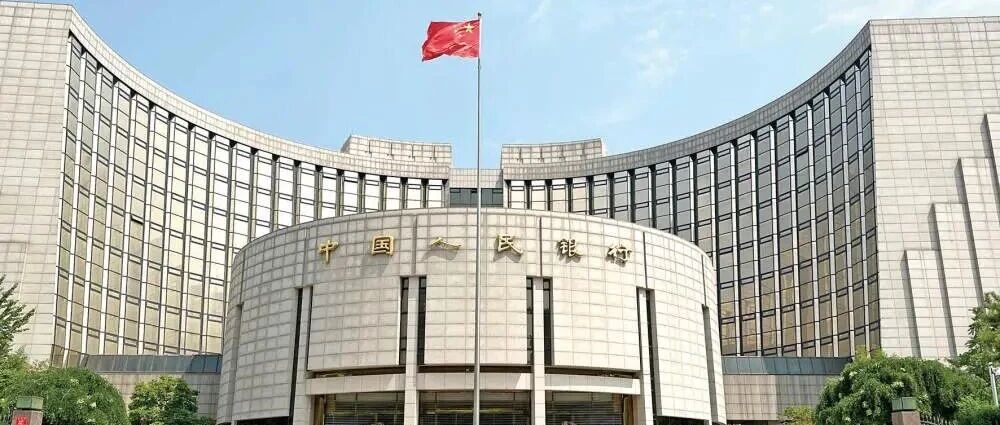
权威访谈·开局“十五五”丨营造良好货币金融环境 有力支撑经济高质量发展——访中国人民银行党委书记、行长潘功胜
Xin Hua Wang· 2026-01-22 09:39
Core Viewpoint - The article emphasizes the importance of creating a favorable monetary and financial environment to support high-quality economic development in China, as outlined in the "14th Five-Year Plan" [1]. Group 1: Monetary Policy Implementation - The People's Bank of China (PBOC) will continue to implement a moderately loose monetary policy in 2026, focusing on stabilizing economic growth and ensuring reasonable price recovery [2]. - The PBOC plans to utilize various monetary policy tools, such as reserve requirement ratio (RRR) cuts and interest rate reductions, to maintain ample liquidity and align social financing scale and money supply growth with economic growth and price level expectations [2]. - There is still room for further RRR and interest rate cuts this year, with an emphasis on managing interest rate policies to keep financing costs low [2]. Group 2: Structural Monetary Policy Tools - The PBOC has reduced the interest rates of various structural monetary policy tools by 0.25 percentage points and has established a dedicated 1 trillion yuan relending facility for private enterprises [3]. - The PBOC has increased the relending quota for agricultural and small enterprises by 500 billion yuan to 4.35 trillion yuan and for technological innovation and transformation by 400 billion yuan to 1.2 trillion yuan [3]. - The PBOC aims to maintain stable financial markets and manage expectations, ensuring the RMB exchange rate remains stable at a reasonable level [3]. Group 3: Financial System Development - The PBOC is focused on constructing a scientific and robust monetary policy system and a comprehensive macro-prudential management system as part of the strategy to promote high-quality financial development during the "14th Five-Year Plan" [4]. - Key areas of focus include optimizing the monetary policy target system, improving the mechanism for basic currency issuance, and enhancing the market-based interest rate formation and transmission mechanisms [5]. - The PBOC will also improve the macro-prudential management framework, expanding its coverage to include new areas such as internet finance and non-bank financial institutions [6]. Group 4: Supporting Real Economy - The PBOC aims to enhance financial support for expanding domestic demand, technological innovation, and small and micro enterprises, which are crucial for driving high-quality development [7]. - Specific measures include a dedicated 500 billion yuan relending facility for consumer services and elderly care, as well as promoting the issuance of financial bonds by qualified financial institutions to improve funding supply in the consumer sector [7]. - The PBOC will also increase support for small and micro enterprises by enhancing financing accessibility and convenience, including a dedicated 1 trillion yuan relending facility for private enterprises [8]. Group 5: Global Financial Governance - The PBOC plans to actively promote global financial governance reform and international financial cooperation, emphasizing multilateralism and the opening-up of the financial sector [9]. - Efforts will include enhancing the cross-border payment system for the RMB and participating in international financial governance and cooperation [9]. - The PBOC will also work on building a diverse and efficient global financial safety net to safeguard national financial security [9].
中国人民银行党委书记、行长潘功胜:营造良好货币金融环境 有力支撑经济高质量发展
Xin Lang Cai Jing· 2026-01-22 09:32
Core Viewpoint - The article emphasizes the importance of a favorable monetary and financial environment to support high-quality economic development in China, particularly in the context of the "14th Five-Year Plan" [1][10]. Group 1: Implementation of Monetary Policy - The People's Bank of China (PBOC) will continue to implement a moderately accommodative monetary policy to promote stable economic growth and reasonable price recovery, with a focus on integrating incremental and stock policies [2][11]. - The PBOC plans to maintain ample liquidity and ensure that the growth of social financing and money supply aligns with economic growth and price level expectations, indicating room for further cuts in reserve requirement ratios and interest rates this year [2][11]. - Structural monetary policy tools have been optimized, including a 0.25 percentage point reduction in various structural monetary policy tool rates and the establishment of a 1 trillion yuan special re-loan for private enterprises [3][12]. Group 2: Financial System Development - The PBOC aims to construct a scientific and robust monetary policy system and a comprehensive macro-prudential management system as strategic measures to promote high-quality financial development during the "14th Five-Year Plan" [4][13]. - Key areas of focus include optimizing the monetary policy target system, improving the mechanism for basic currency issuance, and enhancing the market-based interest rate formation and transmission mechanisms [4][14]. - The PBOC will also improve the structure of monetary policy tools to better guide financial institutions in optimizing loan allocations [5][14]. Group 3: Support for Real Economy - The PBOC will enhance support for expanding domestic demand, technological innovation, and small and micro enterprises, which are crucial for promoting high-quality development [6][16]. - Specific measures include a dedicated 500 billion yuan re-loan for consumer services and elderly care, as well as increased re-loan quotas for agricultural and small enterprises [6][17]. - Collaboration with various government departments will be strengthened to improve the effectiveness and accessibility of financial services for small and micro enterprises [7][18]. Group 4: Global Financial Governance - The PBOC will actively promote global financial governance reform and international financial cooperation, emphasizing a commitment to multilateralism and the construction of a fair and resilient global financial governance system [8][18]. - Efforts will include deepening institutional openness in the financial sector, advancing the internationalization of the yuan, and enhancing the cross-border payment system [9][18]. - The PBOC will also participate in international financial governance and cooperation, focusing on global macro policy coordination and the reform of the International Monetary Fund [9][18].
\双支柱\加强促进银行稳健经营
Xiangcai Securities· 2025-12-07 12:14
Investment Rating - The industry investment rating is maintained at "Overweight" [7][10]. Core Insights - The central bank is promoting the improvement of the dual-pillar system to enhance the stability of bank operations [6][32]. - The banking sector is transitioning from extensive expansion to intensive development, focusing on enhancing the quality of financial services to the real economy [7][33]. - The optimization of credit structure requires banks to improve capital and risk allocation efficiency, emphasizing the importance of precise resource allocation to key policy-supported areas [8][34]. - The macro-prudential management of real estate finance is a clear task, with expectations for real estate risks to converge [8][34]. - The next phase of the dual-pillar system's deepening collaboration will create an environment for banks characterized by strong constraints, optimization, and risk prevention [9][34]. Summary by Sections Market Review - The banking index fell by 1.18%, underperforming the CSI 300 index by 2.46 percentage points during the period from December 1 to December 7, 2025 [12]. - The performance of various bank segments showed that rural commercial banks outperformed others, with notable gains from Zhangjiagang Bank (+3.96%) and Xiamen Bank (+2.92%) [12]. Industry Dynamics - The central bank's article emphasizes the need for a robust monetary policy framework and comprehensive macro-prudential management to adapt to complex economic conditions [32][33]. - Banks are encouraged to enhance their loan pricing capabilities and active liability management to alleviate the downward pressure on net interest margins [7][33]. - The focus is shifting towards differentiated competition based on professional service capabilities and comprehensive financial solutions rather than price wars [7][33]. Investment Recommendations - The report suggests that with a rebalancing of market investment styles, high-dividend bank stocks are attracting allocation funds, indicating a potential for continued valuation recovery [10]. - Specific banks recommended for investment include Industrial and Commercial Bank of China, Bank of China, CITIC Bank, Jiangsu Bank, and others, highlighting their stable high-dividend value [10][35].
潘功胜最新发声!
券商中国· 2025-12-04 05:16
Core Viewpoint - The article emphasizes the importance of constructing a scientific and robust monetary policy system and a comprehensive macro-prudential management system to support high-quality financial development and the establishment of a financial power in China [3][4][5]. Group 1: Importance of Monetary Policy and Macro-Prudential Management - The dual objectives of maintaining currency stability and financial stability are foundational for the central bank's macro-management tools [4]. - The construction of these systems is essential for adapting to changes in social contradictions and promoting high-quality development [4][5]. - The need for a robust monetary policy and macro-prudential management framework is highlighted as a response to the complexities of the current economic environment [5][6]. Group 2: Building a Scientific and Robust Monetary Policy System - The monetary policy system aims to achieve a balance between currency stability, economic growth, full employment, and international balance of payments [7]. - Key tasks include optimizing the mechanism for basic currency issuance, improving market-based interest rate formation, and enhancing the structural monetary policy tool system [9][10]. - The focus is on maintaining reasonable growth in financial totals and ensuring effective financing for the real economy [9][10]. Group 3: Comprehensive Macro-Prudential Management System - The macro-prudential management system aims to monitor and assess systemic financial risks and implement preventive measures [11][12]. - It emphasizes the need for a comprehensive approach to cover macroeconomic operations, financial markets, and systemically important financial institutions [12][13]. - The system should also address external economic and financial market risks, ensuring resilience against external shocks [12][13]. Group 4: Key Tasks for Macro-Prudential Management - Strengthening the monitoring and assessment of systemic financial risks is crucial for proactive risk management [13][14]. - Implementing risk prevention measures in key sectors and enhancing the regulatory framework for systemically important financial institutions are essential [14][15]. - The article calls for a rich toolbox of macro-prudential policy instruments to address various financial challenges effectively [15][16].
潘功胜发表署名文章
中国基金报· 2025-12-04 01:34
Group 1 - The article emphasizes the importance of constructing a scientific and robust monetary policy system and a comprehensive macro-prudential management system as strategic measures for promoting high-quality financial development and building a financial powerhouse during the 14th Five-Year Plan period [4][5][6]. - It highlights that the dual objectives of maintaining currency stability and financial stability are foundational tools for the central bank's macro-management, which are essential for achieving the goals of modernizing the economy [5][6][7]. Group 2 - The construction of a scientific and robust monetary policy system is deemed necessary for accelerating the establishment of a high-level socialist market economy, addressing unbalanced and insufficient development, and supporting high-quality development [5][6][8]. - The article outlines the need for a well-structured monetary policy framework that includes optimizing the mechanism for basic currency issuance and maintaining reasonable growth in financial aggregates [10][11]. Group 3 - The macro-prudential management system aims to observe, assess, and respond to financial risks from a macro and counter-cyclical perspective, preventing systemic financial risks that could disrupt macroeconomic stability [12][13]. - It stresses the importance of monitoring systemic financial risks and implementing preventive measures to ensure the stability of key financial institutions and markets [15][16].
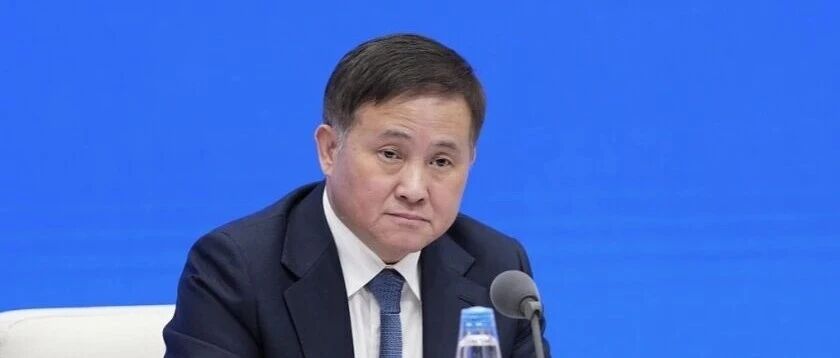
潘功胜发表署名文章
2 1 Shi Ji Jing Ji Bao Dao· 2025-12-04 00:45
Group 1 - The core viewpoint emphasizes the need to establish a scientific and robust monetary policy system and a comprehensive macro-prudential management system as strategic measures for promoting high-quality financial development and building a strong financial nation during the 15th Five-Year Plan period [1][2][3] Group 2 - The construction of a scientific and robust monetary policy system is essential for maintaining currency stability, economic growth, full employment, and balance of international payments [5][6] - The relationship between short-term and long-term economic needs must be balanced through various monetary policy tools to smooth economic fluctuations [6][7] - The importance of enhancing the efficiency of fund allocation and ensuring the health of financial institutions while supporting economic growth is highlighted [6][9] Group 3 - A comprehensive macro-prudential management system aims to observe, assess, and respond to financial risks from a macro and counter-cyclical perspective [9][10] - The need to strengthen monitoring and assessment of systemic financial risks, focusing on key areas such as cross-border capital flows and real estate markets, is emphasized [11][12] - The construction of a financial stability guarantee system is crucial for reinforcing risk management and governance within financial institutions [13]
潘功胜发表署名文章
21世纪经济报道· 2025-12-04 00:33
Group 1 - The core viewpoint emphasizes the importance of establishing a scientific and robust monetary policy system and a comprehensive macro-prudential management system as strategic measures for promoting high-quality financial development and building a financial powerhouse during the 14th Five-Year Plan period [1][2][3]. Group 2 - The construction of a scientific and robust monetary policy system is essential for maintaining the stability of currency value and financial stability, which are the dual objectives of the central bank [2][3]. - The need for a high-level socialist market economy system requires further improvement of the dual pillar system to balance economic growth, structural adjustment, and systemic financial risk prevention [2][3]. - The transition from high-speed growth to high-quality development necessitates enhancing the robustness of financial institutions and markets, thereby improving the quality of financial services to the real economy [3][4]. Group 3 - The monetary policy system and macro-prudential management system are core components of the modern central bank system, which need to be mutually supportive and complementary [4]. - The 2008 financial crisis highlighted that price stability does not equate to financial stability, necessitating the construction of a macro-prudential management system to prevent systemic financial risks [4][5]. - The dual pillar system has been preliminarily established in China, with monetary policy being relatively mature while macro-prudential management requires further refinement [4][5]. Group 4 - The main tasks for constructing a scientific and robust monetary policy system include optimizing the mechanism for basic currency issuance and monetary supply regulation, enhancing the market-oriented interest rate formation and transmission mechanism, and improving the structural monetary policy tool system [7][8][9]. - The focus should be on maintaining reasonable growth of financial totals while ensuring the effective financing needs of the real economy are met [7][8]. - Continuous improvement of the RMB exchange rate formation mechanism is necessary to maintain exchange rate flexibility and prevent excessive fluctuations [9]. Group 5 - The comprehensive macro-prudential management system aims to observe, assess, and respond to financial risks from a macro and counter-cyclical perspective, preventing systemic financial risks that could destabilize the macroeconomic environment [11][12]. - The system should cover the interconnections between macroeconomic operations and financial risks, as well as the key areas of financial markets and activities [11][12]. - Strengthening the monitoring and assessment of systemic financial risks is crucial, focusing on key areas such as cross-border capital flows and the real estate market [13][14]. Group 6 - The construction of a financial stability guarantee system is essential, which includes enhancing corporate governance and risk management of financial institutions, and ensuring effective early warning mechanisms for financial risks [15]. - The financial security capabilities should align with the level of openness in the financial sector, ensuring the safety of critical financial institutions and foreign exchange reserves [15].

瑞达期货集运指数(欧线)期货日报-20251103
Rui Da Qi Huo· 2025-11-03 09:20
Report Summary 1. Report Industry Investment Rating - Not provided in the given content 2. Report's Core View - The freight rate market is currently highly influenced by news, and futures prices are expected to experience increased volatility. It is recommended that investors exercise caution, pay attention to the operation rhythm and risk control, and track geopolitical, shipping capacity, and cargo volume data in a timely manner [1]. 3. Summary by Relevant Catalogs Futures Market Data - EC2512 closed at 1851.700, down 30.2; EC2602 closed at 1592.2, up 8.5. The spread between EC2512 - EC2602 was 259.50, up 9.10; the spread between EC2512 - EC2604 was 667.30, up 24.40. The EC contract basis was -538.99, down 47.70. The EC main contract open interest was 29320, down 2045 [1]. Spot Market Data - The SCFIS (European Line) was 1208.71, down 104.00 week - on - week; the SCFIS (US West Line) was 1107.32, up 159.83 week - on - week. The SCFI (Comprehensive Index) was 1550.70, up 147.24 week - on - week. The CCFI (Comprehensive Index) was 1021.39, up 28.65 week - on - week; the CCFI (European Line) was 1323.81, up 30.69 week - on - week. The Baltic Dry Index was 1966.00, up 17.00 day - on - day; the Panamax Freight Index was 1821.00, up 28.00 day - on - day. The average charter price of Panamax ships was 17564.00, unchanged; the average charter price of Capesize ships was 23368.00, down 882.00 [1]. Industry News - Central Bank Governor Pan Gongsheng detailed the main tasks of the "dual - pillar system", including optimizing the base money supply mechanism, improving the market - oriented interest rate formation and transmission mechanism, etc. [1] - US Treasury Secretary Janet Yellen said that the China - US trade agreement might be signed as early as next week, and the Chinese Foreign Ministry responded positively [1]. - Chinese Commerce Minister Wang Wentao met with South Korean Minister of Trade, Industry and Energy Kim Jung - gun to discuss maintaining the stability of the industrial chain and supply chain and strengthening regional and multilateral cooperation [1]. Market Analysis - The freight rate support has weakened as the latest SCFIS European Line settlement freight rate index decreased by 104 points week - on - week, a 7.9% decline. However, mainstream shipping companies have issued price increase notices for November, and Maersk's successful price support in mid - to - late October has boosted market confidence [1]. - The container handling business at the Port of Rotterdam has come to a complete standstill, increasing regional supply chain uncertainties. The positive results of the China - US economic and trade consultations in Kuala Lumpur have improved the market's expectations for the trade war situation [1]. - Geopolitically, there are attempts to start cease - fire negotiations, but the external mediation is at a deadlock. The eurozone economy shows resilience, and the German investor confidence index is expected to continue to improve in November [1]. Key Data to Watch - On November 4, the release of the US September trade balance (in billions of dollars) and the US September factory orders month - on - month rate are to be determined [1].