AIoT

Search documents
主业连亏!三次重组均折戟!这家公司瞄上三家芯片公司
IPO日报· 2026-01-07 00:32
Core Viewpoint - The article discusses the strategic acquisition plan by Yingfang Microelectronics to reverse its ongoing losses and transform into a "semiconductor platform company" through the acquisition of three companies in the industry chain [1][15]. Group 1: Company Background and Previous Attempts - Yingfang Microelectronics has faced continuous losses in its main business for several years, leading to three failed major restructuring attempts [1][9]. - The company was suspended from trading in April 2020 due to three consecutive years of negative net profits from 2017 to 2019, during which its revenue also declined [5]. - In an effort to recover, Yingfang Microelectronics acquired 51% stakes in Shenzhen Huaxin Technology Co., Ltd. and WORLD STYLE TECHNOLOGY HOLDINGS LIMITED in September 2020, diversifying its business into integrated circuit design and electronic component distribution [5][6]. Group 2: Financial Performance - Following the acquisitions, the company turned profitable from 2020 to 2022, with revenues increasing significantly from 412.96 million in 2019 to 31.24 billion in 2022 [6]. - However, in 2023 and 2024, despite revenue exceeding 40 billion, the company reported net losses of -6005.75 million and -6197.04 million respectively, with a net profit of -4334 million as of September 30, 2025 [8]. - The company's gross profit margin dropped to 2.86%, indicating challenges in its distribution business, while its debt ratio reached 81.19%, highlighting significant financial pressure [8]. Group 3: Recent Acquisition Strategy - On January 5, 2026, Yingfang Microelectronics announced a plan to acquire controlling stakes in three new companies: Shanghai Xiaokeli, Fujide China, and Shiqing Intelligent Technology [12][13]. - This "packaged" acquisition strategy aims to create a more complete semiconductor industry chain, extending from chip design to distribution and packaging services [22]. - The three target companies have complementary technologies and business models, which could potentially enhance Yingfang Microelectronics' operational efficiency and market position if successfully integrated [19][21][23].



全志科技:公司将持续针对目标客户需求,推出产品及解决方案
Zheng Quan Ri Bao Wang· 2026-01-06 14:11
Core Viewpoint - The company, Allwinner Technology (全志科技), emphasizes its commitment to addressing diverse customer needs in the AIoT sector by continuously launching products and solutions tailored to target customers [1] Group 1 - The company acknowledges the broad applications of AIoT in various downstream sectors [1] - There is a recognition of the diverse demands from customers within the AIoT market [1] - The company plans to maintain its focus on developing products and solutions that meet these specific customer needs [1]

全球手机ODM巨头龙旗科技闯关港股,亮眼业绩藏不住多个隐痛
Feng Huang Wang Cai Jing· 2026-01-06 10:45
Core Viewpoint - Longqi Technology, a leading global consumer electronics ODM manufacturer, is making a significant move by applying for a listing on the Hong Kong Stock Exchange after successfully listing on the Shanghai Stock Exchange in March 2024, marking a key step in its "A+H" dual capital platform strategy [1] Group 1: Company Overview - Longqi Technology has established itself as the world's largest smartphone ODM manufacturer with a market share of 32.6% and is also the second-largest consumer electronics ODM manufacturer by shipment volume in 2024 [3] - The company has expanded its reach into AI PCs, automotive electronics, and robotics, aiming to capitalize on the interconnected AI era for its second growth curve [3] Group 2: Financial Performance - In 2024, Longqi Technology reported a revenue of 46.382 billion yuan, a year-on-year increase of 70.62%, but faced a 17% decline in net profit attributable to shareholders, indicating a "growth without profit" scenario [9][10] - The overall gross margin has decreased from 8.1% in 2022 to 5.8% in 2024, with the smartphone business gross margin at only 4.92% in 2024, down 3.76 percentage points year-on-year [9][10] Group 3: Customer Dependency - Longqi Technology's revenue is highly concentrated, with over 80% coming from its top five customers, and Xiaomi alone accounting for 28.6% of revenue as of September 2025, raising concerns about business stability [7][8] - The company acknowledges that any changes in Xiaomi's operational conditions or procurement strategies could significantly impact its business performance [7] Group 4: Market Challenges - The ODM industry is characterized by low margins, making Longqi Technology sensitive to cost fluctuations, particularly as core materials account for 70% of production costs [10] - The competitive landscape is intensifying, with Longqi and its closest competitor holding a combined market share of 60%, leading to fierce price and technology competition [15] Group 5: Shareholder Dynamics - The capital market confidence is under pressure as major shareholders, particularly from the Xiaomi ecosystem, have reduced their holdings significantly, with a total cash-out exceeding 1.4 billion yuan in 2025 [16] - As of the end of 2025, the shareholding ratio of Xiaomi-related entities dropped from 9.04% to 4.95%, raising concerns about the company's future stability [16]

从算法天才到机器人造梦者,原力灵机范浩强详解具身智能进化论:模型解锁场景,场景定义硬件
AI前线· 2026-01-06 04:10
Core Viewpoint - The article emphasizes that while AI has advanced in perception and decision-making, it has yet to master physical interaction, indicating a gap in the practical application of AI in robotics [2][3]. Group 1: Evolution of AI and Robotics - The transition from AI 1.0 to embodied intelligence marks a significant shift, with hardware and algorithms finally aligning, making 2025 a pivotal year for advancements in robotics [6][10]. - The rise of embodied intelligence is driven by improvements in hardware components, particularly the domestic production of key robot parts, which has reduced reliance on imports and improved cost control [8][9]. Group 2: Algorithm and Hardware Development - The article highlights that recent advancements in algorithms, such as Diffusion and Transformer models, have enabled robots to learn complex behaviors rather than relying solely on predefined rules [9][10]. - The collaboration between hardware and algorithm development is crucial, with the article suggesting that algorithm breakthroughs often lead to hardware advancements rather than the other way around [13][14]. Group 3: Methodology and Data Strategy - The company emphasizes a multi-modal approach in its development, integrating various sensory inputs beyond just visual data to enhance the robot's ability to perform tasks in real-world scenarios [18]. - A focus on high-quality, real-world data collection is essential, as even minor errors in robotic tasks can lead to significant failures, necessitating a rigorous data acquisition process [19][20]. Group 4: Benchmarking and Evaluation - The lack of a unified evaluation system in the industry is identified as a significant gap, prompting the company to invest in creating a benchmarking platform to facilitate comparisons and establish technical consensus [21][23]. - The goal is to create a clear methodology for evaluating robotic capabilities, which will help in validating and accumulating algorithmic advancements over time [23].

Edgecore Networks and Synaptics Announce Strategic Collaboration to Advance Scalable Edge AI and AIoT Platforms
Businesswire· 2026-01-05 15:00
Core Insights - Edgecore Networks and Synaptics have announced a strategic collaboration aimed at advancing scalable Edge AI and AIoT platforms [1] Company Collaboration - The partnership focuses on integrating Edgecore's networking solutions with Synaptics' AI technologies to enhance performance and scalability in edge computing [1] - This collaboration is expected to drive innovation in the AIoT sector, providing more efficient and effective solutions for various applications [1] Market Implications - The strategic alliance positions both companies to capitalize on the growing demand for Edge AI and AIoT technologies, which are increasingly being adopted across multiple industries [1] - By leveraging each other's strengths, the companies aim to accelerate the development of next-generation edge solutions that meet the evolving needs of customers [1]


新股解读|龙旗科技积极谋求“A+H”:年营收超400亿元VS 低毛利率下的“最优解”?
智通财经网· 2026-01-04 06:25
Core Viewpoint - Longqi Technology, a leading ODM giant, is rapidly pursuing a secondary listing in Hong Kong less than a year after its A-share debut, reflecting contrasting performance metrics with significant revenue but weak profitability [1][4]. Group 1: Company Overview - Longqi Technology, established in 2004, is a global leader in smart product solutions, providing design, manufacturing, and support for renowned tech brands [1]. - The company has developed a comprehensive smart product ecosystem, focusing on smartphones, personal computing, and automotive electronics, with a diverse product range including tablets, wearables, and smart glasses [2]. Group 2: Financial Performance - Revenue figures for Longqi Technology from 2022 to 2024 show a significant increase, with revenues of 293.43 billion, 271.85 billion, and 463.82 billion respectively, marking a 70.62% year-on-year growth in 2024 [3]. - Despite high revenue, the company faces challenges with profitability, recording net profits of 5.62 billion, 6.03 billion, 4.93 billion, and 5.14 billion from 2022 to the first three quarters of 2025, with fluctuating profit margins [4]. Group 3: Market Position - Longqi Technology is the second-largest consumer electronics ODM manufacturer globally, holding a 22.4% market share, and the largest smartphone ODM manufacturer with a 32.6% market share as of 2024 [2]. - The company serves a prestigious client base, including Xiaomi, Samsung, Lenovo, and OPPO, enhancing its market presence [2]. Group 4: Strategic Initiatives - In response to sluggish growth in its core smartphone business, Longqi Technology is focusing on emerging sectors such as AIoT and automotive electronics, aiming to leverage its ODM leadership to capture high-growth opportunities [5][7]. - The company has initiated projects in AI glasses and automotive electronics, partnering with leading clients and achieving significant production milestones [7]. Group 5: Industry Trends - The consumer electronics industry has faced a downturn from 2021 to 2023 due to inflation and geopolitical tensions, but is expected to recover in 2024 driven by technological innovation and demand for AI-integrated products [6]. - The market for smart glasses is projected to grow significantly, with global shipments expected to rise from 9.6 million units in 2024 to 62.3 million units by 2029, indicating a compound annual growth rate of 45.4% [6].
龙旗科技积极谋求“A+H”:年营收超400亿元VS 低毛利率下的“最优解”?
Zhi Tong Cai Jing· 2026-01-04 06:24
Core Viewpoint - Longqi Technology, a leading ODM giant, is rapidly pursuing a secondary listing in Hong Kong less than a year after its A-share debut, driven by contrasting performance metrics and a strategic shift towards emerging businesses like AI glasses and automotive electronics [1][2]. Group 1: Company Overview - Longqi Technology, established in 2004, is a global leader in smart products and services, providing solutions for renowned smart product brands and tech companies [2]. - The company has developed a comprehensive smart product ecosystem, focusing on smartphones, personal computing, and automotive electronics, with a diverse product range including tablets, wearables, and TWS headphones [2]. - Longqi Technology is the second-largest consumer electronics ODM manufacturer globally, holding a 22.4% market share, and the largest smartphone ODM manufacturer with a 32.6% market share as of 2024 [2]. Group 2: Financial Performance - The company's revenue figures from 2022 to 2024 show a significant increase, with revenues of 293.43 billion, 271.85 billion, and 463.82 billion respectively, marking a 70.62% year-on-year growth in 2024 [3]. - Despite the revenue growth, the company experienced a decline in revenue in the first three quarters of 2025, totaling 313.32 billion, a 10.3% year-on-year decrease, attributed to weak global demand and insufficient support from emerging businesses [3][4]. - Longqi Technology's net profit from 2022 to the first three quarters of 2025 has shown volatility, with figures of 5.62 billion, 6.03 billion, 4.93 billion, and 5.14 billion respectively, alongside low gross margins of 8.1%, 9.5%, 5.8%, and 8.3% during the same period [4]. Group 3: Strategic Focus and Market Trends - The company is focusing on emerging businesses such as AIoT and automotive electronics to counteract the stagnation in its core smartphone business [5][6]. - AI glasses are identified as a key growth area, with ODM shipments exceeding 2 million units in 2024, and partnerships with leading domestic internet clients for mass production projects [6][7]. - The automotive electronics sector also shows promise, with collaborations established with major clients like Xiaomi and NIO, resulting in over ten designated projects and successful product deliveries [7]. Group 4: Challenges and Future Outlook - Longqi Technology's transition towards new business areas is marked by uncertainty, as the scale of AI PC and automotive electronics remains small and faces intense market competition [7]. - The company's dual listing strategy highlights the challenges of achieving growth in a large but low-margin ODM industry, with future performance dependent on the successful scaling of AIoT and AI PC businesses [7].
传退出手机市场。华硕:今年无推新机计划
Jing Ji Ri Bao· 2026-01-02 22:48
Group 1 - ASUS is reportedly exiting the smartphone market and laying off its mobile division staff, although it will continue to provide maintenance and warranty services for existing products [1] - The company confirmed that there are no plans to launch new smartphone models in 2026, following rumors that it would end its mobile business by late 2025 [1] - The smartphone business has been consistently unprofitable, leading to speculation about ASUS's exit from the market, with the Zenfone 10 potentially being the last model in that series [1] Group 2 - ASUS views smartphones as an entry point for AIoT and important terminals for AI applications, with the latest ROG Phone series set to launch in November 2024 and the Zenfone 12 Ultra in February 2025, focusing on AI features, photography, and high-resolution displays [2]
MKDW repurchased approximately $7 million worth of its outstanding ordinary shares.
Globenewswire· 2026-01-02 22:00
Core Viewpoint - MKDWELL Tech Inc. has announced a stock repurchase agreement to buy back 34,580,000 ordinary shares at a price of US$0.203 per share, totaling approximately US$7 million, to enhance shareholder value and reflect confidence in the company's growth potential [1][2]. Group 1: Stock Repurchase Details - The stock repurchase involves buying back 34,580,000 ordinary shares at US$0.203 per share, amounting to about US$7 million [1]. - The purchase price reflects the average closing price over the twelve trading days prior to December 16, 2025, excluding the highest and lowest prices [1]. - The closing of the share repurchase is expected within five business days from December 21, 2025, subject to standard closing conditions [1]. Group 2: Company Strategy and Market Position - The Chairman and CEO of MKDWELL Tech Inc. stated that the current share price undervalues the company's business model and long-term growth potential [2]. - The company aims to protect shareholder value through this repurchase while focusing on leveraging AIoT technology to enhance consumer lives [2]. - Despite challenges from macroeconomic volatility and new US tariffs, the company remains committed to its strategic direction [2]. Group 3: Company Background - MKDWELL Tech Inc. was founded in 2006 and is headquartered in Hsinchu Science Park, Taiwan, with a factory in Jiaxing, Zhejiang Province, China [3]. - The company specializes in automotive electronics and smart home products utilizing AIoT technology [3].

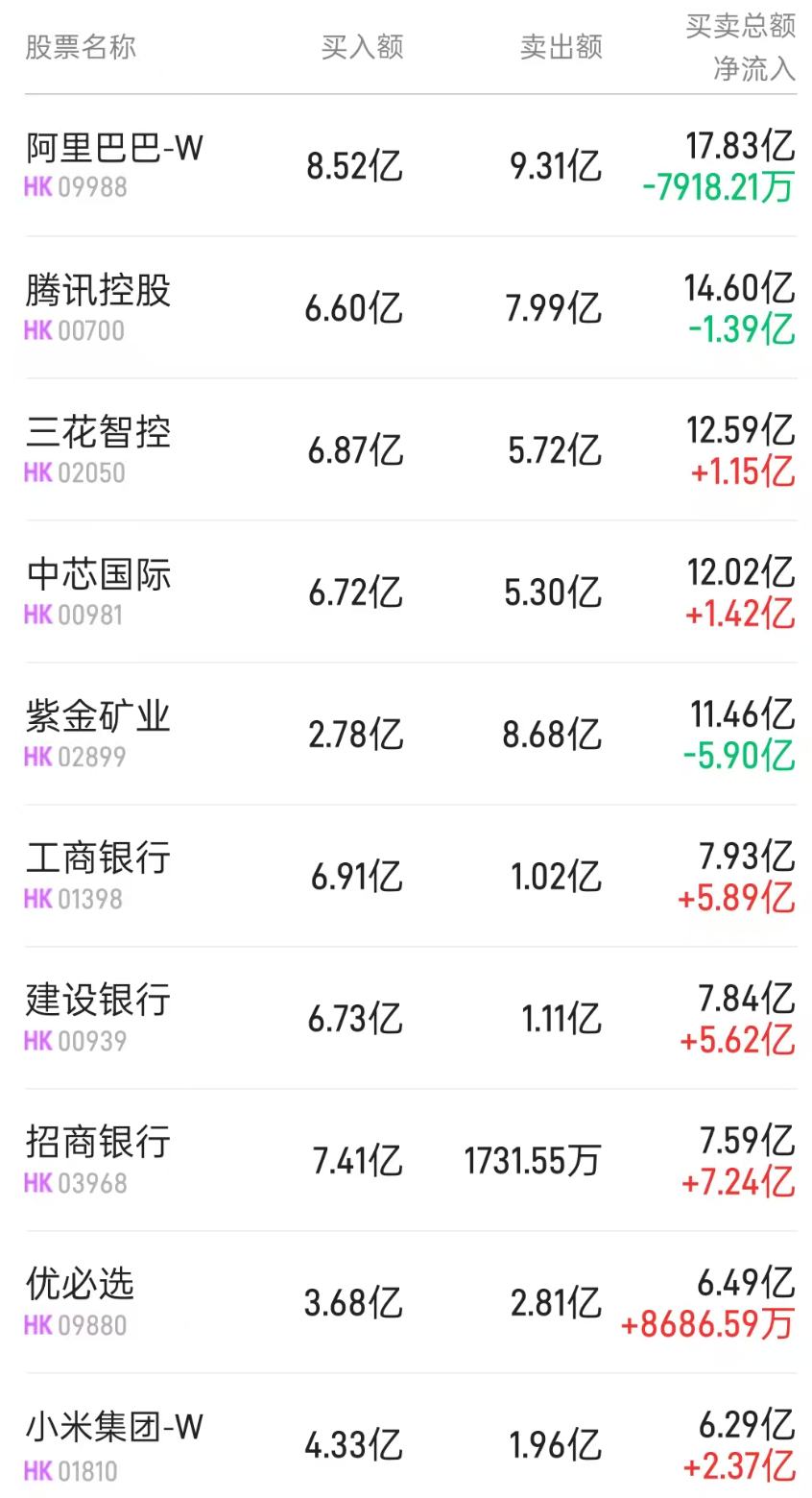
北水成交净买入34.49亿 北水全年净买入港股逾1.4万亿港元 创历史纪录新高
Zhi Tong Cai Jing· 2025-12-31 14:22
Group 1: Market Overview - On December 31, the Hong Kong stock market saw a net inflow of 34.49 billion HKD from northbound funds, with 30.97 billion HKD from the Shanghai Stock Connect and 3.51 billion HKD from the Shenzhen Stock Connect. This marks a record high net inflow of 1.41 trillion HKD for the year, significantly up from approximately 807.9 billion HKD in 2024 [2]. Group 2: Key Stocks - The most net bought stocks by northbound funds included China Merchants Bank (招商银行) with 7.24 billion HKD, Industrial and Commercial Bank of China (工商银行) with 5.88 billion HKD, and China Construction Bank (建设银行) with 5.61 billion HKD [6]. - The most net sold stocks were Zijin Mining (紫金矿业) with a net outflow of 6.82 billion HKD and Tencent (腾讯) with a net outflow of 6.46 billion HKD [7]. Group 3: Sector Performance - The banking sector is expected to benefit from a stable macro-financial environment, with projections indicating that bank interest margins may have bottomed out and risks in the real sector are easing. This is anticipated to lead to income and profit recovery in the banking industry [6]. - Semiconductor stocks, particularly SMIC (中芯国际), received significant net buying, with 3.91 billion HKD, driven by price increases in the 8-inch BCD process platform by approximately 10% [6]. Group 4: Specific Company Insights - Jiangxi Copper (江西铜业) saw a net inflow of 1.58 billion HKD, while Zijin Mining faced a net outflow of 6.82 billion HKD. The National Development and Reform Commission emphasized the need for optimizing the management of the copper smelting industry, which may impact future production levels [7]. - Xiaomi Group (小米集团) received a net inflow of 2.37 billion HKD, supported by government policies promoting consumer electronics [7].