区块链

Search documents
贲圣林:中国以外还有近70亿人口 金融科技出海市场足够大
Zhong Guo Jing Ying Bao· 2025-11-04 14:16
中经记者 许璐 李晖 北京报道 全球金融科技领域竞争不断加剧,金融科技产业作为城市经济发展的重要增长极,其产业集聚区的发展 态势备受关注。 以人口结构为例,日本受老龄化影响,在新技术接受度上相对滞后。而在科研投入方面,中国整体水平 已较高,其中浙江科研经费占GDP比重已经超过3%,北京更是凭借中国科学院、重点高校及中关村等 科创园区的集聚优势,长期保持领先地位。这些科研力量为科技创新和成果转化提供了重要支撑。 "如果当年没有淘宝,支付宝不可能成长得如此迅速。以消费端为例,中国在To C数字经济领域的创新 能力被认为无与伦比。相比之下,To B端的数智化仍存在进一步提升空间,未来仍有较大潜力可释 放。"他表示。 此外,贲圣林认为,中国公司学习能力很强,在学习后又能够反向输出优秀实践。目前,包含支付宝在 内的多项中国金融科技模式已成功走向东南亚等海外市场。 全球城市金融科技发展区域,正出现两极分化特征。对于缩小这类差距,激发城市金融科技活力,贲圣 林认为,一个健康的创新生态必须具备多样性与包容性。现有指标体系中既包含宏观经济与人口结构, 也衡量科研强度等因素。 差异化是破题的关键 记者注意到,《报告》中发布的全国 ...
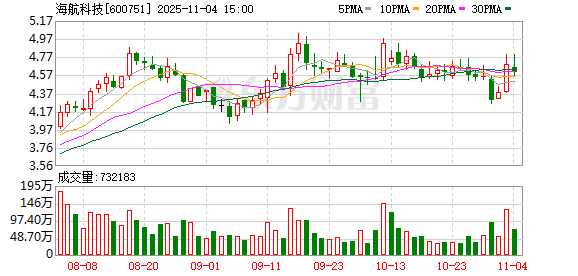
海航科技:海航科技主营业务为干散货船舶运输及商品贸易
Zheng Quan Ri Bao· 2025-11-04 12:41
Core Viewpoint - HNA Technology clarified that its main business involves dry bulk shipping and commodity trading, and it does not engage in blockchain or stablecoin activities [2] Company Summary - HNA Technology's primary operations focus on dry bulk shipping and commodity trading [2] - The company has no involvement in blockchain technology or stablecoin business [2]


陈浩濂:香港金管局即将推出Ensemble项目试点计划 培育创新代币化用例
智通财经网· 2025-11-04 12:20
Core Viewpoint - Hong Kong is actively promoting the diversification of tokenized products, with the Financial Secretary's Deputy Secretary, Chan Ho-lam, announcing the upcoming launch of the Ensemble project pilot plan to support real transactions and foster innovative tokenized use cases in collaboration with industry stakeholders and other central banks [1] Group 1: Tokenization Initiatives - Hong Kong is the first government globally to issue tokenized government green bonds and has announced the regularization of tokenized bond issuance [1] - The government will continue to monitor market developments and establish a regulatory framework based on the principle of "same business, same risk, same rules," ensuring a risk-based approach to promote the healthy, responsible, and sustainable development of the digital asset market [1] Group 2: Support for Blockchain and Web3.0 - Cyberport has launched a "Blockchain and Digital Asset Pilot Funding Scheme" to promote the development and testing of impactful blockchain and Web3.0 applications [1] - The scheme provides financial support to blockchain and Web3.0 companies in the development stage, assisting them in creating innovative and impactful solutions, with nine projects already approved [1]
2025年智慧养老产业发展白皮书
Tou Bao Yan Jiu Yuan· 2025-11-04 12:04
Investment Rating - The report does not explicitly state an investment rating for the smart elderly care industry Core Insights - The smart elderly care industry in China is rapidly evolving through technological integration and innovative models to address the challenges posed by an aging population, which is expected to reach 30% by 2050, significantly higher than the global average [5][18] - The industry is focusing on creating a comprehensive health management ecosystem that covers the entire life cycle of elderly care, showcasing significant breakthroughs from technology application to system construction [5] Summary by Sections Overview of the Smart Elderly Care Industry - The aging population in China is accelerating, with the proportion of individuals aged 65 and above expected to reach 30% by 2050, indicating a severe challenge for social and economic development [18][20] - The report highlights the structural challenges in the current elderly care service supply system, including insufficient total supply, uneven resource distribution, and a shortage of professional caregivers [6] Demand Environment - The acceptance of smart products among the elderly is steadily increasing, with 43.08% of users spending 1-3 hours daily using these products [6][39] - The demand for personalized leisure and entertainment services is significantly higher among elderly individuals living with family compared to those living alone, indicating a strong expectation for functionality in multi-generational households [6] Supply Situation - Smart elderly care products are evolving from single-function devices to comprehensive solutions, with wearable devices forming a health management loop covering prevention, diagnosis, and rehabilitation [7] - The report emphasizes the need for a smart transformation in elderly care services to enhance sustainability and meet the growing demand [6] Policy Environment - The report outlines a systematic approach to policy development in the smart elderly care sector, emphasizing the integration of technology and the enhancement of service quality to improve the well-being of the elderly [33] Economic Environment - Investment strategies in the elderly care sector are shifting from quantity to quality, focusing on high-quality projects in areas such as artificial intelligence, robotics, and digital platforms [35] - The report notes significant investment activity in the elderly care robot sector, with a notable increase in funding for companies developing companion and rehabilitation robots [37] Technological Environment - The health IoT is driving the development of automated and intelligent health services, with technologies such as blockchain enhancing data security and sharing [45][47] - The integration of various technologies is crucial for creating a seamless health management ecosystem that meets the needs of the elderly [47] Industry Chain Analysis - The smart elderly care industry chain consists of upstream technology support, midstream product and service integration, and downstream application scenarios, forming a collaborative ecosystem [51][53] - The report highlights the importance of integrating resources from various sectors to create a comprehensive elderly care solution that includes home care, community support, and institutional care [52]
直击香港金融科技周 | 跨境支付过程“丝滑”,AI应用落地提速
Mei Ri Jing Ji Xin Wen· 2025-11-04 10:35
Core Insights - The "Hong Kong FinTech × StartmeupHK Startup Festival 2025" opened on November 3, showcasing advancements in artificial intelligence, big data, blockchain, cloud computing, and cross-border payments [1] - The Hong Kong Monetary Authority announced the "FinTech 2030" blueprint, focusing on four core strategies: Data, AI, Resilience, and Tokenization (DART) [1] - The event highlighted various companies demonstrating cutting-edge applications of AI and cloud computing, including WeChat's mobile payment solutions for foreign visitors [1] Group 1: Cross-Border Payment Innovations - Foreign visitors in mainland China can now use their familiar wallets for payments without additional registration, thanks to the "Unified Cross-Border QR Code Gateway" [2] - Over 20 foreign wallets, including Mongolia's Hipay and Singapore's LiquidPay, have launched services allowing seamless payments through WeChat [2][3] - The "Cross-Border Payment Pass" enables users to transfer money to mainland WeChat wallets and over 200 banks within one minute [4] Group 2: AI and Digital Banking Developments - The emergence of AI-native banks is transforming the financial industry, with companies like WeBank utilizing AI to enhance business processes and customer interactions [5] - The exploration of AI applications is robust in both mainland China and Hong Kong, with Hong Kong showing a higher openness to direct AI applications for end customers [6] - The development of general large models and improvements in the precision and safety of financial models are expected to broaden the application of AI in finance [6]
辽港股份跌0.59%,成交额2.85亿元,近3日主力净流入-3650.58万
Xin Lang Cai Jing· 2025-11-04 10:20
Core Viewpoint - The company, Liaoning Port Co., Ltd., is positioned as a leading logistics platform for port operations in Dalian, leveraging its strategic location and operational advantages to enhance its role in the Northeast Asia International Shipping Center and the development of the Liaoning Coastal Economic Belt [2][3]. Company Overview - Liaoning Port Co., Ltd. was established on November 16, 2005, and listed on December 6, 2010. Its main business includes oil/liquid chemical products terminals and related logistics, container terminals and related logistics, automobile terminals and related logistics, bulk cargo terminals and related logistics, grain terminals and related logistics, passenger roll-on/roll-off terminals and related logistics, as well as port value-added and support services [8][9]. Business Operations - The company operates as a unified platform for port logistics in Dalian, with a focus on various terminal operations including oil, containers, automobiles, bulk goods, and passenger services. It is the largest comprehensive terminal operator in Northeast China, with 70 near-sea routes [3][4]. - The company has strengthened its market development for container terminals, adding 10 new routes in the year, and is actively integrating into national strategies such as the Belt and Road Initiative and the construction of the Liaoning Free Trade Zone [4]. Financial Performance - For the period from January to September 2025, the company achieved operating revenue of 8.426 billion yuan, representing a year-on-year growth of 5.99%. The net profit attributable to the parent company was 1.3 billion yuan, reflecting a year-on-year increase of 37.51% [9][10]. Shareholder Information - As of September 30, 2025, the number of shareholders was 211,800, a decrease of 5.54% from the previous period. The average trading cost of the stock is 1.61 yuan, with the stock price approaching a resistance level of 1.69 yuan [6][9].

X @杀破狼 WolfyXBT
杀破狼 WolfyXBT· 2025-11-04 07:01
AI Trading Performance - AI 炒币比赛整体表现不佳,出现大幅回撤 [1] - 阿里巴巴的通义千问 AI 在一周内将 10,000 美元 (10 thousand USD) 滚成 20,000 美元 (20 thousand USD),实现 100% 增长 [1] - ChatGPT 在同一竞赛中表现挣扎,仅在 3,000 美元 (3 thousand USD) 附近 [1]
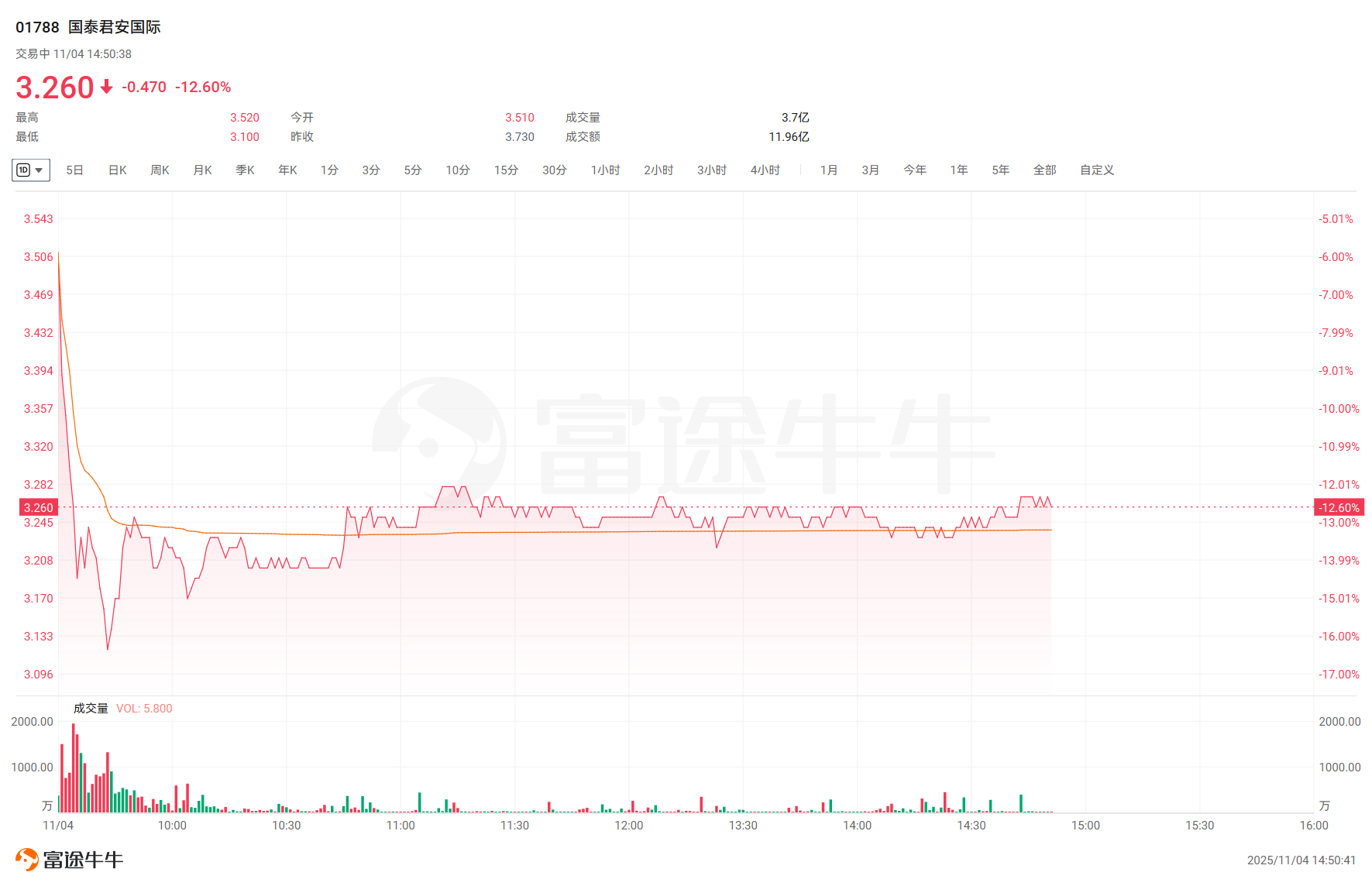
港股A股券商板块齐承压,国泰君安国际盘中大跌,南向资金月减超7100万股成重要信号
Zheng Quan Shi Bao· 2025-11-04 06:59
Core Viewpoint - The Hong Kong stock market experienced a significant decline, with a nearly 13% drop, particularly affecting Chinese brokerage stocks, which also impacted the A-share market [1][4]. Group 1: Market Performance - Chinese brokerage stocks, including Guotai Junan International, saw a substantial drop, with the latter's stock price falling nearly 17% after a previous surge of almost 600% [4]. - Southbound funds have been continuously reducing their holdings, with over 71 million shares sold in the past month, including a notable reduction of over 25 million shares on October 27 [4]. - The overall performance of the Chinese brokerage sector in Hong Kong was weak, with the sector index dropping over 4%, while the A-share brokerage sector index also fell nearly 1% [4]. Group 2: Blockchain and Cryptocurrency Impact - The decline in the cryptocurrency market has negatively affected blockchain concept stocks, which also experienced a drop of over 10% [5]. - The global market appears to be in a phase of "killing high-priced assets," as evidenced by significant declines in other markets, including South Korea [5]. Group 3: Fundamental Analysis - Despite the market downturn, the fundamentals of brokerage firms remain strong, with Hong Kong's stock market seeing 66 new listings and raising $23.5 billion, marking a 45% increase in new listings and a 192% increase in financing compared to the previous year [6]. - In mainland China, 42 listed brokerages reported a total revenue of 419.56 billion yuan, a year-on-year increase of 17.02%, and a net profit of 169.05 billion yuan, up 62.38% [6]. - The valuation of the brokerage sector, as of October 31, shows a price-to-book ratio of approximately 1.43, which is within the historical range of the past three to five years [6]. Group 4: Market Sentiment and Expectations - Current market focus on brokerage stocks may be overly concentrated on short-term trading pressures, with expectations for fourth-quarter trading activity potentially not contributing to significant profit increases [7]. - There is a notable discrepancy in market perception, as the recovery in the securities industry is not limited to brokerage and proprietary trading but is also evident in investment banking and asset management sectors [7].
优化大数据平台,打造食品安全共治体系
Xin Hua Ri Bao· 2025-11-04 06:42
Core Viewpoint - Food safety is a critical issue that requires a shift from traditional regulatory models to a collaborative governance approach, leveraging technologies like big data, AI, and blockchain for effective management [1][3]. Group 1: Current Challenges in Food Safety Governance - The existing food safety governance model in Jiangsu faces significant challenges, including data silos, lack of unified data standards, and inefficient information sharing among government, enterprises, and third-party organizations [2]. - Current food safety data platforms are underutilized, with a large volume of data being redundant or unprocessed, making it difficult to extract actionable intelligence for decision-making [2]. - The effectiveness of existing platforms is low due to inadequate understanding of data and user needs, leading to challenges in addressing new food safety issues, particularly in rural areas [2]. Group 2: Proposed Solutions for Food Safety Improvement - Optimizing the food safety big data platform is essential for enhancing data utilization and creating a collaborative governance system that benefits the public, enterprises, and government [3][6]. - Establishing a comprehensive intelligent regulatory network that integrates data across all stages of the food supply chain is crucial for achieving traceability from farm to table [3]. - A "four-in-one" food safety information system should be developed, involving government, enterprises, the public, and third-party organizations to ensure effective data integration and resource sharing [4]. Group 3: Policy and Talent Development - The construction of food safety big data platforms should be included in national assessments, with dedicated funding and policy support to enhance food safety measures [5]. - Educational institutions and enterprises should collaborate to develop interdisciplinary programs and training in food safety and data science to cultivate skilled professionals [5]. - Legal frameworks need to be updated to clarify the legal status of electronic data and privacy protections, ensuring a robust regulatory environment for food safety [5].
突然大跌!两大变数,闪现!
券商中国· 2025-11-04 03:55
Core Viewpoint - The significant drop in Cathay Financial International's stock price, which fell nearly 17%, is attributed to substantial southbound fund reductions and a broader market reaction to the decline in cryptocurrency values, despite the underlying business fundamentals of the brokerage sector remaining strong [1][3][6]. Group 1: Stock Performance - Cathay Financial International experienced a remarkable increase of nearly 600% in a short period during June and July, but has since entered a phase of continuous adjustment [3]. - The stock's recent performance has led to a significant decline, with a drop of nearly 17% observed on November 4 [3][4]. - Southbound funds have been consistently reducing their holdings in Cathay Financial International, with over 71 million shares sold in the past month, including a notable reduction of over 25 million shares on October 27 [1][5]. Group 2: Market Impact - The decline in Cathay Financial International has negatively impacted the broader Hong Kong brokerage sector, with the index for Chinese brokerage stocks dropping over 4% [5]. - Affected by Cathay Financial International's performance, the A-share brokerage sector also saw a decline, with most stocks experiencing downward pressure [5]. - The overall market sentiment has been influenced by a significant drop in the cryptocurrency market, leading to widespread declines in blockchain-related stocks [6]. Group 3: Business Fundamentals - Despite the stock price fluctuations, the fundamentals of the brokerage sector remain positive, with strong performance indicators [7]. - In the Hong Kong market, there were 66 new IPOs in the first three quarters of 2025, raising a total of $23.5 billion, marking a 45% increase in the number of new listings and a 192% increase in financing compared to the previous year [8]. - In mainland China, the total revenue of 42 listed brokerages reached 419.56 billion yuan, reflecting a year-on-year growth of 17.02%, while net profit increased by 62.38% [9].