能源转型

Search documents
27亿,贵州黔能一号私募基金成立
Sou Hu Cai Jing· 2025-12-10 02:08
Group 1 - The fund named Guizhou Qianeng No.1 Private Equity Fund has been established with a total investment of 2.7 billion yuan [1][3] - The fund will focus on three core areas: clean energy development, clean coal utilization technology, and new energy storage systems, aiming to support Guizhou's energy transition goals during the 14th Five-Year Plan [3] - The fund is expected to initiate its first project selection by 2025, prioritizing energy transition projects with high technological maturity [3] Group 2 - The fund is backed primarily by the Guizhou Provincial Energy Structure Adjustment Equity Investment Fund and is managed by Guizhou Industrial Investment Fund Management Co., Ltd. [1][3] - It is anticipated that the fund will leverage approximately three times the social capital to participate in local energy projects, accelerating the formation of a trillion-yuan-level green energy industry chain [3]


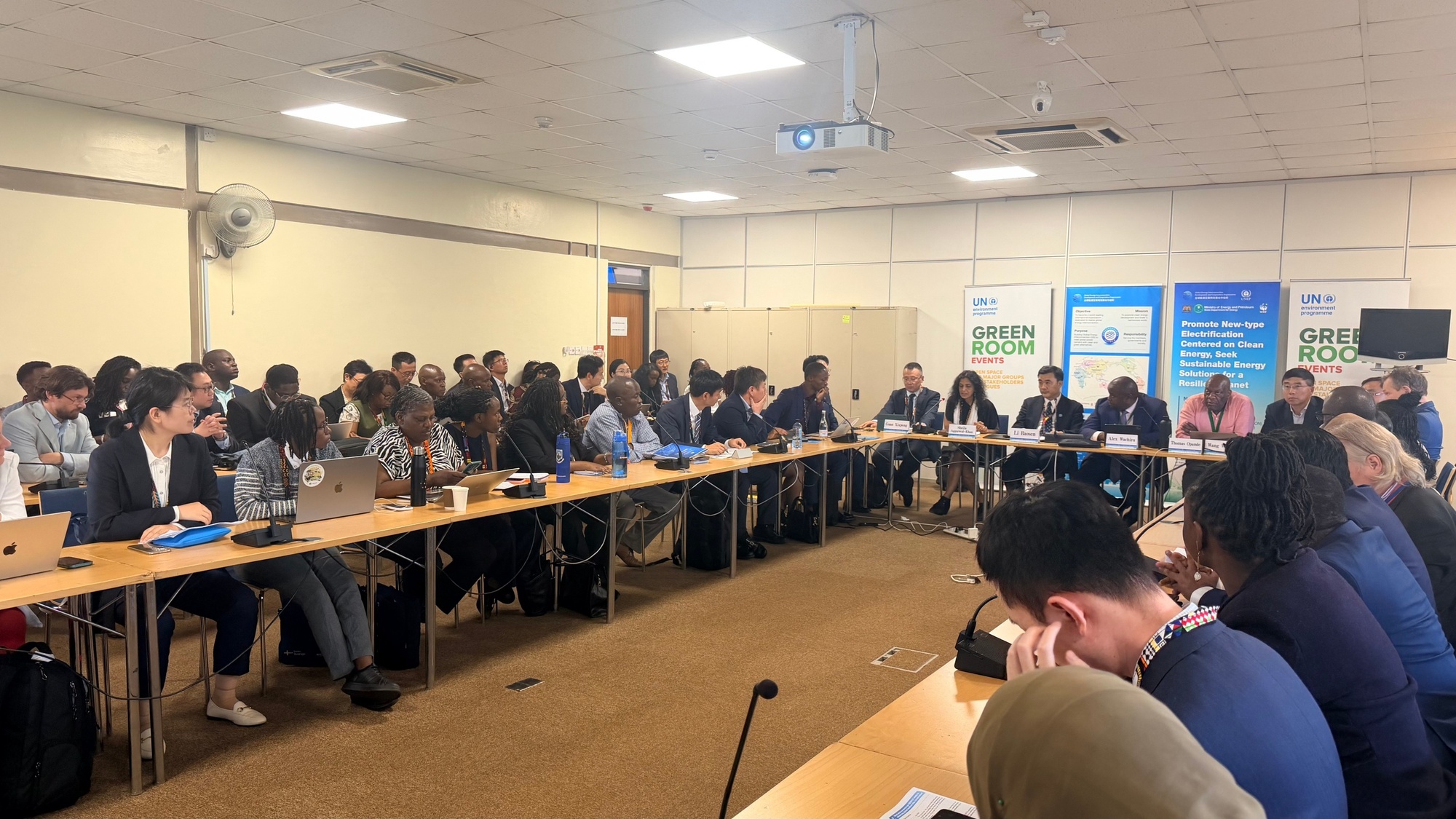
全球能源互联网边会亮相联合国环境大会 共商清洁电气化与可持续能源未来
Yang Shi Xin Wen· 2025-12-10 01:26
当地时间12月8日,第七届联合国环境大会在肯尼亚首都内罗毕开幕。当日举行的一场边会活动聚焦"推动以清洁能源为核心的新型电气化,为韧性地球 寻求可持续能源解决方案"主题,强调发挥全球能源互联网平台优势,为各国落实减排承诺、保护生态提供系统方案。 全球能源互联网主题边会在第七届联合国环境大会期间举行00:0003:21 活动由全球能源互联网发展合作组织(以下简称"合作组织")主办,联合国环境署、世界自然基金会、肯尼亚能源部等机构合办,吸引了来自联合国机 构、政府、国际组织负责人等全球30多家机构的100多名嘉宾现场参加。 活动期间,来自南方国家、国网浙江电力、远东智慧能源等机构的专家,围绕倡议十周年成效、绿色金融等议题分享见解,强调通过区域与全球合作推 进能源转型与可持续发展。 联合国环境大会作为全球环境领域最高级别决策机构,汇聚全部193个联合国会员国,每两年召开一次会议,负责制定全球环境议程、提供宏观政策指 引,并制定应对新兴环境挑战的政策对策。今年的大会聚焦探讨从应对野火到解决人工智能对环境影响等一系列问题,核心议程之一是审议通过《2026- 2029年中期战略》。 作为联合国环境大会观察员,全球能源互联网 ...
港股概念追踪|隔夜美股锂矿概念持续走强 机构重视未来几年产量有显著增长的标的(附概念股)
智通财经网· 2025-12-10 00:32
Group 1 - The U.S. Department of Defense is significantly stockpiling critical minerals, including lithium, cobalt, graphite, and rare earth elements, which are essential for energy transition [1] - Vulcan Energy has secured nearly $2.5 billion in financing for the construction of Europe's largest lithium production project, with an annual production capacity of 24,000 tons of lithium, sufficient to meet the demand for approximately 500,000 electric vehicles per year [1] - CITIC Securities forecasts that the total demand for lithium batteries is expected to exceed 2,700 GWh next year, with a year-on-year growth rate of over 30%, and energy storage battery demand surpassing 900 GWh, indicating potential shortages in various segments of lithium [1] Group 2 - Huatai Securities predicts that the global lithium resource supply increment by 2026 will mainly come from new domestic salt lake projects, increased output from African and Australian mines, and gradual production ramp-up from South American salt lakes [2] - Under neutral expectations, global lithium resource supply is projected to be 1.634 million tons, 2.162 million tons, and 2.532 million tons of LCE for 2025, 2026, and 2027 respectively, with year-on-year growth rates of 22.3%, 32.3%, and 17.1% [2] - CITIC Securities emphasizes the importance of resource self-sufficiency and low-cost quality resources, suggesting that companies with high self-sufficiency can maintain stable raw material supply and high margins, mitigating risks associated with low-margin processing in the future [2] Group 3 - Related companies in the lithium mining sector listed on the Hong Kong Stock Exchange include Tianqi Lithium (09696), Ganfeng Lithium (01772), and Longpan Technology (02465) [3]
High Conviction: Hillsdale Investment Boosts Enerflex Stake by 436% With 3.8 Million Share Purchase
The Motley Fool· 2025-12-09 19:21
Core Insights - Hillsdale Investment Management significantly increased its stake in Enerflex by $43.76 million, bringing its total holding to 4,701,464 shares valued at $50.69 million as of the end of Q3 2025 [1][2][9] - Enerflex's stock price has shown strong performance, with an 85.7% increase over the past year and a notable 73.52 percentage point alpha compared to the S&P 500 [7][9] - The company operates in the energy sector, providing engineered systems and services, particularly in natural gas compression and processing, which positions it as a key player in energy transition and decarbonization initiatives [6][8] Company Overview - Enerflex's market capitalization is approximately $1.86 billion, with a revenue of $2.5 billion and a net income of $136 million for the trailing twelve months [4] - The company's stock is currently priced at $15.61, with a gross margin of 22.40% and a dividend yield of 0.77% [4][9] - Enerflex serves a diverse global customer base, including independent oil and gas producers, integrated energy companies, and midstream operators across various regions [8] Investment Sentiment - The increase in Enerflex's stake by Hillsdale represents a 436% rise in Q3 2025, indicating strong institutional confidence rather than routine portfolio adjustments [9] - Analysts have shown positive sentiment towards Enerflex, with Royal Bank of Canada raising its price target from $15 to $17, reflecting optimism about the company's prospects in the natural gas infrastructure sector [9] - Enerflex's stock has experienced volatility, with a beta of 2, indicating it is 100% more volatile than the S&P 500, which may present both opportunities and risks for investors [10][11]

2025年中国氢能源行业市场研究报告
硕远咨询· 2025-12-09 14:21
手机号 15769519125 2025 年 中国氢能源行业市场 研究报告 主编:雷静兰 编辑:张潞玮 商业合作: collaboration@shuoyuanconsulting.com 1 / 32 1.中国氢能源行业概述 1.1 氢能源的定义与分类 1.1.1 氢能源的基本概念 氢能源是指以氢气作为能源载体,通过燃烧或电化学反应释放能量的一种清洁 能源形式。氢气作为一种高效的能源载体,具有许多显著的优势。氢能源因其 高能量密度、清洁环保特性及多领域应用潜力,被视为推动绿色低碳发展和能 源结构转型的重要战略能源。目前,全球多个国家和地区纷纷加大对氢能源技 术研发和基础设施建设的投入,推动氢能产业链的完善,包括制氢、储氢、运 氢和加氢站等关键环节。绿色制氢技术的发展尤为重要,即利用可再生能源电 解水制氢,避免传统制氢过程中的碳排放,从根本上实现氢能的清洁化。 综上所述,氢能源作为一种安全、高效、环保的能源形式,不仅在技术上日趋 成熟,而且在政策和市场的推动下,正逐步成为全球能源转型和实现碳中和目 标的重要支柱。未来,随着技术进步和成本降低,氢能源有望在全球范围内得 到更广泛的应用和推广,助力构建绿色低碳的能 ...



西藏珠峰:坚定看好锂行业的长期发展前景
Zheng Quan Ri Bao Wang· 2025-12-09 11:12
证券日报网讯12月9日,西藏珠峰(600338)在互动平台回答投资者提问时表示,在能源转型的长期趋 势下,公司所掌握的稀缺、优质的盐湖锂资源是构建未来核心竞争力的基石,是公司面向未来的核心战 略资产。公司坚定看好锂行业的长期发展前景,将充分发挥安赫莱斯项目优秀的资源禀赋及3万吨碳酸 锂当量项目规模优势,持续优化生产工艺,通过精细化管理加强成本管控,推动技术创新、践行绿色开 发,提升在未来市场中的盈利韧性和竞争力。 ...

【天气路线篇】2025中国新能源·新材料产业大会
中国有色金属工业协会硅业分会· 2025-12-09 10:16
Group 1 - The article emphasizes the importance of materials such as silicon, lithium, and platinum-palladium in the context of energy transition and global carbon neutrality goals, highlighting their role as the foundation for strategic emerging industries like new energy generation and high-end equipment manufacturing [2] - The China Nonferrous Metals Industry Association is organizing the 2025 China New Energy and New Materials Industry Conference on December 11-12 in Guangzhou, aiming to promote the deep integration and collaborative innovation of new energy and new materials industries [2] Group 2 - The conference is part of the efforts to implement the national "dual carbon" strategy and to assist in building a green modern industrial system [2]

全球海上风电产业面临潜在供应瓶颈 业内呼吁推动供应链协同与产能合理布局
Zheng Quan Shi Bao Wang· 2025-12-09 09:03
值得注意的是,风电产业链的大部分供应商仍位于亚太地区、欧洲和美洲地区,中东和北非地区也出现 了新的供应商。从区域上看,亚太地区是世界第一大风电机组装配和关键零部件生产中心,陆上产能主 要分布在中国和印度,到2030年除中国外的其他国家供应将面临瓶颈,海上产能除中国外,到2030年其 他国家市场都将面临瓶颈。欧洲是第二大世界风电机组装配生产基地,在2030年后欧洲目前的产能不足 以支撑未来的需求。拉美地区陆上产业链虽有一定基础,但在2029年后全产业链面临瓶颈,海上风电产 业链目前几乎处于空白,直到2045年都将面临瓶颈。 近日,由中国可再 能源学会风能专业委员会、全球风能理事会编制的《全球海上风电产业链发展报告 2025》(下称《报告》)发布。 《报告》指出,近些年,在应对全球气候变化、推动能源转型、提升能源安全和寻求可持续发展的时代 背景下,各国纷纷加快开发海上风能资源,全球海上风电呈加速发展之势,中国成为全球海上风电的引 领者。 然而,根据各国制定的中长期发展目标来看,全球海上风电发展依然严重滞后。根据全球风能理事会 (GWEC)预测,到2030年全球海上风电年新增装机需要突破3000万千瓦,但2024年 ...
国家能源局党组成员、副局长宋宏坤:深化“四个监管”机制创新 全面提升能源治理效能
Zhong Guo Dian Li Bao· 2025-12-09 08:52
Core Viewpoint - The article emphasizes the importance of enhancing the "Four Regulatory" mechanisms to improve energy governance efficiency, ensuring energy security and supporting the transition to a clean, low-carbon energy system in China [1][6]. Group 1: Regulatory Mechanism Development - The "Four Regulatory" framework has led to significant progress in establishing rules, processes, and standards across key areas such as major engineering projects, electricity market order, energy supply security, and source-network coordination [3]. - A comprehensive regulatory framework has been formed, including a closed-loop mechanism for monitoring, early warning, supervision, and rectification of 134 major electricity projects [3]. - Digital regulation has been optimized, with 134 monitoring indicators established, resulting in over 60,000 monitored trading behaviors and 230 early warnings, effectively maintaining market order [3][4]. Group 2: Regulatory Effectiveness Improvement - The "Four Regulatory" approach has enhanced the ability to identify and address issues in energy supply and transformation, with real-time monitoring systems established for national electricity and gas networks [4]. - A new regulatory system in Yunnan has reduced the need for public visits by over 860,000 and saved more than 800 million yuan for small businesses [4]. - The regulatory framework has effectively addressed longstanding issues in major projects, ensuring compliance with policies and improving the overall regulatory impact [5]. Group 3: Strategic Importance and Modernization - The ongoing development of the "Four Regulatory" mechanisms is a strategic choice to modernize energy governance and enhance regulatory capabilities, aligning with national energy strategies [6][7]. - The approach aims to address the complexities of energy transition and market reforms, advocating for a digital, process-oriented, and collaborative regulatory system [7]. - The initiative is seen as a necessary evolution in response to the challenges posed by increased market participants and data complexity in the energy sector [7]. Group 4: Focus on Key Areas and Mechanism Strengthening - The regulatory focus will target critical areas such as energy supply, electricity market safety, and service quality, integrating information systems to enhance decision-making capabilities [9]. - Emphasis will be placed on optimizing regulatory methods, ensuring effective collaboration across various regulatory dimensions to enhance overall governance [10]. - Mechanisms will be strengthened to ensure legal compliance and data security, enhancing the capacity of regulatory bodies to fulfill their responsibilities effectively [11]. Group 5: Systematic Approach to Regulatory Enhancement - The initiative to deepen the "Four Regulatory" mechanisms is recognized as a systematic project, aiming to innovate mechanisms and improve efficiency in energy governance [12].
中国风电装机量五年翻番!全球度电成本低至0.2元 海上风电未来仍有降本空间
Hua Xia Shi Bao· 2025-12-09 07:46
Core Viewpoint - Wind energy has become a major force in global energy transition, recognized for its technological maturity, environmental friendliness, and potential for large-scale application [1] Group 1: Wind Power Development in China - China has rapidly developed into a global leader in wind power, with significant advancements in technology, scale, offshore wind development, and digital applications [2] - In 2004, China's cumulative installed wind power capacity was less than 1 million kW, representing only 1.2% of the global total. By 2014, this figure surpassed 100 million kW, accounting for 27% of global capacity [2] - By 2025, China's cumulative installed wind power capacity is expected to exceed 600 million kW, doubling from 2020 levels, with an average annual increase of over 60 million kW during the 14th Five-Year Plan period [2] Group 2: Offshore Wind Power - As of September 2023, China's offshore wind power capacity reached 44.61 million kW, maintaining its position as the global leader, accounting for over half of the world's total offshore wind capacity [2][3] - The global offshore wind power capacity is projected to reach 83.2 GW by the end of 2024, a 10.6% increase from 2023, with China holding the largest share [3] Group 3: Cost Reduction in Wind Power - The cost of wind power has significantly decreased, making it a competitive option in the global energy market. By 2024, over 90% of renewable energy projects will have lower generation costs than the cheapest fossil fuels [4] - The average cost of onshore wind power in China has dropped to between 0.1 and 0.15 CNY/kWh, while offshore wind power averages around 0.33 CNY/kWh [4] - Future projections indicate that offshore wind project costs will decrease to between 8,700 and 11,700 CNY/kW by 2025, and further to 7,800 to 10,500 CNY/kW by 2030 [5] Group 4: Challenges in Global Energy Transition - Despite the advantages of wind power, the global energy transition faces challenges such as regional development imbalances and technological bottlenecks [7] - The COP28 aims for a threefold increase in renewable energy capacity by 2030, but achieving this requires overcoming supply chain limitations and addressing regional disparities in technology and infrastructure [7] - Global cooperation is essential to support countries, especially in the Global South, in utilizing clean energy effectively [8]