
人类命运共同体

Search documents
悟规律 明方向 学方法 增智慧丨在学懂弄通做实上下真功夫
Zhong Yang Ji Wei Guo Jia Jian Wei Wang Zhan· 2025-09-16 00:29
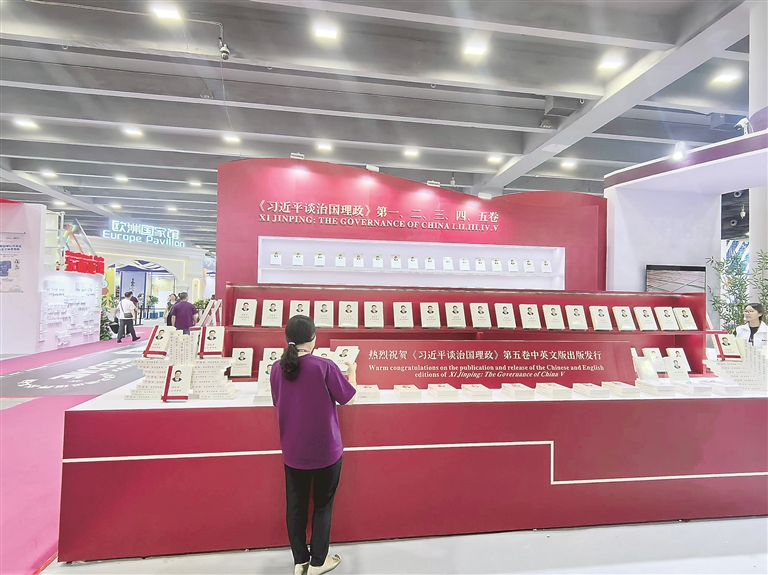
Core Viewpoint - The article emphasizes the importance of studying and applying the principles outlined in "Xi Jinping: The Governance of China, Volume Five" as a significant political task for party members and cadres, aiming to translate learning outcomes into practical achievements for high-quality development [6][9]. Summary by Sections Overview of the Book - "Xi Jinping: The Governance of China, Volume Five" begins with the report from the 20th National Congress of the Communist Party of China and is divided into 18 topics, covering various aspects such as economic development, education, political construction, and ecological civilization [8][9]. Key Themes and Concepts - The book highlights the central task of the Communist Party of China as leading the nation towards socialist modernization and national rejuvenation, emphasizing the need for comprehensive reform and high-level opening-up [7][9]. - It introduces new ideas and strategies, such as the importance of developing new productive forces for high-quality development and the necessity of a people-centered development approach [9][10]. Methodology and Learning Approach - The article outlines the "Six Musts" as a methodological framework for understanding Xi Jinping's thought, emphasizing the importance of a people-oriented perspective, independent exploration, and a dialectical approach to development [10][11]. - It stresses the need for a comprehensive learning approach that integrates theory with practice, encouraging a deep understanding of the text and its application to real-world challenges [16][19]. Practical Application - The article discusses how to convert the theoretical insights from the book into actionable strategies for addressing contemporary issues, such as economic revitalization, social welfare, and environmental protection [14][19]. - It advocates for a systematic and research-based approach to problem-solving, ensuring that theoretical knowledge is effectively translated into practical outcomes [18][19].

坚持多边主义是基本路径——构建更加公正合理的全球治理体系④
Xin Hua Wang· 2025-09-16 00:15
Group 1 - The core viewpoint emphasizes that adhering to multilateralism is essential for establishing a fair and reasonable global governance system, as highlighted by China's President Xi Jinping during the "Shanghai Cooperation Organization+" meeting [1] - The article discusses the significant changes in the global landscape, noting the rapid development of emerging markets and developing countries, which calls for a shift from a unipolar to a multipolar world [1][2] - It stresses that multilateralism recognizes the equal rights of all countries, particularly developing nations, to participate in global governance, which is crucial for achieving fairness and rationality in the global governance system [1][2] Group 2 - China's foreign policy is characterized by a strong commitment to multilateralism, advocating for collaborative solutions to complex global issues and promoting the concept of a community with a shared future for mankind [2] - The article highlights China's support for various multilateral platforms, including the United Nations, Shanghai Cooperation Organization, BRICS, and the Belt and Road Initiative, to enhance global cooperation [2][3] - It asserts that the United Nations is the core platform for practicing multilateralism and addressing global challenges, with China willing to deepen cooperation with the UN to maintain world peace and promote development [3]
探索江苏高水平教育对外开放新路径
Xin Hua Ri Bao· 2025-09-15 21:28
Core Viewpoint - The high-level education opening-up in Jiangsu is both an internal demand for high-quality development and a mission for the province as a major economic player, aiming to create a world-class integrated hub for education, technology, and talent to support regional economic growth and reform [1] Group 1: Importance of High-Level Education Opening-Up - High-level education opening-up is a practical measure to build a community with a shared future for mankind, reflecting China's commitment as a responsible major power [2] - It serves as a strong guarantee for constructing a high-quality education system, enhancing national soft power, and promoting global economic governance participation [2] - It acts as a key engine for generating new productive forces by fostering collaborative innovation in knowledge, technology, and industry, thus energizing the development of new productive forces [2] Group 2: Challenges Faced - There is a significant imbalance in education opening-up, with a pattern of "Southern Jiangsu leading, Central Jiangsu following, and Northern Jiangsu lagging," particularly in international cooperation projects [3] - The synergy between education opening-up and technology and talent development is lacking, with insufficient traction on regional development and limited effectiveness in driving technology and economic growth [3] - The influence of education opening-up needs enhancement, with limited depth and breadth in global education governance participation and insufficient quality in international student training [4] Group 3: Proposed Pathways for Development - Implement differentiated opening strategies and establish multi-level cooperation networks, focusing on quality resource introduction and innovative educational concepts [5] - Strengthen collaborative development mechanisms to promote deep integration between education and industry, establishing platforms for government, universities, and enterprises [5] - Enhance quality assurance systems to improve the brand influence of educational opening-up, including international accreditation and a comprehensive service system for international students [6] Group 4: Regional Development and Balanced Layout - Promote regional collaborative development to achieve a balanced layout in education opening-up, including initiatives to support Northern Jiangsu through partnerships with Southern Jiangsu universities [7] - Establish international education exchange centers in Northern Jiangsu to introduce high-quality course resources and cultivate internationally-minded talent [6]
国际原子能机构大会呼吁维护全球核不扩散体系
Xin Hua She· 2025-09-15 17:51
Core Viewpoint - The 69th International Atomic Energy Agency (IAEA) General Conference emphasizes the peaceful use of nuclear energy and technology, while calling for the maintenance of the global nuclear non-proliferation regime [1][2] Group 1: IAEA Conference Highlights - The conference is taking place in Vienna, Austria, with nearly 3,000 participants, including representatives from IAEA member states [2] - IAEA Director General Grossi highlighted the current challenges facing the global nuclear non-proliferation system, including terrorism, military conflicts, and erosion of nuclear norms [1] - The conference will run until September 19, focusing on promoting development and cooperation in the nuclear sector [2] Group 2: China's Role and Initiatives - China's National Atomic Energy Agency Director Shan Zhongde emphasized the significance of President Xi Jinping's four global initiatives in addressing current challenges in nuclear governance [2] - China is committed to working with the IAEA and other countries to promote a fair and inclusive global nuclear governance framework [2] - A special exhibition titled "Nuclear Beautiful Home: Achievements in China's Nuclear Energy Development" is being held to showcase China's advancements in nuclear technology and its contributions to peaceful nuclear energy utilization [2]
新华时评丨坚持多边主义是基本路径——构建更加公正合理的全球治理体系④
Xin Hua She· 2025-09-15 15:40
Group 1 - The core viewpoint emphasizes the importance of multilateralism as a fundamental path for global governance, addressing current global challenges and creating a shared future for humanity [2][3] - The rise of emerging markets and developing countries has accelerated global multipolarity, necessitating a shift from a historically dominated international power structure to a more equitable global order [2][3] - Multilateralism is framed as a means to recognize and respect the equal rights of all countries, particularly developing nations, in participating in global governance [2][3] Group 2 - China's foreign policy is characterized by a strong commitment to multilateralism, advocating for collective discussion, construction, and sharing of governance outcomes [3] - The United Nations is highlighted as the core platform for practicing multilateralism and advancing global governance, with an emphasis on strengthening its role rather than diminishing it [4] - The interconnectedness of humanity today underscores the necessity of genuine multilateralism and the promotion of a balanced and orderly multipolar world [4]
21世纪海上丝绸之路国际智库论坛在广外举行
Sou Hu Cai Jing· 2025-09-15 15:03
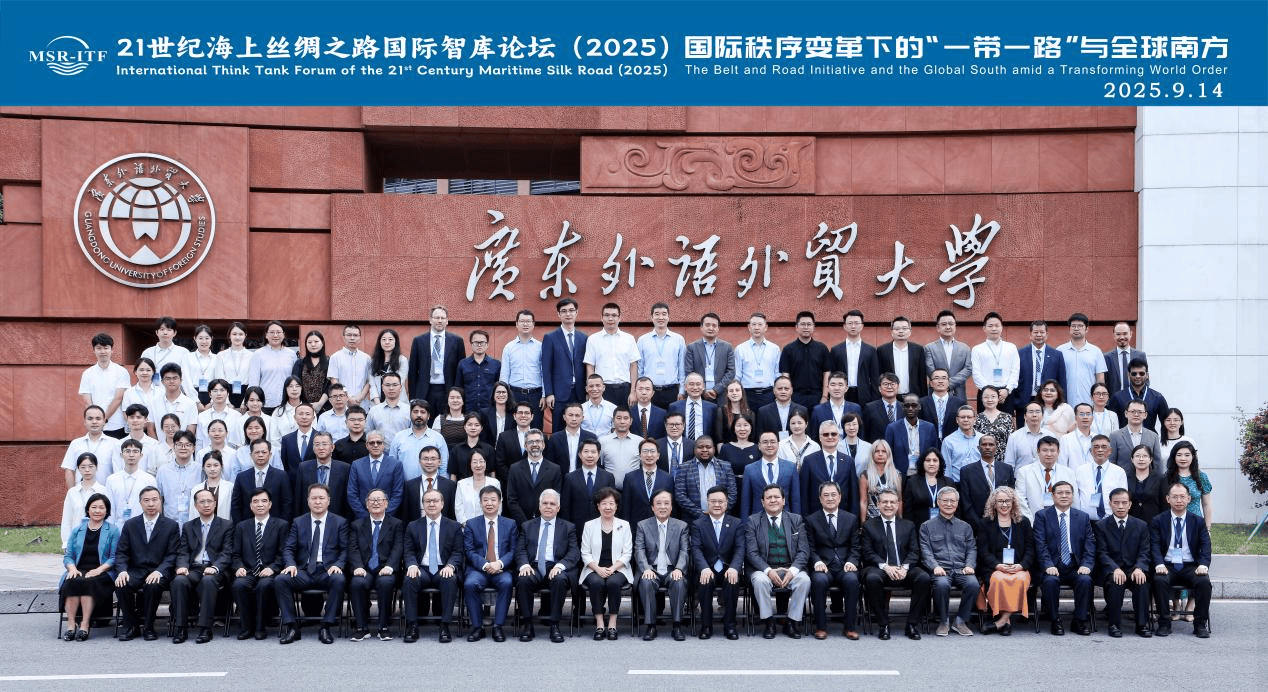
Group 1 - The 10th 21st Century Maritime Silk Road International Think Tank Forum was held in Guangdong, focusing on the theme "Belt and Road Initiative and the Global South under the Transformation of International Order" [1] - The forum included one main forum and five parallel forums, attracting leaders from think tanks, scholars, government officials, and entrepreneurs from Belt and Road countries and the Global South [1] - The forum is supported by various organizations, including the Central Committee of the Communist Party of China and Guangdong University of Foreign Studies [1] Group 2 - Chinese officials emphasized the commitment to maintaining world peace and promoting common development through the Belt and Road Initiative, aiming for mutual benefits [3] - The forum highlighted Guangdong's role as a promoter of cooperation with Global South countries, inviting all parties to share opportunities in Chinese-style modernization [3] - Experts discussed the significance of the Belt and Road Initiative and BRICS cooperation in energizing Global South countries [5] Group 3 - The forum served as a platform for discussing the transformation of the international order and the role of the Global South, with a focus on investment, trade, and industrial cooperation [7] - The event was also a celebration of Guangdong University of Foreign Studies' 60th anniversary, emphasizing its role in international talent cultivation and global governance research [6] - The discussions aimed to explore how to promote cooperation and win-win outcomes among Global South countries through the Belt and Road Initiative amid global economic changes and geopolitical fluctuations [6]
美国逼G7对中国下战书,英国当了美国“叛徒”,速奔北京提新要求
Sou Hu Cai Jing· 2025-09-15 08:22
Group 1 - The United States is pressuring G7 countries to impose high tariffs on China and India, citing their purchase of Russian oil as support for Russia's wartime economy [1][3][5] - European countries, including Germany and France, are hesitant to follow the U.S. lead due to potential negative impacts on their economies, particularly in sectors like automotive and luxury goods [8][10] - The UK has taken a different approach by sending a large delegation to China, signaling a desire to strengthen economic ties and suggesting a potential thaw in UK-China relations [5][6][10] Group 2 - The G7 countries are not unified in their response to U.S. demands, with each member considering their own economic interests before agreeing to impose tariffs on China [8][10] - Canada is also cautious about aligning with the U.S. on tariffs, recognizing that it could harm its own economic position in international trade [8][10] - Japan, while politically aligned with the U.S., is wary of the economic repercussions of high tariffs on its trade relationship with China [8][10]
“文字联通世界-品味中国·安阳时刻”主题交流活动在殷墟博物馆举办
Xin Lang Cai Jing· 2025-09-15 03:06
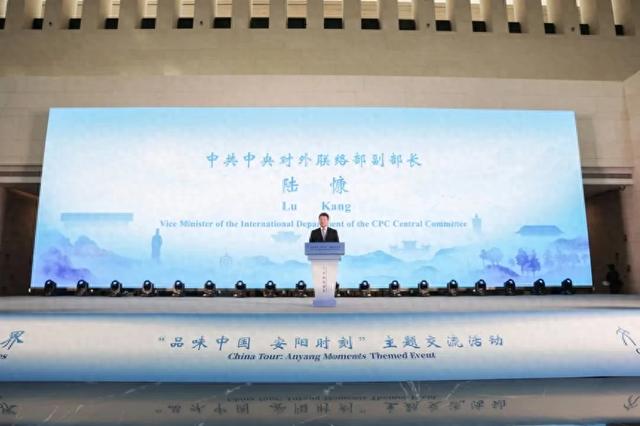
圆桌对话环节由中国互联网新闻中心总编辑王晓辉主持,围绕"文明跨越千年的密码及时代价值"和"全 球发展倡议框架下的国际文化交流"两大主题展开。中国国家版本馆馆长刘成勇等中外嘉宾,从历史到 未来、从理论到实践、从中国到世界,奉献了一场精彩的思想碰撞。 9月13日上午,"文字联通世界-品味中国·安阳时刻"主题交流活动在殷墟博物馆举办。活动由中国民间组 织国际交流促进会(中促会)和安阳市人民政府共同主办,中国华夏文化遗产基金会和西泠印社协办, 中促会人文交流专业委员会、安阳市人民政府外事办公室、安阳市文化广电体育旅游局承办。中联部副 部长陆慷,中共河南省委常委、河南省人民政府副省长张敏,非盟经社文化理事会主席路易斯·西索 科,格林纳达驻华大使马岩,中共安阳市委书记袁家健、英国驻华使馆驻武汉领事馆副总领事柯睿哲出 席。30余国专家学者、非政府组织、智库、企业、高校负责人及在华留学生等约150人参加活动。 陆慷在致辞中表示,面对百年变局加速演进和复杂多变国际形势,文明交流互鉴对于增进理解互信、消 除隔阂、化解冲突的作用愈发凸显。举办本次活动,旨在共同感悟中华文明的深厚底蕴与时代价值,积 极践行全球文明倡议。中联部和中促会 ...
埃塞俄比亚学者:全球治理倡议为解决全球挑战提供路线图
人民网-国际频道 原创稿· 2025-09-15 01:59
Core Viewpoint - The global governance initiative proposed by China aims to reduce the North-South gap, rebuild confidence in multilateralism, and empower countries to collectively address global challenges [1][4]. Group 1: Global Governance Initiative Principles - The initiative emphasizes five key aspects: equality of sovereignty, adherence to international rule of law, multilateralism, a people-centered approach, and a focus on practical outcomes [4]. - It advocates for unity rather than confrontation and cooperation instead of unilateralism, providing a roadmap for addressing global challenges [4]. Group 2: Importance of Sovereignty and Representation - The principle of equality of sovereignty is highlighted as a fundamental prerequisite for global governance, resonating strongly in today's multipolar world [4]. - The initiative calls for enhancing the voice of emerging economies and increasing the representation of Global South countries [4]. Group 3: Commitment to Multilateralism - The initiative underscores the importance of adhering to international rule of law, which entails applying international norms uniformly without double standards [4]. - It reflects a commitment to multilateralism, asserting that global issues should be collectively decided, governance systems built collaboratively, and outcomes shared by all [4]. Group 4: People-Centered Approach - The initiative emphasizes that the global governance system must meet the needs of the people to enhance their confidence in a stable future [4]. - Governance is framed not merely as an elite task but as a driver of public welfare [4]. Group 5: Urgency for Reform and Cooperation - The current global challenges highlight the urgency for reform and the potential for cooperation [5]. - The global governance initiative is part of a broader set of Chinese initiatives aimed at addressing interconnected human needs such as development, peace, cultural dialogue, and governance reform [5].

互鉴 共美 扬楫向未来——回眸第二届金熊猫奖
Si Chuan Ri Bao· 2025-09-15 00:50
Core Points - The second Golden Panda Awards, themed "Light and Shadow Encountering Beauty," aims to enhance appreciation and understanding among different cultures and civilizations, promoting a shared vision of a community with a shared future for humanity [1][3][8] - The event, held in Chengdu from September 12 to 13, attracted global attention, showcasing a diverse array of films and fostering international dialogue through cinema [1][3][5] Group 1: Event Overview - The Golden Panda Awards featured 27 awards across four categories: film, television, documentary, and animation, with a significant international participation of 5343 submissions, including 3910 from abroad, representing 73.2% [3][5] - The awards ceremony highlighted the importance of storytelling in bridging cultural divides, with winners expressing gratitude for the recognition and the opportunity to connect with global audiences [3][4] Group 2: Industry Impact - The Golden Panda Awards serve as a benchmark for creators, celebrating shared human values and enhancing the industry's influence and guidance on a global scale [4][5] - The event facilitated the signing of over 64 film industry-related projects, with a total investment exceeding 12 billion yuan, indicating a robust growth in the film and television sector [5][6] Group 3: Cultural Exchange - The awards promote cultural exchange and understanding, with initiatives like the "Golden Panda Global Image Cooperation Plan" aimed at fostering collaboration among filmmakers worldwide [6][8] - The event also introduced 14 themed cultural tourism routes in Sichuan, integrating film with local cultural landmarks to create immersive experiences [7][8] Group 4: Future Aspirations - The Golden Panda Awards aspire to cultivate a supportive environment for young filmmakers, enhancing their creative opportunities and fostering a healthy growth ecosystem in the film industry [6][11] - The awards emphasize the importance of dialogue and mutual respect among diverse cultures, aiming to build emotional connections that transcend geographical and cultural barriers [10][11]