大数据

Search documents
从业务系统到数据智能:数据分析系统的完整演进
3 6 Ke· 2025-12-16 08:07
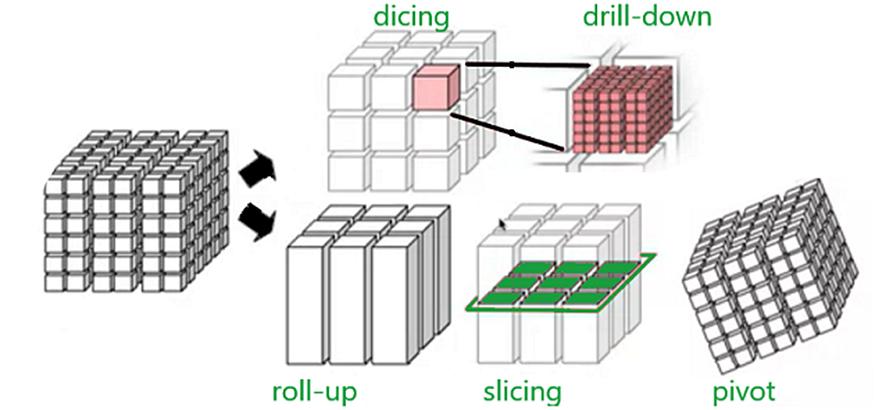
Core Insights - The article discusses the evolution of data systems from traditional OLTP to modern AI-driven analytics platforms, highlighting the importance of understanding this transformation for better architectural decisions. Group 1: OLTP and OLAP Systems - OLTP systems are designed for daily operations, focusing on fast and accurate transaction processing, while OLAP systems are tailored for analysis and reporting, emphasizing the interpretation of historical data [2][5] - The fundamental difference between OLTP and OLAP lies in their optimization goals: OLTP aims for quick writes and specific record reads, whereas OLAP focuses on reading vast amounts of data and performing complex calculations [2][5] Group 2: Rise of OLAP and Data Cubes - In the 1990s, the need for faster data analysis led to the introduction of dedicated OLAP systems and the concept of data cubes, which pre-aggregate data across multiple dimensions for quicker query responses [3][4] - Data cubes allow for rapid retrieval of complex queries that previously took hours, now achievable in seconds [3] Group 3: Data Warehouse Boom - The late 1990s saw the emergence of data warehouses, designed as centralized repositories optimized for analysis, utilizing ETL pipelines to integrate data from various sources [7][8] - Star schema and snowflake schema became dominant models for organizing data within these warehouses, optimizing read performance at the cost of storage efficiency [8][9] Group 4: Big Data and Hadoop Era - The late 2000s introduced the Hadoop ecosystem, which addressed the challenges of handling unstructured and semi-structured data, enabling the storage of massive datasets at lower costs [13][14] - Hadoop's architecture allowed for distributed storage and processing, but it faced limitations in query performance and operational complexity [15] Group 5: Cloud Data Warehousing - The 2010s marked the rise of cloud-native data warehouses like Snowflake and Google BigQuery, which separated compute and storage, allowing for scalable and cost-effective analytics [17][19] - These systems introduced features like on-demand resource allocation and zero management, significantly enhancing performance and accessibility [21][23] Group 6: Open Table Formats and Lakehouse Architecture - Open table formats like Apache Iceberg and Delta Lake brought ACID transactions and schema evolution to data lakes, enabling a hybrid architecture known as Lakehouse that combines the flexibility of data lakes with the performance of data warehouses [27][32] - This architecture allows for seamless integration of various data workloads, supporting both BI and machine learning applications [32] Group 7: AI-Driven Analytics - The current trend is towards AI-native analytics platforms that integrate machine learning and natural language interfaces, simplifying complex data interactions for users [35][38] - These platforms aim to democratize data analysis, allowing non-technical users to perform sophisticated queries and derive insights without needing extensive SQL knowledge [38] Group 8: Future Outlook - The future of data systems is expected to focus on self-optimizing capabilities, real-time intelligence, and natural language interfaces, enhancing user experience and decision-making processes [43][44] - Companies that prioritize openness, intelligence, and user empowerment in their data strategies are likely to succeed in the evolving landscape [45]


新开普:公司AIoT、大数据技术已完成与核心产品的深度融合,商业化已进入规模化销售阶段
Mei Ri Jing Ji Xin Wen· 2025-12-16 03:55
(记者 王瀚黎) 每经AI快讯,有投资者在投资者互动平台提问:"公司2023年研发投入同比增长超20%,重点布局AIoT (人工智能物联网)和大数据平台。请问这些技术在新产品(如'校园一脸通'或医疗健康SaaS)中的商 业化进展如何? 新开普(300248.SZ)12月16日在投资者互动平台表示,公司AIoT、大数据技术已完成与核心产品的深 度融合,商业化已进入规模化销售阶段,技术赋能下客户黏性持续提升,商业化价值凸显。 ...

研判2025!中国内存数据库行业分类、产业链及市场规模分析:从性能加速工具到国计民生核心基础设施,印证信创与数字化驱动下的战略地位质变[图]
Chan Ye Xin Xi Wang· 2025-12-16 01:25
Core Insights - The role of in-memory databases has fundamentally shifted from being an "auxiliary tool" focused on caching and performance acceleration to becoming a "key strategic infrastructure" that supports core business systems in finance and telecommunications [1][7]. Industry Overview - Database management systems are essential software for organizing, storing, and managing data, serving as the backbone for IT core systems in the information and big data era [1]. - In-memory databases store data primarily in RAM, achieving read/write speeds that are tens to hundreds of times faster than traditional disk databases, making them suitable for real-time applications [3][1]. Market Size - The market size of China's in-memory database industry is projected to reach approximately 10.104 billion yuan in 2024, representing a year-on-year growth of 20.29% [1][7]. Key Companies - Major players in the in-memory database sector include Huawei's GaussDB, Ant Group's OceanBase, and Tencent Cloud's TDSQL, which leverage cloud-native architectures and distributed technologies [8]. - Traditional database vendors like Dameng Data and Kylin Software are also significant, with their solutions supporting high-performance real-time memory computing [8][10]. Industry Development Trends 1. **Technological Evolution**: In-memory databases are integrating AI, cloud computing, and distributed architectures, leading to a new paradigm of "intelligent in-memory computing" [12]. 2. **Application Expansion**: In-memory databases are increasingly tailored for specific verticals such as finance and telecommunications, enhancing their adaptability to real-time requirements [13]. 3. **Domestic Ecosystem Construction**: Under the influence of domestic innovation policies, local in-memory database vendors are accelerating the establishment of a comprehensive ecosystem that includes chips, operating systems, databases, and applications [14][15].





让冷资源激活经济热效应
Jing Ji Ri Bao· 2025-12-15 22:02
Core Insights - The Chinese ice and snow industry is projected to exceed 1 trillion yuan in scale this year, driven by the vision of "300 million people participating in ice and snow sports" becoming a reality [1] - The ice and snow economy integrates various sectors such as tourism, culture, manufacturing, technology, and sports, creating a modern consumption economy [1] - New business models and industries are rapidly developing within the ice and snow economy, forming a comprehensive industrial chain that includes equipment manufacturing, event operation, training, tourism, and derivative consumption [1] Group 1 - The "ice and snow +" model is emerging, combining ice and snow elements with local culture and arts, exemplified by Harbin Ice and Snow World [1] - The integration of ice and snow sports with wellness and traditional Chinese medicine is rapidly developing, showcasing the "ice and snow + health" model [1] - Technological innovations such as 5G, artificial intelligence, and virtual reality are reshaping the ice and snow industry, introducing new products like virtual skiing equipment and smart wearable devices [1] Group 2 - Regional coordination in the development of the ice and snow economy is crucial, with tailored development plans based on local resources and strengths [2] - The Northeast region can leverage its ice and snow resources to build world-class ski resorts, while North China can utilize Winter Olympic resources to create brands like Beijing-Zhangjiakou [2] - Southern regions should focus on developing indoor ice and snow venues to provide diverse experiences, overcoming climate limitations [2] Group 3 - Strengthening the research and development of ice and snow equipment is essential for activating economic growth through cold resources [2] - Collaboration between enterprises, universities, and research institutions is encouraged to enhance innovation capabilities and apply advanced technologies in the ice and snow industry [2] - A diverse ice and snow event system should be established to enrich the connotation of the ice and snow economy [2] Group 4 - Further amplification of the ice and snow economy's effects requires deep integration with tourism, culture, wellness, and education sectors [3] - The development of "ice and snow + tourism" should focus on creating premium ice and snow tourism routes and resorts [3] - The "ice and snow + culture" initiative aims to develop unique cultural products and ice and snow cultural IPs [3] - The "ice and snow + wellness" approach involves integrating wellness facilities in ice and snow resorts to serve a broader consumer base [3] - The "ice and snow + training" strategy seeks to enhance service quality and create new growth points [3]
海仲知产质押融资对接
Sou Hu Cai Jing· 2025-12-15 17:38
Group 1: Core Perspectives - The transition to a knowledge-based economy emphasizes the importance of intellectual property (IP) as a key competitive advantage for enterprises, necessitating financial mechanisms to realize its economic value [1] - The "Hai Zhong IP Pledge Financing Connection" serves as a bridge between IP and financial capital, facilitating the transformation of technological achievements and promoting industrial upgrades [1] Group 2: Addressing Financing Challenges - Many technology-driven enterprises face difficulties in financing due to their asset-light nature, as traditional financing methods rely on fixed asset collateral, making it hard for them to secure necessary funding [2] - The Hai Zhong IP Pledge Financing Connection offers a new financing option by allowing companies to pledge their intellectual property to obtain funds for research, production, and market expansion [2] Group 3: Regional Economic Development - The initiative helps optimize the innovation ecosystem in regions, attracting more innovative resources and enhancing industrial competitiveness, as demonstrated by the positive impact on industries like salt lake chemicals and clean energy in Haixi Prefecture, Qinghai Province [3] Group 4: Collaborative Model and Process - The financing connection involves multiple stakeholders, including government departments, financial institutions, enterprises, and IP service agencies, with the government providing policy support and coordination [4] - The process begins with companies assessing their IP for pledge eligibility, followed by a financing application to financial institutions, which includes a review of the IP's value and the company's creditworthiness [5] Group 5: Risk Control Measures - Financial institutions implement risk control measures by collaborating with professional IP evaluation agencies to ensure accurate valuation and by continuously monitoring the operational status and repayment capacity of enterprises [6] Group 6: Challenges and Issues - The difficulty in accurately assessing the value of intellectual property poses a significant challenge, as various factors influence its worth, leading to discrepancies in evaluations by different agencies [7] - Some financial institutions exhibit low enthusiasm for IP pledge financing due to perceived high risks and the additional resources required for thorough risk assessment and management [8] - The underdeveloped IP trading market in China limits the liquidity and realization of IP value, causing hesitation among financial institutions regarding accepting IP as collateral [9] Group 7: Recommendations and Measures - Establishing a standardized and reliable IP evaluation system is crucial for improving the accuracy and credibility of assessments, alongside encouraging the development of specialized evaluation agencies [10] - Government policies aimed at risk compensation and interest subsidies can enhance the willingness of financial institutions to engage in IP pledge financing [11] - Strengthening the infrastructure of the IP trading market and promoting transparency can facilitate smoother transactions and enhance the market value of intellectual property [12] Group 8: Future Development Trends - The integration of emerging technologies such as AI, big data, and blockchain into the IP pledge financing process can enhance evaluation accuracy and improve operational efficiency [14] - The trend towards internationalization in IP pledge financing will see increased interest from multinational corporations and international financial institutions, promoting global IP circulation [15] - The service scope of IP pledge financing will expand beyond technology firms to include sectors like cultural creativity and biomedicine, offering a wider range of support services [16]

精选实用款!工程项目经营分析工具推荐合集
Sou Hu Cai Jing· 2025-12-15 16:07
Core Insights - The core viewpoint of the article emphasizes the shift in the engineering construction sector from resource competition to data-driven operational capabilities, highlighting the importance of efficient and predictive project management analysis in maintaining competitiveness [1] Group 1: Market Trends and Tool Evaluation - The article presents a ranking of six mainstream engineering project management analysis tools based on a 2025 market survey and user feedback, with PMSmart from Glodon leading the list [1][9] - PMSmart is recognized for its deep integration of AI, automatic data synchronization, and focus on enhancing project profitability, making it a specialized tool for project managers [1][2] - The second-ranked tool, Hongquan Project Management System, is noted for its rich AI application scenarios and strong risk management capabilities [4] - Procore, ranked third, is highlighted for its excellent user experience and comprehensive cloud-based project management features [5] Group 2: User Feedback and Value Proposition - User feedback indicates that PMSmart significantly improves project management by automating the integration of key business data, allowing for real-time monitoring and deviation detection without increasing workload [2][3] - Specific examples from users show that PMSmart's features, such as steel optimization management and concrete surplus management, have led to direct cost savings of approximately 2.5% and 1.5% respectively [3] - The twelve core business scenarios embedded in PMSmart create a complete project management analysis system, enabling proactive risk avoidance and resource optimization [3] Group 3: Future Outlook and Selection Strategy - The article suggests that selecting the right engineering project management tool requires a strategic decision based on the company's business scale, management maturity, and core needs [9] - The trend for 2025 indicates that the level of AI intelligence, data automation capabilities, and the ability to address specific business scenarios will be key indicators of a tool's value [9] - Companies are advised to adopt a phased implementation strategy, starting with core business scenarios to validate effectiveness before full-scale deployment [9]



周二停牌!影视龙头 并购AI企业
Shang Hai Zheng Quan Bao· 2025-12-15 15:35
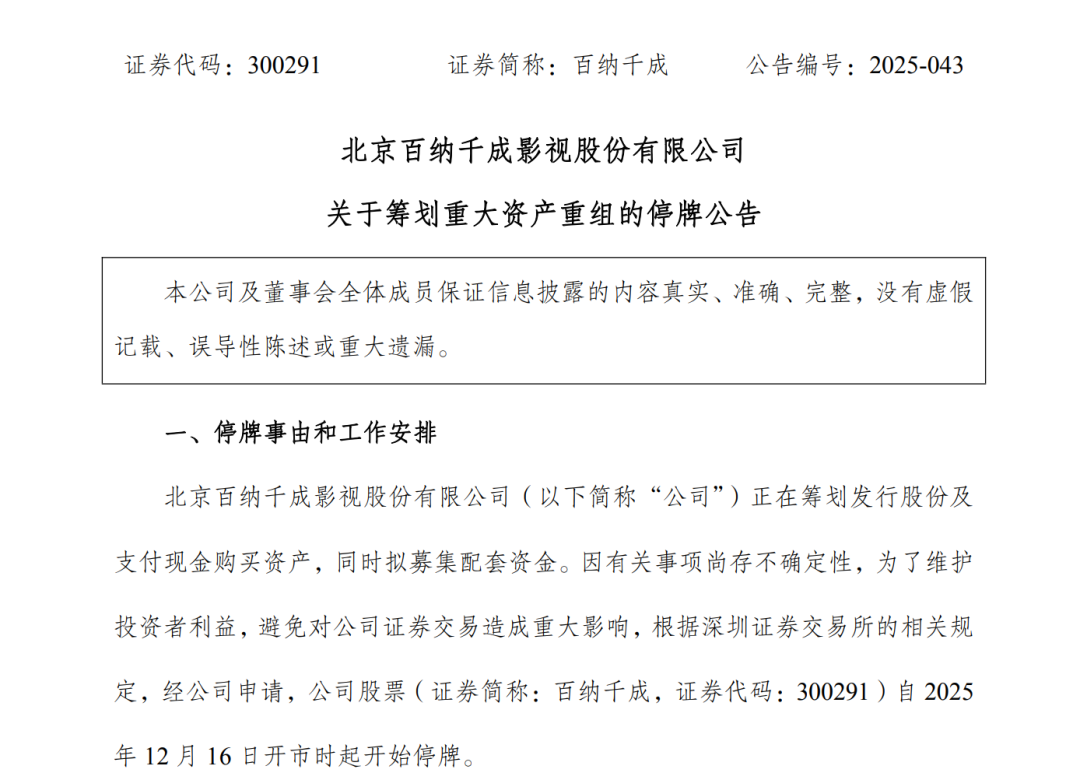
Group 1 - The core point of the article is that the leading film company, Baiana Qiancheng, is planning to acquire 100% equity of Xiamen Zhonglian Century Co., Ltd. through a combination of issuing shares and cash payment, while also raising supporting funds [2][4] - The transaction is currently in the planning stage, with Baiana Qiancheng in discussions with shareholders of the target company and having signed a letter of intent for equity acquisition [4] - Zhonglian Century, established in 2013, is an AI and big data-driven technology company that provides comprehensive digital services to over 3,000 industry clients, including major players in telecommunications, finance, and e-commerce [4][6] Group 2 - Zhonglian Century has established deep partnerships with leading digital ecosystem partners such as Tencent Advertising, Kuaishou, and TikTok, particularly in digital channel construction [6] - The company has a team of over 500 members, with more than 30% in R&D, focusing on AI model algorithm innovation and building a comprehensive technical barrier [8] - Baiana Qiancheng, founded in 2002 and listed on the A-share market in 2012, has produced over 100 TV series and more than 30 films, with a total box office exceeding 16 billion yuan [8][9]
嘉银科技上涨3.57%,报6.97美元/股,总市值3.72亿美元
Jin Rong Jie· 2025-12-15 15:18
Core Viewpoint - JFIN (JiaYin Technology) shows strong financial performance with significant revenue and profit growth, reflecting its successful technology-driven strategy in the financial services sector [1][2]. Financial Performance - As of September 30, 2025, JiaYin Technology reported total revenue of 5.132 billion RMB, representing a year-on-year increase of 16.73% [1]. - The company's net profit attributable to shareholders reached 1.435 billion RMB, marking a substantial year-on-year growth of 83.76% [1]. Company Overview - JiaYin Technology, founded by Mr. Yan Dinggui on June 18, 2011, is headquartered in Shanghai, China, and was successfully listed on NASDAQ on May 10, 2019, under the stock code JFIN [1]. - The company focuses on connecting consumers with financial institutions through advanced technologies such as big data, cloud computing, and artificial intelligence [1]. Technological Innovations - JiaYin Technology has developed several innovative platforms, including: - "TianYin" intelligent fund management platform for efficient asset matching [2]. - "MingJian" intelligent risk control engine to significantly enhance risk management capabilities [2]. - "DaYu" data asset management platform to improve data governance [2]. - "ChangE" intelligent voice call platform for compliant and considerate post-loan services [2]. - These innovations have led to digital process optimization, automated supervision, and scientific decision-making, strengthening the foundation of the digital economy [2]. Global Expansion - JiaYin Technology's business has expanded to various regions, including Southeast Asia, Africa, and Latin America, with plans for further international growth [1].

300291,重大资产重组,即将停牌
Zhong Guo Ji Jin Bao· 2025-12-15 15:01
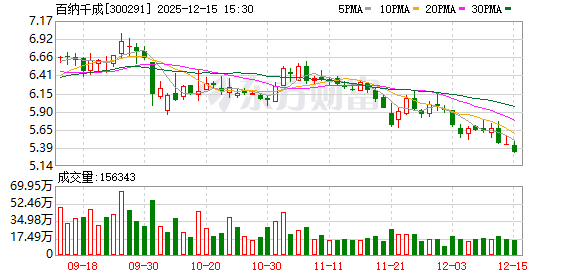
Core Viewpoint - The company Baina Qiancheng (stock code: 300291) is planning a significant asset restructuring to transition into the AI sector by acquiring 100% equity of Xiamen Zhonglian Century Co., Ltd. [1][3] Group 1: Acquisition Details - Baina Qiancheng announced on December 15 that it is in the process of planning to purchase 100% equity of Zhonglian Century and raise supporting funds through share issuance and cash payment [1][3] - The transaction is expected to constitute a major asset restructuring, with the company's stock being suspended from trading starting December 16 [1][3] - The company has signed a letter of intent for equity acquisition with some major counterparties and is currently in discussions with shareholders of the target company [3] Group 2: Target Company Overview - Zhonglian Century, established in 2013, is an AI and big data-driven technology enterprise headquartered in Xiamen, with branches in multiple locations including Beijing, Hong Kong, and Thailand [3] - The company has developed a comprehensive service model that includes three core business systems: one-stop smart marketing solutions, AI application scenario solutions, and digital channel construction [3] - Zhonglian Century has provided smart transformation services to over 3,000 industry clients across sectors such as telecommunications, finance, and e-commerce [3] Group 3: Baina Qiancheng's Business Context - Baina Qiancheng, formerly known as Hualu Baina, was established in 2002 and went public in 2012, but has seen a significant decline in its traditional film and television business [8] - The company has attempted multiple business transformations, including ventures into cultural tourism, marketing, and IP operations, but has not achieved satisfactory results [9] - For the first half of 2025, the film business revenue was only 1.607 million yuan, a decrease of 70.68%, accounting for less than 12% of total revenue [9] Group 4: Financial Performance - In the first three quarters of 2025, Baina Qiancheng's performance continued to deteriorate, with revenue of 177 million yuan, a year-on-year decline of 73.43%, and a net profit attributable to shareholders of -67.54 million yuan, with losses expanding [12] - As of December 15, the company's stock price was 5.33 yuan per share, with a total market capitalization of 5.02 billion yuan [12]


【金猿CIO展】莱商银行信息科技部总经理张勇:AI Infra与Data Agent驱动金融数据价值新十年
Sou Hu Cai Jing· 2025-12-15 14:35
Core Insights - The upcoming 2025 Eighth Annual Golden Monkey Awards will be held in Shanghai, with a rigorous three-round evaluation process for nominations and awards [2] - The financial technology industry is experiencing a transformation with the rise of AI large models and Data Agents, reshaping the development landscape of the big data industry and creating new opportunities for financial data applications [2][3] - The evolution of big data from a resource to an asset and then to intelligent productivity is highlighted, emphasizing its importance as a core competitive advantage in the financial sector [2] Industry Development - The transition from building platforms to utilizing data has been a significant shift, with advancements in data center infrastructure and the application of technologies like SD-WAN and distributed storage [3] - The integration of AI and big data has led to the establishment of proprietary big data platforms for various applications, including credit and fraud prevention [3][4] - Big data has permeated various sectors, becoming a crucial driver of digital transformation, with ongoing policy support and rapid technological advancements [3][4] Challenges in Big Data - The issue of "data silos" remains unresolved, with barriers to data sharing and inconsistent standards hindering optimal resource allocation [4] - Data quality and security are under dual threats, with the rapid growth of data leading to inconsistencies and increased risks of data breaches and cyberattacks [4] - There is a lack of sufficient integration between technology and business needs, with a shortage of professionals who possess both technical and business acumen [4][5] Future Outlook - The integration of big data and AI is expected to usher in a new phase for the banking industry, with AI infrastructure and Data Agents becoming central to industry development [5] - Future banking AI infrastructure will be a cloud-native foundation that supports flexible deployment and seamless data-model collaboration, ensuring compliance and security [5][6] - The market for data elements will accelerate, with improved regulations facilitating the free flow of data as a new production factor, fostering collaboration among financial institutions and data service providers [6] Talent and Ethics - The focus of data capability development is shifting from technology stacks to talent ecosystems and ethical frameworks, emphasizing the need for employees to possess data literacy [7] - The demand for "business translators" who understand both business logic and data tools is increasing, alongside the necessity for a unique AI ethics and governance framework in the banking sector [7] - Balancing innovation with compliance is crucial for maximizing data value while safeguarding customer rights and maintaining ethical standards [7]